

Let's address the elephant in the room: when most people hear "modular home," they picture a glorified shipping container with the charm of a site office. Generic finishes. Low ceilings. Windows that feel like afterthoughts.
That outdated perception couldn't be further from the reality of modern modular construction. Today's factory-built homes rival: and often exceed: the quality, design, and finish levels of traditionally built houses. The difference? They're delivered in weeks instead of months, with precision that on-site construction simply can't match.
Here's why modular doesn't mean basic anymore.
The Volume Advantage: Soaring Ceilings as Standard
Walk into a contemporary modular home and the first thing you'll notice is space. Real, generous, vertical space.
High ceilings aren't an expensive upgrade in modular design: they're engineered into the build from the start. Most quality modular homes feature ceiling heights of 2.7 to 3.0 metres as standard, creating an immediate sense of openness that transforms how a home feels. That extra volume does more than look impressive. It improves air circulation, maximises natural light penetration, and creates a psychological sense of freedom that low ceilings actively suppress.
Traditional builders often compress ceiling heights to save costs: every additional 100mm adds material and labour expenses that compound across a custom build. But modular manufacturers design once and replicate efficiently. The engineering work is done. The materials are bulk-purchased. The result is a ceiling height that would be considered a premium feature in a brick-and-mortar build, delivered as standard in your modular home.
Floor-to-Ceiling Glass: Light as a Design Element
Full-height double-glazed windows aren't just about views: they're about fundamentally changing how a home interacts with its environment.
Modern modular homes integrate expansive glazing that runs from floor to ceiling, dissolving the barrier between interior and exterior spaces. These aren't small punch-windows grudgingly inserted into walls. They're architectural statements that flood rooms with natural light, frame outdoor landscapes, and create a visual connection to the site that makes compact floor plans feel dramatically larger.
The double-glazing is critical. Two panes with an insulating air gap trap heat in winter and reflect it in summer, maintaining comfortable interior temperatures without constant HVAC cycling. Low-E coatings on the glass further enhance thermal performance, blocking UV radiation while allowing visible light through. The frames themselves: typically powder-coated aluminium: are engineered for airtight seals and smooth operation that won't sag or stick after years of use.
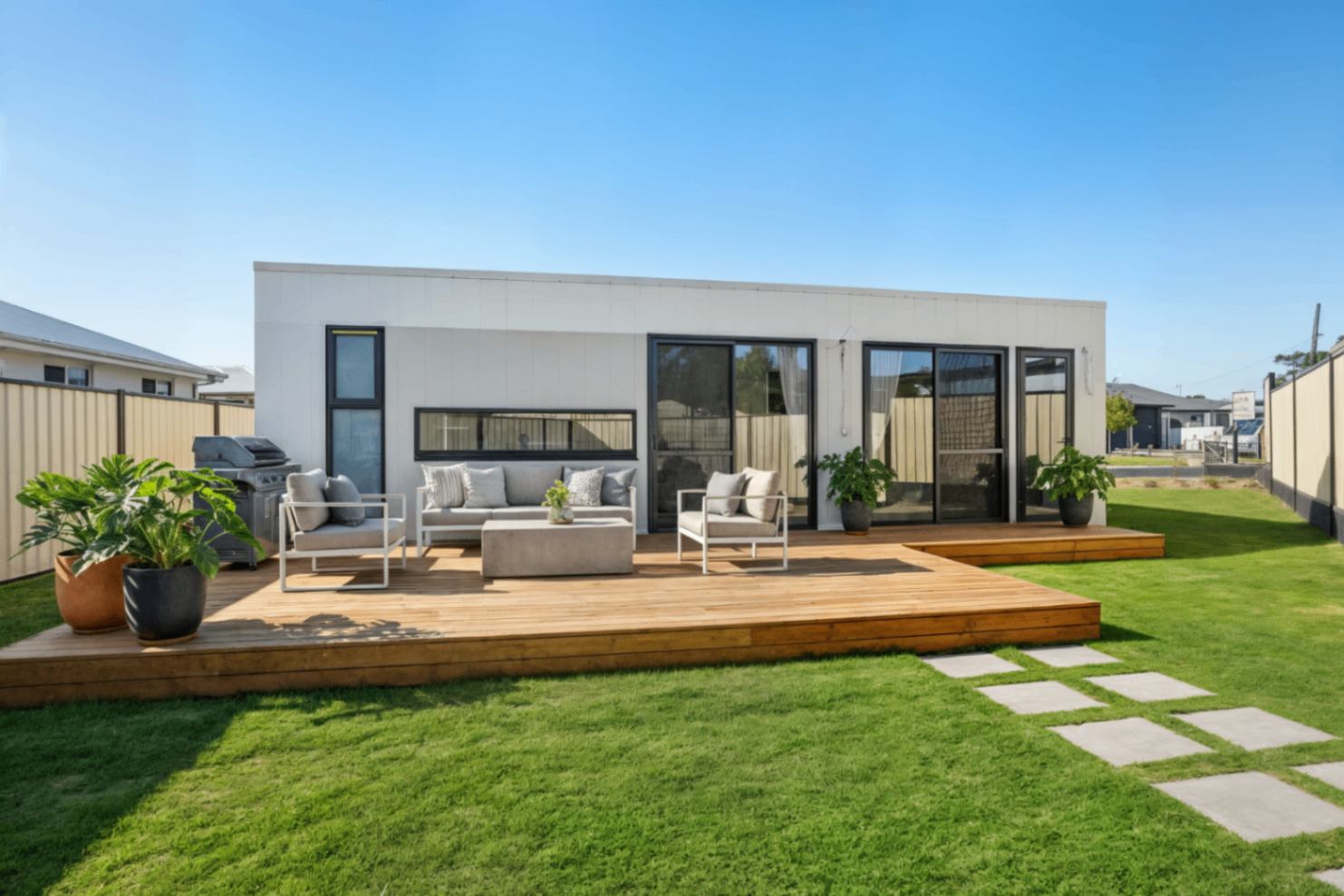
This level of glazing would add tens of thousands to a traditional build. In modular construction, it's part of the system. Factory installation ensures perfect alignment, consistent sealing, and structural integration that field crews struggle to replicate.
Premium Finishes Delivered from the Factory Floor
Here's where modular construction flips the script entirely: approximately 70% of your home is built in a controlled factory environment, free from the weather, dust, and site contamination that plague traditional builds.
That means your benchtops, cabinetry, flooring, and wall finishes are installed by skilled tradespeople working in optimal conditions with precision tools and quality control protocols that would be impossible on a muddy building site. The result? Joinery that's actually square. Tiles that are actually level. Paint finishes without the stippled texture of windblown dust.
Standard inclusions in quality modular homes now include:
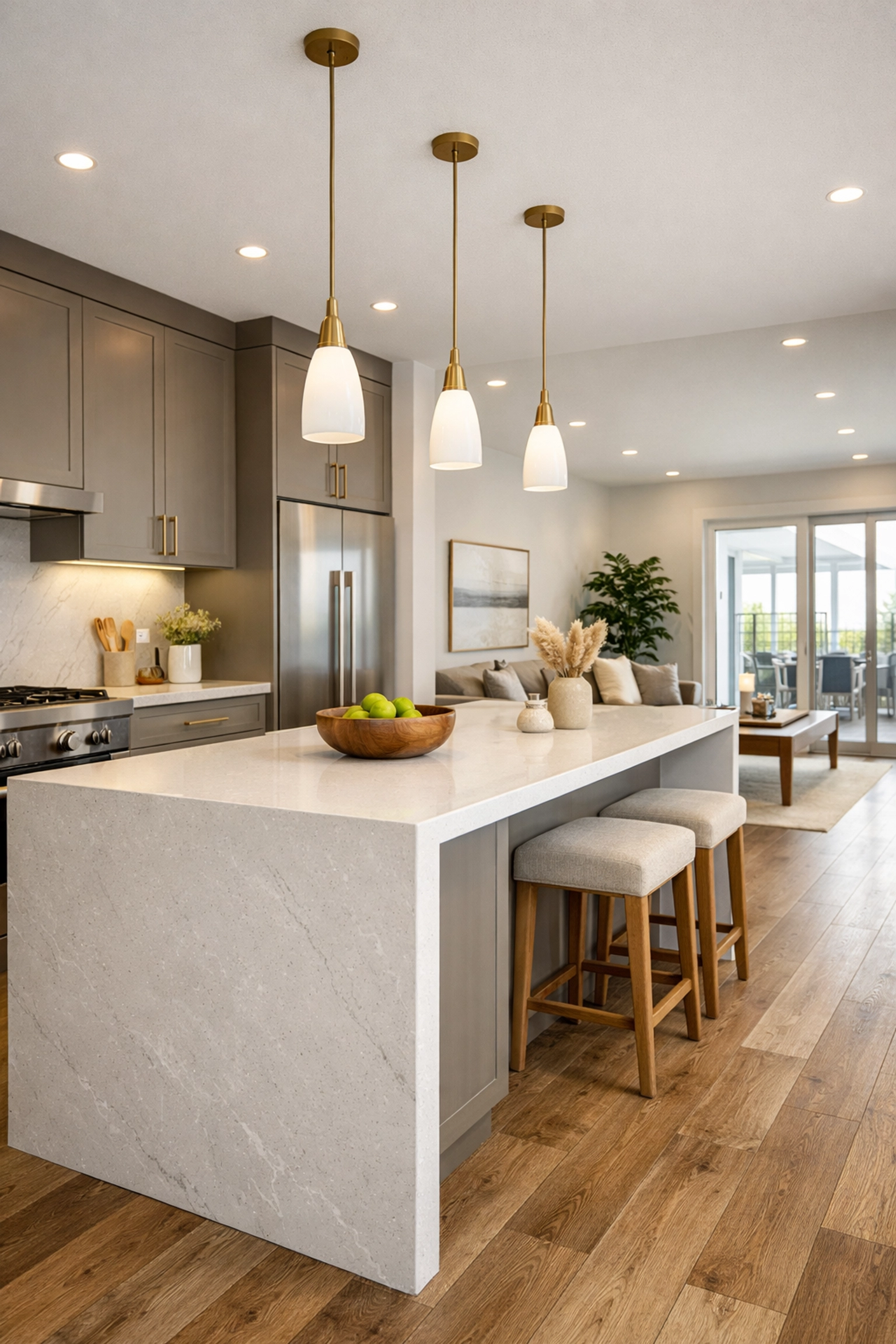
- Engineered stone or quartz benchtops with waterfall edges
- Soft-close cabinetry with premium hardware throughout
- Designer tapware and fixtures in bathrooms and kitchens
- Luxury vinyl plank or hybrid timber flooring with commercial-grade wear layers
- Recessed LED lighting on dimmer circuits
- High-efficiency appliances installed and tested before delivery
These aren't upsells or custom packages: they're baseline specifications. The factory-controlled process allows modular builders to negotiate bulk material pricing and maintain relationships with premium suppliers, passing cost savings directly to you while elevating the standard finish level beyond what project builders typically offer.
The quality assurance extends beyond materials. Each module undergoes multiple inspections during construction, with structural, electrical, and plumbing systems verified at each stage. By the time your home arrives on site, it's already been tested more rigorously than most traditionally built houses will ever experience.
Insulation Excellence: Thermal Performance Built In
Energy efficiency isn't a feel-good add-on in modern modular homes: it's an embedded advantage of the construction method itself.
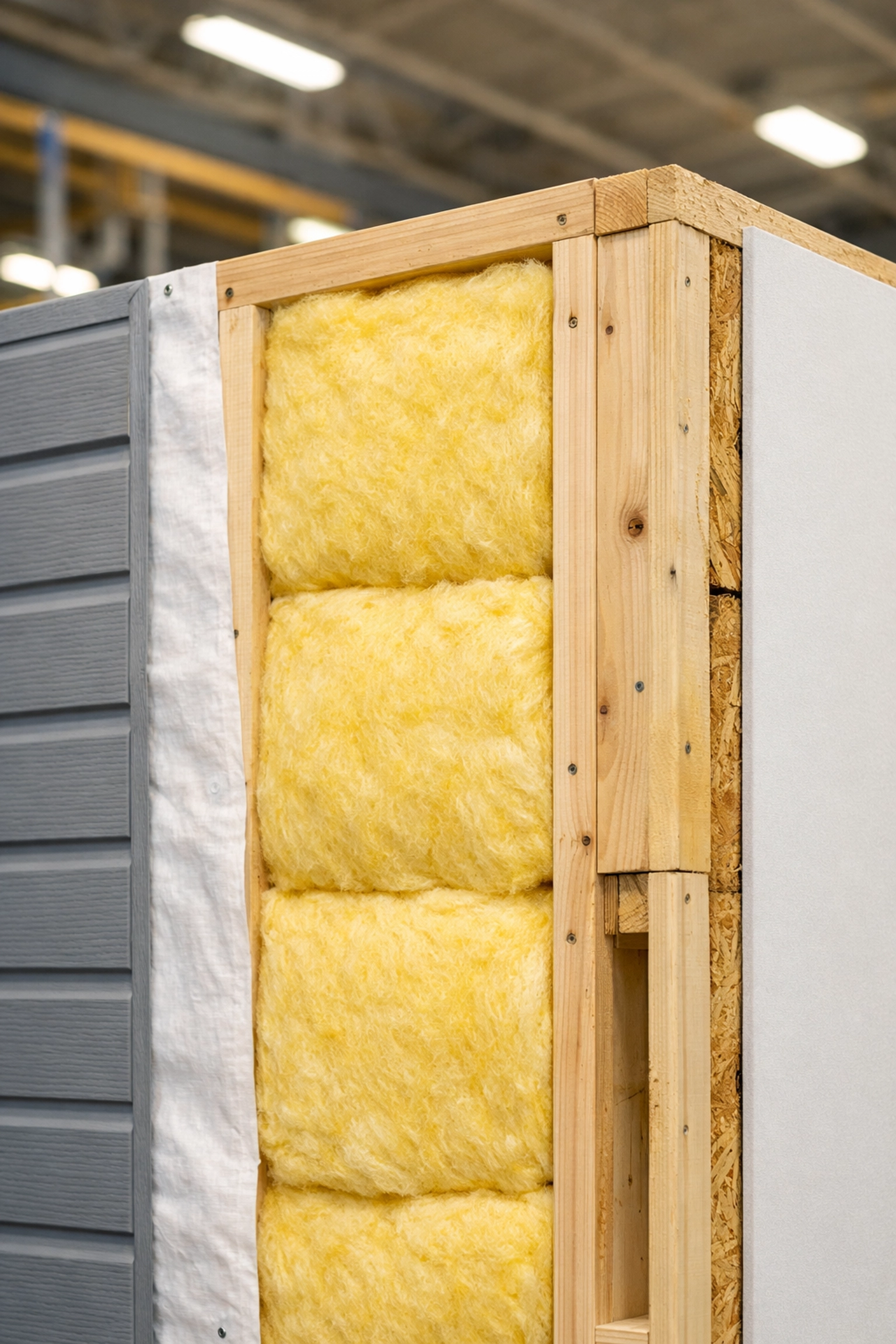
Factory-built modules allow for precision insulation installation that field crews simply cannot match. Wall cavities are filled completely, with no gaps or compressed sections. Ceiling insulation is installed before the roof is closed, ensuring even coverage across every square metre. Floor insulation is applied in a controlled position, properly supported and sealed against the subfloor.
The result is a thermal envelope that performs exactly as engineered. No cold spots. No air leakage through poorly sealed junctions. No thermal bridges where structural elements conduct heat through the building fabric.
Most quality modular homes achieve R-values well above minimum code requirements:
- Roof: R4.0-R6.0 bulk insulation
- Walls: R2.5-R3.5 with optional reflective wrap
- Floors: R1.5-R2.5 depending on ground clearance
Combined with double-glazed windows and airtight construction, this creates a home that requires minimal active heating or cooling. Your HVAC system runs less frequently, for shorter durations, at lower intensity. The comfort is immediate: no cold drafts in winter, no heat gain in summer: and the energy savings compound month after month across the life of the home.
Designer Aesthetics Without the Designer Price Tag
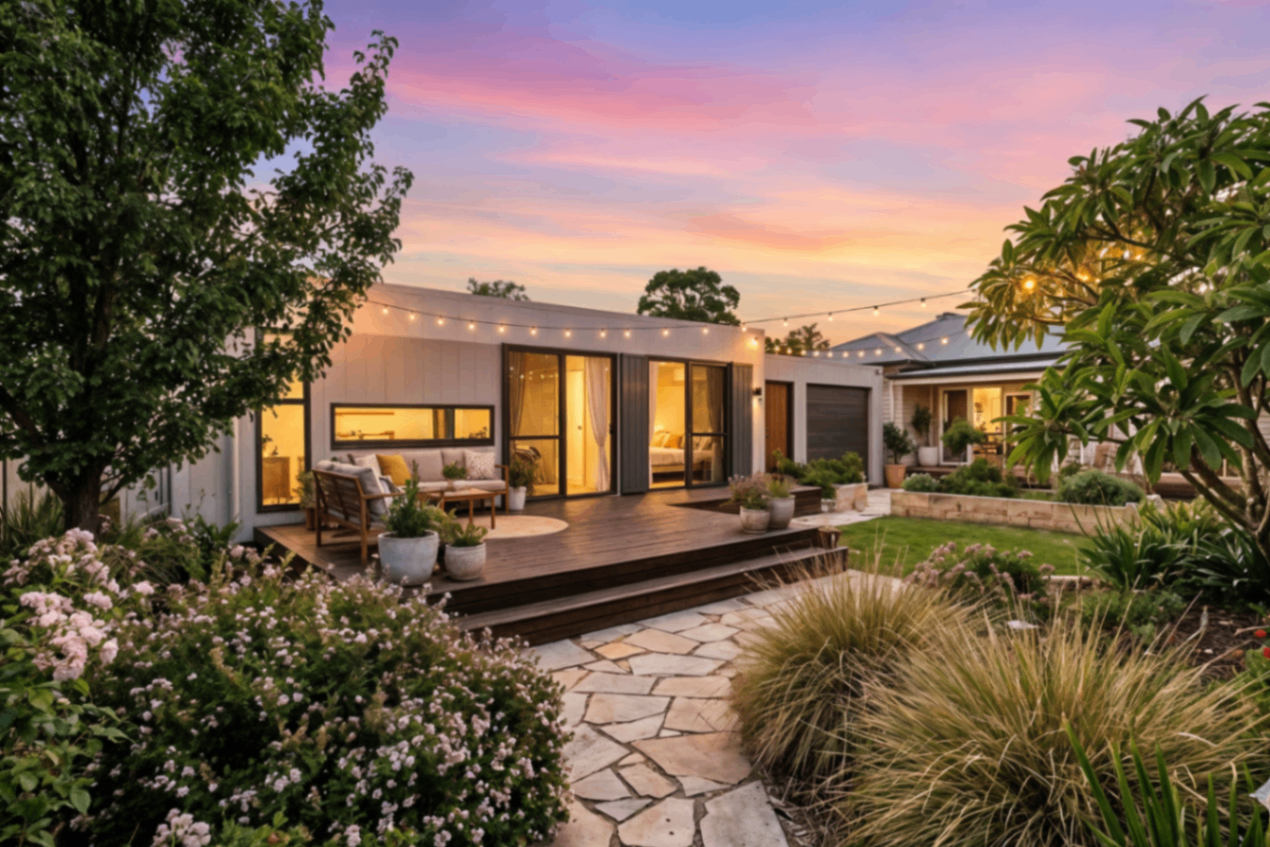
The architectural language of contemporary modular homes has evolved dramatically. Gone are the boxy, utilitarian profiles of early prefab designs. Today's modules incorporate mixed cladding materials, varied roof lines, substantial eaves, and articulated facades that read as custom architecture.
Timber accents. Architectural concrete panels. Standing seam metal roofing. Feature lighting integrated into soffits and decking. These aren't cosmetic afterthoughts: they're designed into the system from the beginning, with material selections and colour palettes curated by architects who understand how modern homes should look and function.
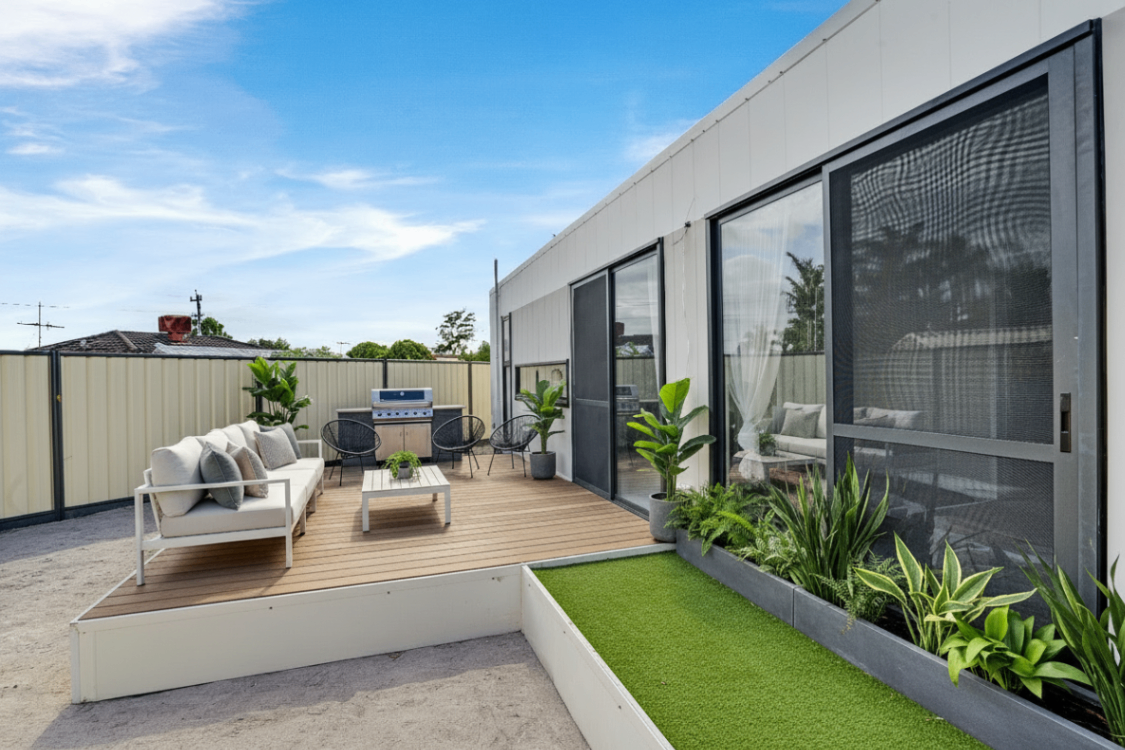
The outdoor spaces receive equal attention. Expansive timber decks with integrated seating and planter boxes extend living areas outdoors. Low-maintenance landscaping with native species creates privacy and softens the built form. Feature lighting along pathways and deck perimeters transforms evening aesthetics while improving functionality.
This holistic design approach delivers homes that genuinely look and feel like custom architect-designed residences: because that's exactly what they are. The difference is that the design is refined once, then executed repeatedly with precision that custom builds rarely achieve.
The Timeline Advantage: Months Faster Than Traditional
While traditional builders navigate weather delays, trade scheduling conflicts, and extended approval processes, modular construction progresses on parallel tracks. Your foundation is being prepared on-site while your modules are simultaneously being built in the factory.
The timeline compression is substantial. Where a traditional build might require 8-12 months from groundbreaking to occupancy, a comparable modular home can be site-ready in 12-20 weeks from order confirmation. That's not cutting corners: it's eliminating inefficiencies.
Factory construction removes weather dependencies entirely. Rain doesn't halt progress. Wind doesn't prevent roof installation. Extreme temperatures don't compromise material curing. Work continues on schedule, day after day, with trade crews moving systematically through production stations designed for maximum efficiency.
On-site installation typically requires just 1-2 weeks. Modules arrive complete, are lifted into position by crane, and are joined together with structural connections that were engineered specifically for this purpose. Services are connected, final inspections are completed, and you're receiving keys while your neighbors' traditional builds are still waiting for window deliveries.
Moving Beyond the Misconception
The "cheap shed" stereotype persists because it's a convenient mental shortcut: a way to categorise something unfamiliar into an existing box. But modern modular construction has evolved so far beyond its origins that the comparison no longer holds any relevance.
These are genuine homes. Permanent structures engineered to exceed building code requirements, designed by architects who understand contemporary aesthetics, and built by manufacturers who've refined their processes across hundreds of completed projects. The quality is verifiable. The performance is measurable. The value proposition is undeniable.
Premium doesn't mean expensive: it means considered. Intentional. Executed with precision and delivered with confidence.
Explore What's Possible
The modular homes being delivered today challenge every assumption about factory-built housing. High ceilings, expansive glazing, premium finishes, exceptional insulation, designer aesthetics, and accelerated timelines: all delivered as standard inclusions rather than expensive upgrades.
If you're ready to move beyond misconceptions and explore what modern modular construction actually delivers, start with our current designs. Each home represents years of engineering refinement and design evolution, built to Australian standards and ready to exceed your expectations.
The question isn't whether modular can match traditional quality anymore. It's why you'd accept anything less than factory precision.