
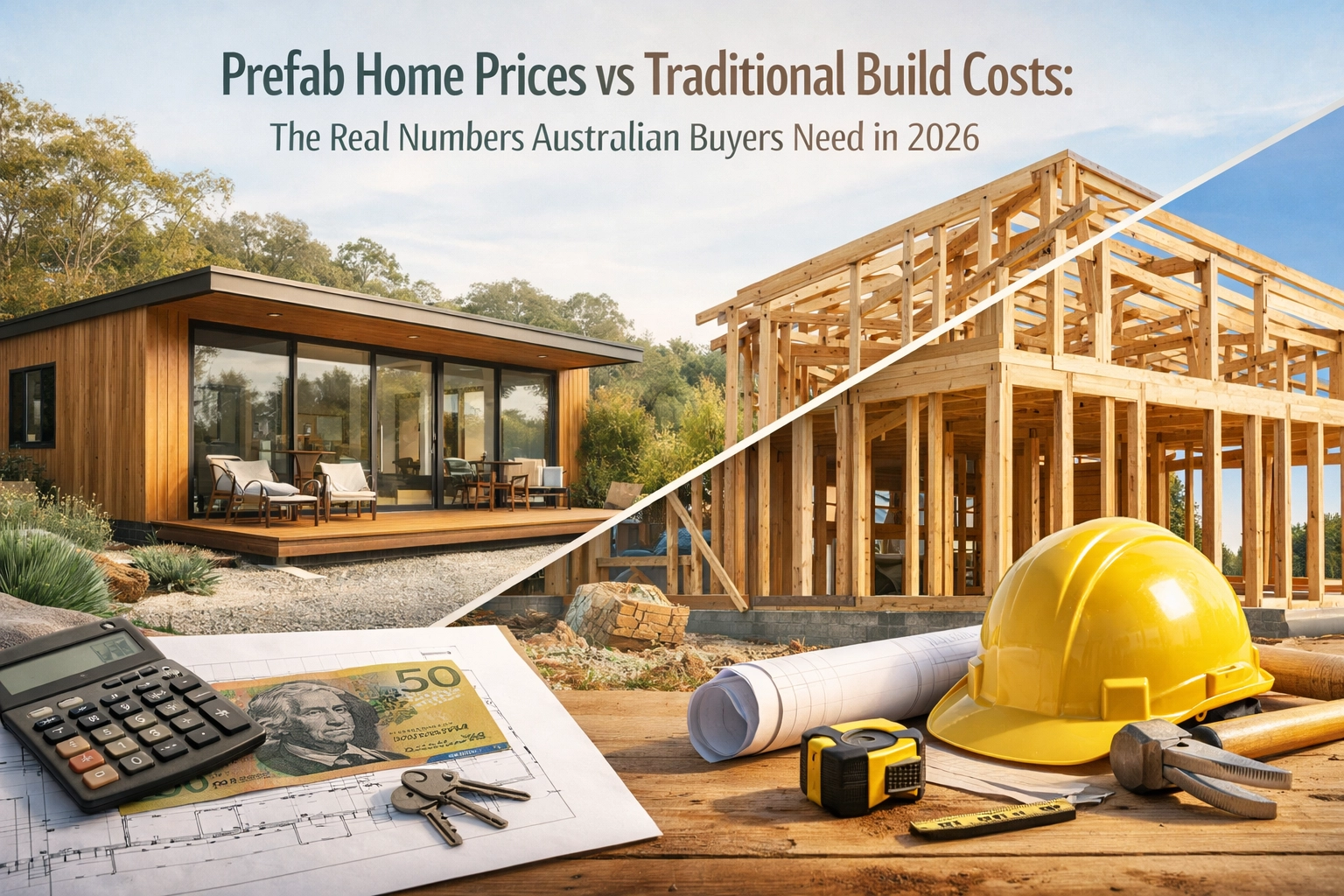
Let's cut through the noise. You're trying to figure out whether prefab homes actually save you money, or if it's just marketing hype. With traditional build costs spiralling and builder insolvencies making headlines, Australian buyers in 2026 need clarity, not sales pitches.
Here's what you actually need to know about modular home prices versus traditional construction costs, including the hidden expenses most builders won't talk about upfront.
The Real Numbers: Prefab vs Traditional Build Costs
Prefab home prices in Australia range from $150,000 to $500,000+ depending on size, specifications, and finishes. Breaking that down:
- Studio to one-bedroom units: $150,000–$250,000
- Medium family homes (2-3 bedrooms): $300,000–$500,000
- Large, architecturally designed homes: $700,000–$1,000,000+
Per square meter, you're looking at $1,500–$3,000 for modular construction, a figure that includes factory manufacturing, quality control, and most core structural elements.
Traditional builds? The per-square-meter cost typically runs 10-20% higher than equivalent prefab construction. That gap widens when you factor in time-related expenses, which we'll unpack shortly.
Where Traditional Builds Bleed Money (And You Don't Realise It)
The advertised price for a traditional build is rarely the final price you pay. Here's where the hidden costs stack up:
Labor Delays and Weather Exposure
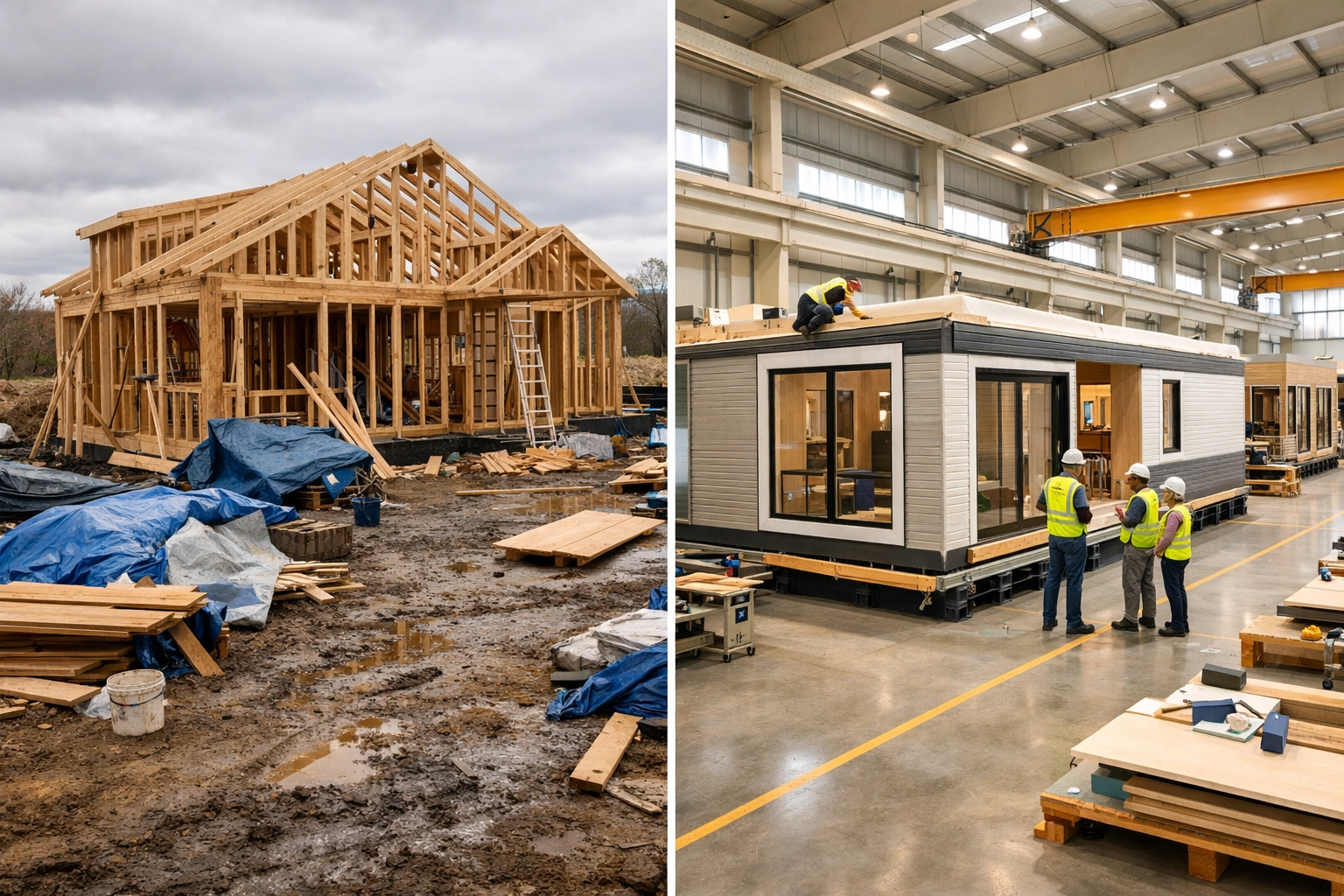
Traditional construction happens entirely on-site, meaning every rain delay, every skilled tradesperson shortage, every material delivery holdup extends your timeline, and your holding costs. A six-month build that stretches to twelve months doubles your rent payments, mortgage interest on land loans, and council fees.
Material Waste and Price Volatility
On-site construction generates 15-20% more material waste than factory-controlled manufacturing. You're paying for timber that gets cut wrong, bricks that crack during installation, and concrete that cures improperly. With material costs fluctuating in 2026, traditional builders often pass these overruns directly to you via variation clauses.
Council and Site-Related Fees
Both construction methods involve council fees, site preparation, and compliance costs, but traditional builds stretch these expenses over longer approval and construction windows. Extended site occupation means extended temporary fencing, extended insurance, extended everything.
The "Variation" Trap
Traditional contracts frequently include variation clauses that allow builders to charge extra when material costs rise or design changes occur. These "small adjustments" can balloon your final invoice by 10-30% beyond the original quote.
Hidden Costs in Prefab Construction (Yes, They Exist Too)
Prefab isn't immune to additional expenses, but they're more predictable:
Site Preparation and Foundations
Your block needs to be level, accessible, and ready for module placement. Depending on soil conditions and slope, site prep can run $10,000–$40,000. However, this cost exists for traditional builds too: it's just often buried in the total quote.
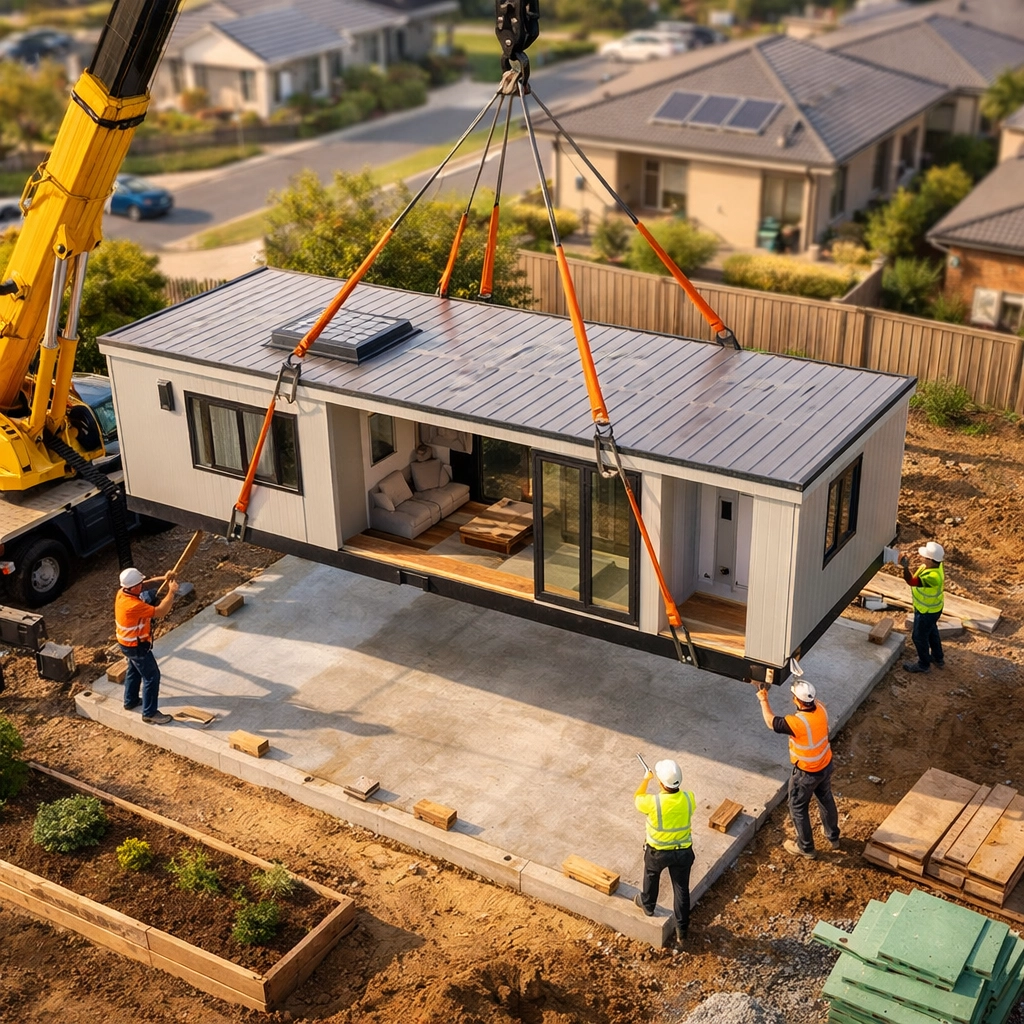
Transport and Crane Costs
Delivering completed modules from the factory to your site involves specialised transport and crane hire. For metro locations, this typically adds $8,000–$15,000. Regional or remote areas see higher costs due to distance, but traditional builds in those locations face even steeper premiums for labor and material delivery.
Connection and Finishing
Once modules are placed, they need to be connected, sealed, and finished. This includes plumbing hookups, electrical connections, and final landscaping. Budget $15,000–$30,000 for completion work: still far less than the cumulative overruns typical of traditional builds.
Timeline Impact: The Cost of Waiting
Prefab homes are completed in 12-20 weeks. Most of that time happens off-site in a controlled factory environment while your land sits untouched. Traditional builds require 6-12 months minimum, often stretching to 18 months when delays compound.
Let's translate that into real dollars. Assume you're paying $2,500/month in rent while construction happens:
- Prefab (4 months): $10,000 in rent during construction
- Traditional (10 months): $25,000 in rent during construction
That $15,000 difference alone narrows: or eliminates: any perceived cost advantage traditional builds might have. Add in land loan interest, extended insurance, and your time spent managing subcontractors, and the financial case for traditional construction weakens further.
EcoHub Homes' Fixed Pricing: What You See Is What You Pay
Here's where most prefab builders differentiate themselves: and where EcoHub Homes takes it further.
Fixed-Price Certainty
When we quote a project, that price includes manufacturing, delivery within metro Perth, installation, and connection to services. No variation clauses. No surprise invoices halfway through. The only additional costs are site-specific items we clearly outline upfront: soil tests, bushfire attack level (BAL) upgrades if required, and any customisation beyond our standard specifications.
Turnkey Timelines
From deposit to move-in, you're looking at 12-16 weeks for standard designs. We manufacture your home in our facility while you finalise site prep, then install in days: not months. That compressed timeline saves you money, stress, and the uncertainty that derails traditional projects.
Energy Efficiency Built In
Our homes include R4.8 ceiling insulation, double-glazed windows, and solar-ready design as standard. Retrofitting a traditional build to equivalent energy performance costs $20,000–$40,000 after construction. We build it in from the start, reducing your long-term utility bills and increasing resale value.
Regional and Remote Builds: Where Prefab Wins Decisively
If your block is outside metro areas, prefab becomes even more compelling. Traditional builders charge premium rates: sometimes 30-50% above city pricing: to cover travel, accommodation, and material transport to regional sites.
Prefab sidesteps most of those costs. Your home is manufactured in one location, transported as complete modules, and installed quickly. While transport costs increase with distance, they're still vastly lower than the cumulative premiums traditional builders add for regional work.
What About Resale Value?
The outdated stigma around modular homes has evaporated. Modern prefab construction meets the same National Construction Code (NCC) standards as traditional builds, uses identical (or superior) materials, and delivers equivalent: or better: energy performance.
Buyers in 2026 care about build quality, energy efficiency, and maintenance costs. A well-designed modular home with premium finishes, double-glazed windows, and proven durability holds its value just as effectively as a traditionally built equivalent. In some cases, the superior insulation and lower ongoing costs make prefab homes more attractive at resale.
The Bottom Line: Prefab Home Prices Deliver Measurable Savings
When you tally the real costs: construction, timeline, hidden fees, energy performance: modular home prices in 2026 offer 10-20% savings compared to traditional builds, often more when you account for time-related expenses and variation-free contracts.
For Australian buyers navigating builder insolvencies, material shortages, and cost volatility, prefab construction offers something increasingly rare: certainty. You know the price, you know the timeline, and you know what you're getting before a single brick is laid: or in this case, a single module is placed.
Ready to See What Fixed Pricing Looks Like for Your Block?
We build transparency into every quote. DM us with your block details, design preferences, and any site-specific considerations (slope, BAL rating, access), and we'll provide a detailed fixed-price proposal with no hidden surprises.
Or explore our standard designs to see what's possible within your budget: from compact granny flats to spacious family homes, all manufactured to NCC standards and delivered on time.