
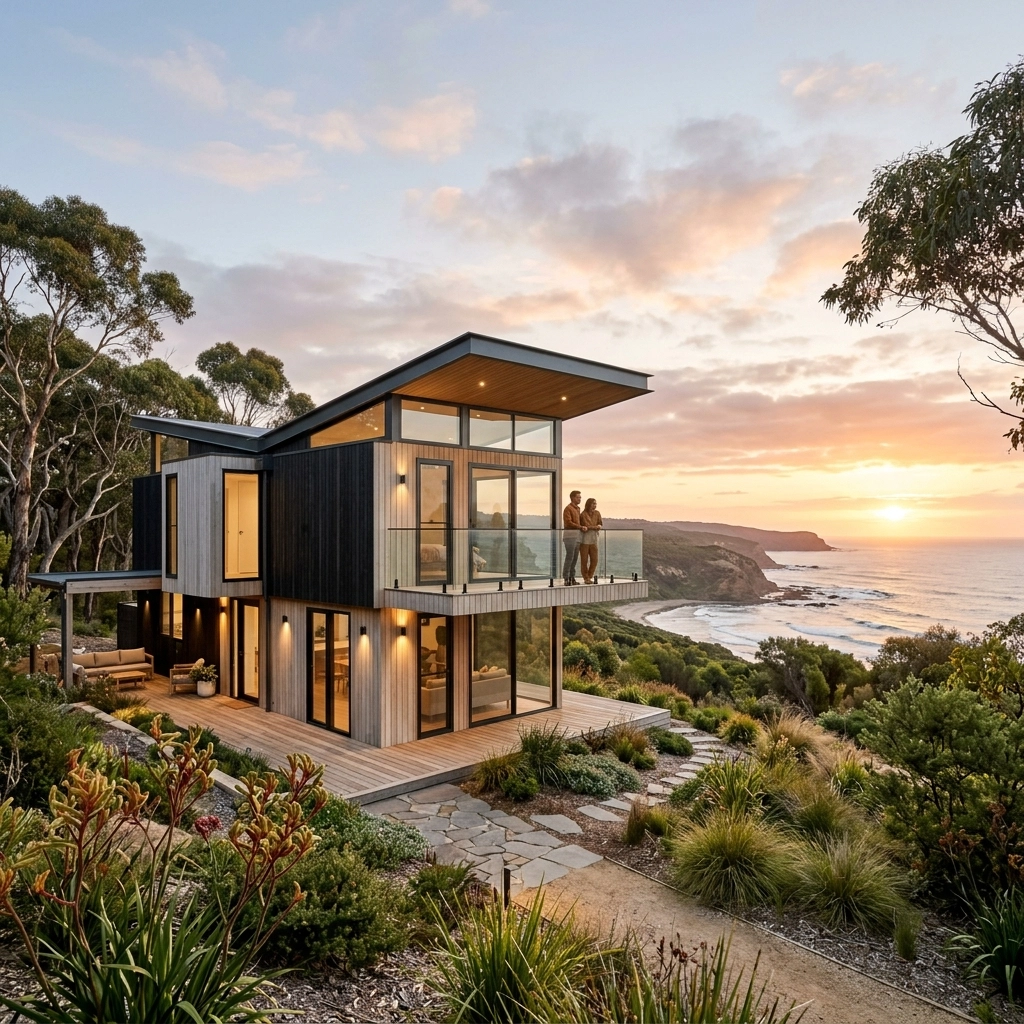
Let’s be real: the Australian building industry has been under the pump for years. Between skyrocketing material costs, a persistent shortage of skilled trades, and the frustratingly slow pace of traditional site-built homes, property owners and investors have been looking for an "out."
Welcome to April 2026. The shift we’ve been talking about for years hasn't just arrived: it’s completely redefined how we think about homeownership and property development. Modular housing is no longer the "alternative" choice; it is the dominant, high-performance solution for a country that needs smarter, faster, and more sustainable living spaces.
At EcoHub Homes, we’ve seen the landscape change firsthand. If you’re planning to build this year, sticking to the old way of doing things isn't just risky: it’s often unnecessarily expensive. Here is why modular construction is the genuine game-changer for 2026.
1. Speed: Moving in Months, Not Years
The most significant pain point in Australian construction has always been the timeline. In the past, a standard residential build could easily drag on for 12 to 18 months, plagued by weather delays and "no-show" subcontractors.
In 2026, time is the new currency. Modular homes are built in controlled factory environments, allowing for a level of precision and speed that site-built homes simply cannot match. While your footings are being prepared on-site, your home is being manufactured simultaneously. This parallel processing means that most construction timelines for modular homes are now four months or less.
Imagine making the decision to build in May and hosting your first housewarming party by August. That isn’t a pipe dream: it’s the new standard. For investors, this rapid turnaround is even more critical. Every month a house is "under construction" is a month of lost rental yield. Modular housing bridges that gap, putting your capital to work almost immediately.
2. Unmatched Energy Efficiency as Standard
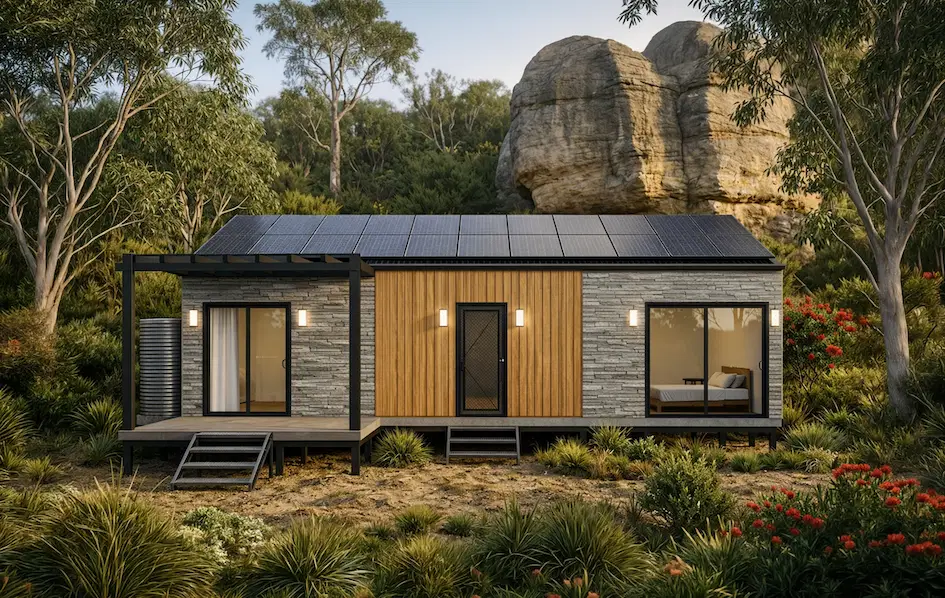
Gone are the days when a "sustainable" home was a luxury add-on. With the 2026 energy landscape and the push toward net-zero, energy performance is a non-negotiable requirement for modern Australian builds.
Modular homes are naturally suited for high-performance standards like the Passive House movement. Because they are constructed in a factory, the "envelope" of the building: the walls, roof, and floor: is sealed with much higher precision than a traditional build. This eliminates the draughts and thermal bridges that usually plague Australian houses.
When you choose a modular build from EcoHub Homes, you aren't just getting a house; you’re getting a thermal powerhouse. Our designs typically include:
- High-spec insulation: Keeping you cool in the scorching Aussie summer and warm in winter without relying on the AC.
- Double-glazed windows: Standard across our range to ensure acoustic and thermal comfort.
- Solar-ready designs: Making it easier than ever to slash your power bills.
In 2026, a home that doesn't prioritise energy independence is a home that will lose value. Choosing modular is the fastest way to future-proof your investment against rising utility costs.
3. Financial Predictability in an Uncertain Market
If you’ve spoken to anyone who built a home the "traditional" way over the last few years, you’ve likely heard horror stories about "cost-plus" contracts and mid-build price hikes. Material shortages have made quoting a fixed price nearly impossible for many traditional builders.
Modular construction flips this script. Because the majority of the build happens in a centralised facility where materials are bought in bulk and labor is consistent, we can offer far more price certainty. For property owners, this means no nasty surprises halfway through the project.
This predictability is a massive win for maximising land value. Whether you are looking at a backyard granny flat or a full-scale subdivision, knowing your costs upfront allows for accurate ROI calculations.

4. The Investor’s Secret Weapon: Subdivision and Yield
The Australian property market in 2026 is all about density and smart land use. Large suburban blocks are being transformed into multi-dwelling sites, and modular housing is the engine driving this trend.
Why? Because modular units can be transported into tight sites with minimal disruption to the neighborhood. If you have a large backyard, you can unlock passive income by installing a high-quality modular granny flat in a fraction of the time it would take to build a traditional secondary dwelling.
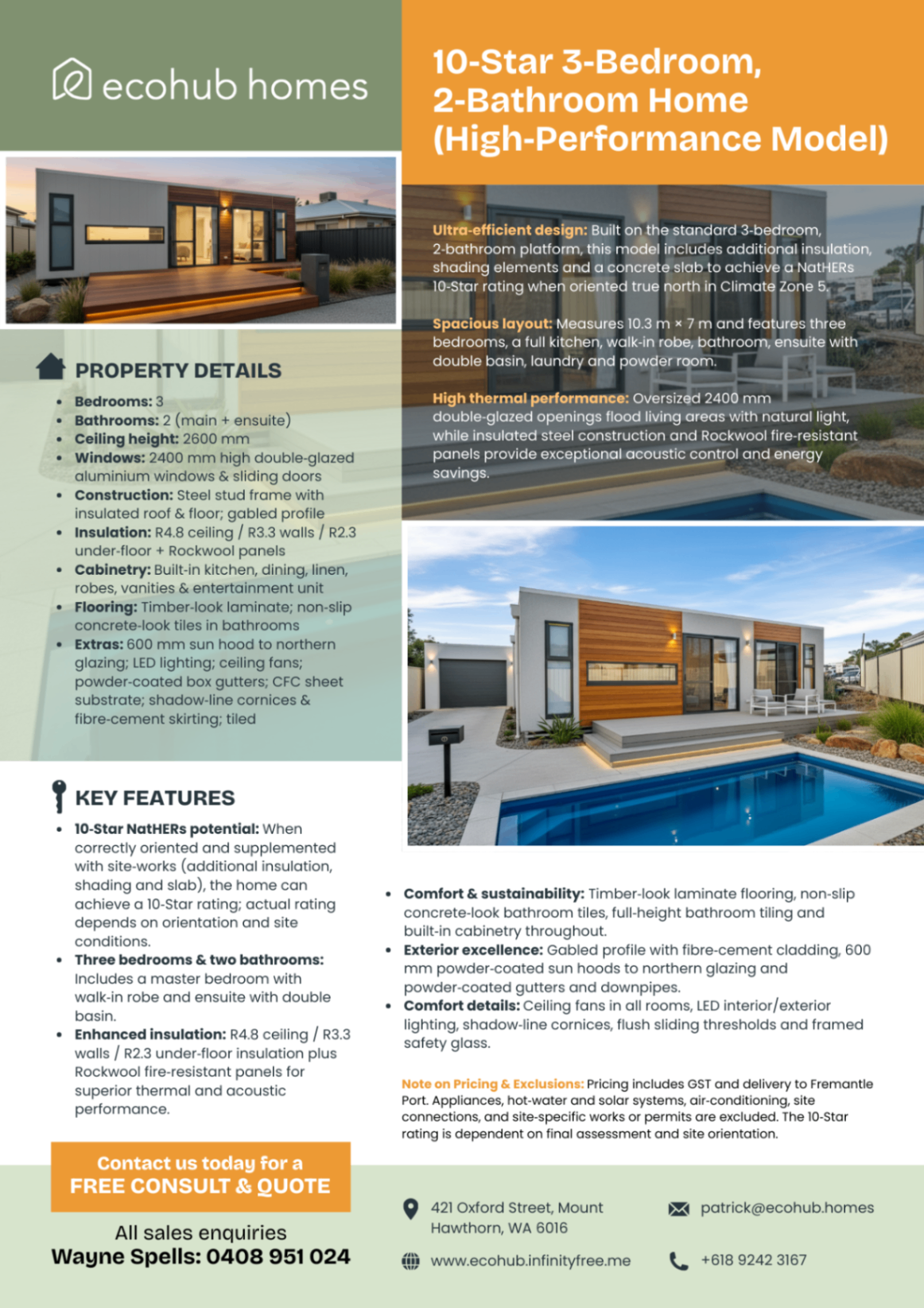
For developers, modular construction offers a "plug-and-play" solution for subdivisions. You can order multiple units of the same high-quality design: like our 3-bedroom, 2-bathroom T-House: and have an entire small community ready for tenants in less than half the time of a conventional development.
5. Overcoming the "Prefab" Stigma: Premium Quality and Compliance
One of the biggest hurdles modular housing had to overcome was the outdated perception that "prefab" meant "cheap" or "temporary." In 2026, that myth has been thoroughly busted.
Modern modular homes are built using heavy-duty steel frames and premium finishes that often exceed the quality of site-built homes. Because these modules have to be transported on the back of a truck, they are actually engineered to be stronger than traditional houses. They have to withstand the vibrations and stresses of transport, resulting in a robust structure that stands the test of time.
Furthermore, there is often confusion around regulations. Let’s clear it up: modular homes are fully NCC compliant. They meet the same National Construction Code requirements as any other house in Australia, and in many cases, they exceed them due to the precision of factory manufacturing.
6. The Rise of Off-Grid Independence
As we move deeper into 2026, more Australians are looking to escape the "grid" entirely. Whether it’s for a holiday retreat in the bush or a permanent move to a more remote area, the demand for off-grid living is at an all-time high.
Modular homes are the perfect fit for remote sites. Transporting a team of builders, their equipment, and all the raw materials to a remote location is a logistical nightmare and an environmental disaster. With modular, the "messy" part of the build happens in the factory. We then deliver a nearly complete home to your site, install it on piers, and connect it to your systems with minimal site disturbance.
If you’re dreaming of a sustainable retreat, our guide to off-grid modular living covers everything from water harvesting to battery storage, showing you how modular makes remote living simple.
Summary: Why Wait?
The construction industry has reached a tipping point. The old way: slow, unpredictable, and wasteful: is giving way to a smarter, more industrialised approach. Modular housing in 2026 isn't just a trend; it's the solution to the Australian housing crisis and the best way for individuals to take control of their building journey.
By choosing modular, you are choosing:
- Certainty: In price and delivery.
- Quality: Precision-engineered in a factory environment.
- Sustainability: Drastically reduced waste and superior energy performance.
- Speed: Moving into your new home while your neighbors are still waiting for their frames to arrive.
Whether you're looking to build your dream home, add a rental unit to your property, or develop a subdivision, EcoHub Homes is here to lead the way. The future of Australian building is modular: and that future is happening right now.
Ready to see what’s possible? Explore our range of sustainable modular homes or reach out for a consultation to find out how we can fast-track your next project.