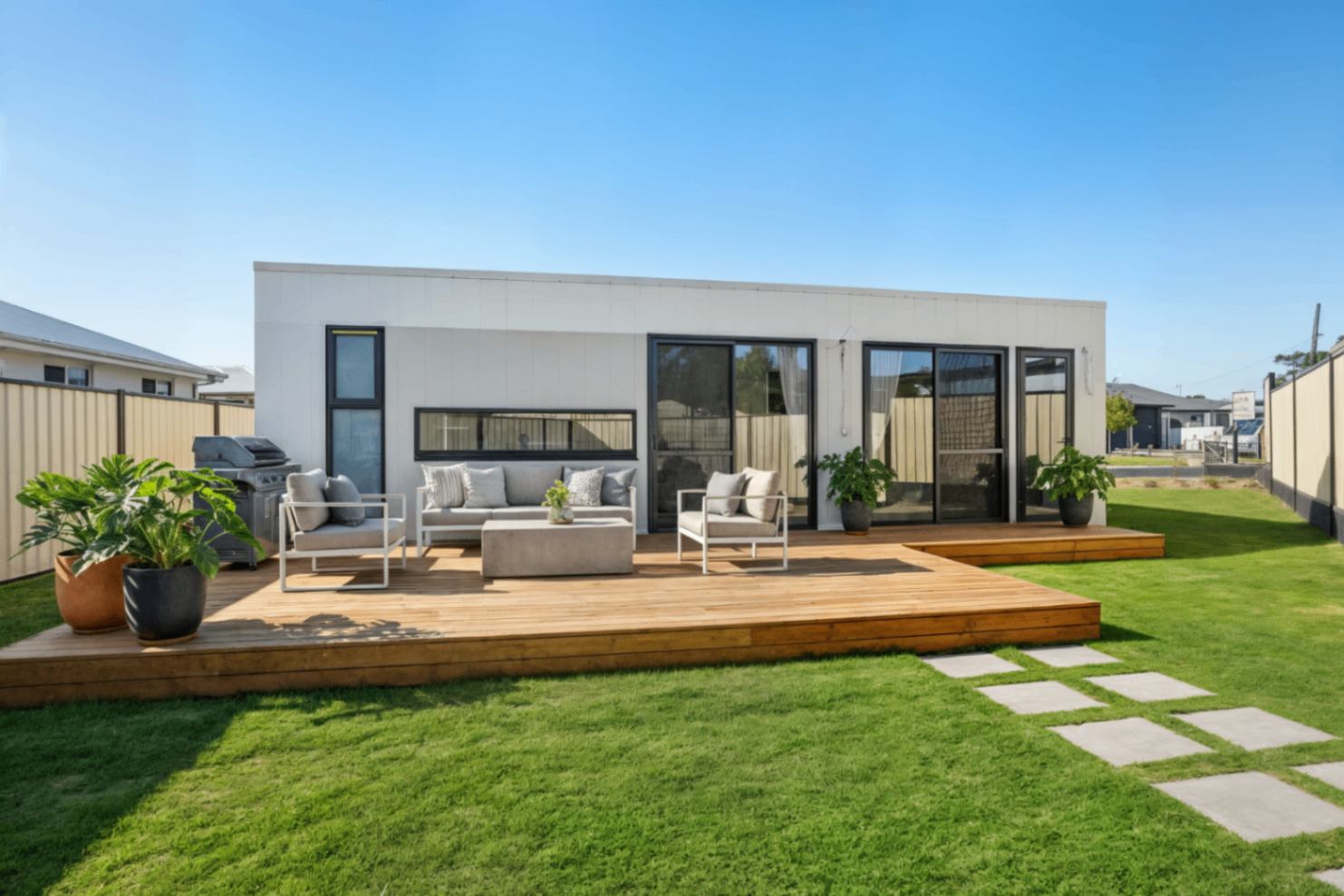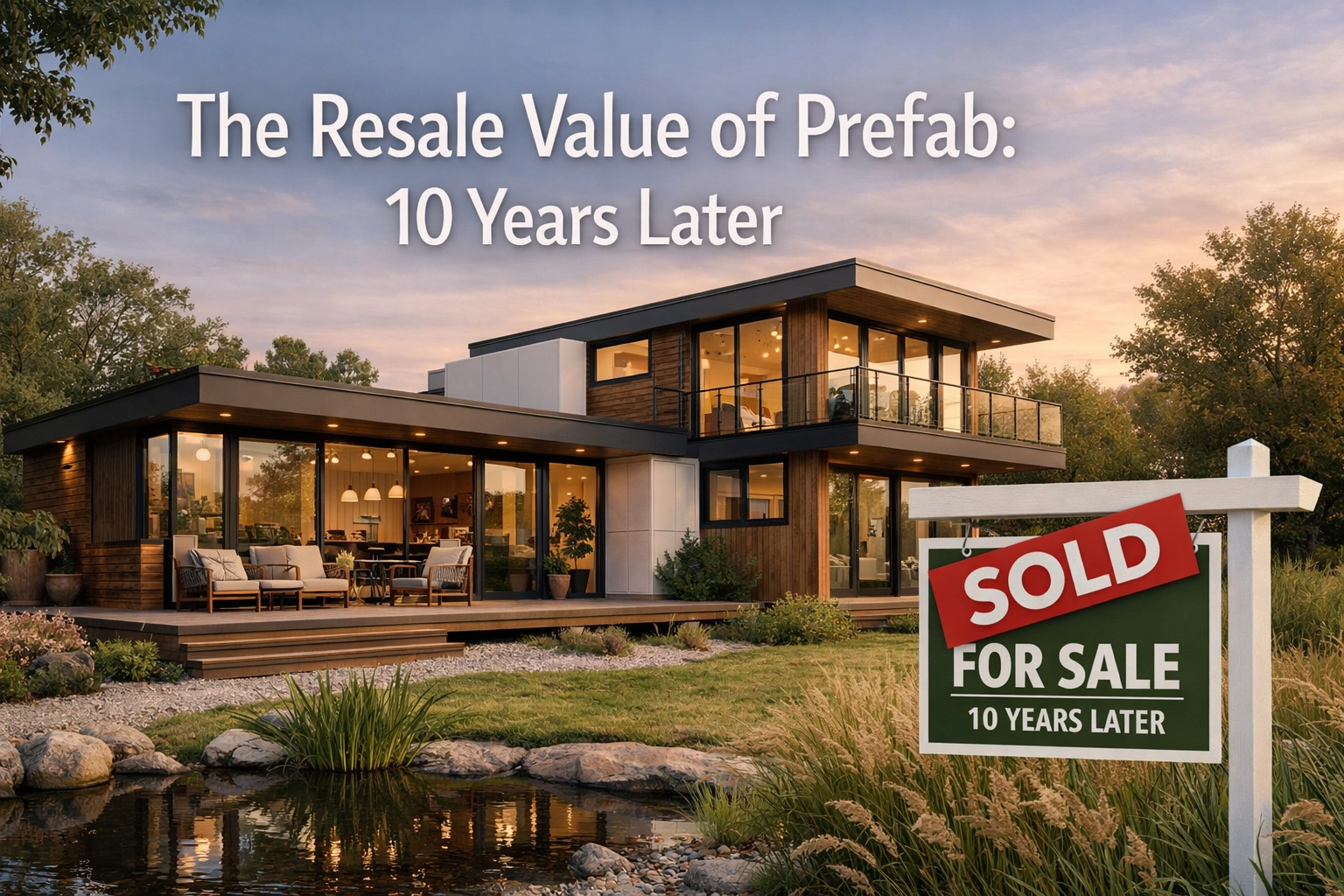
For decades, a persistent myth has haunted the modular housing industry: the idea that a factory-built home is a depreciating asset. Potential homeowners often hesitate, fearing that while a traditional "stick-built" house is an investment, a prefab home is more akin to a vehicle: losing value the moment it leaves the lot.
As we move through 2026, the data has finally caught up with the industry. We now have decades of longitudinal studies and market performance metrics that tell a very different story. The reality is that modern modular homes do not just hold their value; they appreciate at rates that frequently mirror, and occasionally outperform, traditional construction.
If you are looking a decade into the future, the financial trajectory of a prefab build is one of the most stable bets in the current Australian real estate market.
The 10-Year Data: Myth vs. Reality
When analyzing the long-term financial performance of housing, the ten-year mark is the ultimate litmus test. It is long enough to move past initial market fluctuations and deep enough to see how the materials and construction methods handle the elements.
The historical data is staggering. Between 2000 and 2024, manufactured and modular homes situated on owned land appreciated by approximately 211.8%. To put that into perspective, traditional site-built homes in the same period saw an appreciation of 212.6%. That is a negligible difference of less than 1% over nearly a quarter of a century.
When you break that down to an annual growth rate, both housing types sit comfortably at roughly 5% per year. Compounded over a 10-year period, a well-maintained prefab home will see a total appreciation of approximately 62–63%. Since 2014, we have even seen specific windows where high-quality modular builds outpaced traditional homes in year-over-year price increases, driven by the rising demand for modern, sustainable living.
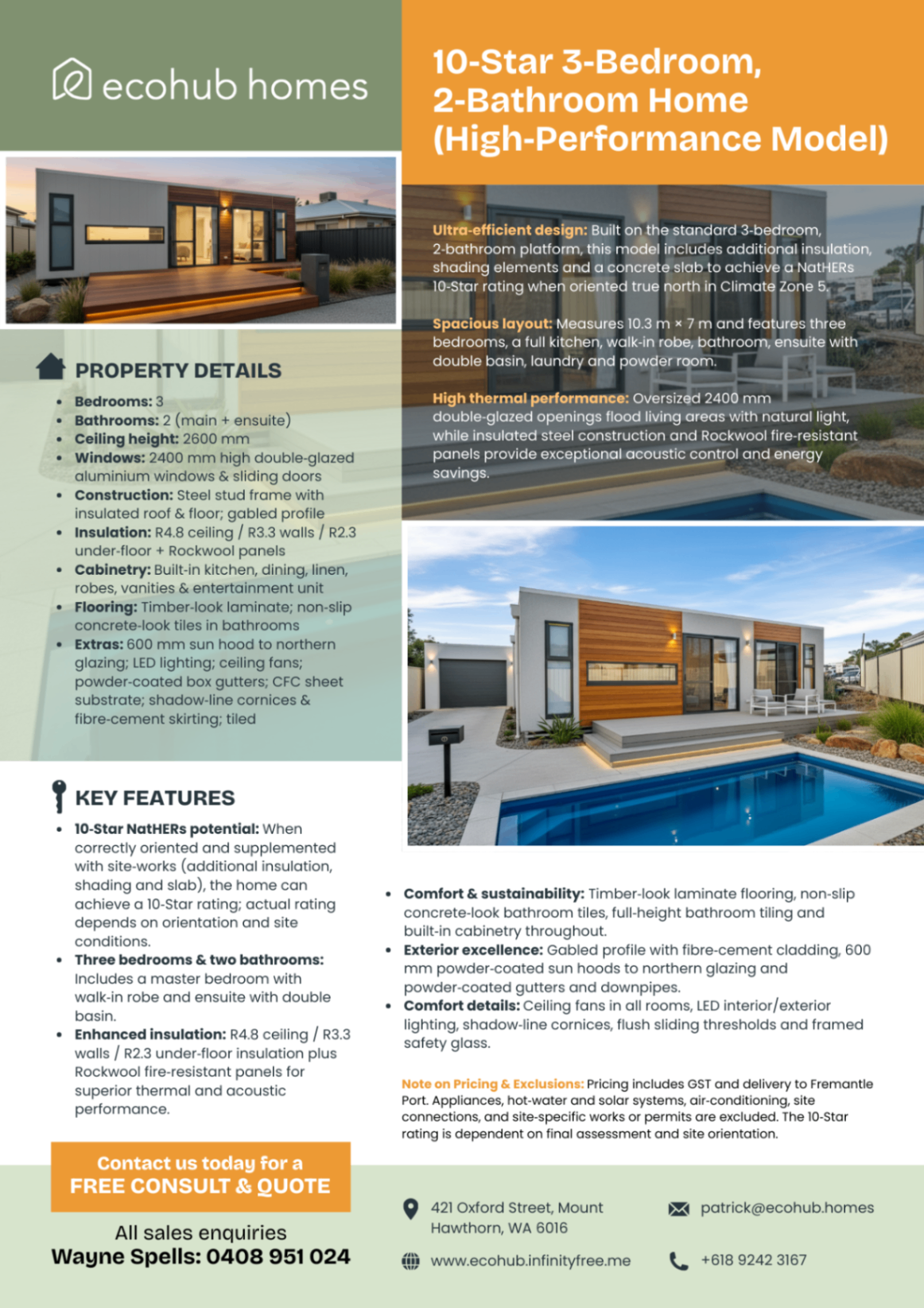
Want to compare layouts quickly? Head to our modular home models and floor plans to see what suits your block, budget, and timeline.
Why Prefab Appreciation Matches Traditional Builds
The reason for this parity is simple: modern modular homes are built to the same: or higher: Building Code of Australia (BCA) standards as any on-site construction. Banks, insurers, and savvy appraisers no longer distinguish between the two based on the method of construction, but rather on the quality of the finished product.
Precision Engineering and Longevity
In traditional construction, materials are exposed to the elements for months. Timber sits in the rain, frames warp under the sun, and moisture can be trapped in the walls before the building is even sealed.
In contrast, EcoHub Homes are constructed in a climate-controlled factory environment. This precision engineering ensures that every joint is tight, every seal is perfect, and the structural integrity of the steel frame is never compromised by weather during the build phase. Ten years down the track, this manifests as fewer structural cracks, better-fitting doors, and higher resistance to the common "settling" issues that plague site-built homes.
The Appraisal Factor
When an appraiser visits a property ten years after it was built, they look at "comparables" in the area. Because our homes are permanent structures fixed to a foundation, they are appraised using the same criteria as any other residential property. They look at square footage, number of bedrooms, and the quality of finishes: all areas where modern modular design excels.
The "Eco-Premium": How Sustainability Drives Resale
In the 2026 housing market, energy efficiency is no longer a luxury; it is a primary driver of resale value. Buyers are increasingly wary of rising energy costs and are willing to pay a premium for homes that are "future-proofed."
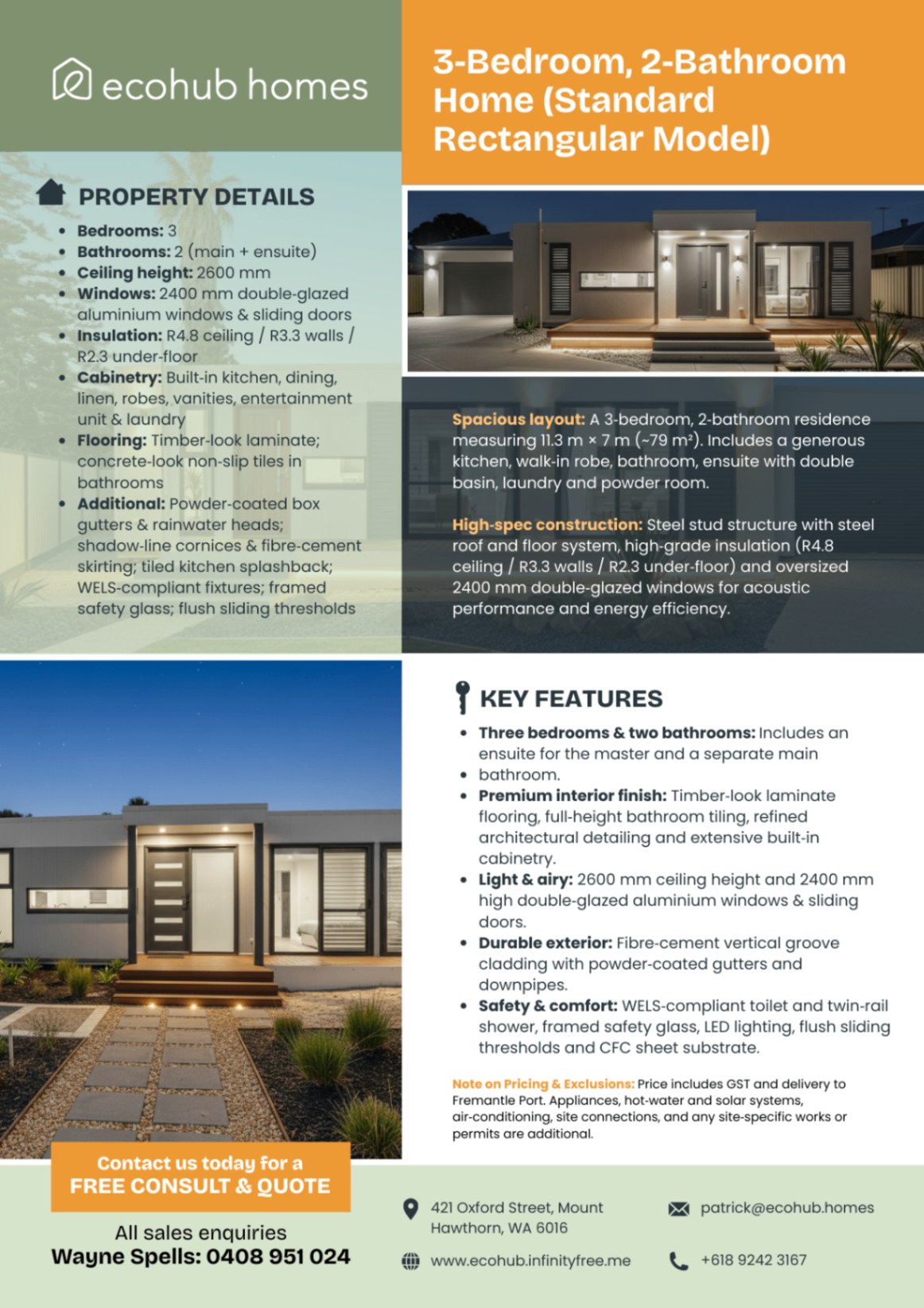
This is where EcoHub Homes gain a significant edge in long-term valuation. A home with a high NatHERS rating, full-height double-glazed windows, and superior insulation is significantly more attractive to a buyer ten years from now than a drafty, poorly insulated traditional build.
- Operational Savings: A buyer in 2036 will look at the utility history of a home. A modular home with solar-ready infrastructure and thermal efficiency offers a lower "total cost of ownership," which justifies a higher asking price.
- Climate Resilience: As Australian summers become more intense, the demand for high-performance building envelopes increases. The durable fibre-cement cladding and high-spec insulation used in our 3-bedroom T-House ensure the home remains comfortable and low-maintenance for decades.
Key Factors That Influence Your 10-Year ROI
While the construction method is sound, several external factors will dictate whether your specific investment hits that 60%+ appreciation target.
1. Land Ownership
The single most important factor in appreciation is the land. Homes situated on owned land appreciate because the land itself increases in value. When a modular home is permanently affixed to a site, it becomes part of the real estate asset. Properties where the home is on a leased lot (such as some lifestyle villages) do not follow the same appreciation curve because the owner does not benefit from the rising value of the dirt.
2. Location and Market Demand
As with all real estate, location is king. If the local council is investing in infrastructure or if the area is experiencing a population influx, your prefab home will rise with the tide. Because modular construction allows for faster development in high-demand areas, owners can often "get in" to a rising market faster than those waiting 18 months for a traditional build.
3. Maintenance and Condition
A house is a machine for living, and every machine requires maintenance. A modular home that has been neglected will lose value, just like any other property. However, because we use premium finishes: like full-height bathroom tiling and durable timber-look laminate flooring: the "wear and tear" at the 10-year mark is often significantly less than homes built with builder-grade materials.
The Speed Advantage: The "Hidden" ROI
When calculating the 10-year return on investment, many homeowners forget to factor in the initial savings.
Because a prefab home can be installed in a fraction of the time it takes to build on-site, you save significantly on interest holding costs or rent during the construction phase. If you save $30,000 in rent by moving into your EcoHub home six months earlier, that is $30,000 in immediate equity. When you sell ten years later, that "saved" capital adds to your total net profit.
"The misconception that modular homes are 'temporary' is dead. In the current market, a high-spec prefab home is viewed by lenders and buyers as a premium, sustainable asset. The precision of the build actually makes it a 'safer' bet for long-term structural integrity."
: Industry Insight, 2026
The Verdict: A Decade of Growth
Ten years from today, a modular home will not look like a "mobile home." It will look like a modern, architecturally designed residence. It will have weathered the storms better than many of its site-built neighbors, and its energy bills will be significantly lower.
The data proves that modular homes are a sound financial vehicle. They offer the speed of modern manufacturing with the wealth-building potential of traditional real estate. Whether you are looking at our 3-bedroom designs for a family residence or a secondary dwelling, you can proceed with the confidence that your equity is secure.
Ready to Plan Your Build?
If you want a modular home that holds its value—and feels premium from day one—take the next step:
- Explore our models and floor plans
- Or get in touch with EcoHub Homes for a tailored, no-pressure chat about your block, timeline, and budget
The future of housing isn't just about where you live: it's about how smart you invest.