
If you’ve been looking for a way to build your dream home without the three-year wait or the spiralling costs of traditional construction, you’ve likely looked at modular housing. But as with any disruptive technology, a lot of "old school" myths still float around the Australian property market.
Before we dive into the facts, take a moment to see what a modern modular home actually looks like on the inside. This walk-through of our 3×2 family home shows exactly why the old "donga" comparisons are a thing of the past.
https://youtu.be/Kskhm6zG7_c?si=Sjp40wDQ6mvRjJqk
At EcoHub Homes, we hear the same concerns every week. "Is it just a fancy shipping container?" "Will the bank lend on it?" "Do I need a special permit?"
The truth is that the modular industry in 2026 is lightyears ahead of where it was even five years ago. It’s time to set the record straight. Here are the seven biggest myths about modular homes in Australia: busted.
Myth 1: Modular Homes are Lower Quality Than Site-Built Homes
This is perhaps the most persistent myth. People assume that because a home is built in a factory, it’s "flimsy."
The Reality: In many ways, modular homes are built tougher than traditional homes. Every EcoHub home must be structurally engineered to withstand the stresses of being transported on a truck and craned onto a site. More importantly, we operate under the same National Construction Code (NCC) as any brick-and-mortar builder. Because our homes are built in a controlled factory environment, they aren’t exposed to rain, wind, or moisture during the framing stage: leading to a more precise, higher-quality finish.
Myth 2: They’re Just "Temporary" or Relocatable Buildings
Many buyers confuse modular homes with "tiny homes on wheels" or temporary site offices.
The Reality: There is a massive legal and structural difference. EcoHub homes are Class 1a permanent dwellings. Once they are installed on-site, they are fixed to permanent footings and connected to mains services (or off-grid systems). They aren't designed to be moved every six months; they are designed to stand for generations, backed by our 10-year structural warranty.

Myth 3: It’s Impossible to Get a Bank Loan for Modular
"The bank won't lend on something that isn't built on the land yet." This used to be a major hurdle, but the financial landscape has shifted.
The Reality: Major lenders, including Commonwealth Bank (CBA), now offer dedicated modular construction loans. Because the industry has matured, banks treat the land as your primary collateral while the build happens off-site. Once the home is delivered and "tied down," it’s valued exactly like a standard house. We work closely with brokers who specialise in modular finance to ensure our clients get the same competitive rates as traditional builds.
Myth 4: Local Councils Always Reject Modular Designs
If you’re worried about red tape, you aren't alone. Australian planning departments haven't always been the fastest to adapt.
The Reality: The NSW Prefab Bill 2026 has been a game-changer, streamlining approvals for prefabricated and modular homes across the state, with other states following suit. Because our designs are pre-engineered to meet (and often exceed) local bushfire (BAL) and energy-efficient standards, the compliance path is often faster than a "bespoke" site build where every detail is a new variable for the council.
Myth 5: They All Look the Same (The "Box" Problem)
"You can tell it’s a modular home from the street."
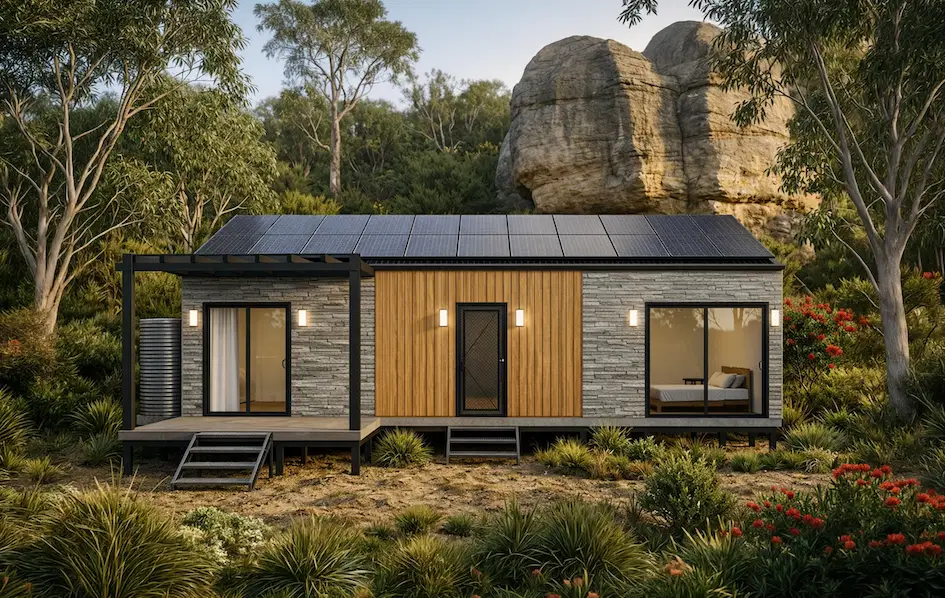
The Reality: Take one look at our 3-bedroom gabled designs and you’ll see that modern modular is about architectural freedom. We use 3D visualisation tools to help you customise your home before a single piece of steel is cut. From vertical timber-look cladding and stone accents to full-height double-glazed windows, your home will look like a high-end designer residence, not a shipping container.

Myth 6: Modular Homes Don’t Hold Their Value
There is a fear that modular homes depreciate like a car rather than appreciating like real estate.
The Reality: Value is driven by location, design, and energy efficiency. Because EcoHub homes are built for high NatHERS ratings (up to 10 stars) and feature premium finishes, they are highly desirable in the resale market. As energy costs rise, a home that stays cool in a Perth summer without the massive AC bill is worth more to a future buyer. Data from 2025 and 2026 shows that well-maintained modular homes are appreciating at the same rate as traditional homes in the same suburbs.
Myth 7: They’re Only for Tiny Living or Granny Flats
"Modular is fine for a guest pod, but not for a family."
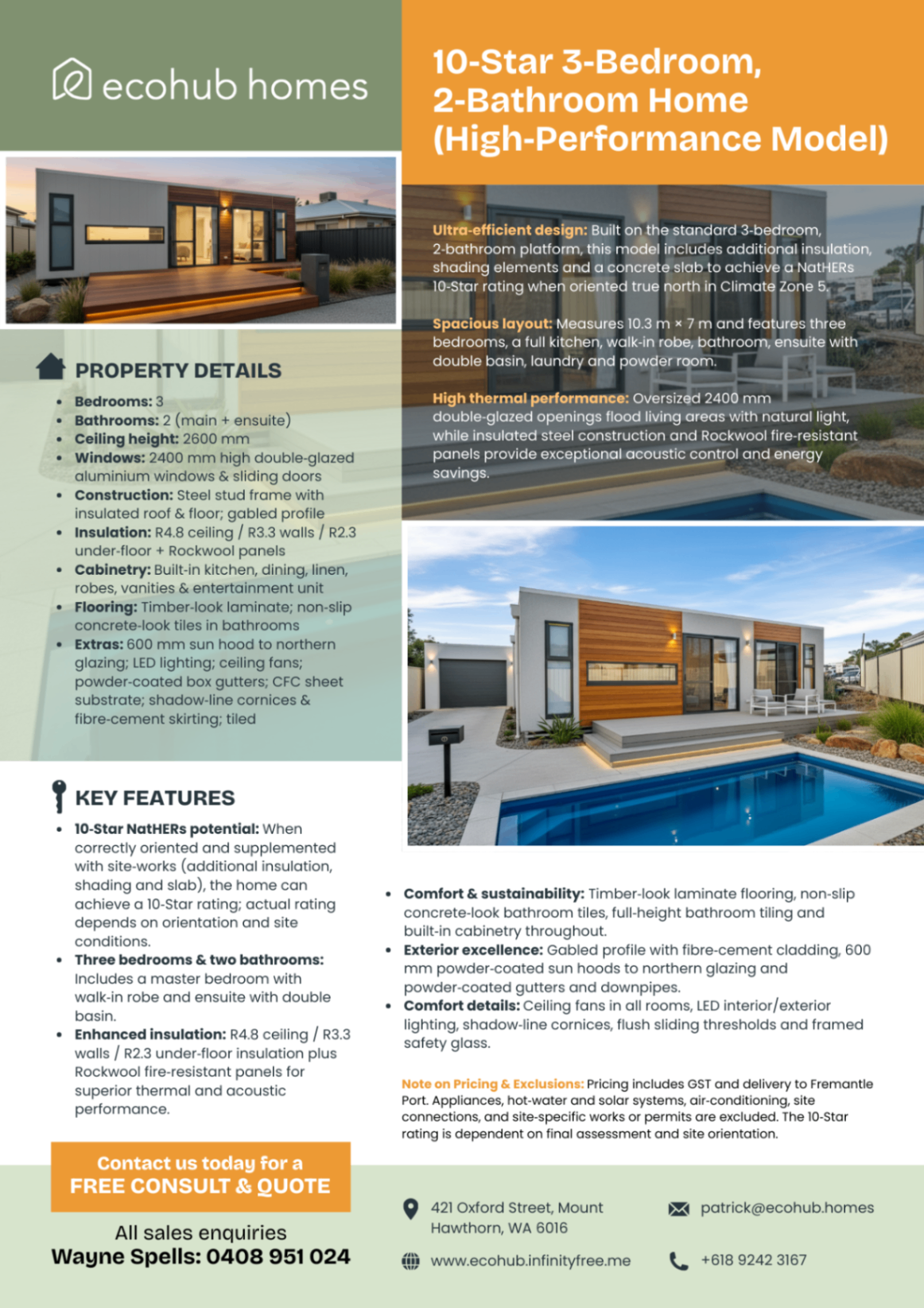
The Reality: While we love a smart granny flat, modular construction is now a primary choice for family homes. Our 3-bedroom, 2-bathroom "T-House" offers over 100sqm of living space with open-plan layouts, master suites, and extensive decking. We’re building dream family homes on vacant lots across Australia for people who want the space without the stress.
The Bottom Line
The gap between "traditional" and "modular" is closing fast. When you choose modular, you aren't choosing a "lesser" home: you’re choosing a more efficient, more sustainable, and more predictable way to build.
Ready to see the possibilities for your block?
Whether you’re an investor looking for passive income or a family ready to build your forever home, we’re here to help. Contact the EcoHub team today for a free design consultation and let’s turn that vacant lot into something extraordinary.