
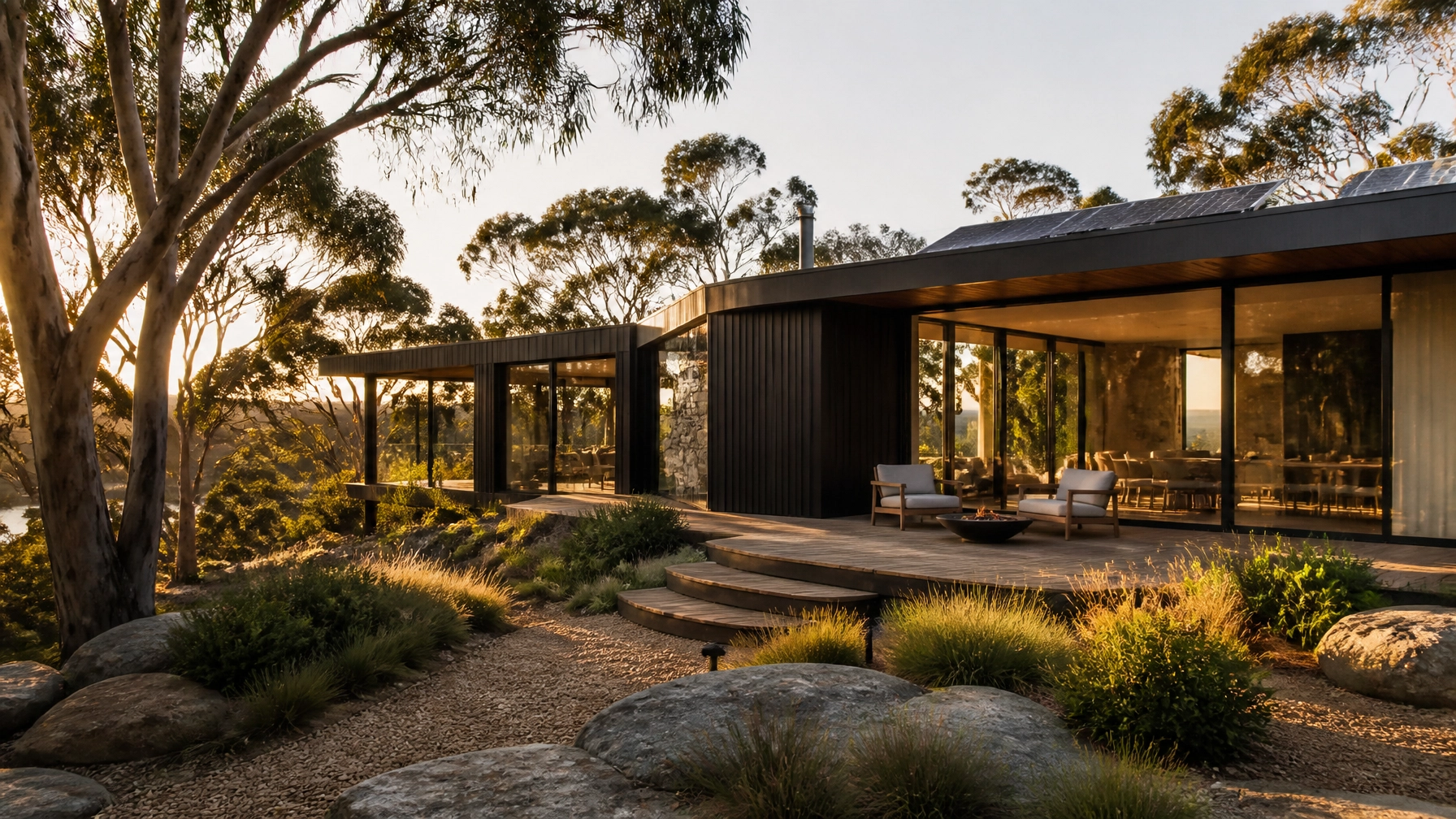
Before we dive into the numbers and the shifting landscape of Australian construction, take a moment to walk through one of our signature designs. Seeing the quality firsthand often answers the "is it really as good as traditional?" question better than any spreadsheet can.
Watch our 3×2 Modular Home Walk-through Tour:
https://youtu.be/Kskhm6zG7_c?si=Sjp40wDQ6mvRjJqk
The Australian housing market in 2026 is a different beast than it was even a few years ago. We’ve moved past the "prefab is just a shipping container" phase and entered an era where precision engineering meets high-end luxury. Yet, the same question plagues every dinner party conversation from Perth to Sydney: Does traditional building even matter anymore?
If you’re sitting on a vacant lot or planning a knockdown-rebuild, you’ve likely felt the sting of rising material costs and the sheer frustration of "builder ghosting." The truth about modular construction costs isn't just about the sticker price: it’s about the total cost of your life while that house is being built.
In this guide, we’re stripping back the marketing fluff to look at the hard data of modular vs. traditional in 2026, the reality of financing, and why "cheap" is the most expensive word in construction.
1. The 2026 Price Gap: Modular vs. Traditional
For decades, the site-built home was the gold standard. You hired a builder, they set up a portaloo, and for the next 18 months, you prayed for good weather. In 2026, that model is under immense pressure.
Current benchmarks for Australian residential builds show a widening gap. According to 2026 market data, modular builds typically range between $2,500 and $3,000 per m² for standard high-quality finishes, while premium architectural modular homes sit around $3,800 to $4,600 per m².
Compare this to traditional site-built homes, which are now regularly clocking in between $3,500 and $6,500 per m² depending on the complexity and location.
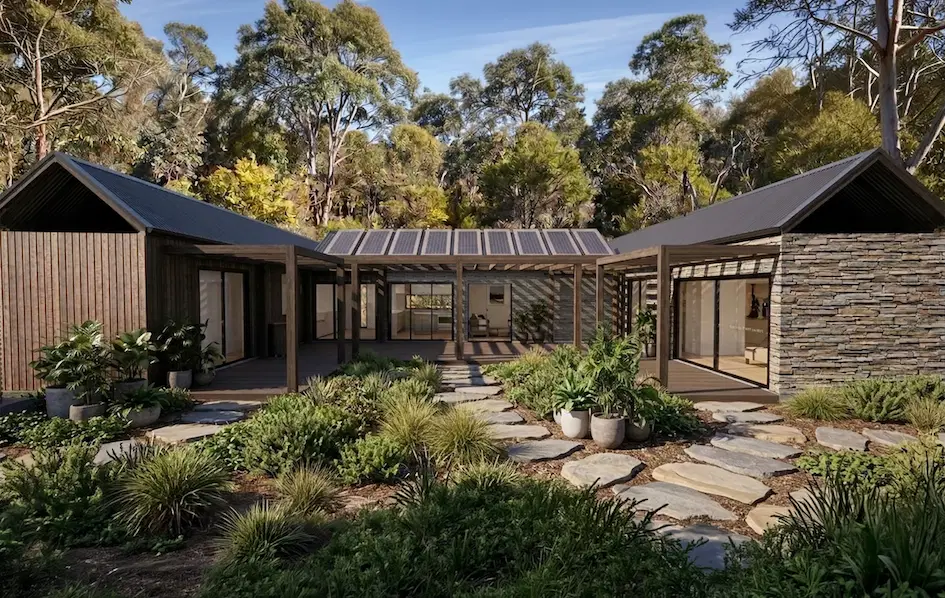
Why the difference?
It’s not because the materials are "cheaper": at EcoHub Homes, we use the same premium stone, timber, and double-glazed windows you’d find in a high-end custom build. The savings come from industrial efficiency.
- Zero Weather Delays: When your home is built in a climate-controlled facility, a week of rain doesn't add a week of wages to your bill.
- Waste Reduction: Factory settings allow for precision cutting and material recycling that site builds simply can't match. We typically see 30% less material waste in our modular processes.
- Fixed-Price Certainty: This is the big one. Traditional builds are notorious for "variations." In the modular world, your home is engineered before a single nail is driven. The price we say is the price you pay.
2. Time is the Ultimate Currency (and Interest)
If you’re financing your build, every month your home is "under construction" is a month you’re paying interest on a loan for a house you can't live in.
In 2026, modular projects are completing 20% to 40% faster than conventional builds. We’re talking about moving in within 12–20 weeks rather than 12–18 months.
"The real cost of a traditional build isn't just the invoice from the builder; it’s the 12 months of rent you paid elsewhere and the compounding interest on your construction loan while the site sat empty for three months waiting for a plumber." : Industry Insight, 2026
By slashing the timeline, modular homeowners are saving an average of $15,000 to $40,000 in holding costs alone. That’s money that stays in your pocket: or goes toward that upgraded kitchen island you’ve been eyeing.
3. Financing the Future: Banks and Modular Homes
Let’s address the elephant in the room: Financing. Historically, Australian banks were hesitant to lend on homes being built in a factory. They liked to see "bricks on the ground" before releasing funds.
As of 2026, the tide has turned, but you still need a strategy. Major lenders like CBA and Westpac have introduced more streamlined construction loan products for modular and prefab homes. However, because a significant portion of the value is created off-site, some banks still require a slightly higher deposit or a specific "modular-friendly" progress payment schedule.
Penny’s Pro-Tip: Don’t just walk into a local branch. Work with a mortgage broker who specialises in construction finance. They know which lenders understand the modular value proposition and won't penalise you for choosing a more efficient way to build.
4. The BAL-FZ Reality: Building in the Fire Zone
For many Australians, the dream home is nestled in the bush. But with that beauty comes the reality of BAL (Bushfire Attack Level) ratings. If your land is rated BAL-FZ (Flame Zone), the costs can skyrocket regardless of how you build.
BAL-FZ requires non-combustible cladding, specialised fire shutters, and toughened glass. While modular construction doesn't "bypass" these costs: the laws of physics and the Australian Standards (AS 3959) apply to everyone: it does offer a unique advantage: Pre-certified systems.
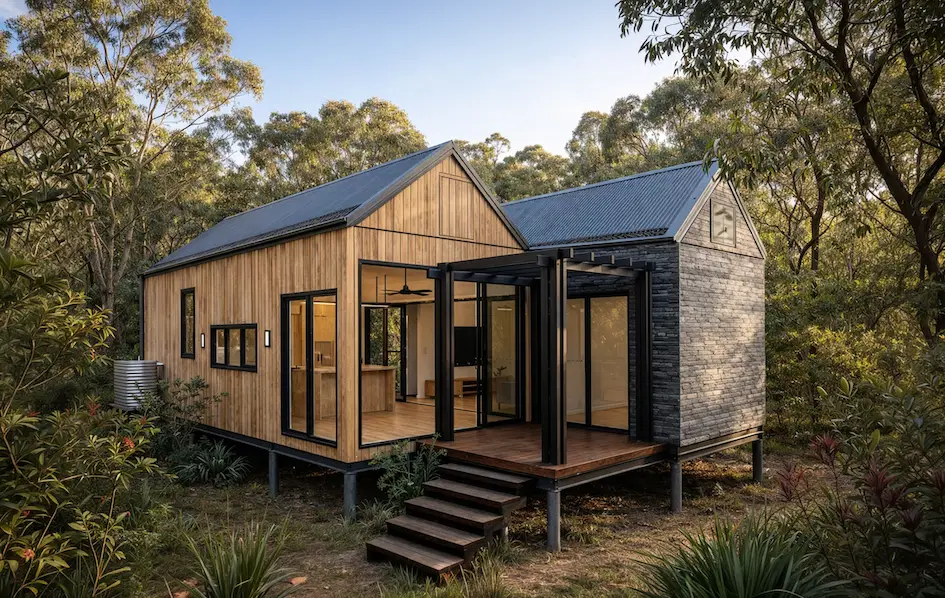
At EcoHub Homes, our wall and roof systems are engineered to meet high BAL ratings in a repeatable, controlled way. When you build traditionally in a Flame Zone, you’re often paying for custom engineering and on-site testing for every single window and joint. In a modular factory, those details are solved once and applied perfectly every time, reducing the risk of a "non-compliance" headache during your final inspection.
5. Sustainability: A ROI Driver, Not Just a Buzzword
In 2026, a "sustainable home" is no longer just for the eco-conscious: it’s for the budget-conscious. With energy prices continuing their upward trend, the thermal performance of your home is a direct reflection of your future bank balance.
Our homes are designed for a 10-star NatHERS rating potential. We achieve this through:
- Full-height double-glazed windows as standard.
- High-density insulation in floors, walls, and ceilings.
- Solar-ready designs that turn your roof into a power plant.
Sustainable modular design isn't just about saving the planet; it's about building an asset that is cheaper to run and has a higher resale value. An energy-efficient home in 2026 is significantly more attractive to future buyers than a drafty, traditional "project home."
6. Turning Vacant Land into Passive Income
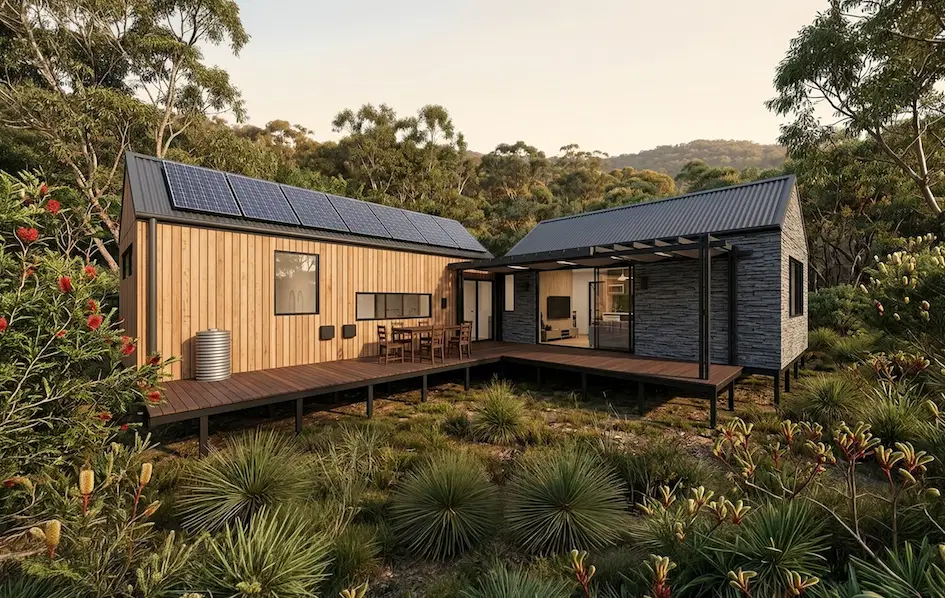
One of the biggest trends we’re seeing this year is the use of modular homes as investment vehicles. Property owners are looking at their large backyards or vacant regional lots and seeing a "smart investment."
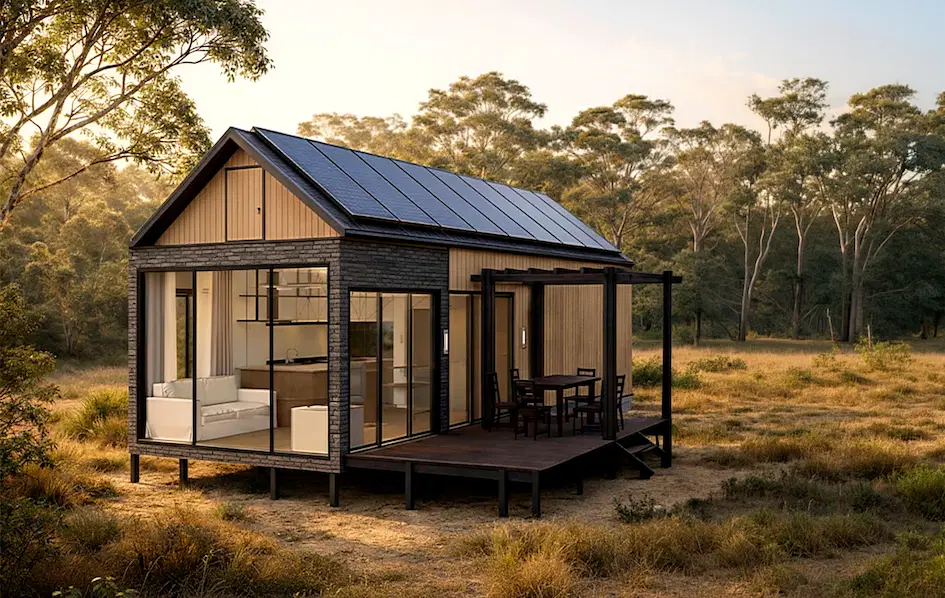
Because our one-bedroom modular homes start from $99,000, the barrier to entry for becoming a landlord has never been lower. You can install a high-end "granny flat" or holiday rental in a matter of weeks, tapping into the booming short-term rental market without the two-year headache of a traditional construction project.
The Verdict: Does Traditional Still Matter?
Traditional building still has its place for hyper-complex, site-specific architectural masterpieces that defy standard geometry. But for the vast majority of Australians: those looking for high-end design, sustainable living, and cost certainty: traditional building is becoming a luxury of the "time-rich."
In 2026, the truth about modular construction is clear: It’s not just a faster way to build; it’s a smarter way to invest. You’re trading the chaos of a construction site for the precision of a laboratory, and the results speak for themselves.
Ready to see what's possible on your lot?
Don't let your land sit idle while traditional building costs continue to climb. At EcoHub Homes, we handle the entire journey: from that first 3D visualisation to the moment we hand over the keys.
Contact our team today for a free consultation and quote and let’s get your 2026 dream home off the drawing board and onto your land.