

Want to see what premium modular quality actually looks like? Take a video tour of our 3×2 modular home with our founder!
https://youtu.be/Kskhm6zG7_c?si=Sjp40wDQ6mvRjJqk
If you’re standing on a vacant lot in 2026, dreaming of a home that doesn’t take three years and a literal mountain of stress to build, you’ve likely looked at modular. And why wouldn’t you? The old stigma of "prefabs" being glorified shipping containers or shaky demountables has been relegated to the history books, right alongside fax machines and dial-up internet.
But as the modular industry explodes across Australia, a new question has emerged: Does it actually matter who builds it?
In a world where you can seemingly "add to cart" on a three-bedroom villa, it’s easy to fall into the trap of thinking all prefab is created equal. Surely, if it’s built in a factory, it’s all just precision and robots, right?
Wrong.
In 2026, the gap between a "budget" prefab and a high-performance modular home is wider than the Nullarbor. Choosing the wrong builder doesn't just mean a few wonky kitchen tiles; it means navigating a minefield of compliance issues, thermal failures, and warranty woes that could turn your "smart investment" into a very expensive garden shed.
Here is the cold, hard truth about prefab quality standards in 2026 and why your choice of builder is the most important decision you’ll make this year.
The Factory Floor: Precision vs. "She’ll Be Right"
Traditional building is a battle against the elements. You’ve seen it: timber sitting in the rain for weeks, tradies trying to level a frame in a howling gale, and the inevitable human error that comes from working on a muddy site.
Modular construction changes the game by moving the entire process into a controlled environment. However, "controlled" is a relative term.
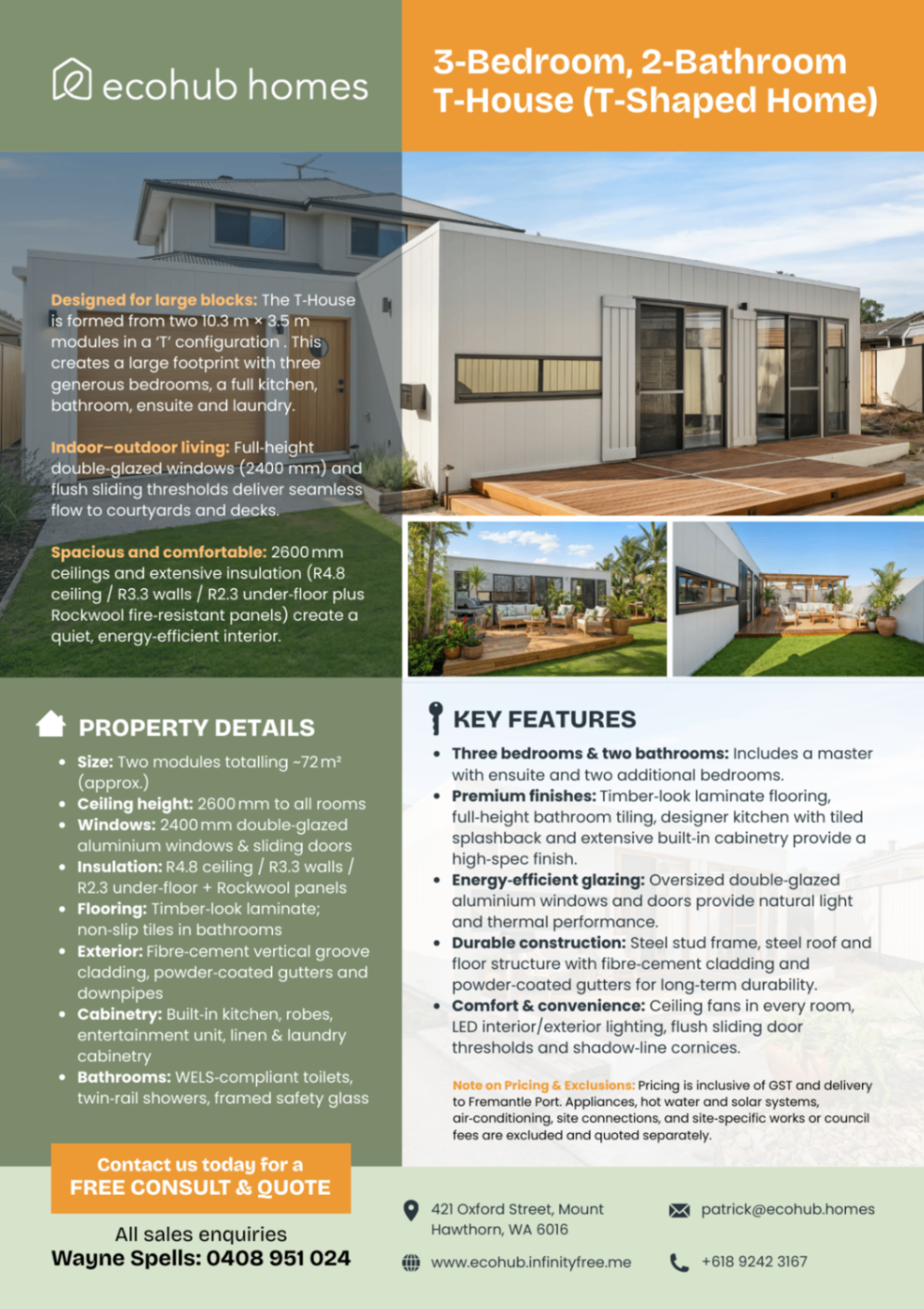
A reputable builder like EcoHub Homes treats the factory floor like a high-tech laboratory. We’re talking about steel-frame precision, where every millimetre is accounted for before a single bolt is tightened. When you build in a factory, you eliminate the variables. No rain-soaked floorboards. No "close enough" measurements.
But here’s the kicker: some builders use the factory as a way to hide shortcuts. Because the modules arrive "finished," the average homeowner can’t see the insulation (or lack thereof) behind the walls or the quality of the structural junctions. In 2026, quality isn't just about what you see; it's about the engineering you don't see.
The 2026 Regulatory Landscape: NCC and Beyond
In the last couple of years, the Australian building landscape has shifted. The National Construction Code (NCC) has tightened its grip on energy efficiency and structural integrity. Furthermore, 2026 saw the full implementation of the SA HB 268 Handbook for Prefabricated and Modular Construction.
This isn't just boring paperwork. It’s a shield for the consumer.
These standards ensure that a modular home isn't a "special" category of building with lower requirements. In Australia, a modular home must meet the exact same standards as a traditional site-built home. That means:
- Thermal Performance: Achieving high NatHERS ratings (aiming for that elusive 10-star mark).
- Bushfire Compliance: Meeting BAL ratings that actually keep you safe.
- Structural Integrity: Withstanding everything from coastal winds to the occasional earth tremor.
If a builder tells you "don't worry about that, it’s a prefab," run. Fast. A quality builder will lean into these regulations. At EcoHub, we don't just meet the NCC; we use it as a baseline. Our energy-efficient designs feature full-height double-glazed windows and superior insulation because a house that’s "legal" but expensive to heat is a failure in our eyes.
The Warranty Trap: Why 10 Years is the Magic Number
Let’s talk about the "W" word: Warranty.
In the excitement of picking out floorboards and kitchen taps, many people forget to ask what happens in year eight when a window seal fails or the floor begins to creak.
In the modular world, warranties are often the first thing to be watered down by cut-price operators. You might see "2-year workmanship" or "manufacturer's warranty only."
Do not settle for less than a 10-year structural warranty.
A 10-year warranty is a builder's way of saying, "I trust my engineering enough to bet my business on it." It’s a commitment to the longevity of the home. At EcoHub Homes, our 3-bedroom models and investment units come with a comprehensive 10-year warranty because we know our steel frames and premium finishes are built for the long haul.
"In 2026, a warranty isn't just a piece of paper; it’s the ultimate litmus test for brand trust. If a builder won't stand by their work for a decade, they aren't building a home: they're building a temporary structure." – Industry Insight
The "Imported" Headache: A Cautionary Tale
One of the biggest risks in 2026 is the influx of "flat-pack" or imported modular units. They look great in the glossy brochures and the price point is often tantalizingly low.
But here is the reality: many imported units fail Australian compliance the second they hit the wharf.
From non-compliant electrical wiring to glass that doesn't meet Australian safety standards, the "savings" disappear instantly when you have to hire an Australian engineer to re-certify the entire structure. Even worse, many of these units aren't designed for the Australian climate. A module built for a temperate European climate will turn into an oven under the Western Australian sun.
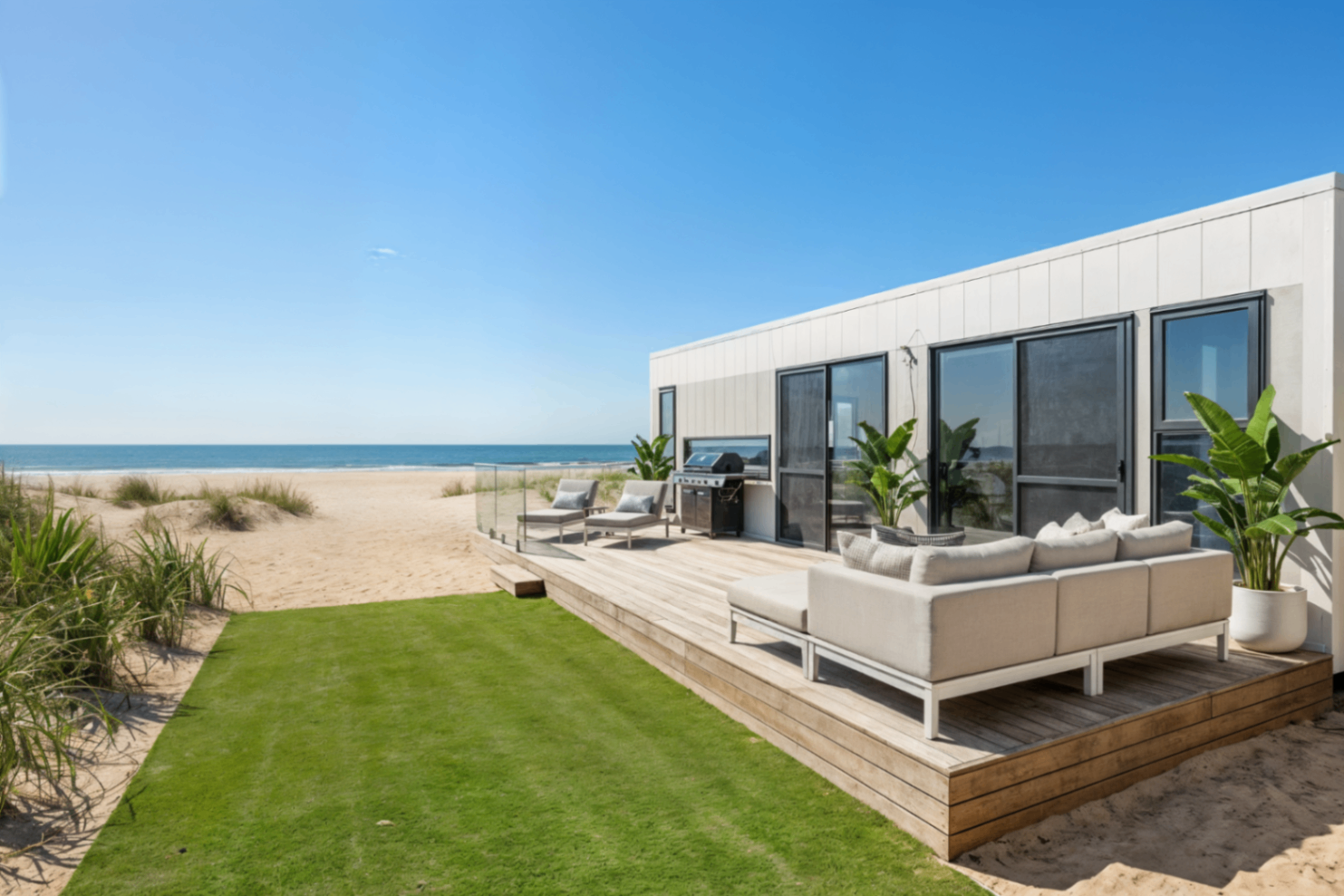
Choosing a local, reputable builder like EcoHub means your home is built for Australia, by Australians who understand the NCC and local council requirements. We handle the permits and site preparation so you don't have to spend your weekends arguing with a building certifier.
The EcoHub Standard: What Quality Actually Looks Like
So, if you’re vetting a builder, what should you actually be looking for? Here is the "EcoHub Checklist" of non-negotiables for a high-quality modular home in 2026:
- High Ceilings: Don't settle for 2.4m. A quality build should feel airy. We standardise 2.6m+ ceilings to ensure your home feels like a luxury villa, not a shoebox.
- Double Glazing: This is non-negotiable for energy efficiency. If they’re offering single-pane glass, they’re stuck in 2010.
- Premium Insulation: Walls, floors, and ceilings. It’s the difference between a $100 power bill and a $1,000 one.
- Steel Frame Construction: Termite-proof, fire-resistant, and won't warp over time.
- Turnkey Service: A builder who says "we just drop it off" is leaving you with the hardest 20% of the job. You want a partner who handles delivery, installation, and final connections.
Turning Vacant Land into a Smart Investment
For many Australians in 2026, modular isn't just about building a dream home; it's about unlocking passive income. Whether it’s a granny flat in the backyard or a multi-unit development on a regional lot, the quality of the build directly impacts your ROI.
High-quality finishes and sustainable designs attract higher-paying tenants and ensure lower maintenance costs over the life of the investment. A cheap build might save you $20k upfront, but if you’re replacing carpets and fixing leaks every two years, that "saving" is a fantasy.
Conclusion: Don't Compromise on the Foundation
Does your builder matter in 2026? More than ever.
As the construction industry pivots toward off-site manufacturing, the market is flooded with options. But a home is still the most significant investment most people will ever make. It is the place where your family grows or the engine that drives your financial independence.
Don't leave that to chance.
Demand precision. Insist on the 10-year warranty. Look for the double glazing and the high ceilings. At EcoHub Homes, we don't just build modules; we build legacies.
Ready to see the difference that real quality standards make? Explore our range of modular designs or book a consultation to see how we can bring your vision to life: faster, smarter, and with the certainty you deserve.