
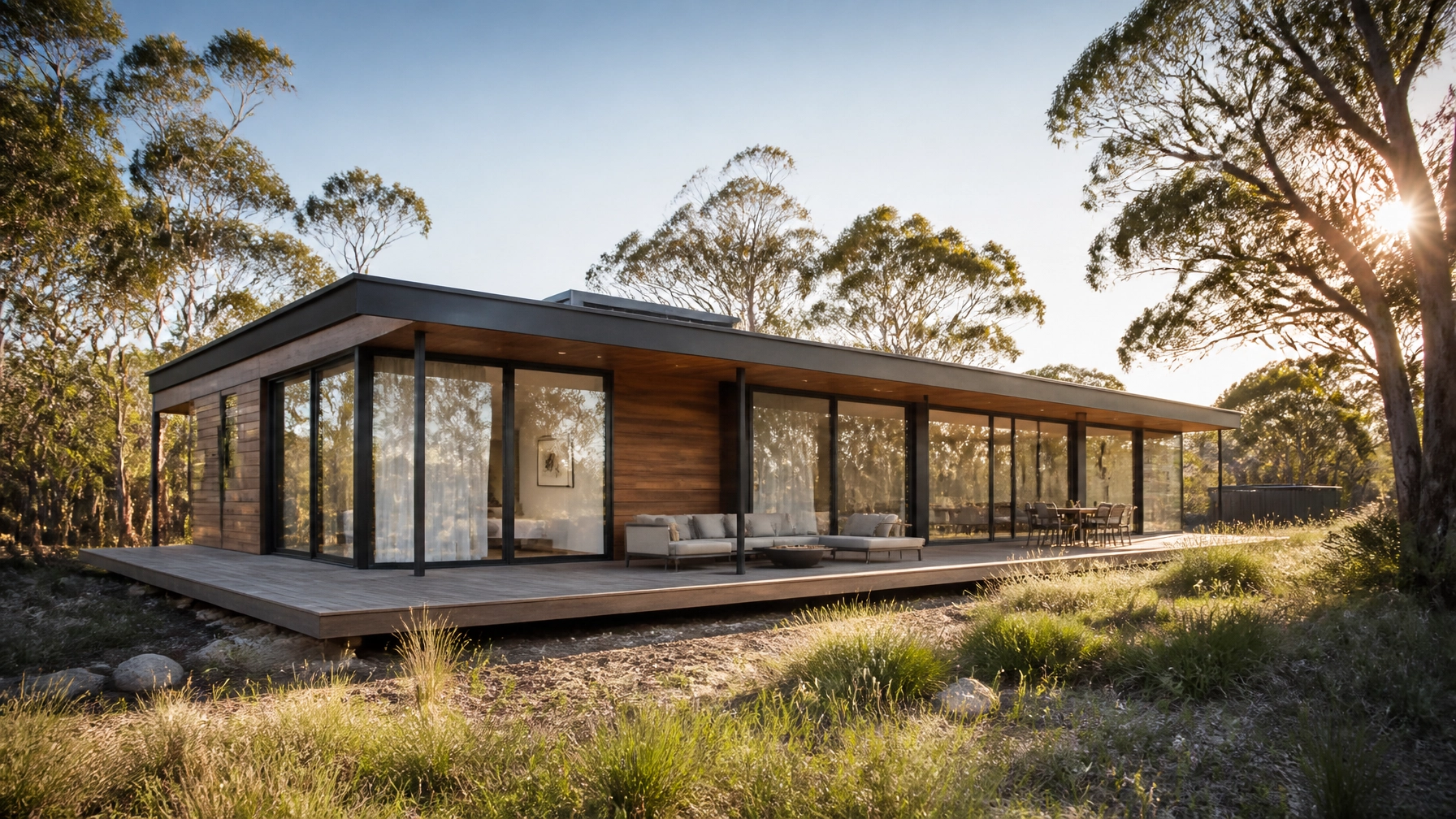
Before we dive into the data, take a walk through one of our latest 3×2 modular designs to see the finish quality for yourself.
https://youtu.be/Kskhm6zG7_c?si=Sjp40wDQ6mvRjJqk
The Australian housing market in 2026 has reached a definitive crossroads. With traditional construction costs remaining volatile and skilled labour shortages continuing to plague site-built projects, the "modular vs traditional" debate is no longer about fringe alternatives: it’s about financial survival and logic. For property owners and investors, the choice between these two methods will define the next decade of their portfolio's performance.
The Cost Gap: Real Savings in a Post-Inflation Market
In 2026, the financial delta between modular and traditional builds has widened significantly, particularly in New South Wales. While traditional builders struggle with on-site wastage and logistical delays, modular manufacturing has streamlined into a high-precision science.
The numbers are difficult to ignore: modular construction is now consistently 15-25% cheaper than traditional site-building across NSW.

These savings aren't the result of "cheap" materials: quite the opposite. They stem from the elimination of weather-related downtime and the massive reduction in material waste. In a factory environment, every offcut is accounted for; on a traditional site, you are paying for the 20% of materials that end up in a skip bin. At EcoHub Homes, our modular rates start from $99,000, providing a transparent entry point that traditional builders simply cannot match without sacrificing structural integrity.
The Time Warp: Six Months vs Eighteen
Time is the silent killer of residential ROI. In the current climate, a standard three-bedroom home built via traditional methods typically takes 12 to 18 months from the first sod turn to the final handover: and that's assuming no major weather events or sub-contractor "no-shows."
Modular construction operates on a completely different timeline. By performing site preparation and factory manufacturing in parallel, we deliver move-in ready homes in approximately six months.

This 50-70% reduction in build time isn't just a convenience; it is a massive financial win. For investors, it means six to twelve months of additional rental income. For homeowners, it means half a year of saved rent or reduced interest-only payments on a construction loan.
Engineering Precision: Steel vs Stick
There is a lingering myth that "modular" means "temporary." In 2026, the technical reality is the reverse. Factory-built homes are engineered to withstand the rigours of highway transport, meaning they are structurally superior to many site-built counterparts.
- Tighter Seals: Building in a climate-controlled factory allows for millimetre-perfect joins.
- Steel Frames: Unlike timber that can warp or attract termites, our steel-framed structures offer lifelong durability.
- Double Glazing as Standard: While traditional builds often treat high-performance glass as a costly upgrade, our designs integrate full-height double-glazed windows to ensure thermal efficiency from day one.

Sustainability: 40% Less Waste
The environmental cost of traditional building is staggering. Modern modular methods produce 40% less waste than site-built projects. Because we build to a specific set of templates, materials are pre-cut to exact specifications. Furthermore, our homes are "solar-ready" and utilise eco-friendly insulation that exceeds standard NCC requirements, ensuring your home isn't just cheaper to build, but cheaper to run.
Financing and Resale: The Final Hurdles Cleared
Historically, financing modular builds was a point of friction. That changed in 2025. Major lenders, led by the Commonwealth Bank (CBA), now offer progressive drawdown products specifically for modular construction. This allows you to pay the factory in stages: just as you would a traditional builder: removing the need for massive upfront cash reserves.
Regarding resale, the market has matured. Because our homes are fully compliant with the National Construction Code (NCC) and come with a 10-year warranty, they hold their value identically to traditional homes. A "dream home" is defined by its design and liveability, not whether the walls were joined in a factory or in the rain.

The Honest Reality: When Traditional Still Wins
We won't sugar-coat it: modular isn't for every single project. If you are looking for an avant-garde, non-linear architectural masterpiece with 45-degree angles and bespoke stone masonry integrated into the foundation, traditional building is your only path. Modular excels at efficient, high-end, contemporary design. If your goal is a hyper-customised "monument" rather than a smart, sustainable, and fast-to-market home, you should expect to pay the 25% premium and wait the 18 months that traditional building requires.
The Verdict for 2026
For the vast majority of Australian property owners, the decision is now clear. Modular construction offers a faster path to equity, a more controlled budget, and a level of engineering precision that site-built homes struggle to replicate.
Whether you are looking to turn a vacant lot into a rental powerhouse or build a sustainable family retreat, the future of Australian housing is being built in a factory.
Ready to see what's possible on your land? Explore our 2026 Floorplans or contact the EcoHub team for a site assessment.