

You've found the perfect block: great location, established neighbourhood, sensible price. There's just one problem: it slopes. Hard.
Most traditional builders take one look and start quoting excavation costs that would fund a European holiday. They talk about retaining walls, engineered slabs, and site cuts that'll turn your block into a construction zone for months. The message is clear: your sloped site is a problem.
Here's what they won't tell you: modular construction is actually better suited to sloped blocks than traditional builds. Not "we can make it work." Better. Full stop.
Why Slopes Favour Modular (Not the Other Way Around)
Traditional building relies on creating a perfectly flat, stable surface for a concrete slab. On sloped terrain, that means one of two approaches: cut deep into the hillside (expensive, disruptive, terrible for drainage), or build up with massive retaining walls and fill (even more expensive, requires engineering, delays everything).
Modular homes skip that entire problem.
Instead of fighting the slope with tonnes of concrete and soil movement, modular builds work with the terrain using pier and beam foundations: sometimes called stumps or posts. These elevated footing systems are incredibly versatile. They can step down a slope naturally, accommodate uneven ground without major excavation, and handle significant grade changes that would send slab costs through the roof.
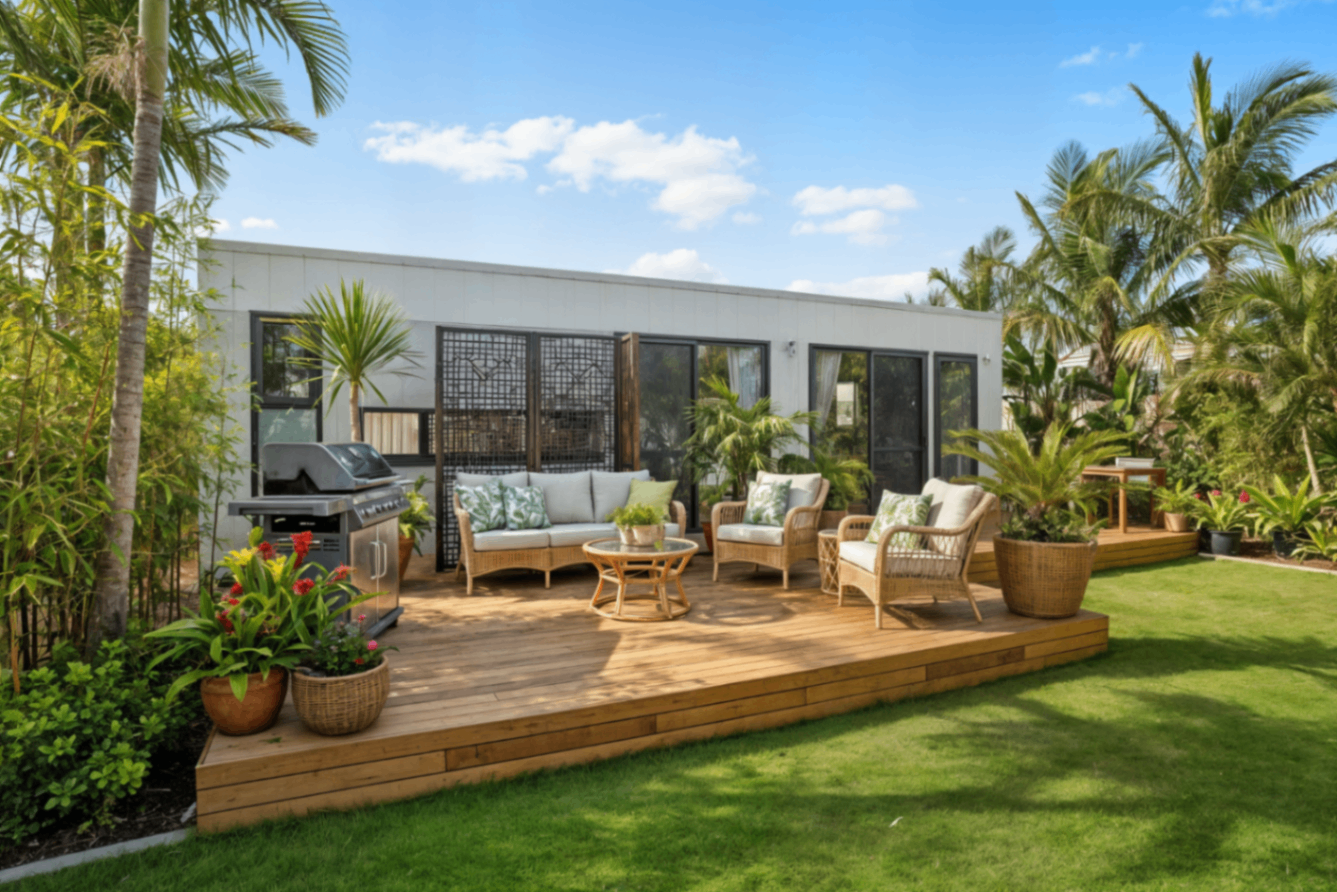
The structural principle is simple: instead of creating a flat platform for the house to sit on, we bring the house to the land using adjustable supports. Each pier is engineered to the specific load and soil conditions at that point. The result? Your home sits lightly on the landscape rather than bulldozing it into submission.
Pier and Beam Foundations: The Slope Solution
Pier and beam foundations use concrete footings (piers) positioned at strategic points beneath the home, connected by steel or treated timber beams that support the floor frame. For sloped sites, this system delivers several critical advantages:
Minimal excavation. Each pier requires only a small excavation point: typically 600mm × 600mm × 600mm deep: rather than cutting an entire house footprint into the hillside. You're talking dozens of small holes instead of moving hundreds of cubic metres of soil.
Adaptability to terrain. Piers can be different heights across the same build. The front of your home might sit on 1.2-metre piers while the rear uses 0.6-metre supports. The floor frame stays level while the foundations follow the slope.
Drainage preserved. Natural water flow across your block isn't disrupted. Retaining walls and cut-and-fill can create drainage nightmares: pier systems let water move naturally beneath the home.
Access for services. The crawl space created beneath the home provides easy access for plumbing, electrical conduits, and future maintenance. No jackhammering through concrete slabs to fix a pipe.
Cost control. Engineered slab-on-ground for a sloped site can add $40,000–$80,000 to a build depending on the grade. Pier and beam foundations typically add $8,000–$15,000 over flat-site costs: a fraction of the slab alternative.
Australian standards require all footing designs to be engineered specifically for your site conditions. Before construction, a geotechnical assessment evaluates soil type, bearing capacity, and any special considerations (reactive clay, high water table, etc.). The engineer then designs the pier layout, depth, and reinforcement to comply with AS 2870 (Residential Slabs and Footings) and AS 3600 (Concrete Structures).
The outcome is a fully compliant, structurally certified foundation that meets or exceeds the requirements for traditional construction: without the traditional cost penalty for slopes.
See It Before We Build It
One significant advantage of modular construction on sloped sites is 3D visualisation during the design phase. Before a single pier goes in the ground, you can see exactly how the home will sit on your specific terrain.
We model your block using site survey data: contours, existing trees, access points, views. Then we position the modular home digitally, showing you the pier heights, deck levels, and how rooms relate to the landscape. Want the main living area to capture that valley view? We adjust the home's placement and show you the result in 3D.
This isn't just pretty pictures. It solves real problems:
- Deck integration. Sloped sites often allow stunning deck spaces that step down with the terrain. We can show you multiple deck configurations and heights before committing to one.
- Access planning. Entry points, driveway grades, and pedestrian pathways need careful consideration on slopes. The 3D model helps identify the best approach.
- View optimisation. You're not guessing which rooms will capture which views: you see it accurately before construction starts.
For comparison, traditional builds on slopes typically work from 2D plans and cross-sections. You're trying to visualise how everything fits together from technical drawings. Most clients can't accurately picture the result until framing goes up: too late to make changes without significant cost.
Reduced Site Disruption (Your Neighbours Will Thank You)
Excavating a sloped site for traditional construction is loud, messy, and slow. Excavators, bobcats, trucks moving soil, and retaining wall construction can dominate a site for 6–10 weeks. The entire block becomes a mud pit after rain. Access roads get chewed up by heavy vehicles.
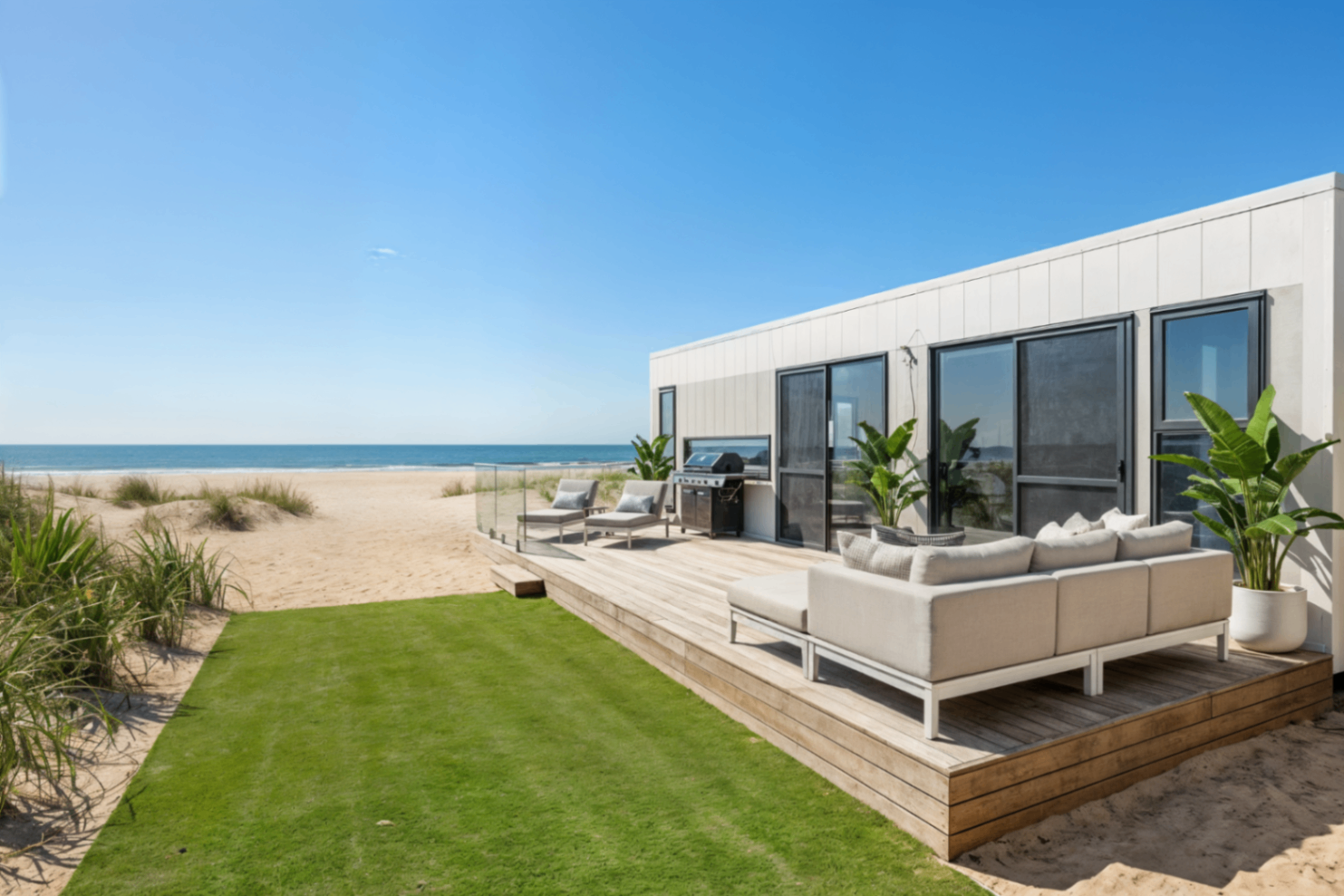
Modular construction on piers is dramatically less invasive:
Foundation phase: 5–8 days for pier installation versus 4–6 weeks for a complex slab. The footing team works with a small excavator for pier holes, then a concrete truck for pouring. Minimal soil disturbance, no retaining walls, no massive earthworks.
Module delivery: The home arrives in 2–4 sections (depending on size) and cranes into position in a single day. The modules are already weatherproof, so there's no extended period of exposed framing and materials on site.
Finishing trades: With services roughed into the modules at the factory, on-site plumbing and electrical connections take days, not weeks. The bulk of interior finishing is already complete.
Total site disruption? Typically 2–3 weeks from first pier to practical completion for a standard 3-bedroom home. Traditional builds on slopes can stretch 6–9 months from excavation to handover.
This speed matters beyond convenience. Reduced construction time means reduced holding costs if you're financing the land separately. It means less impact on surrounding properties (critical if you're building in an established area). And it means you move in sooner.
Design Advantages: Views, Light, and Volume
Here's where sloped sites shift from challenge to opportunity. The same terrain that makes traditional building expensive gives modular homes distinct design advantages.
Elevated living spaces. When your home sits on piers, ground-floor living areas are often 1–2 metres above natural grade at the high end of the slope. This elevation delivers treetop views, improved breeze capture, and a sense of being nestled into the landscape rather than dominating it.
Full-height glazing without compromise. Our modular homes feature floor-to-ceiling double-glazed windows as standard. On a sloped site, these windows can capture valley views, coastal panoramas, or bushland aspects that wouldn't be possible at ground level. The structural design of modular panels allows for extensive glazing without sacrificing thermal or structural performance.
Cathedral ceilings and volume. The factory-built nature of modular construction makes high ceilings (2.7m–3.0m) cost-effective. On a sloped site with an elevated floor, this creates dramatic internal volume: you're maximising the benefits of the elevation rather than fighting to minimise it.
Underfloor space. The crawl space beneath the home isn't wasted. Many clients use it for secure storage, workshop space, or future expansion. Some designs incorporate garage or utility areas beneath the main living level, taking advantage of the slope rather than treating it as unusable space.
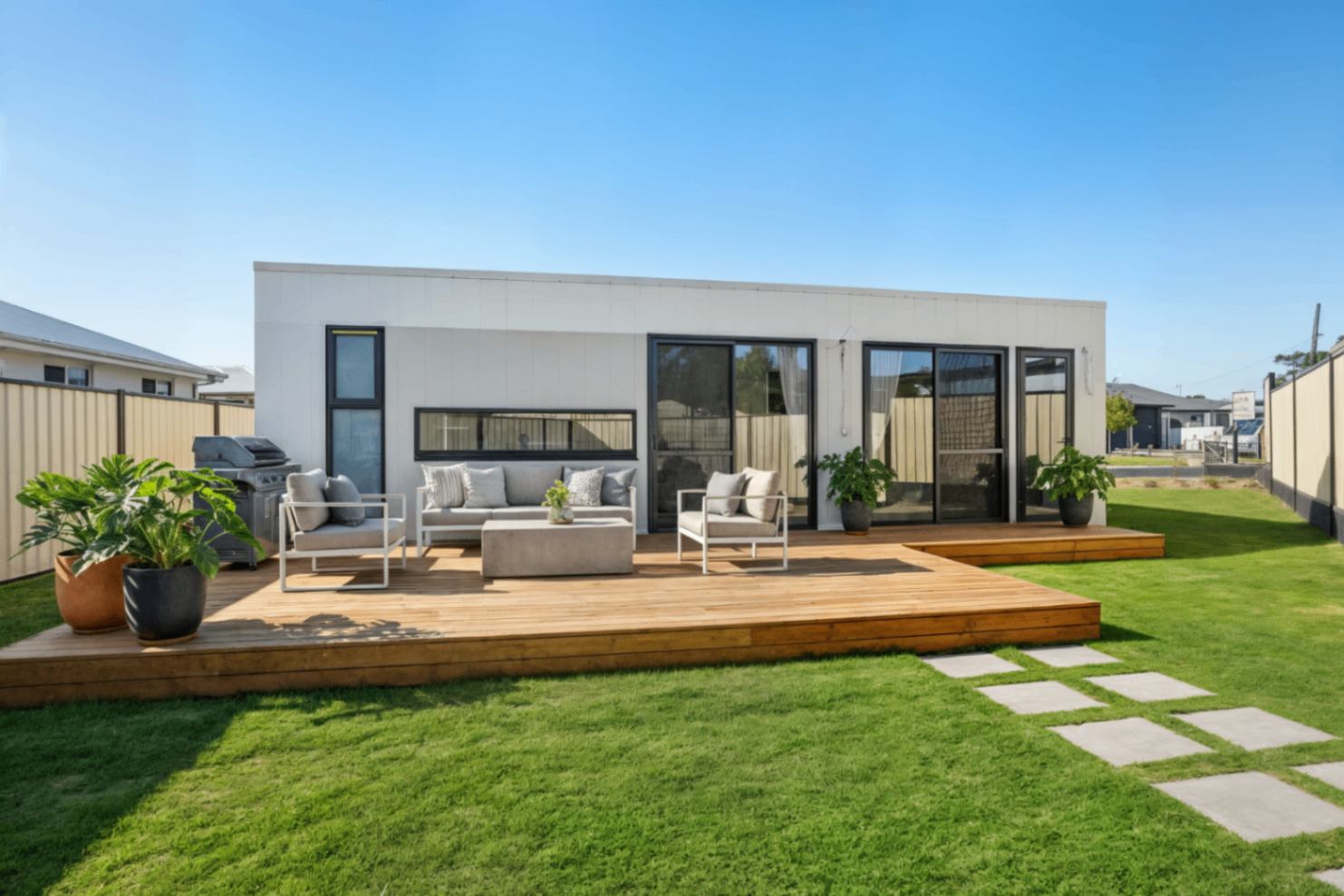
Real-World Examples
We've installed modular homes on blocks with grades ranging from gentle 1:20 slopes to dramatic 1:4 hillside sites. The common thread? Clients who were initially concerned about their "difficult" blocks consistently report that the slope became their favourite design feature.
A recent 3-bedroom installation near Margaret River sits on a coastal block that falls 3 metres from front to rear boundary. The home uses 2.4-metre piers at the rear, stepping down to 0.9 metres at the front. The result: a ground-floor deck that hovers in the tree canopy, capturing ocean glimpses and afternoon sea breezes. Total foundation cost premium over a flat site? $11,400. Quote for a traditional slab with retaining walls on the same block? $67,000.
In Perth's hills, a 4-bedroom EcoHub home leverages a steep 1:6 slope to create a two-level effect with a single-storey build. The main living area sits 2.1 metres above grade at the rear, with full-height windows overlooking a natural bushland reserve. The front entrance meets the home at what feels like an upper level. It's dramatic, takes full advantage of the views, and cost less than traditional construction on flat ground.
These aren't exceptions. They're examples of what becomes possible when you stop fighting terrain and start working with it.
The Process: Site Assessment to Completion
If you're holding a sloped block and wondering whether modular makes sense, here's the typical pathway:
Initial consultation. We discuss your block, review any existing survey data, and establish preliminary feasibility. This is free: no obligation.
Site visit and assessment. Our team visits the site to evaluate access, slope characteristics, soil type, and design opportunities. We'll often bring a drone to capture aerial context.
Geotechnical report. A soil engineer conducts bore tests to determine bearing capacity and any special foundation requirements. This report informs the final footing design.
3D design and costing. We model the home on your specific block, showing you exactly how it will sit, where piers will be positioned, and what the final result looks like. This includes a fixed-price quote covering everything from engineering to installation.
Engineering certification. All footing designs and structural modifications (if any) are certified by licensed engineers and submitted for building approval.
Installation. Piers go in, modules crane into position, connections complete, landscaping finalises. You move in.
The timeline from site assessment to handover typically runs 14–18 weeks for a standard design on a sloped block: comparable to flat-site construction, and months faster than traditional building on slopes.
Your Sloped Block Is an Asset, Not a Problem
The real insight here is philosophical as much as practical. Traditional construction treats uneven terrain as an obstacle to overcome: something to flatten, cut, or fill until it behaves like flat ground. Modular construction treats terrain as a design input, not a defect.
Your slope creates elevation. Elevation creates views, breeze, and character. Pier foundations deliver those benefits without the cost and disruption of fighting the landscape.
If you've been holding a sloped block and assuming it limits your options, it's time to reassess. The constraints you're worried about are traditional-building constraints. Modular sidesteps them entirely.
Want to see how a modular home would sit on your specific block? DM us with your site details and we'll generate a preliminary 3D placement: no cost, no obligation. Let's turn that slope into your best design feature.