
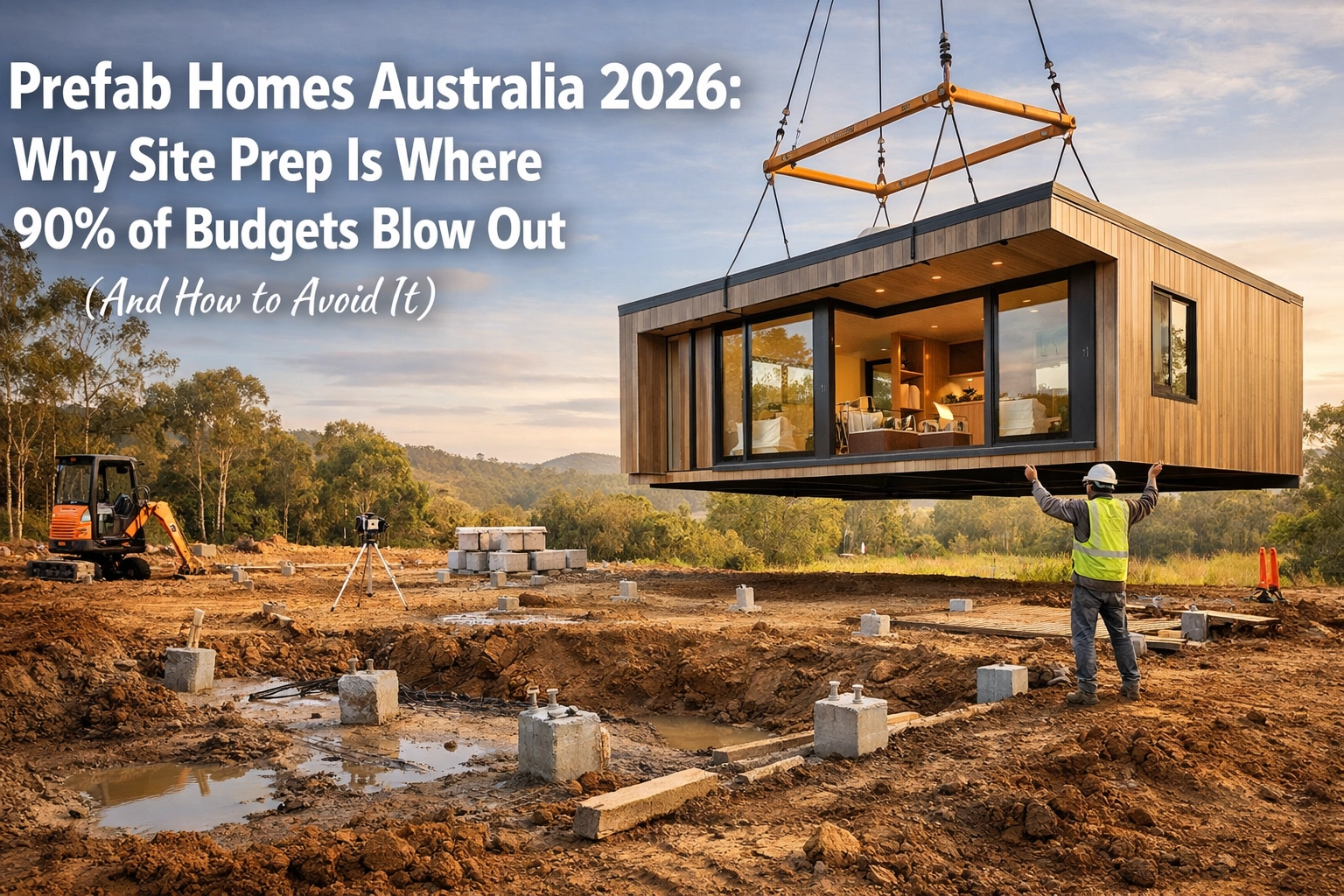
You've done the research. You've crunched the numbers. The modular home price looks perfect: until the site work quote arrives and suddenly your budget needs an extra $60,000.
Here's the uncomfortable truth about prefab homes Australia in 2026: the home itself is rarely where projects derail. It's what happens before the modules even arrive that causes financial chaos. Site preparation accounts for 10-15% of typical project costs, but on difficult blocks, that figure explodes by 30-50% or more. And most buyers don't see it coming.
This isn't about being unlucky. It's about understanding what makes a block difficult: and knowing which questions to ask before you commit.
The Real Culprits Behind Site Preparation Blowouts
Terrain is the silent budget killer.
A flat suburban block requires minimal groundwork: basic levelling, a concrete slab, standard drainage. Straightforward. Affordable. Predictable.
A sloping block in Queensland's Hinterland? That's where the expenses spiral. Suddenly you're looking at major excavation, retaining walls engineered to hold back tonnes of earth, and stepped foundations that require specialist concrete pours. These aren't minor adjustments: they're fundamental structural requirements that can add $50,000 or more before a single module touches down.
The slope itself doesn't care about your budget. Neither do the regulations that govern how you must safely build on it.

Soil conditions determine everything beneath your home.
Rocky terrain requires mechanical excavation instead of standard earthmoving. Poor drainage means installing sophisticated stormwater systems with collection pits and drainage channels. Expansive clay soils: common across Western Australia and parts of Victoria: demand engineered pier-and-beam foundations rather than simple slabs.
Each soil challenge adds layers of cost. A geotechnical report might reveal contaminated fill that needs removal and replacement. Soft soils require deeper footings with additional reinforcement. These aren't optional upgrades: they're engineering necessities dictated by Australian building standards.
Access limitations compound the problem.
Transportable homes require clear delivery paths. A block tucked down a narrow laneway with overhead power lines means expensive route planning, possible utility relocation, and specialized crane lifts instead of standard truck delivery. Tight turning circles force costly load splits: your three-bedroom home that was meant to arrive in two modules might need to come in five smaller sections, multiplying transport and installation fees.
Remote or regional locations face additional earthwork expenses simply due to equipment transport costs and limited contractor availability. What costs $15,000 in metropolitan Perth might run $25,000 in a coastal town three hours north.
What Actually Goes Into Site Preparation Costs
Understanding the components helps you evaluate quotes properly:
Engineering and assessment work begins before any machinery arrives. Soil testing identifies bearing capacity and drainage requirements. Engineering reports specify foundation types and structural requirements. These documents aren't bureaucratic box-ticking: they're essential for council approval and structural integrity.
Earthworks and excavation transform raw land into a building-ready platform. This includes vegetation removal, topsoil stripping, bulk excavation for level pads, trenching for services, and final site grading for drainage. On sloped blocks, cut-and-fill operations move substantial earth volumes to create level building platforms.
Foundation installation varies dramatically by site. Simple concrete slabs suit flat, stable blocks. Pier-and-beam systems work for modest slopes or reactive soils. Engineered steel post foundations handle extreme slopes and difficult terrain: they're more expensive upfront but can save tens of thousands in earthworks by "floating" over uneven ground rather than requiring massive levelling operations.

Services connection and infrastructure include trenching for sewer, water, electricity, and telecommunications. Distance from street connections directly impacts cost: a block with services at the front boundary is far cheaper than one requiring 50 meters of trenching through existing landscaping or rock.
Drainage systems prevent water damage and structural issues. This includes stormwater collection, site runoff management, and sometimes retention systems if council regulations require on-site water detention before discharge.
Your Budget Protection Checklist
These strategies separate controlled budgets from financial disasters:
Get soil testing done first, not last. Before you fall in love with a block or commit to purchase, obtain geotechnical testing. A $2,000 soil report can reveal $40,000 worth of hidden foundation costs. This information gives you negotiating power on land price or lets you walk away before serious money gets committed.
Choose terrain strategically. Flat blocks deliver maximum cost efficiency for modular homes Australia projects. Every degree of slope adds complexity and expense. If you're comparing similar properties, the flatter option almost always delivers better financial outcomes: even if the purchase price is slightly higher.
Budget land and site work as separate line items. Don't lump everything into a single "property cost" figure. Land purchase, site preparation, and the modular home itself need distinct budget allocations. This clarity prevents the dangerous assumption that a $400,000 home on a $200,000 block is a $600,000 project: when site work might add another $80,000.
Obtain multiple site work quotes. Prices vary significantly between contractors. Get at least three detailed quotes that break down earthworks, foundations, drainage, and services separately. This granularity helps you understand where costs concentrate and reveals if any quote includes unnecessary scope.

Plan for permit costs upfront. Council building permits, compliance certificates, and connection fees add 5-10% to project costs. Get these figures confirmed during planning, not as surprises during construction.
Consider foundation systems strategically. Engineered post systems cost more than concrete slabs initially, but on difficult terrain they reduce earthworks requirements by 20-30%. A $35,000 post foundation might save $50,000 in excavation and retaining walls: delivering a net saving while providing superior flexibility for site conditions.
Coordinate timing to minimize holding costs. Arrange site preparation to occur while your prefab modules are being manufactured. This parallel workflow prevents paying rent or mortgage interest during site work delays. A well-coordinated project moves from land purchase to completed home in 4-6 months rather than dragging across a full year.
How EcoHub Homes Handles Site Preparation Differently
We've watched too many Australian families get blindsided by site costs. That's why our process builds protection in from the start.
When you engage with EcoHub Homes, site assessment happens early: not as an afterthought. We evaluate your block's specific requirements during initial consultations, identifying potential challenges before you commit to the project. Our network of experienced earthworks contractors provides realistic quotes based on actual site conditions, not optimistic estimates.
For blocks with challenging terrain, we specify engineered steel post foundations that minimize excavation requirements. These systems work across slopes, rocky terrain, and reactive soils without the massive earthworks that blow out traditional budgets. The home "floats" on engineered piers rather than requiring extensive cut-and-fill operations.

Our site-to-installation service coordinates everything: earthworks, foundation installation, services connection, and final module delivery. One point of contact manages the entire ground-up process, eliminating the coordination chaos that causes delays and cost overruns when owners juggle multiple contractors separately.
We also time site preparation to align with your home's manufacturing schedule. While your modules are being built in our controlled factory environment, site work progresses in parallel. This coordination means you're not paying double accommodation costs or watching interest compound on construction loans while waiting for separate contractors to finish sequential work.
The Bottom Line on Site Costs
Site preparation isn't where 90% of all budgets blow out: but it's absolutely where most budget surprises occur. The difference between a controlled project and a financial nightmare comes down to pre-construction diligence.
Understand your specific block's requirements before modules leave the factory. Get soil testing done early. Choose terrain strategically. Budget separately for land, site work, and structure. Obtain detailed quotes that break down cost components clearly.
The blocks that look like bargains often hide expensive site preparation requirements. The properties that seem expensive sometimes deliver better value because they need minimal groundwork.
Smart buyers focus on total project cost: not just module pricing. They ask uncomfortable questions early rather than discovering expensive answers mid-construction. They work with companies that understand Australian site conditions and build site assessment into their process from day one.
If you're considering modular homes Australia for 2026, start with a clear-eyed site evaluation. Understanding what's beneath your dream home location determines whether your budget stays on track or spirals into costly surprises.
Want to understand what your specific block requires? Talk to our team about a site assessment. We'll help you see what's really involved: and give you a realistic picture of costs before you commit to anything. No surprises. No budget chaos. Just honest answers about what your project actually requires.