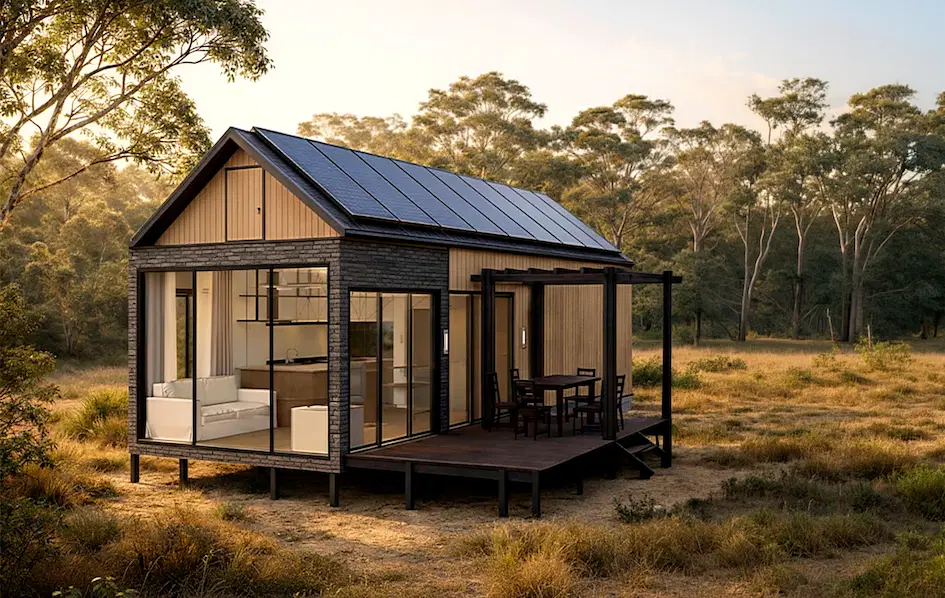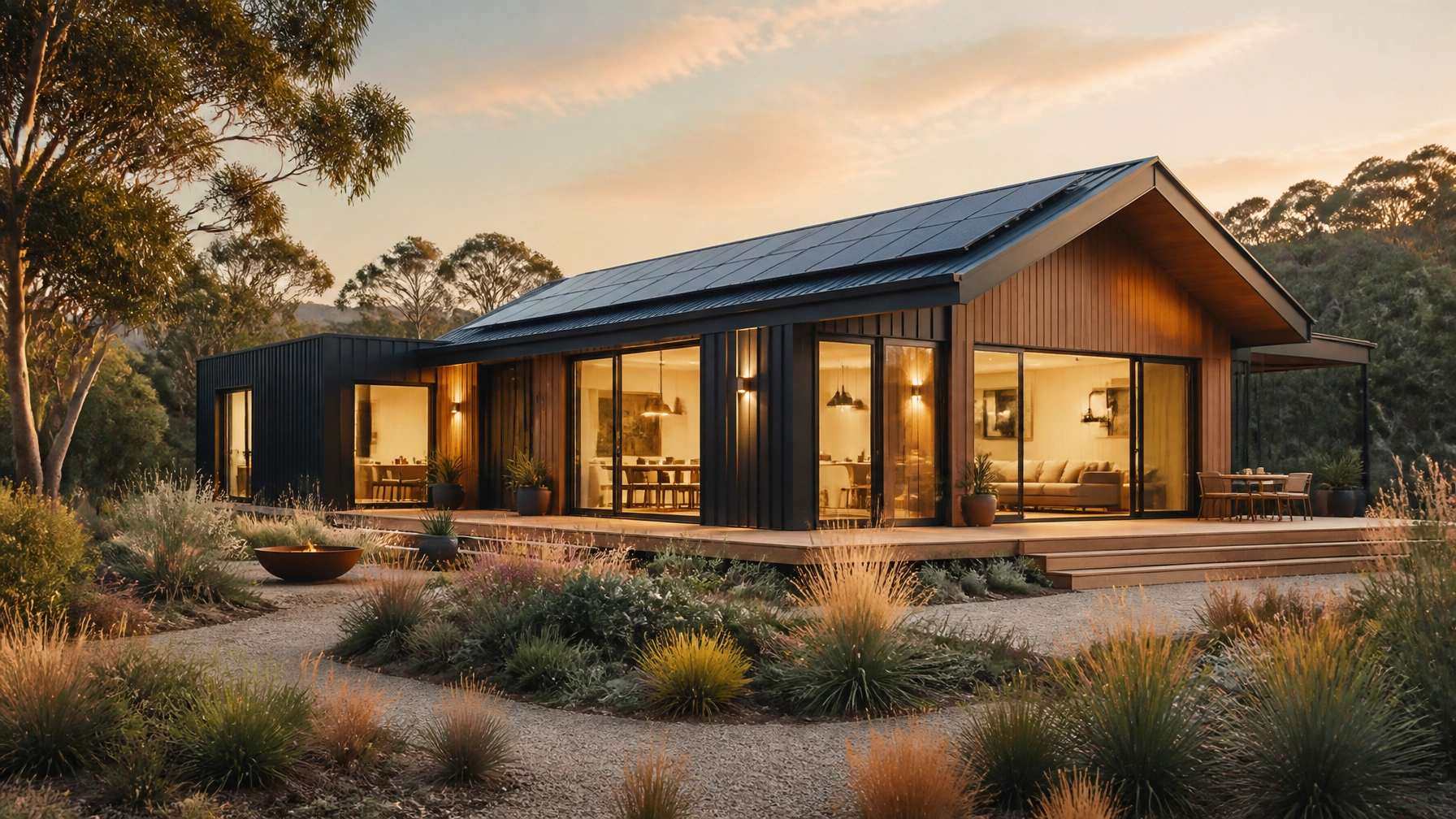
If you’ve been keeping an eye on the Australian property market lately, you’ve likely noticed a massive shift. The days of waiting 18 to 24 months for a traditional build are quickly becoming a thing of the past. As we move through 2026, sustainable prefab and modular homes have moved from a "niche alternative" to the gold standard for smart homeowners and savvy investors alike.
Whether you're looking to build your dream sanctuary, bypass the headaches of traditional construction, or turn a vacant lot into a high-yield rental, this guide covers everything you need to navigate the current landscape, from costs and financing to the technicalities of bushfire compliance.
Before we dive into the details, take a look at what modern modular living actually looks like in our latest video tour.
If you’re curious about how a high-end 3×2 modular home feels on the inside, watch this quick walkthrough of our latest design.
https://youtu.be/Kskhm6zG7_c?si=Sjp40wDQ6mvRjJqk
The 2026 Reality: Why Prefab is Winning
The housing landscape in Australia has changed. Construction costs for traditional builds have remained volatile, and labor shortages continue to plague site-built projects. In contrast, the modular industry has refined its manufacturing processes to offer something traditional builders simply can’t: certainty.
At EcoHub Homes, we’ve seen a surge in demand because people are tired of "budget creep" and moving dates that keep sliding back. Building in a controlled factory environment means no rain delays, no "surprise" material surcharges, and a significantly smaller carbon footprint.
Breaking Down the Costs: What to Budget for in 2026
One of the first questions everyone asks is, "What does it actually cost?" In 2026, the price of a quality, sustainable modular home typically ranges between $3,000 and $4,500 per square metre.
While you might see "kit homes" advertised for much less, it’s important to distinguish between a flat-pack shell and a premium, move-in-ready modular home. Here is a rough breakdown of what you can expect for our core range:
- 1-Bedroom Solutions: Starting from $99,000, these are perfect for granny flats or high-end short-stay rentals.
- 2-Bedroom Homes: Generally ranging from $250,000 to $420,000, depending on the level of sustainable inclusions.
- 3-Bedroom Family Homes: Premium designs with high ceilings and double glazing typically start around $450,000 and can go up to $680,000+ for architectural finishes.
Keep in mind that these figures usually cover the home itself. You should always factor in "site-specific" costs, which include soil tests, council permits (usually $6,500–$10,000), utility connections, and transport/installation. We recommend keeping a 15% contingency buffer, even with modular, the ground under your feet can occasionally throw a curveball.
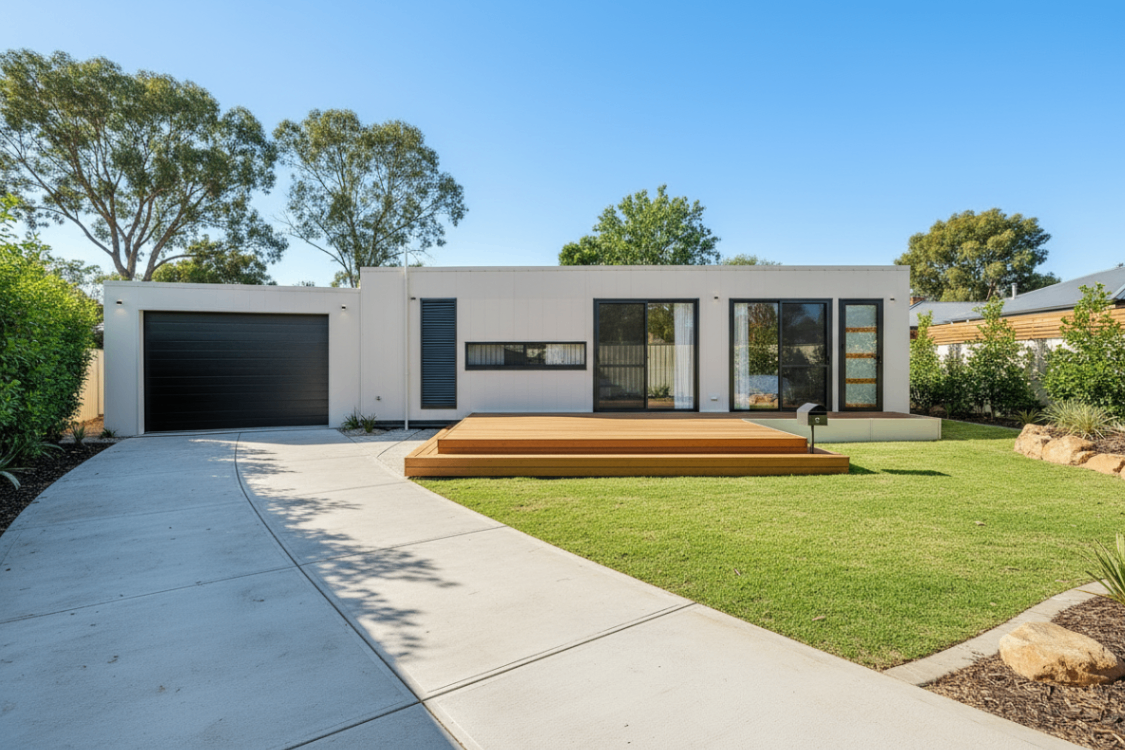
Financing Your Build: Yes, the Big Banks Are In
There used to be a myth that getting a loan for a modular home was a nightmare. In 2026, that simply isn't the case. Major Australian lenders like CBA, NAB, ANZ, and Westpac now have dedicated policies for modular and prefab housing.
The key is that the home must be permanently fixed to the land. Banks treat these projects as standard Construction Loans. Here’s how to ensure your finance goes through smoothly:
- Fixed-Price Contracts: Banks love certainty. At EcoHub, we provide fixed-price contracts that satisfy the most stringent lending requirements.
- Progress Payments: Your loan will be drawn down in stages: usually aligned with factory milestones and final on-site installation.
- Valuations: Lenders will perform an "as-if-complete" valuation. Because our homes use premium materials and meet high energy standards, they often value up better than low-spec traditional builds.
Building for Resilience: The BAL-FZ Challenge
With more Australians looking to build in beautiful, bush-adjacent locations, understanding the Bushfire Attack Level (BAL) is critical. If your land is classified as BAL-FZ (Flame Zone), you are in the highest risk category.
Building in a Flame Zone requires specialized engineering. Standard timber frames and ordinary glass won't cut it. You'll need non-combustible cladding, fire-rated glazing systems, and ember-proof detailing.
"Building in a BAL-FZ zone adds cost, but it's an investment in survival. In 2026, we’re seeing that fire-resilient homes aren't just safer: they're becoming significantly more valuable as insurance premiums rise for non-compliant older homes." : EcoHub Technical Lead
While many builders shy away from BAL-FZ, we’ve integrated these requirements into our design language. You don't have to live in a windowless bunker; with the right fire-rated glass and steel sub-structures, you can still have those stunning full-height views while staying completely compliant with Australian standards.

Sustainability as a Financial Strategy
Sustainability in 2026 isn't just about "feeling good": it's about the bottom line. With the NCC 2022 regulations now fully in effect, every new home must meet a 7-star energy rating. We aim even higher.
By using high-performance insulation, solar integration, and double-glazed windows as standard, our homes can reduce annual energy bills by up to 30%. For investors, this is a huge selling point. Tenants in 2026 are actively looking for "low-bill" homes, allowing you to command higher rents and enjoy lower vacancy rates.
If you have a vacant lot or a large backyard, a modular addition is the fastest path to passive income. While a traditional build might take two years to start generating rent, our modular units can be delivered and installed in a matter of weeks once permits are cleared.
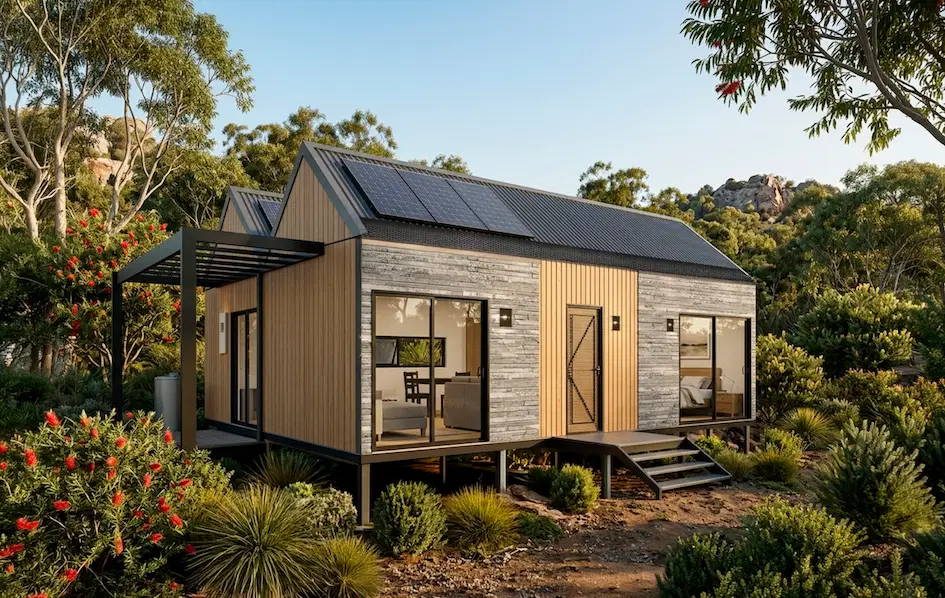
Your Move-In Timeline
One of the most liberating aspects of the EcoHub process is the speed. Because we handle everything: from the initial 3D visualization and council permits to site prep and the final 10-year warranty: you aren't left managing ten different contractors.
- Design & Permits: We handle the paperwork and the 3D design phase.
- Factory Build: Your home is built in a precision-controlled environment.
- Site Prep: While your house is being built, we prepare your land.
- Delivery & Install: The home is delivered and connected to services in days, not months.
Ready to Start Your Project?
The 2026 housing market belongs to those who build smart. Whether you’re dreaming of a sustainable family home or looking to maximize the ROI on your land, modular construction offers a path that is faster, greener, and more cost-effective.
At EcoHub Homes, we’re here to make the process simple. Let’s turn that vacant lot or that "one day" dream into a reality.
Explore our range of 1, 2, and 3-bedroom modular homes here or get in touch with our team today to discuss your site’s specific requirements.