
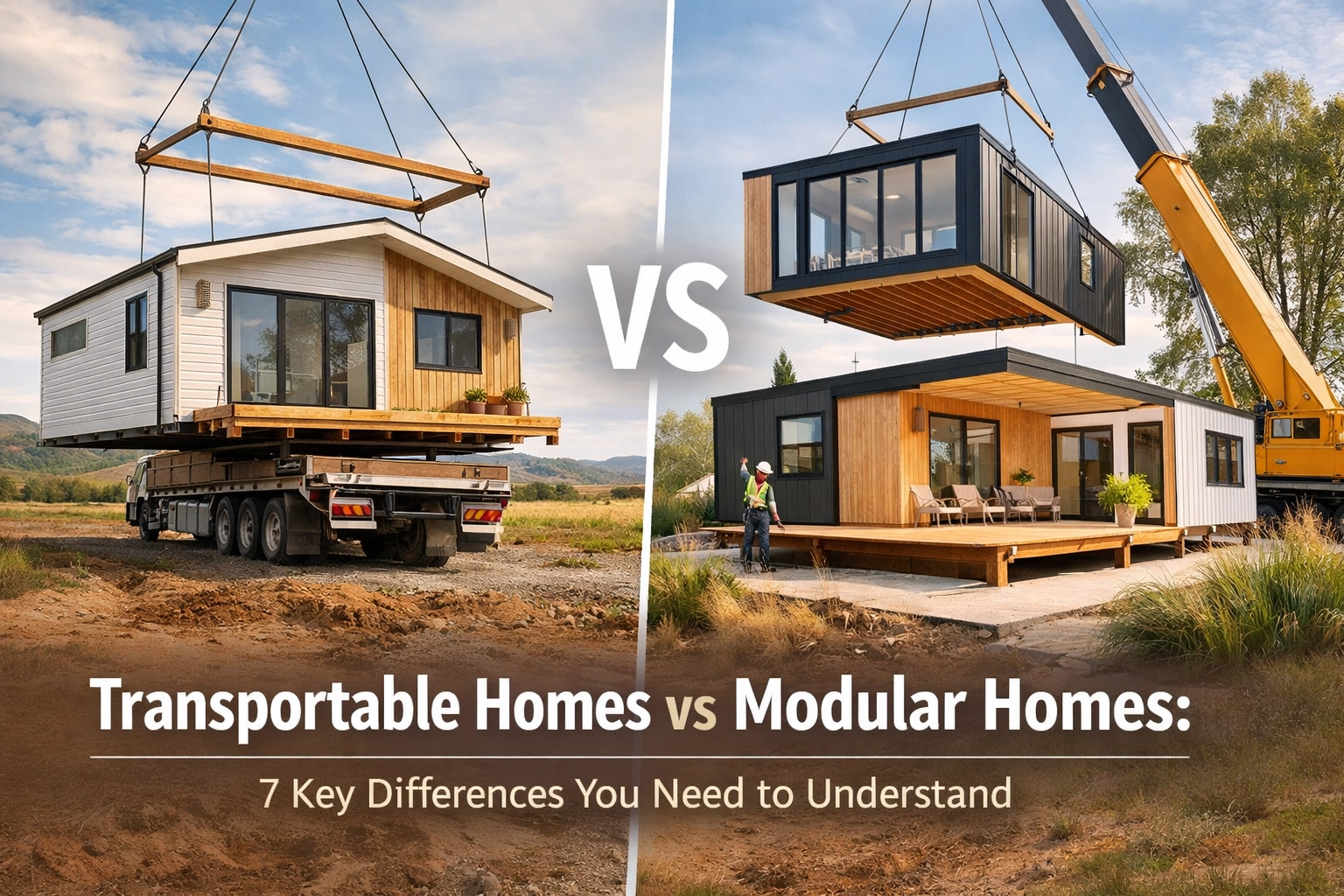
You've probably heard both terms thrown around: sometimes interchangeably. Someone mentions a "transportable home," and the next person calls it "modular." Here's the truth: they're not the same thing, and confusing the two could cost you tens of thousands in resale value, financing headaches, and long-term headaches.
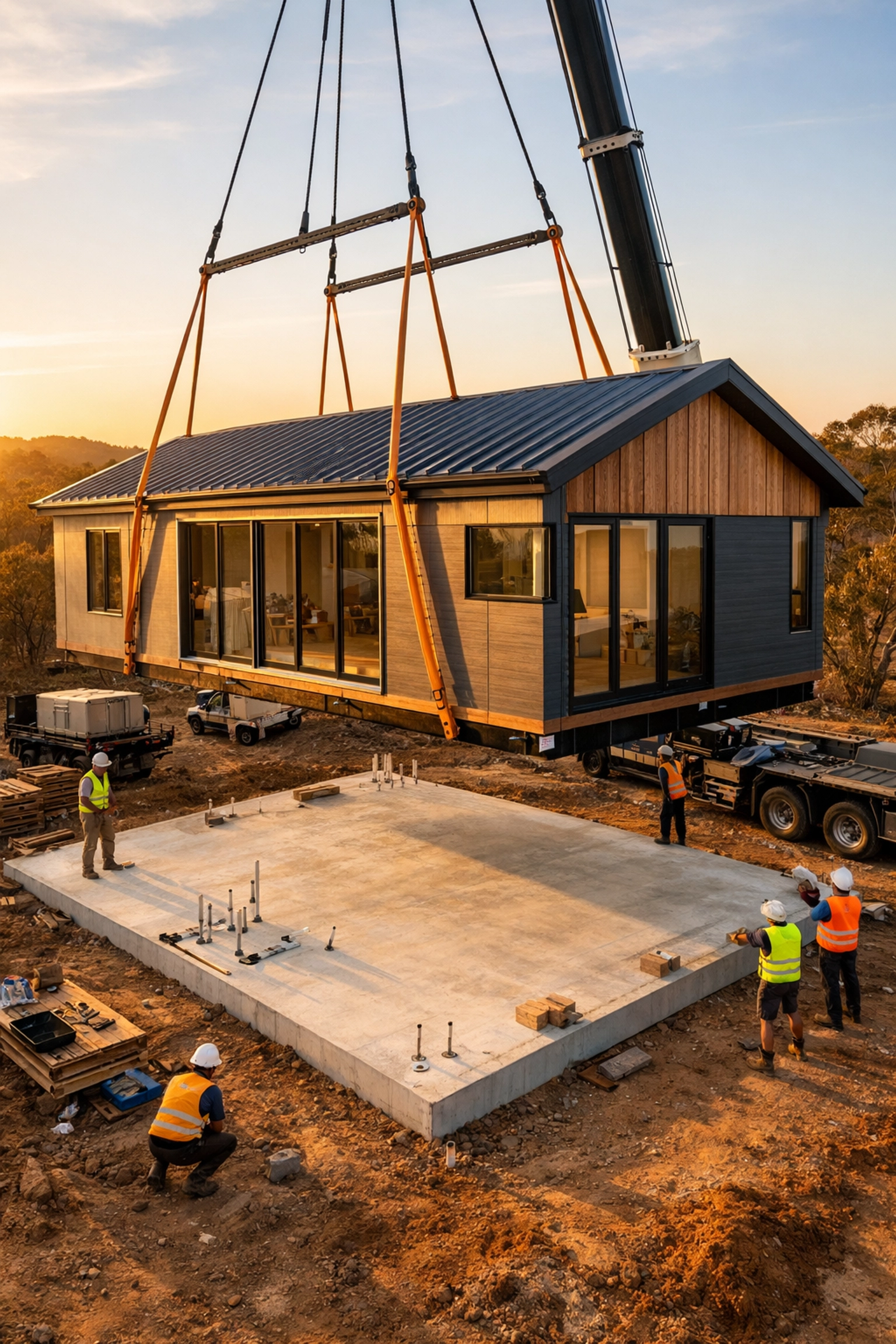
Let's clear the air. Transportable homes are typically demountable structures designed for temporary or semi-permanent use: think mining camps, site offices, or budget accommodation. Modular homes are factory-built, permanent residences engineered to the same exacting standards as any traditional house you'd build on-site. They're delivered in sections, craned onto a foundation, and finished to a level that makes them indistinguishable from conventional construction.
The stakes matter. Choose wrong, and you're looking at insurance complications, financing restrictions, and a property that depreciates rather than appreciates. Here are the seven critical differences you need to lock in before making any decisions.
1. Building Code Compliance: BCA vs. Basic Standards
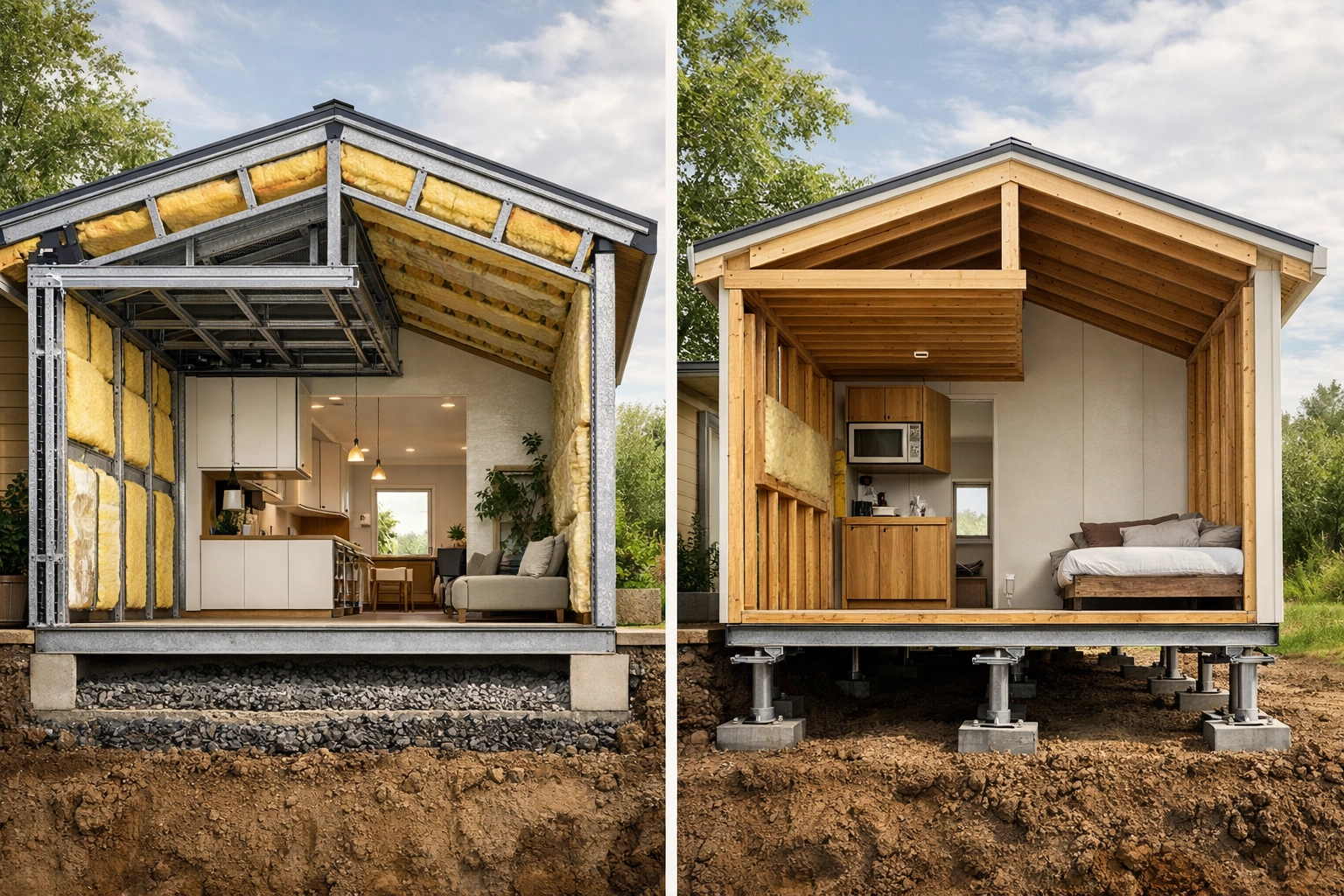
Modular homes must comply with the Building Code of Australia (BCA) and all local council regulations: exactly like a traditional brick-and-mortar house. That means structural engineering reports, wind load calculations for cyclone zones, fire resistance ratings, and energy efficiency standards. Every wall stud, electrical outlet, and roof truss gets scrutinized.
Transportable homes? They're built to lower temporary structure standards. Some follow modified codes, others meet basic safety requirements without the rigorous checks permanent dwellings require. You won't find engineering stamps or compliance certificates that satisfy council for indefinite occupation.
This difference cascades into everything else. If you're planning to live in your home for decades: or sell it as a permanent residence: BCA compliance isn't optional. It's the baseline that determines whether banks, insurers, and buyers treat your property seriously.
2. Foundation Requirements: Permanent vs. Relocatable
Modular homes sit on permanent engineered foundations: concrete slabs, screw piles, or strip footings designed for the specific soil conditions of your site. Once installed, they're not going anywhere. The structure becomes part of the land, legally and physically.
Transportable homes are built on steel chassis or frames designed for mobility. They rest on adjustable piers, blocks, or temporary pads. Need to move? You can jack them up, load them onto trucks, and relocate. That flexibility sounds appealing until you realize it limits structural integrity, floor plan options, and long-term stability.
The foundation choice affects everything downstream: council approvals, insurance classifications, and whether your home appreciates as real estate or depreciates like a caravan. Permanent foundations anchor your investment to the property market. Temporary ones leave you floating in a grey zone.
3. Property Classification: Real Estate vs. Chattel
Here's where it gets financially critical. Modular homes on permanent foundations are classified as real property: the same legal category as every house in your suburb. They're titled to the land, appear on property valuations, and appreciate alongside the broader housing market.
Transportable homes are often classified as chattel (personal property), similar to vehicles or furniture. They receive separate registration, sometimes even vehicle-style titles. This classification creates immediate problems for financing, insurance, and resale.
Banks love real property. They understand it. Valuers can assess it against comparable sales. Insurers cover it under standard home and contents policies. Chattel? That's a different beast: higher interest rates, shorter loan terms, and insurers who treat it like a caravan. Your $150K investment could be worth $90K in five years purely due to classification.
4. Quality and Finishes: Premium vs. Functional
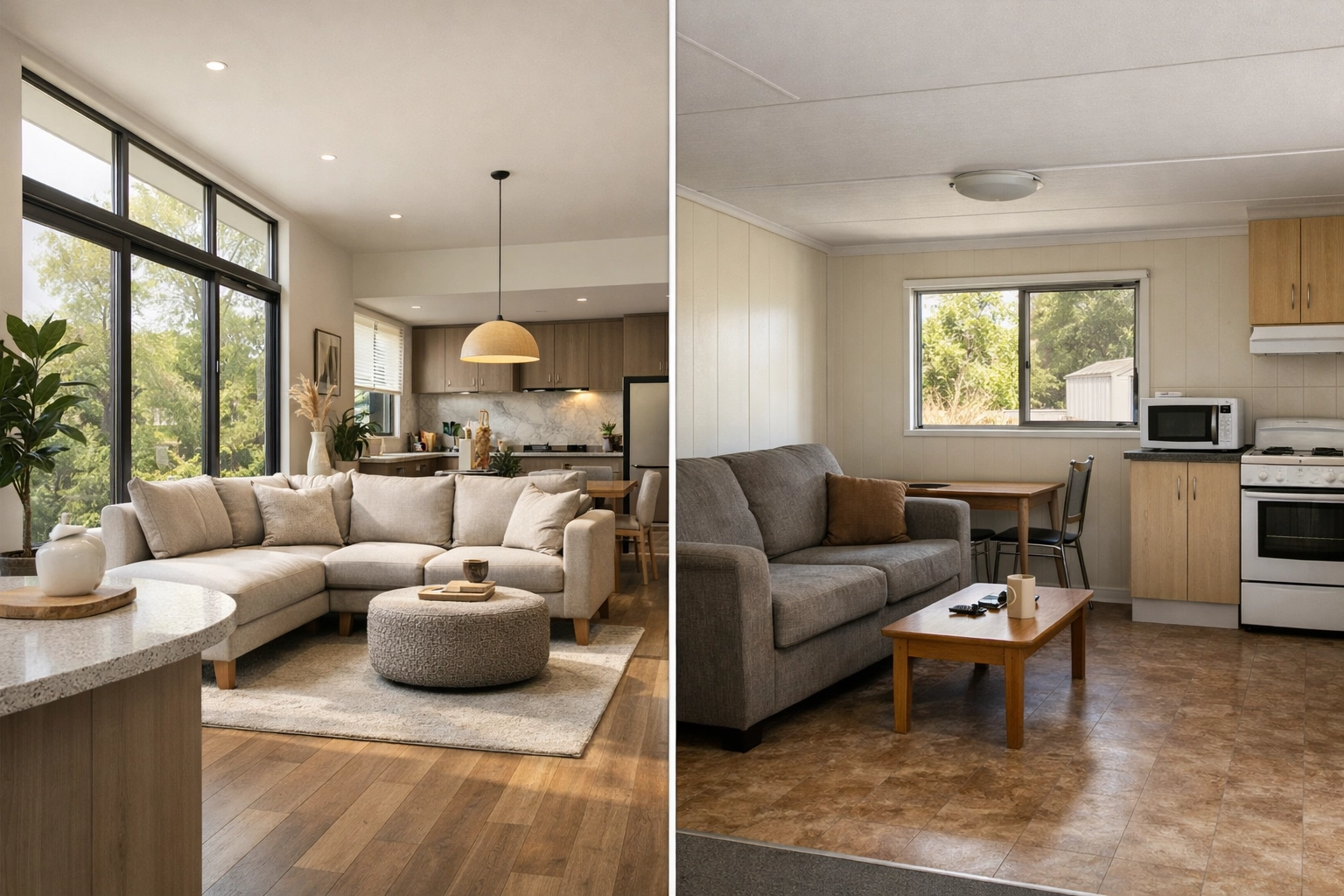
Step inside an EcoHub modular home and you'll find 2600mm ceilings, full-height double-glazed windows, stone benchtops, and timber-look laminate flooring. The finishes match: and often exceed: project homes at display villages. That's because modular homes target the permanent residential market where quality directly impacts resale value.
Transportable homes prioritize function and cost efficiency. You'll see lower ceilings (2400mm or less), single-glazed windows, vinyl flooring, and basic cabinetry. Wall cavities contain minimal insulation. Kitchens and bathrooms feel utilitarian rather than luxurious. These choices make sense for temporary accommodation but fall short for family living.
The quality gap isn't snobbery: it's engineering and market positioning. Modular manufacturers build for decades of use and aesthetic trends that shift every 10-15 years. Transportable builders optimize for rapid deployment and budget consciousness. Different missions, radically different outcomes.
5. Design Flexibility: Custom vs. Fixed Layouts
Modular homes offer near-limitless customization. Want to add a third bedroom? Move the kitchen to face north? Install a walk-in robe and ensuite? No problem. The factory engineering accommodates changes because the final product must satisfy individual buyer preferences and council requirements.
Transportable homes come with fixed layouts. You're choosing from a catalogue: Model A, B, or C. The steel chassis dictates room dimensions. Load-bearing walls can't shift. Single-storey designs dominate because stacking modules requires engineering that pushes transportables into modular territory anyway.
This rigidity extends to aesthetics. Transportable homes often maintain that recognizable "portable building" look: flat rooflines, simple cladding, minimal architectural detail. Modular homes integrate pitched roofs, verandahs, mixed materials, and street appeal that blends with established neighborhoods.
6. Financing and Insurance: Straightforward vs. Complicated
Apply for a home loan on a modular home and banks treat it like any other property purchase. Standard interest rates. 30-year terms. 80% loan-to-value ratios. Valuers assess it against comparable sales in your area. Insurance follows normal home and contents policies: structure, contents, public liability.
Transportable homes trigger red flags. Banks might offer chattel mortgages with higher rates and shorter terms: think 10-15 years instead of 30. Some lenders refuse outright, pushing you toward specialist financiers who charge premium rates. Insurance becomes complicated too: is it a home, a relocatable building, or somewhere in between?
These financial barriers don't just affect upfront costs. They limit your buyer pool at resale. How many families can secure financing for a transportable when banks prefer modular or traditional homes? That restricted demand suppresses resale values further.
7. Resale Value: Appreciation vs. Depreciation
This is the knockout difference. Modular homes appreciate like traditional houses because they are permanent structures on titled land. Market forces, location, and local development drive value up over time. A $350K modular home today could sell for $420K in five years if the suburb gentrifies.
Transportable homes typically depreciate: sometimes rapidly. They're viewed as temporary solutions or budget alternatives, not long-term residences. Buyers question structural longevity, finish quality, and whether they're getting "a real house." That skepticism translates to lower sale prices relative to construction costs.
The appreciation gap compounds over decades. That modular home becomes a retirement nest egg. The transportable remains a depreciating asset you'll eventually replace. If you're building for permanent living or investment returns, the choice becomes obvious.
The Bottom Line: Know What You're Actually Buying
The transportable vs. modular distinction isn't semantic: it's financial, legal, and practical. Transportable homes serve specific purposes: short-term accommodation, mining camps, temporary site offices. They're functional and affordable within those contexts.
But if you're building a family home, a granny flat for rental income, or an investment property, modular construction delivers permanent, appreciating real estate that banks, insurers, and buyers treat seriously. The upfront cost might run 10-20% higher than transportables, but you're purchasing a genuine house: not a relocatable structure masquerading as one.
At EcoHub Homes, we build exclusively to BCA standards on permanent foundations because our customers deserve real homes that increase in value, finance easily, and stand the test of time. Every wall, window, and floorboard meets the same codes as any traditional build: with the speed, precision, and cost advantages of factory construction.
Ready to see the difference in person? Visit our display homes and walk through modular construction that feels nothing like a transportable. The quality speaks for itself: 2600mm ceilings, full-height glazing, premium finishes throughout. This is permanent, appreciating real estate built in weeks instead of months.
Let's build something that lasts: and grows in value while you're living in it.