
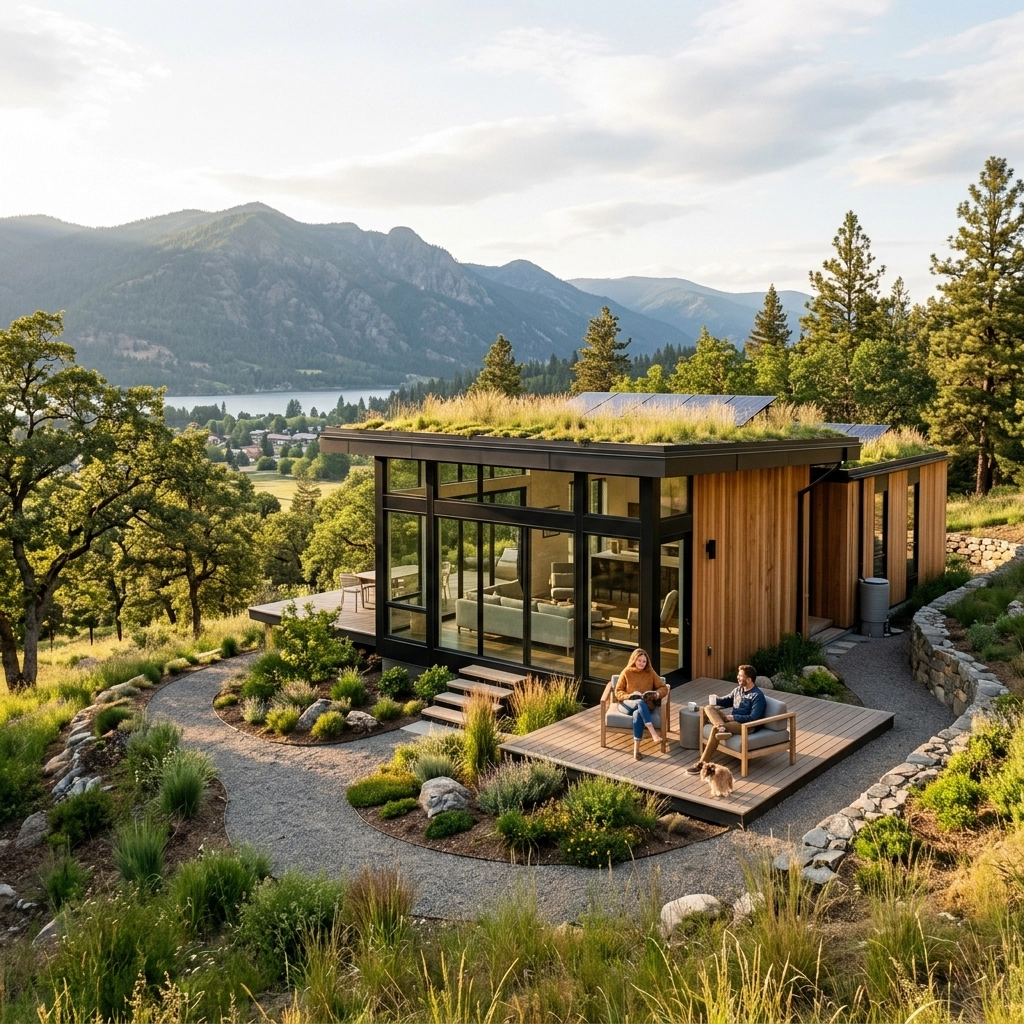
Let’s be honest: the Australian housing market in 2026 is a wild ride. If you’ve tried to build a home or even look for a rental lately, you know the drill. Material costs fluctuate by the week, finding a reliable builder is like searching for a needle in a haystack, and "weather delays" have become a standard excuse for projects running six months over schedule.
But while traditional construction is struggling to keep its head above water, there’s a quiet revolution happening in factories across the country. Prefabricated (or modular) housing has officially shed its "temporary cabin" reputation. In 2026, it’s the gold standard for smart homeowners and savvy investors who want quality, speed, and: most importantly: sanity.
At EcoHub Homes, we’ve seen the shift firsthand. People aren't just curious about prefab anymore; they’re demanding it. Here is exactly why everyone is talking about modular homes this year and why you should be considering one for your next project.
The Death of the "12-Month Build"
The biggest frustration in Australian property is the timeline. Traditionally, you sign a contract, wait for a slab, wait for a frame, wait for the rain to stop, and wait for the plumber who is stuck on another job. It’s a linear, slow-motion process that often takes 12 to 18 months.
In 2026, nobody has time for that.
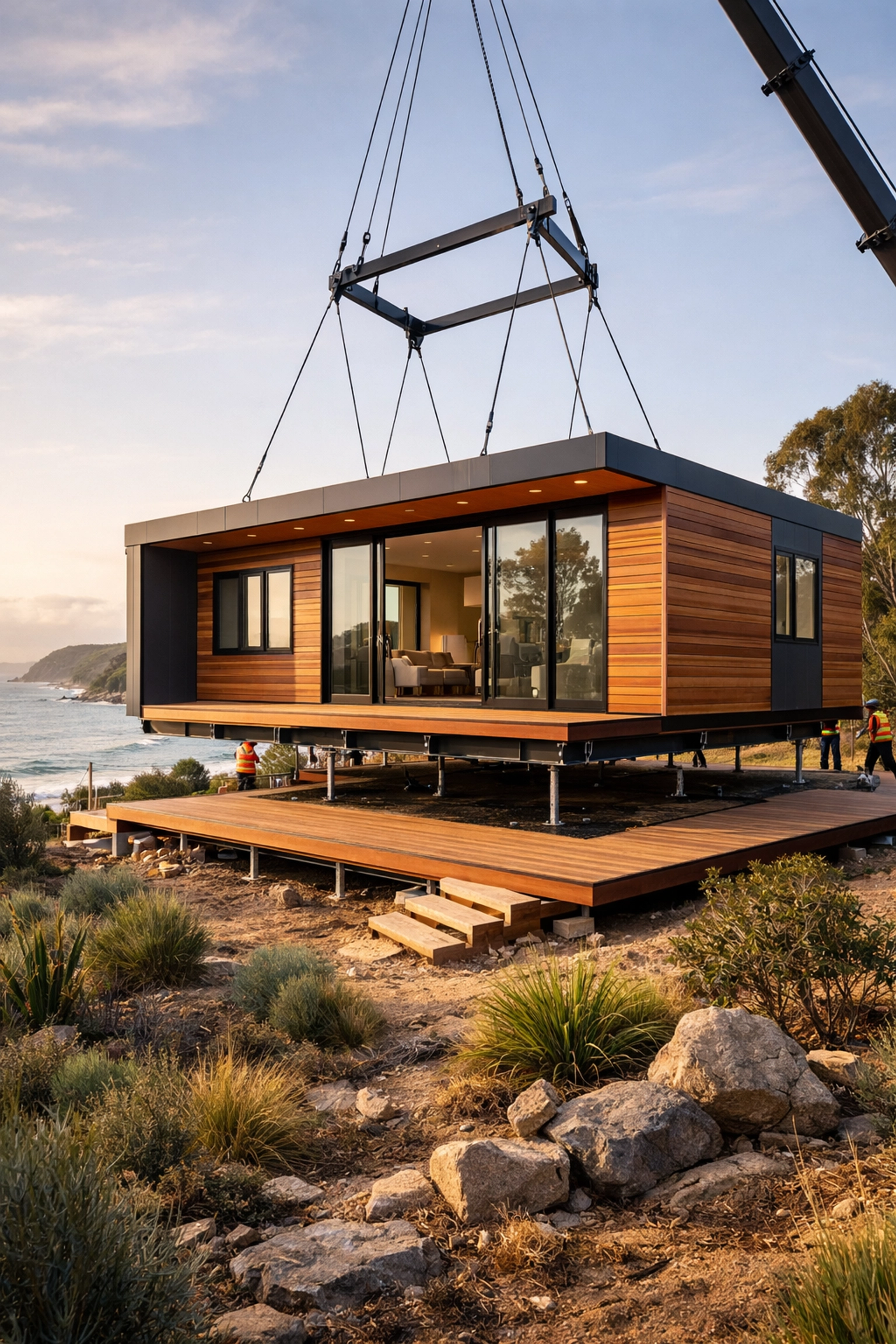
Modular construction flips the script. While your site is being cleared and the footings are being prepared, your home is already being built in a climate-controlled factory. This parallel processing means that by the time the site is ready, the home is virtually finished. We’re talking about timelines that are cut by 50% or more.
Imagine deciding to build in April and moving in by July. That’s not a dream; it’s the reality of the EcoHub Homes 3-bedroom, 2-bathroom modular home.
Cost Certainty in an Uncertain Economy
If you’ve spoken to anyone who built a "sticks and bricks" home recently, they likely have a horror story about "variations." A variation is a fancy word for "it’s going to cost you an extra $20,000 because the price of timber went up or we found a rock."
The beauty of the 2026 prefab model is predictability. Because the construction happens in a factory environment, every piece of material is accounted for before the first nail is driven. We don't deal with site-specific weather delays that burn through labor hours.
For property owners and investors, this cost stability is a superpower. You get a fixed price, and you can actually stick to your budget. Whether you’re looking at a one-bedroom one-bathroom home as a secondary dwelling or a full-scale family residence, knowing the price upfront is the ultimate peace of mind.
Sustainability Isn't Optional Anymore
In 2026, a "green" home isn't just about feeling good: it’s about survival in a high-cost energy market. Australia’s building codes have tightened, and homeowners are feeling the pinch of soaring electricity bills.
Modular homes are inherently more sustainable than traditional builds. Here’s why:
- Zero Waste: In a factory, offcuts are recycled or used for the next project. Site-built homes often see 30% of materials end up in a skip bin.
- Precision Sealing: Because modules are built on a level factory floor with laser precision, the building envelope is much tighter. This means fewer draughts and better thermal performance.
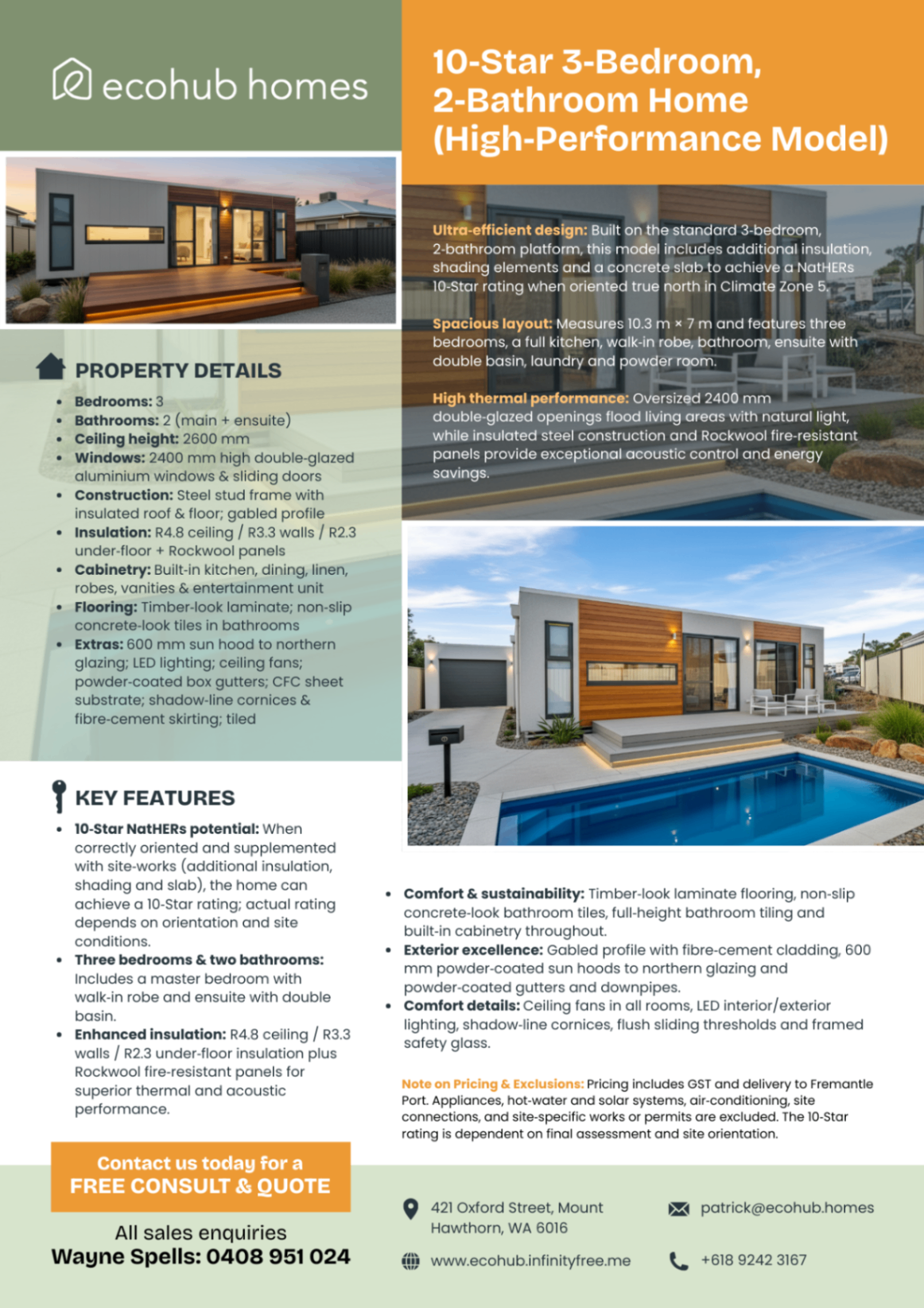
- Energy Ratings: We are now routinely seeing designs like our 10-Star Three-Bedroom Two-Bathroom Home. A 10-star rating means the home requires virtually no artificial heating or cooling, regardless of the Perth heat or a cold Victorian winter.
The Investor’s Secret Weapon
If you’re a property investor, 2026 is the year of the "Passive Income Pivot." With the rental crisis still biting across Australia, the demand for high-quality, fast-turnaround housing is at an all-time high.
Investors are moving away from buying existing, run-down houses that require endless maintenance. Instead, they are using modular homes to:
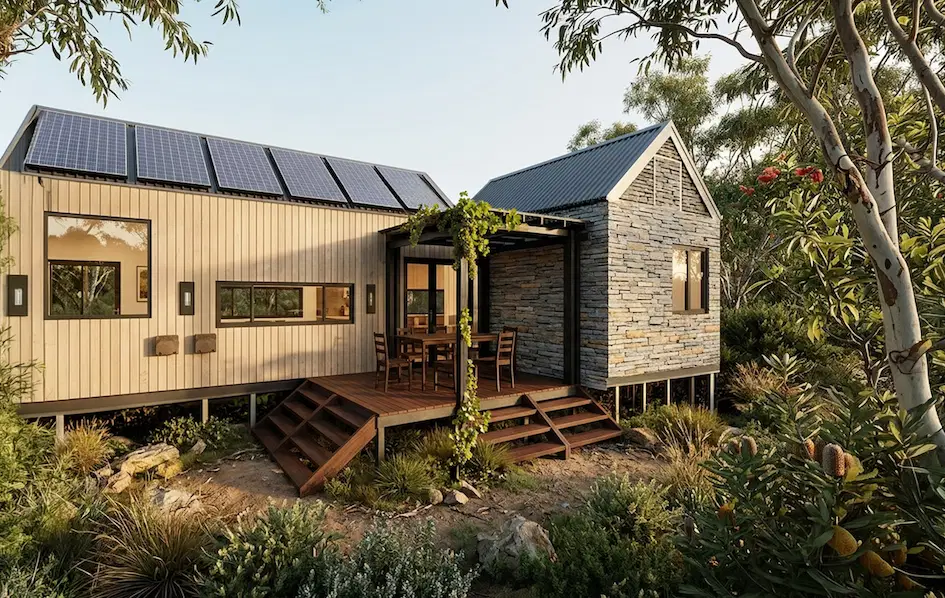
- Unlock Backyard Value: Adding a two-bedroom one-bathroom home to an existing block can double rental yield without the cost of a full subdivision.
- Short-Term Stay Success: The aesthetics of modern prefab: think high ceilings, stone finishes, and full-height double glazing: are perfect for high-end Airbnb listings.
- Rapid Depreciation: New builds offer significantly better tax benefits than older properties, and because you can get them on the ground so fast, the ROI starts almost immediately.
If you want to see how the numbers stack up, we actually run a free investment seminar specifically for landowners looking to maximize their property’s potential.
Precision Engineering vs. "She’ll Be Right"
Traditional building sites are chaotic. Materials are left in the rain, timber warps under the Australian sun, and quality control depends entirely on who shows up on the day.
Prefabricated homes are built to aerospace levels of precision. At EcoHub Homes, our steel-framed structures are engineered to handle the transport process: which means they are actually stronger than a standard house. If a house can be loaded onto a truck and driven 500km to a rural site without cracking, you know it’s built to last.
Every component, from the 2600mm high ceilings to the insulated wall panels, is inspected in a controlled environment. There is no "she'll be right" attitude; there is only "it’s done right."
High-End Aesthetics: The Death of the "Box"
One of the biggest myths we’re still busting in 2026 is that modular homes look like shipping containers or temporary school classrooms.
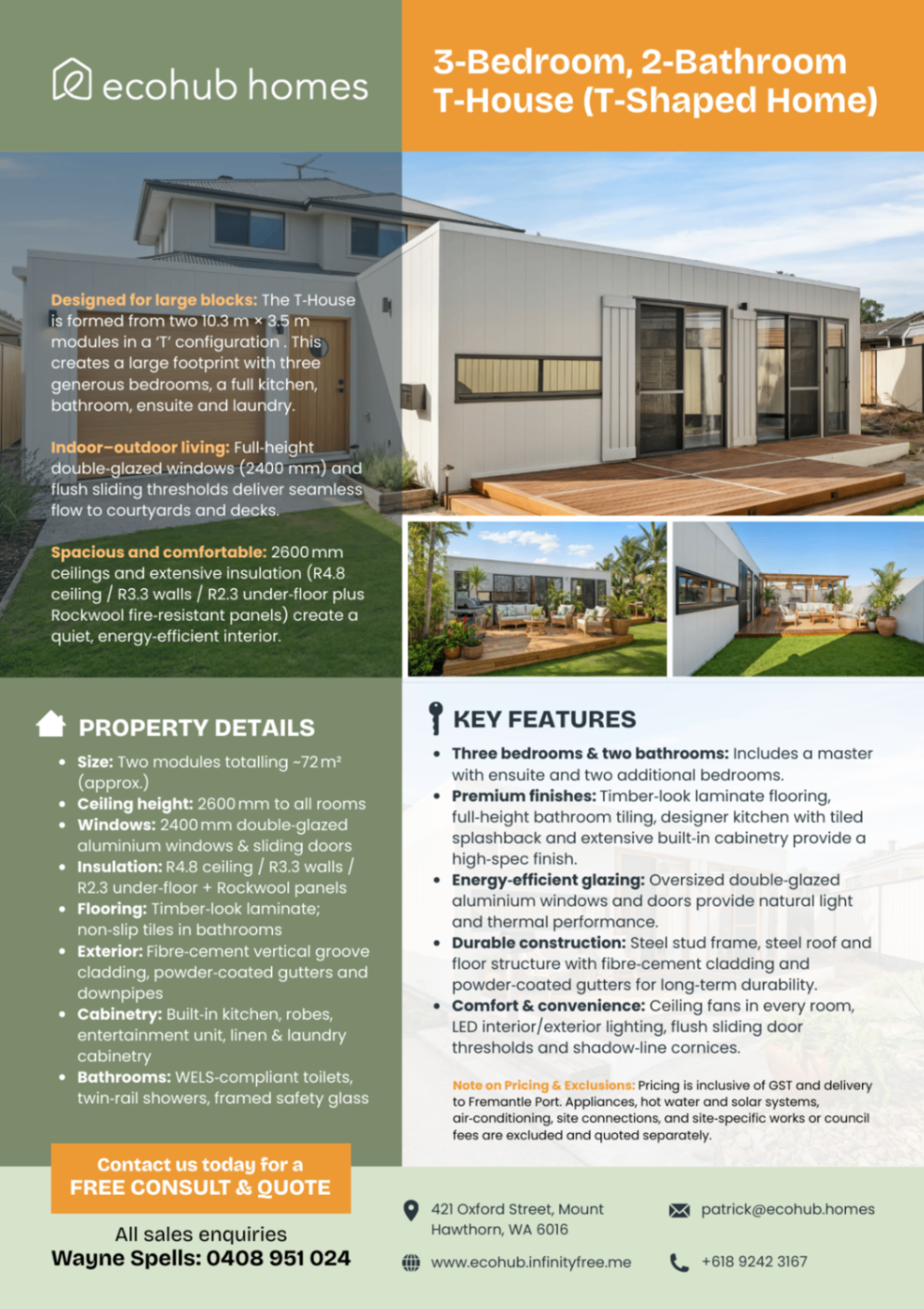
Take one look at the 3-Bedroom Two-Bathroom T-House. It features:
- Full-height, double-glazed windows that invite the outside in.
- Premium timber-look or fibre-cement cladding.
- Architectural gabled facades.
- Modern, open-plan layouts that feel more spacious than traditional brick homes.
The "look" of prefab in 2026 is indistinguishable from a high-end architecturally designed home. The only difference is that the prefab version was finished in a fraction of the time and for a fraction of the cost.
How to Get Started
The housing landscape has changed. Staying "ahead of the game" in 2026 means looking beyond the old ways of building and embracing the efficiency of the modular revolution. Whether you are looking to build a sustainable sanctuary for your family or a high-yield asset for your portfolio, the evidence is clear: prefab is the future.
Ready to see what's possible on your block?
The first step is understanding your site and your goals. We’ve helped hundreds of Australians navigate the path from "empty lot" to "dream home" without the stress of traditional building.
Don’t wait for the next price hike or the next 12-month delay.
- Explore our range: Check out our full catalog of homes.
- Get expert advice: Book a free consultation with our team to discuss your site and budget.
- See it for yourself: Visit us to learn why EcoHub Homes is the leading name in Australian modular construction.
The future of housing isn't being built on-site. It’s being built better, faster, and smarter. Join the conversation and start your modular journey today.