

The question comes up every single time: "Will my local council even approve this?"
It's the hurdle that stops more projects than any other, the fear that modular construction sits in some regulatory grey zone, that planning departments will laugh you out of the office, that you'll sink months into a dream only to be told "no" by someone with a clipboard.
Here's the truth: Modular homes are approved in every Australian state and territory. They're not caravans. They're not sheds with windows. They're engineered, code-compliant residential buildings that meet: or exceed: the same standards as any traditional stick-built home.
The difference? We handle the approvals process for you. And because our designs are standardised and pre-engineered, the path to "yes" is often faster than you'd expect.
Modular Homes Aren't a Loophole: They're Full Compliance
Let's clear this up immediately: modular homes are built to the National Construction Code (NCC) and carry the same certifications as conventional housing. They're subject to the same structural, electrical, plumbing, and fire safety standards. They're inspected during factory construction and again on-site after installation.
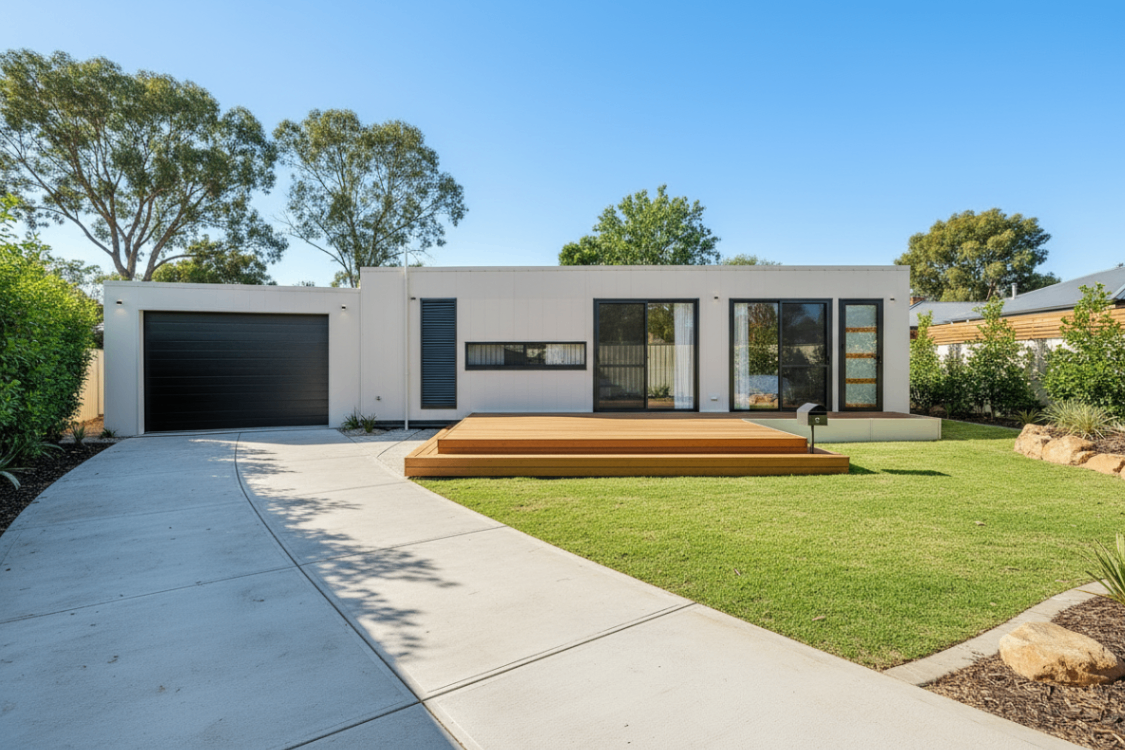
The building certifier doesn't care how your home was assembled: only that it meets the code. A modular home arrives with full compliance documentation, engineering certificates, and a 10-year structural warranty. No shortcuts. No compromises.
What councils do care about:
- Site setbacks and easements
- Floor area ratios and lot coverage
- Stormwater management and drainage
- Connection points for utilities
- Aesthetic guidelines (if applicable)
These requirements apply to every new dwelling, whether it's built on-site over six months or installed in a single day.
How the Approval Process Actually Works
Modular housing follows a two-stage approval model: state certification during manufacturing and local council approval for site-specific installation.
Stage One: Factory Certification
Before your home is even built, the design is certified by the relevant state authority. In WA, this means compliance with the Building Code of Australia (BCA) and oversight from building surveyors who inspect modules during production.
Every frame, every electrical connection, every roof truss is checked against engineering specs. By the time your home leaves the factory, it's already passed inspections that would take weeks on a traditional build site.
Stage Two: Council Development Approval
This is where most first-timers get nervous: but it's also where modular construction shines.
Your council isn't approving the building method. They're approving the land use. Does the design suit the zoning? Does it meet local planning policies? Are the setbacks correct?
Because EcoHub designs are standardised and pre-engineered, we've already resolved the structural and compliance questions. What remains is a straightforward planning application: and we manage it from start to finish.
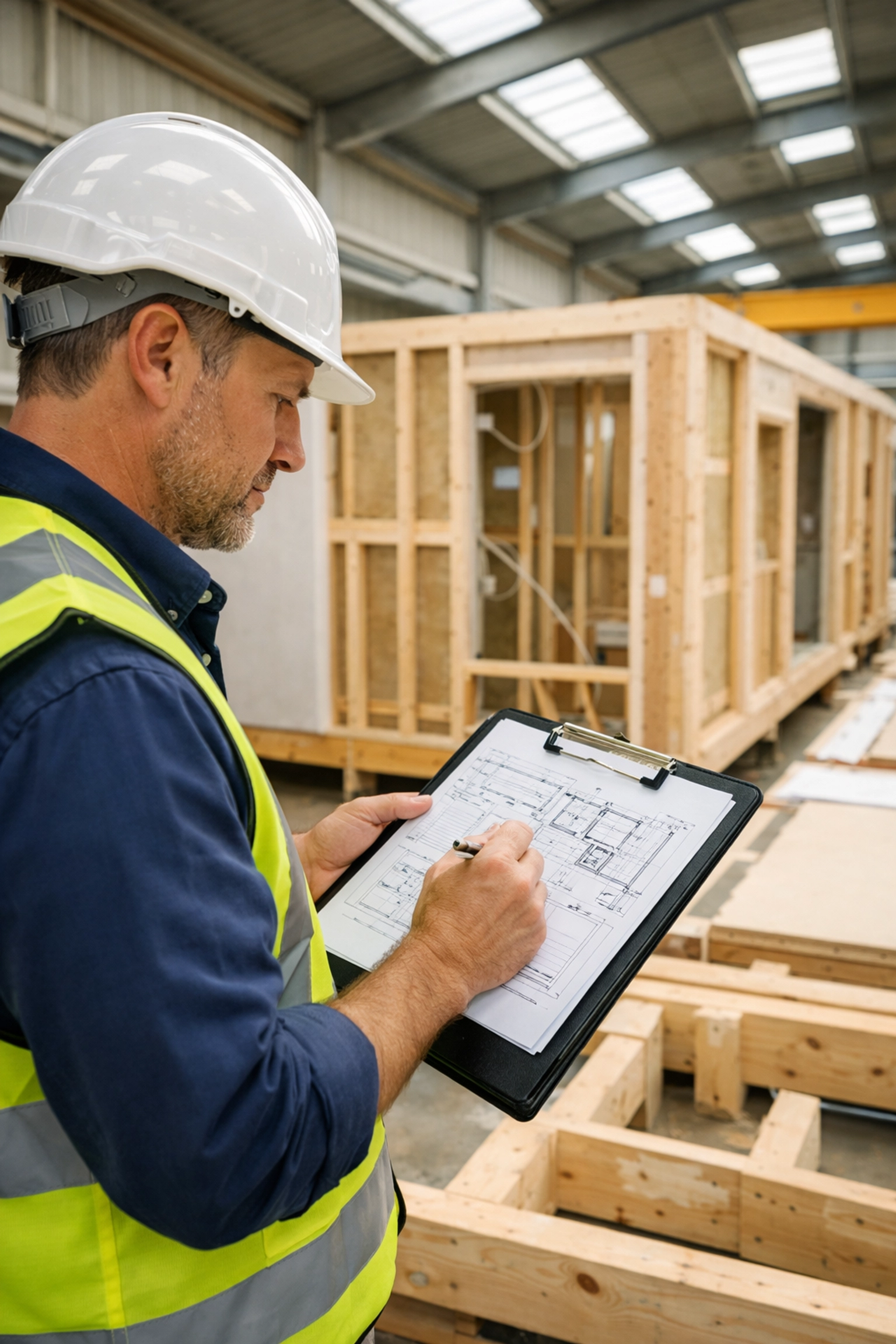
We Handle the Entire Process (So You Don't Have To)
One of the biggest advantages of working with EcoHub is this: you're not navigating the bureaucracy alone.
From day one, we coordinate:
- Site surveys and soil assessments
- Development applications and supporting documentation
- Liaison with council planners and building certifiers
- Connection permits for water, sewer, and electrical services
- Final inspections and occupancy certificates
You're not chasing approvals or translating engineering reports. We've done this across hundreds of sites, and we know exactly what councils need to see.
Our in-house team submits plans, responds to queries, and ensures every box is ticked before your home is manufactured. By the time the crane arrives, approvals are locked in and connections are ready.
Why Modular Approval is Often Faster Than Traditional Builds
Here's where modular construction offers a genuine advantage: speed.
Traditional builds require staged inspections: footings, framing, electrical rough-in, insulation, final fit-out. Each stage waits for council sign-off, and delays compound. A rainy week can push your frame inspection back by a fortnight.
Modular homes flip this model. Most construction happens in a controlled factory environment under continuous certification. The on-site work is limited to foundations, crane installation, and utility connections: all of which can be scheduled in advance with precision.
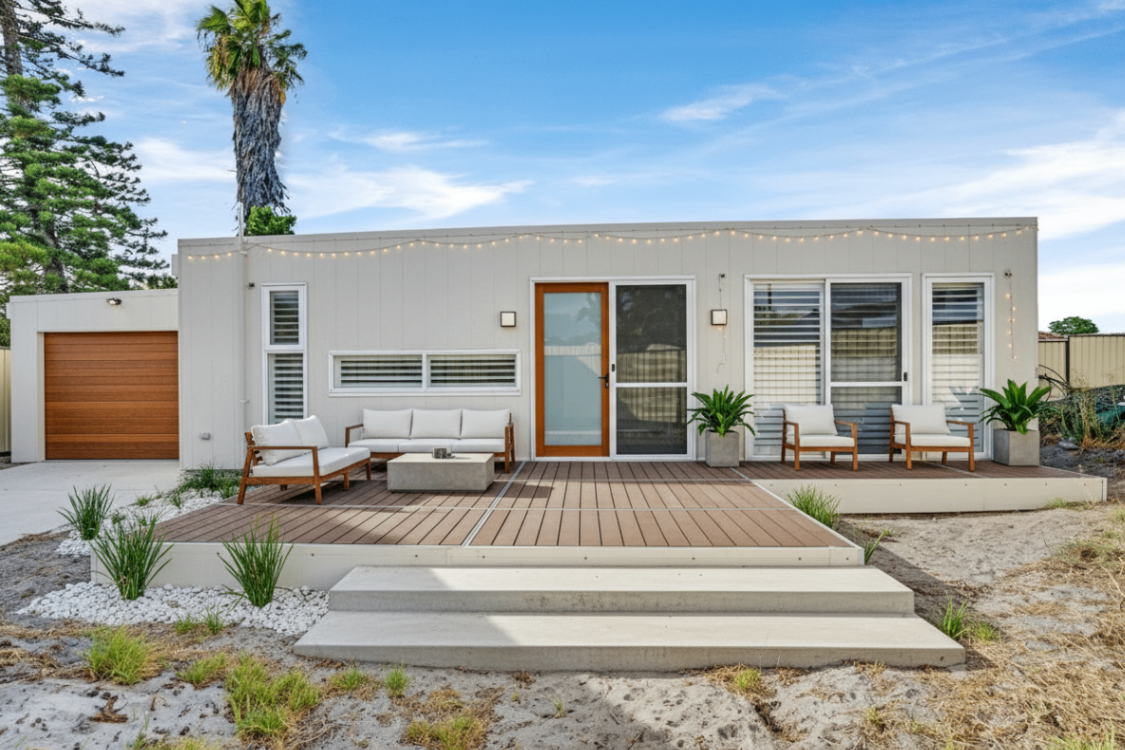
Councils appreciate this too. Pre-engineered designs reduce the risk of non-compliance, and standardised plans mean fewer questions during assessment. We've seen development applications approved in as little as 4–6 weeks in metro areas, well ahead of the typical 8–12 week timeframe for custom builds.
This isn't guaranteed (council workloads vary), but it's a consistent pattern. Standardisation removes ambiguity, and ambiguity is what slows approvals down.
Smart Investment: Granny Flats and Rear Lot Development
If you're exploring modular construction as a passive income strategy, the approval process is even more straightforward.
Granny Flats (Secondary Dwellings)
Most Australian councils allow secondary dwellings on residential lots without full development approval: provided they meet size and setback criteria. In WA, granny flats under 70m² can often be approved as "deemed-to-comply" development, bypassing lengthy planning processes entirely.
EcoHub's one- and two-bedroom designs are purpose-built to fit these parameters. They're compact, code-compliant, and ready to generate rental income within weeks of installation.
Learn more about granny flats as rental income
Subdivision and Rear Lot Development
If you're subdividing a larger block, modular homes accelerate the entire timeline. Instead of waiting months for a traditional build to complete on the new lot, you can have a finished, occupied dwelling in place within 8–12 weeks of subdivision approval.
For landowners, this means faster returns. For developers, it means reduced holding costs and quicker sales.
Explore how modular housing maximises land value
The 10-Year Warranty: Peace of Mind Beyond Installation
Approvals aren't just about getting permission: they're about accountability.
Every EcoHub home is backed by a 10-year structural warranty, the same protection mandated for all new residential construction in Australia. This covers major structural defects, framework issues, and building envelope integrity.
It's not a gesture of goodwill. It's a legal requirement we're proud to meet.
This warranty exists because modular homes are built to the same standards as traditional housing. It's third-party verified, independently insured, and enforceable under Australian consumer law.
If councils treated modular homes as experimental or substandard, this warranty wouldn't exist. But they don't: and it does.
What About Regional and Rural Sites?
The approval process becomes even simpler outside metro areas.
Regional councils often have more flexible planning policies and shorter assessment timeframes. Modular construction is particularly appealing in remote locations where skilled trades are scarce and traditional build timelines can stretch beyond a year.
We've delivered homes to mining sites, rural subdivisions, and coastal towns where on-site construction would have been impractical or prohibitively expensive. The factory-built model removes logistical barriers and ensures consistent quality regardless of location.
Site preparation remains the same: level foundations, utility connections, and council sign-off: but the reduced on-site labour means fewer delays and lower costs.
Your Path to Council Approval Starts Here
If you're ready to move forward but unsure about the approvals process for your specific site, the first step is simple: talk to us.
We'll assess your lot, identify any site-specific requirements, and outline the approval pathway before you commit to anything. No guesswork. No surprises.
Modular housing isn't a workaround or a compromise: it's a streamlined, code-compliant alternative to traditional construction. Councils approve these homes every day because they meet the standards. We just make the process faster, simpler, and far less stressful.
DM us to discuss your site and get a clear approval timeline. Let's turn that vacant block into a finished, income-generating asset( without the red tape headaches.)