
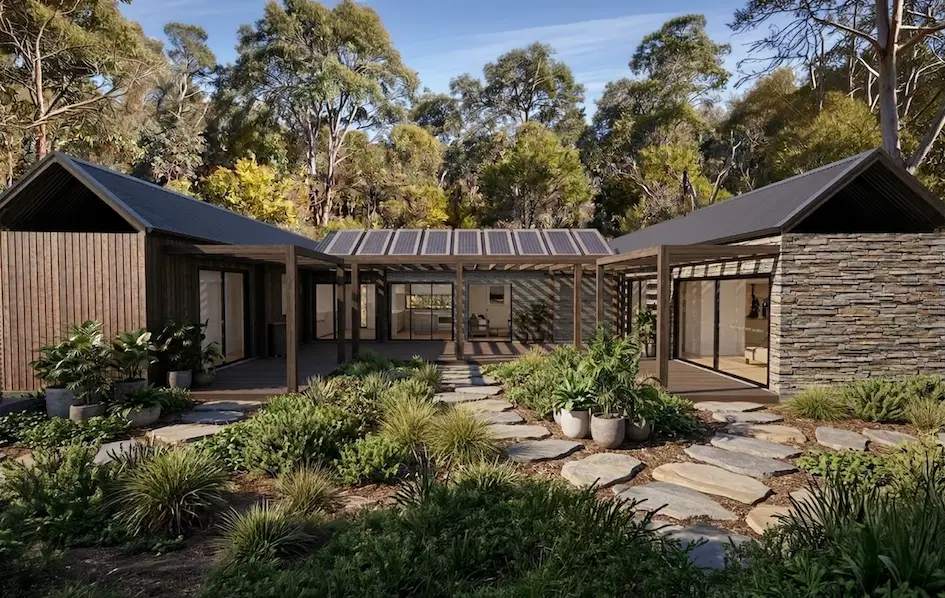
Before we dive into the numbers, take a walk through one of our most popular designs to see the quality and finishes included in these prices.
https://youtu.be/Kskhm6zG7_c?si=Sjp40wDQ6mvRjJqk
Navigating the Australian housing market in 2026 requires a shift in strategy. With traditional build times stretching longer and labor costs remaining volatile, modular construction has moved from a "niche alternative" to a primary solution for savvy homeowners and investors.
But the question remains: What does it actually cost?
In 2026, transparency is everything. At EcoHub Homes, we believe in stripping away the "starting from" ambiguity. Whether you are looking for a $99,000 secondary dwelling or a $600,000+ architectural family estate, here is the definitive guide to modular home pricing in Australia today.
The Benchmark: Cost Per Square Metre
In the current market, you should expect a supply-only price (the cost of the modules built in the factory) to range between $2,300 and $3,000 per square metre.
If you are looking for a "turnkey" experience, where the home is delivered, installed, connected to services, and ready for you to turn the key, the price typically moves into the $3,800 to $4,600 per square metre range. This variation accounts for site-specific requirements like foundations, council permits, and regional delivery logistics.
2026 Price Tiers at a Glance
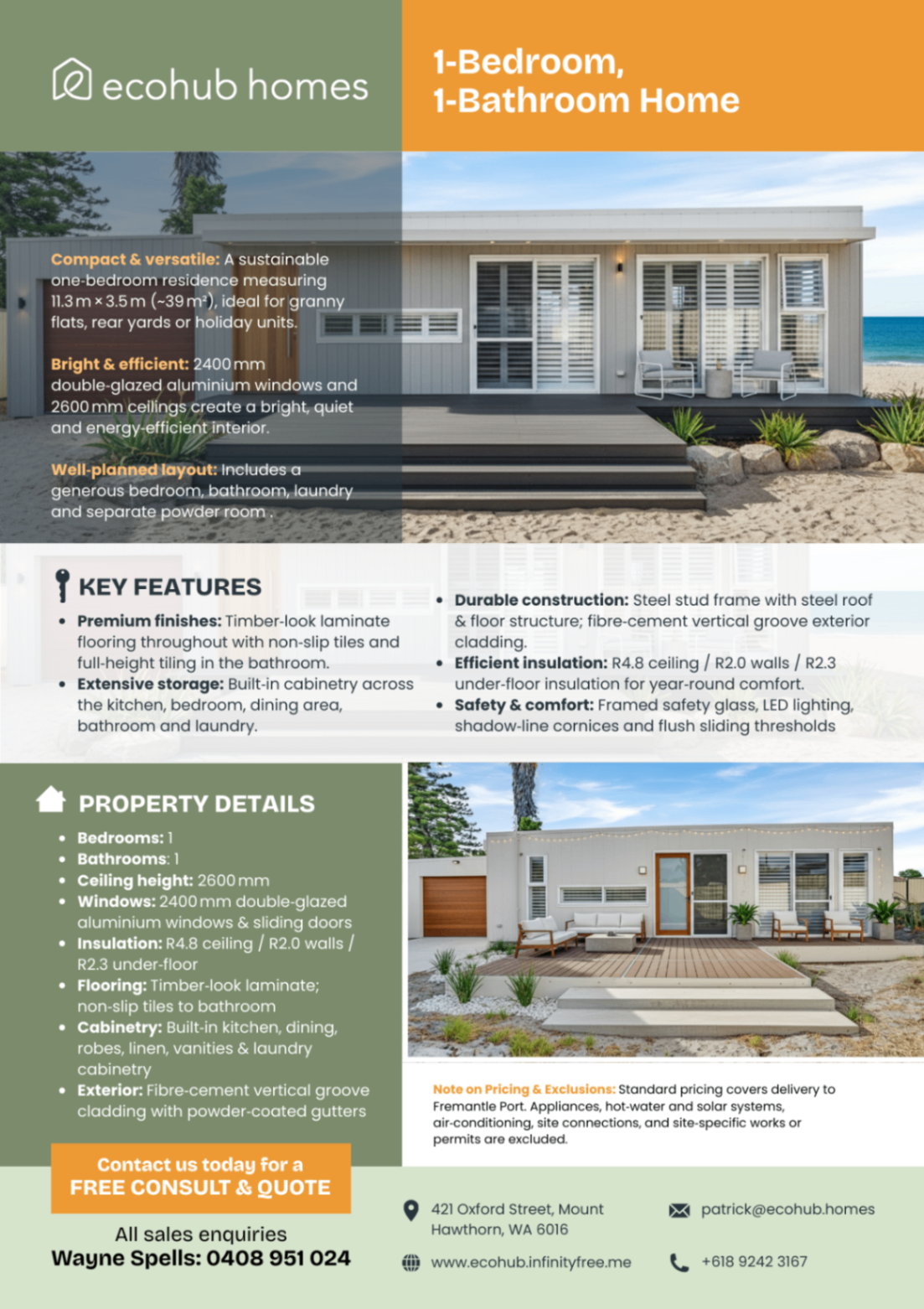
- Entry-Level ($99,000 – $180,000): Perfect for high-end granny flats or compact one-bedroom retreats. These models typically feature 40-60sqm of living space with premium finishes standard.
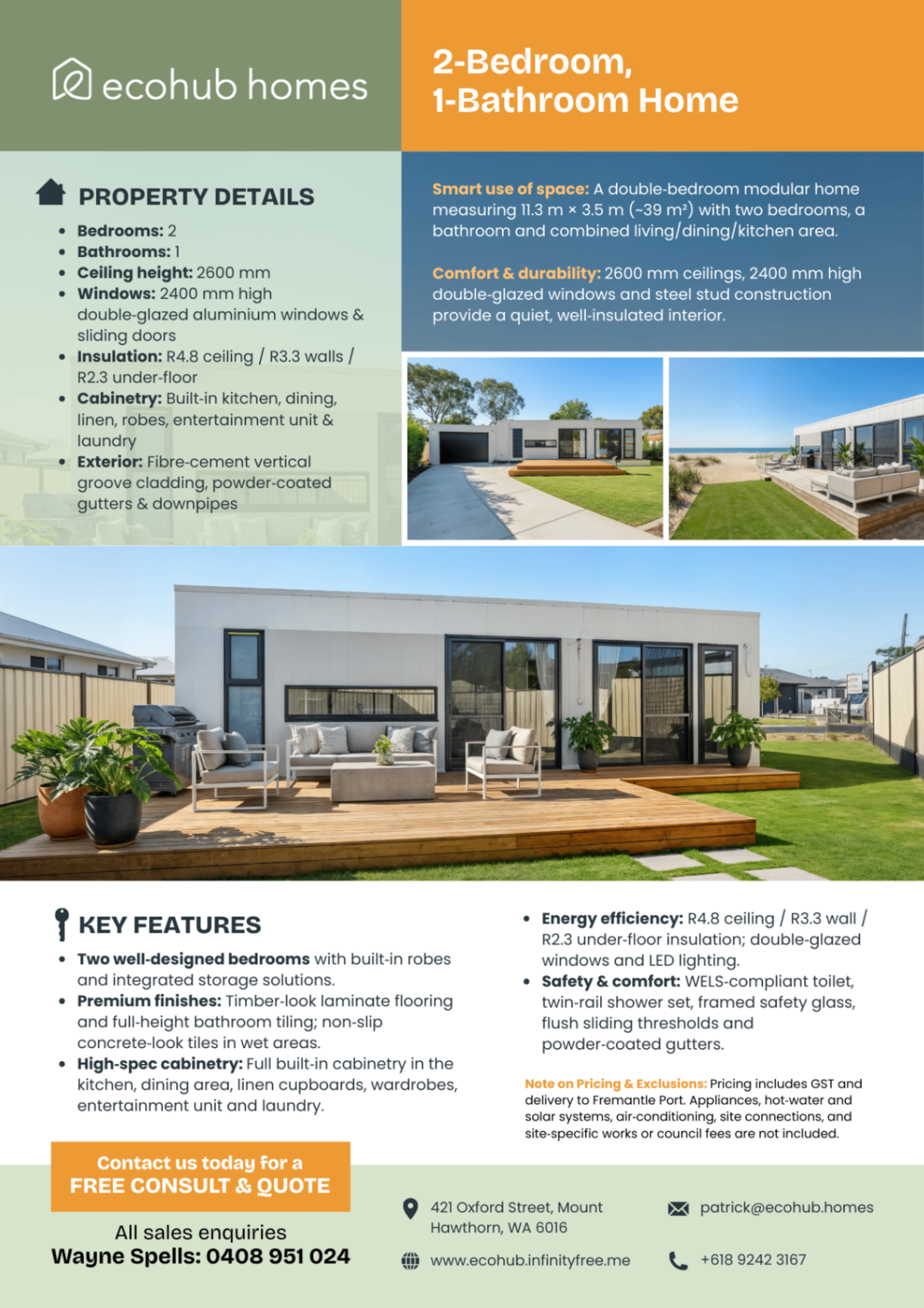
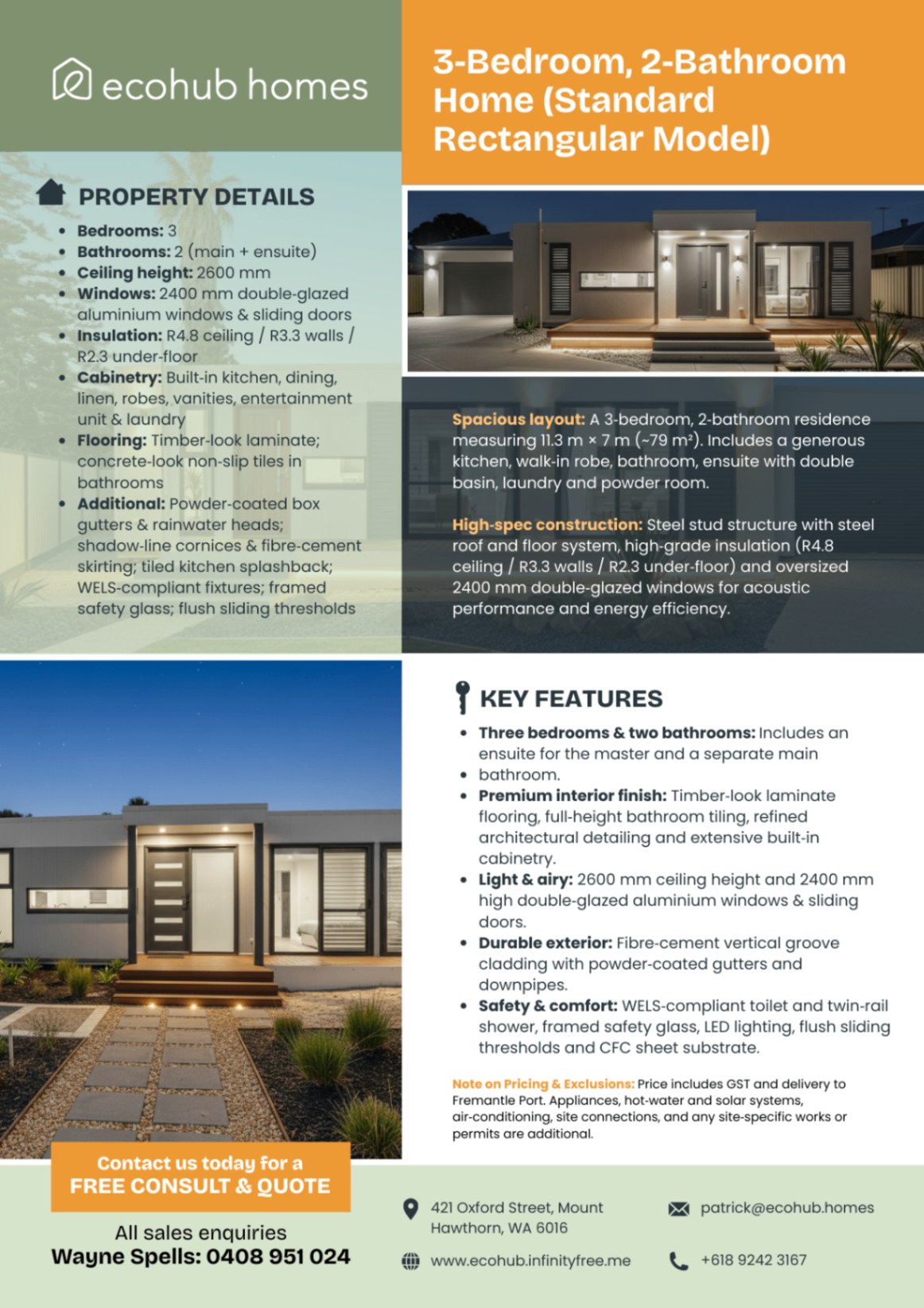
- Mid-Range ($250,000 – $450,000): This is the "sweet spot" for two-to-three-bedroom homes. At this level, you gain significant square footage and open-plan living-dining areas.
- Premium Family Homes ($500,000 – $750,000+): Large-format 4-bedroom designs, often featuring multiple modules, expansive decking, and architectural features like raked ceilings and high-performance glass walls.
What’s Included (And What’s Extra)
The "sticker price" of a modular home can be misleading if you don't know what’s inside the box. At EcoHub Homes, our standard pricing is designed to minimize surprises.
Standard Inclusions:
- Structural Integrity: Steel frame construction and durable fibre-cement cladding.
- Energy Efficiency: Full-height double-glazed windows, high-density insulation (R4.8 in ceilings), and solar-ready roof designs.
- Interior Finishes: 2600mm high ceilings, timber-look laminate flooring, and full-height bathroom tiling.
- Cabinetry: Custom built-in robes and premium kitchen joinery.
The "Site-Specific" Variables:
No two blocks of land are identical. These factors will influence your final quote:
- BAL Rating (Bushfire Attack Level): Building in a bushfire-prone area requires upgraded glazing and non-combustible materials, which can add 5-15% to the build cost.
- The Slope: Flat sites are cheaper. Steep or reactive soil sites require specialized piering or screw-pile foundations.
- Logistics & Delivery: Distance from the factory and ease of access for the delivery trucks/cranes play a major role.
- Utility Connections: Bringing power, water, and sewage from the street to your specific building envelope.
Modular vs. Traditional: The Real Financial Comparison
When comparing a $400,000 modular build to a $400,000 traditional build, modular wins on Total Cost of Ownership.
Traditional builds are notorious for "budget creep", variation claims due to weather delays, material shortages, or subcontractor price hikes. Modular homes are built in a controlled factory environment with fixed material costs and a timeline that is often 50-70% faster than site-built homes.
For an investor, finishing a home 6 months earlier means 6 months of additional rental income. For a homeowner, it means 6 months less of paying both a mortgage and rent elsewhere. That "time-saving" is a genuine financial asset.
"The efficiency of factory-controlled construction isn't just about speed; it's about the elimination of waste and the precision of the build. In 2026, the 'hidden' cost of traditional building is the uncertainty. Modular provides the antidote: certainty in price and quality."
, Daniel Margraf, Marketing Manager at EcoHub Homes
Strategic Investing: Turning Vacant Lots into Passive Income
We are seeing a surge in property owners using modular homes to unlock "hidden" value in their backyards. With the 2026 rental market remaining tight, a $150,000 two-bedroom modular unit on a rear lot can often generate $500 – $700 per week in rent. This allows homeowners to pay down their primary mortgage significantly faster while providing much-needed housing supply.
FAQs: Your Quick Guide to 2026 Costs
Does the price include council permits?
Most base prices exclude permit fees and council contributions, as these vary wildly between local governments. However, we handle the application process for you to ensure compliance with Australian building standards.
Can I customize the design?
Yes. While "off-the-shelf" modules are the most cost-effective, we offer 3D visualization for custom layouts. Small changes to floor plans are common, though significant structural changes will impact the $/m² rate.
Is financing a modular home difficult?
In 2026, most major Australian lenders have specialized products for prefab and modular construction. Because the asset is built off-site, the progress payment schedule differs from a traditional build, but the valuation is generally treated the same once the home is fixed to the land.
Take the Next Step
The best way to understand what you'll actually pay is to get a site-specific assessment. We provide a full-service experience: from custom design and 3D visualization through to site prep, delivery, and a 10-year warranty.
Whether you're building a dream holiday home or looking to maximize rental yield on an investment property, our team is ready to help you navigate the 2026 landscape.