
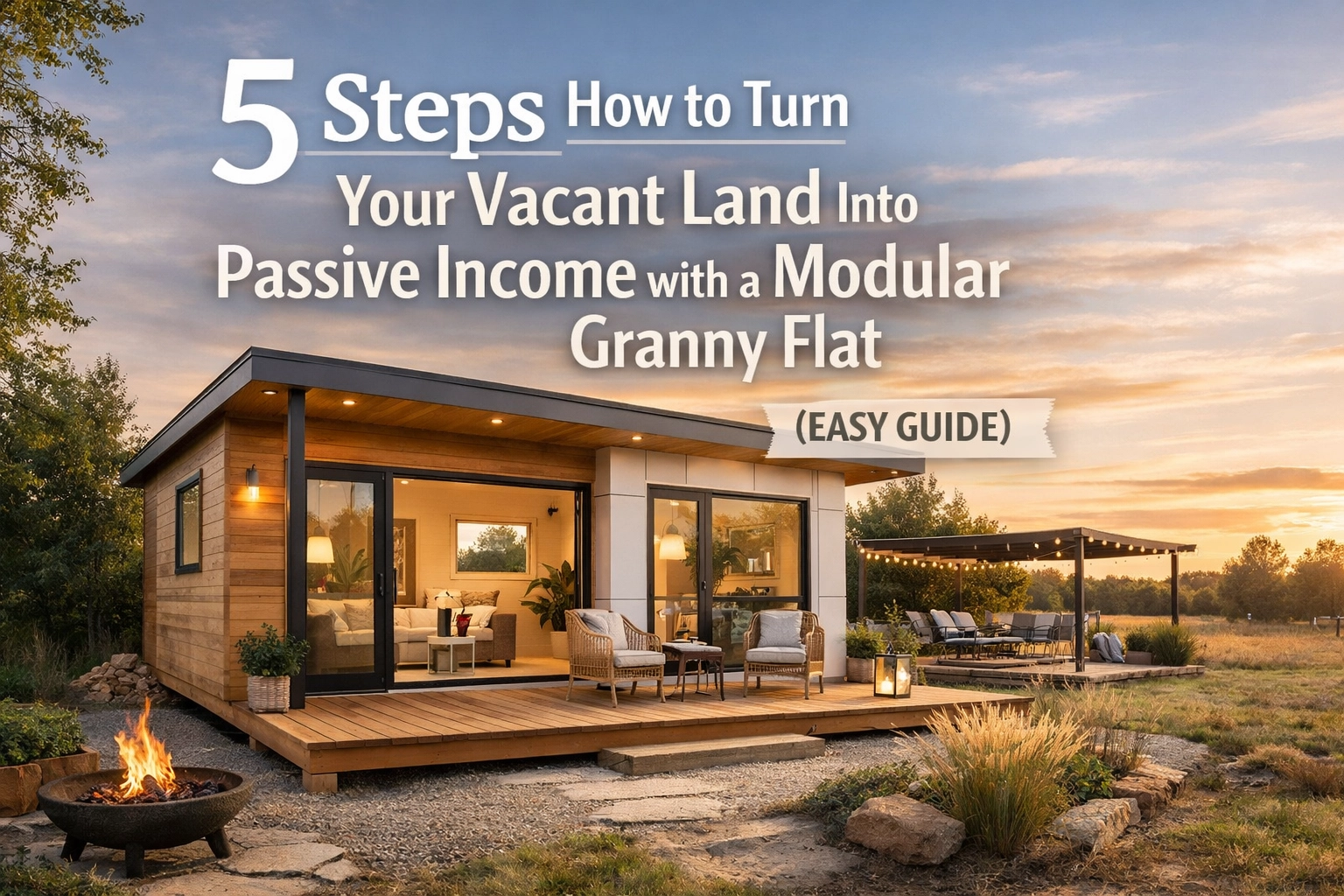
That patch of vacant land sitting idle behind your house isn't just grass and potential: it's money you're leaving on the table. Every week that land stays empty, you're missing out on $500 to $600 in rental income. The maths is brutal: over a year, that's up to $31,200 in passive income that could be covering your mortgage, funding renovations, or building your investment portfolio.
But here's the thing most property owners get wrong: they assume turning vacant land into income requires years of planning, mountains of red tape, and six-figure investments. Not anymore.
Modular granny flats have transformed the game entirely. You can go from empty backyard to cash-flowing rental property in as little as 12 weeks, starting from $99,000. No drawn-out construction timelines. No council approval nightmares. No endless site visits from trades.
This is your step-by-step blueprint to convert underutilised land into a genuine income stream: fast, affordable, and surprisingly straightforward.
Step 1: Check Your Land Suitability (Takes 30 Minutes)
Before you get excited about rental yields, you need to confirm your property meets the basic requirements. The good news? Most residential blocks in Australia do.
Minimum land requirements:
- At least 450 square metres total block size
- Minimum 12-metre street frontage
- Adequate setbacks from boundaries (typically 1 metre side, 3 metres rear)
- Access to essential services (water, electricity, sewerage)
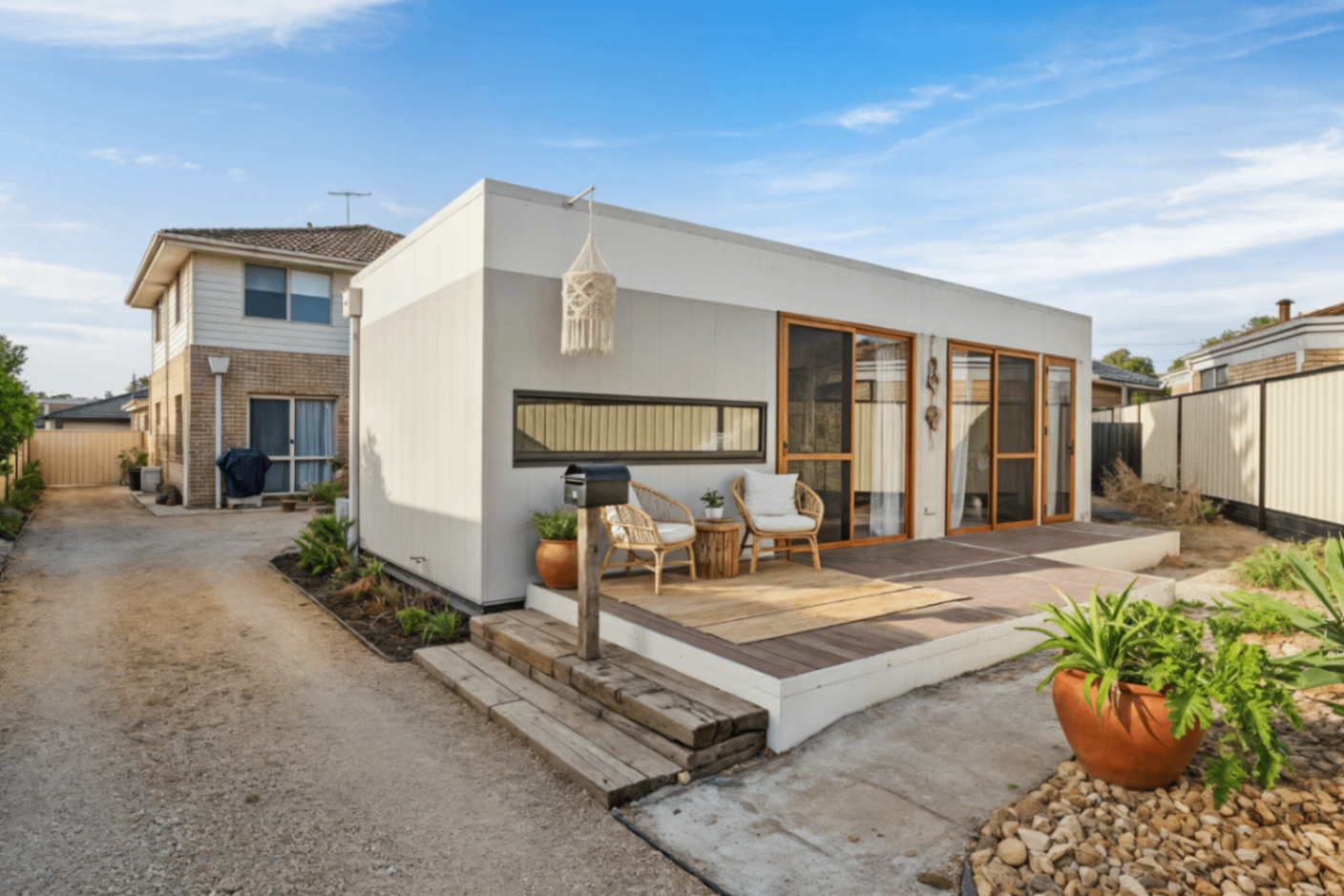
Rural councils often allow larger granny flats with more flexibility, while suburban areas have tighter regulations. The key is understanding what your specific council permits: and here's where modular construction gives you an edge.
Because modular granny flats are manufactured to strict Australian building standards off-site, councils are increasingly streamlining approvals. Many now classify them under complying development, meaning faster processing and fewer hurdles.
What to check on your land:
- Slope and drainage (minor grading is fine; major earthworks add cost)
- Underground services location (call Dial Before You Dig: it's free)
- Heritage overlays or environmental restrictions
- Existing easements that might affect placement
Take photos of your backyard from multiple angles and measure the available space. You'll need these for the next step.
Step 2: Choose Your Layout: 1, 2, or 3 Bedrooms
This decision directly impacts your rental yield, target tenant, and upfront investment. Let's break down the three options.
1-Bedroom Granny Flat (Starting at $99k)
Perfect for singles, young professionals, or downsizers. Typically 40-50 square metres with open-plan living, compact kitchen, bathroom, and bedroom. Rental range: $350-$450 per week depending on location.
Best for: Property owners wanting the lowest entry cost and quickest turnaround.
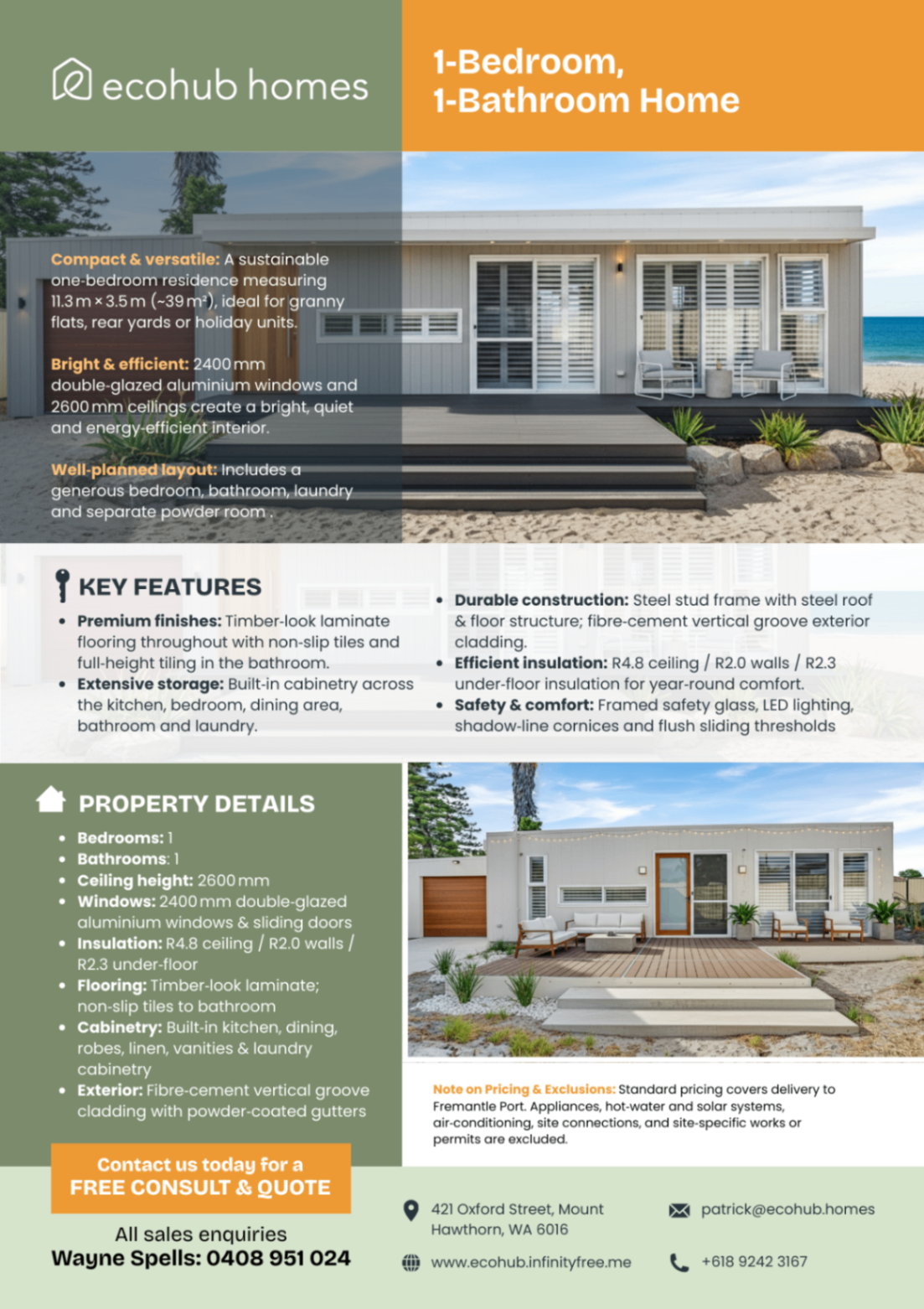
2-Bedroom Granny Flat (Starting at $135k)
The sweet spot for most investors. Appeals to couples, small families, or professionals working from home. Usually 60-70 square metres with separate living area, two bedrooms, bathroom, and full kitchen. Rental range: $450-$550 per week.
Best for: Maximising rental demand while keeping costs moderate.
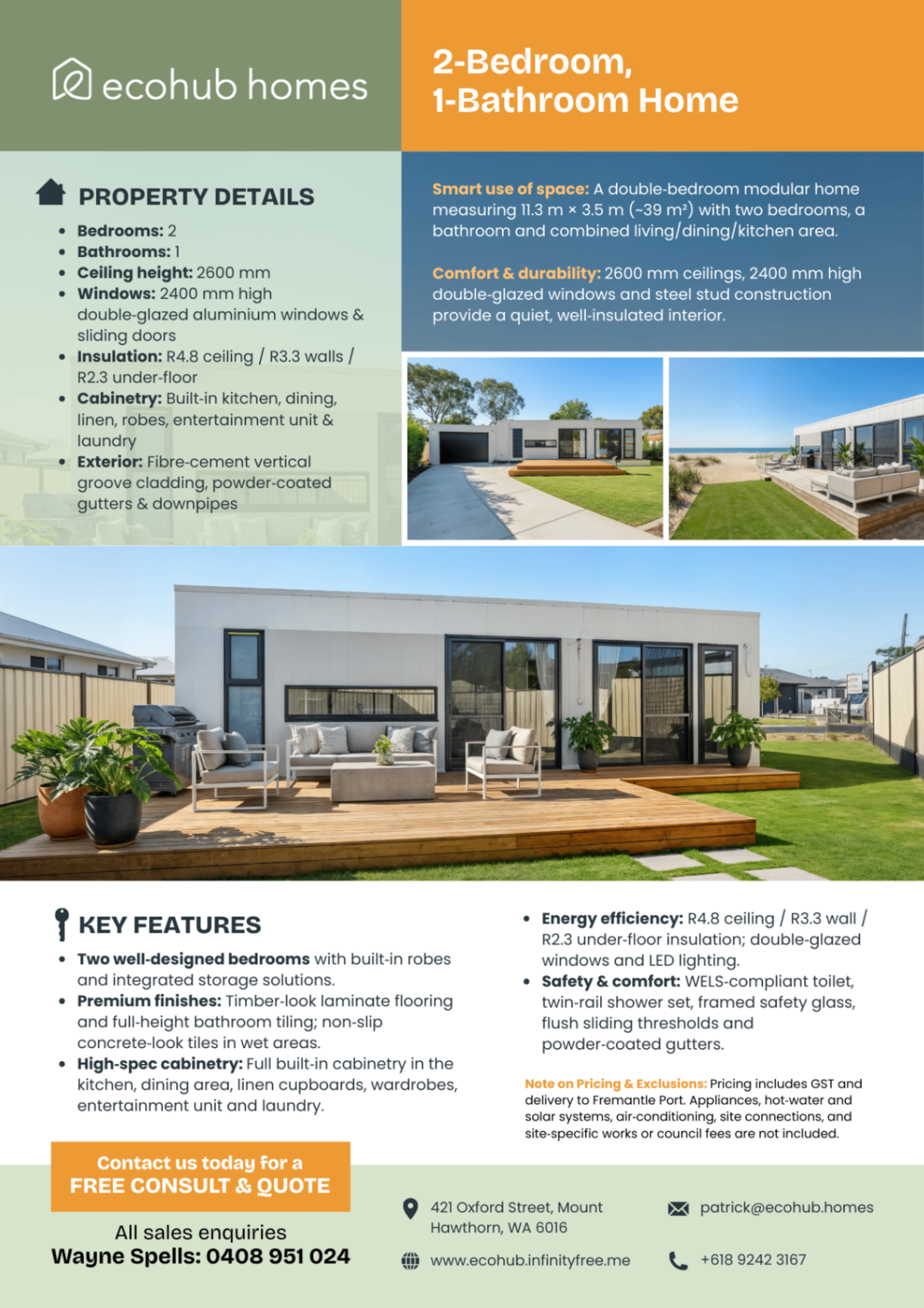
3-Bedroom Granny Flat (Starting at $180k)
Targets families and long-term tenants. Approximately 90-100 square metres with two bathrooms, spacious living areas, and proper storage. Rental range: $550-$700+ per week.
Best for: Premium properties in high-demand suburbs where families are actively searching.
Your choice should align with your local rental market. Check Domain and realestate.com.au for comparable granny flat rentals in your suburb. If 2-bedroom units are renting within 7-10 days, that's your answer. If 1-bedroom options sit vacant for weeks, you know to upsize.
Remember: every additional bedroom increases rental income but also your loan repayments. Run the numbers on actual cash flow: not just theoretical yields.
Step 3: Council Approvals (We Handle the Heavy Lifting)
This is where most property owners expect chaos. Council submissions. Architectural drawings. Neighbour notifications. Months of waiting.
Here's the reality with EcoHub Homes: we manage the entire approval process on your behalf.
Our team submits all required documentation: including site plans, engineering specifications, and compliance certificates: directly to your local council. Because our modular homes are pre-engineered and meet Australian Standards AS3959 (bushfire), AS1684 (structural timber), and the National Construction Code, approvals typically process faster than traditional builds.
What you'll need to provide:
- Property title and rates notice
- Site photos and measurements (from Step 1)
- Your preferred layout choice (from Step 2)
What we handle:
- Complete architectural plans
- Structural engineering certification
- Energy efficiency reports (NatHERS compliance)
- Bushfire Attack Level (BAL) assessments if required
- Soil testing coordination
- Council submission and follow-up
Timeline: Most councils process complying development applications within 10-20 business days. Development applications (for more complex sites) take 6-8 weeks. We'll give you accurate estimates based on your specific council.
One critical advantage: because modular granny flats are manufactured while approvals are processing, you're not losing time. The moment council stamps approval, your home is ready for delivery.
Step 4: Site Preparation (The Forgotten Cost: Until Now)
You've got approval. Your modular home is being built in our factory. Now comes the site work: and this is where budget blowouts happen if you're not prepared.
Essential site preparation:
- Ground levelling and compaction – Your granny flat needs a stable, level base. Minor grading costs $2,000-$5,000; extensive earthworks can reach $15,000+.
- Concrete slab or pier and beam foundation – Concrete slabs suit flat blocks ($8,000-$15,000). Sloped sites often require pier and beam systems ($12,000-$25,000).
- Service connections – Trenching and connecting water, sewer, electricity, and potentially gas. Budget $8,000-$15,000 depending on distance from mains.
- Driveway or pathway access – Delivery trucks need clear access. Simple gravel paths cost $1,500-$3,000; paved driveways run $5,000-$10,000.
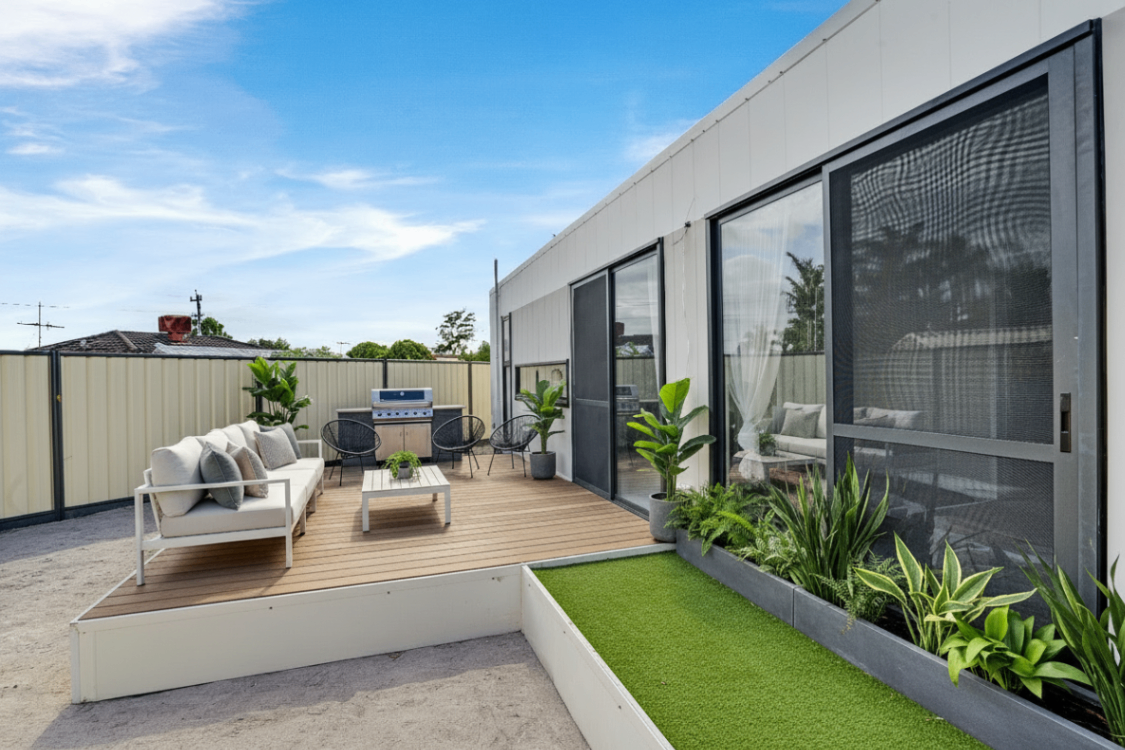
The key is getting accurate site preparation quotes before you sign anything. We connect you with trusted local contractors who've installed dozens of modular homes: they know exactly what's required and won't surprise you with "unforeseen" costs.
Pro tip: Schedule your site work during the manufacturing phase (typically 8-10 weeks). When your modular granny flat arrives, the foundation is cured, services are connected, and you're ready for same-day installation.
Total site preparation typically adds $20,000-$40,000 to your project, depending on site complexity. Factor this into your financing from the start.
Step 5: Installation and Start Renting (Cash Flow Begins)
Delivery day is genuinely impressive. A crane lifts your complete modular home onto the prepared site, and within 4-6 hours, your granny flat is positioned, levelled, and secured. After that, final connections (plumbing, electrical, guttering) take another 2-3 days.
From site prep completion to move-in ready: 1 week maximum.
Final steps before renting:
- Final inspections – Council and certifiers verify everything meets code (we coordinate this)
- Occupancy certificate issued – This legal document confirms your granny flat is safe and habitable
- Utilities connected and meter installed – Tenants will need their own accounts
- Minor landscaping – Tidy the immediate surrounds for tenant appeal
Now comes the best part: listing your property and securing a tenant.
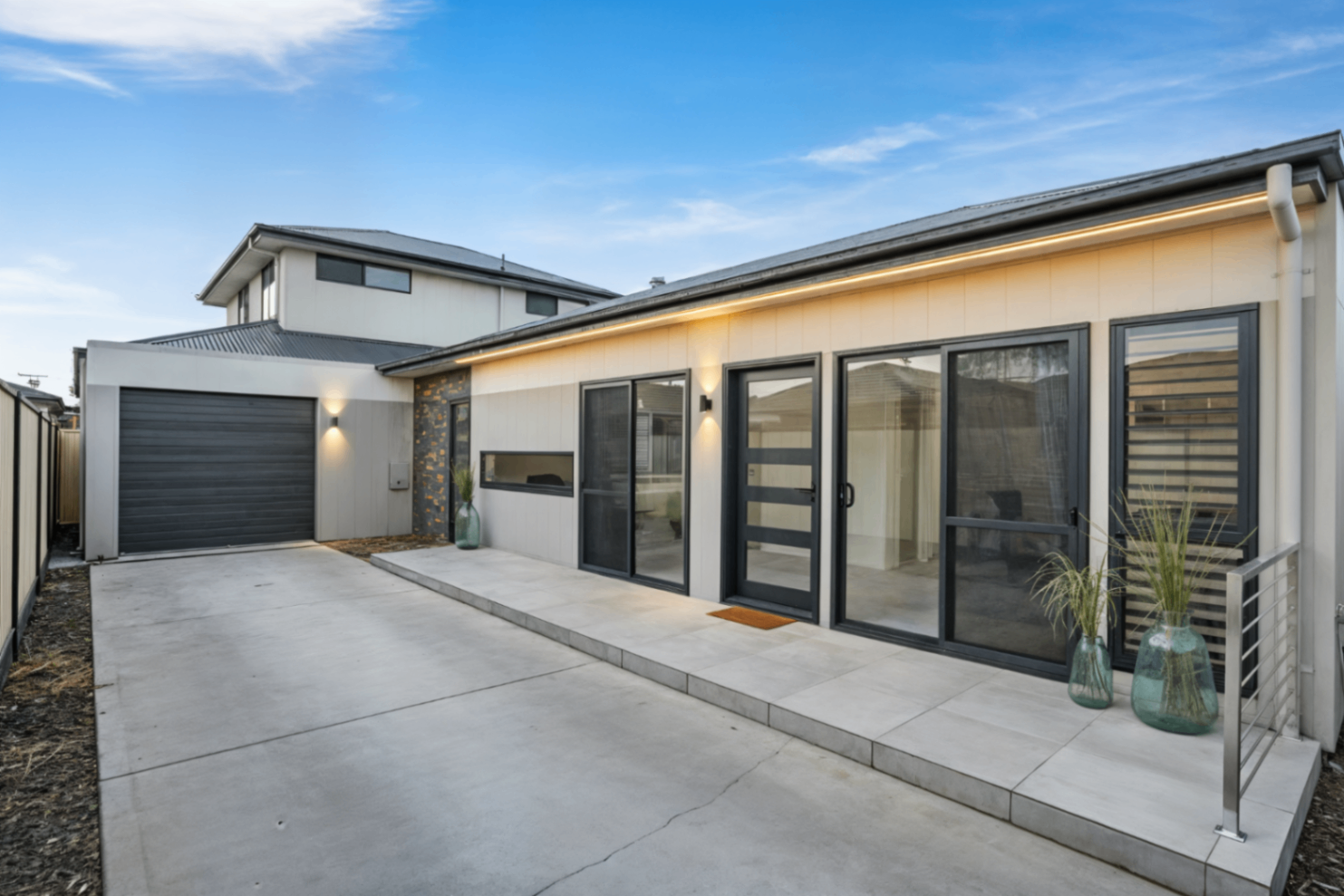
Marketing your granny flat:
Professional photos matter enormously. A well-presented 2-bedroom granny flat with quality finishes attracts inquiries within 24-48 hours. Highlight the features tenants actually care about: energy efficiency (double-glazed windows, R4.8 insulation), modern appliances, private outdoor space, and proximity to transport.
Set your rent competitively based on comparable properties: not what you hope to achieve. Vacancy costs you $70+ per day in lost income. It's smarter to rent at market rate and maintain 100% occupancy than chase premium pricing and sit empty.
Tax advantages you can't ignore:
Granny flats qualify for depreciation deductions on the building structure and fixtures. Typically, owners claim $4,000-$8,000 annually in depreciation alone: that's $4,000-$8,000 in taxable income you don't pay tax on. Over 10 years, this adds up to $40,000-$80,000 in tax savings.
Engage a quantity surveyor to prepare a depreciation schedule (costs around $600-$800). The first-year deductions alone usually cover this expense multiple times over.
The cash flow reality:
Let's run actual numbers on a 2-bedroom granny flat:
- Total investment: $135,000 (home) + $30,000 (site prep) = $165,000
- Weekly rent: $500
- Annual rental income: $26,000
- Less costs (rates, insurance, maintenance): $3,500
- Net annual income: $22,500
If you borrowed 100% using equity in your primary residence at 6.5% interest, your annual loan cost is approximately $10,725. Your net positive cash flow: $11,775 per year: or $980 per month.
That's $980 monthly you can redirect toward your mortgage, invest elsewhere, or simply bank. And this figure improves as rents increase and your loan balance reduces.
Your Vacant Land Is Ready: Here's What Happens Next
You've got the blueprint. You understand the process. Now the question is simple: how many more months are you willing to let that land sit empty?
Starting at $99,000 for a complete 1-bedroom modular granny flat, the entry barrier is lower than most property owners realise. Factor in site preparation, and you're looking at total investment from $120,000 for a fully installed, council-approved, rent-ready property.
The entire process: from first consultation to tenant move-in: takes 12-16 weeks when managed properly. That means you could be receiving your first rental payment before winter ends.
Explore our granny flat range and see exactly what $99,000 gets you: floor plans, inclusions, finishes, and real installation timelines. Want to compare options side-by-side? Start with our 1-bedroom, 2-bedroom, and 3-bedroom modular designs and shortlist the layout that fits your block and your tenant market. If you'd rather talk through your site and numbers, book a free consultation or head straight to our contact page and we’ll map out feasibility, approvals, and a realistic timeline.
Ready to turn “unused backyard” into reliable cash flow—fast?
Explore the floor plans on EcoHub Homes and then get in touch for a tailored plan for your block: approvals pathway, site prep scope, delivery access, and a clear start-to-rent timeline.