
Let’s be honest: building a home in Australia has historically been a bit of a nightmare. Between the unpredictable weather, the "tradie shortage" that never seems to end, and those soul-crushing material price hikes, it’s a wonder anyone gets a roof over their head at all.
But it’s Monday, the 23rd of March, 2026, and the landscape has shifted. If you’re still thinking about "building a house" in the traditional sense: bricks, mortar, and eighteen months of stress: you’re effectively living in the past.
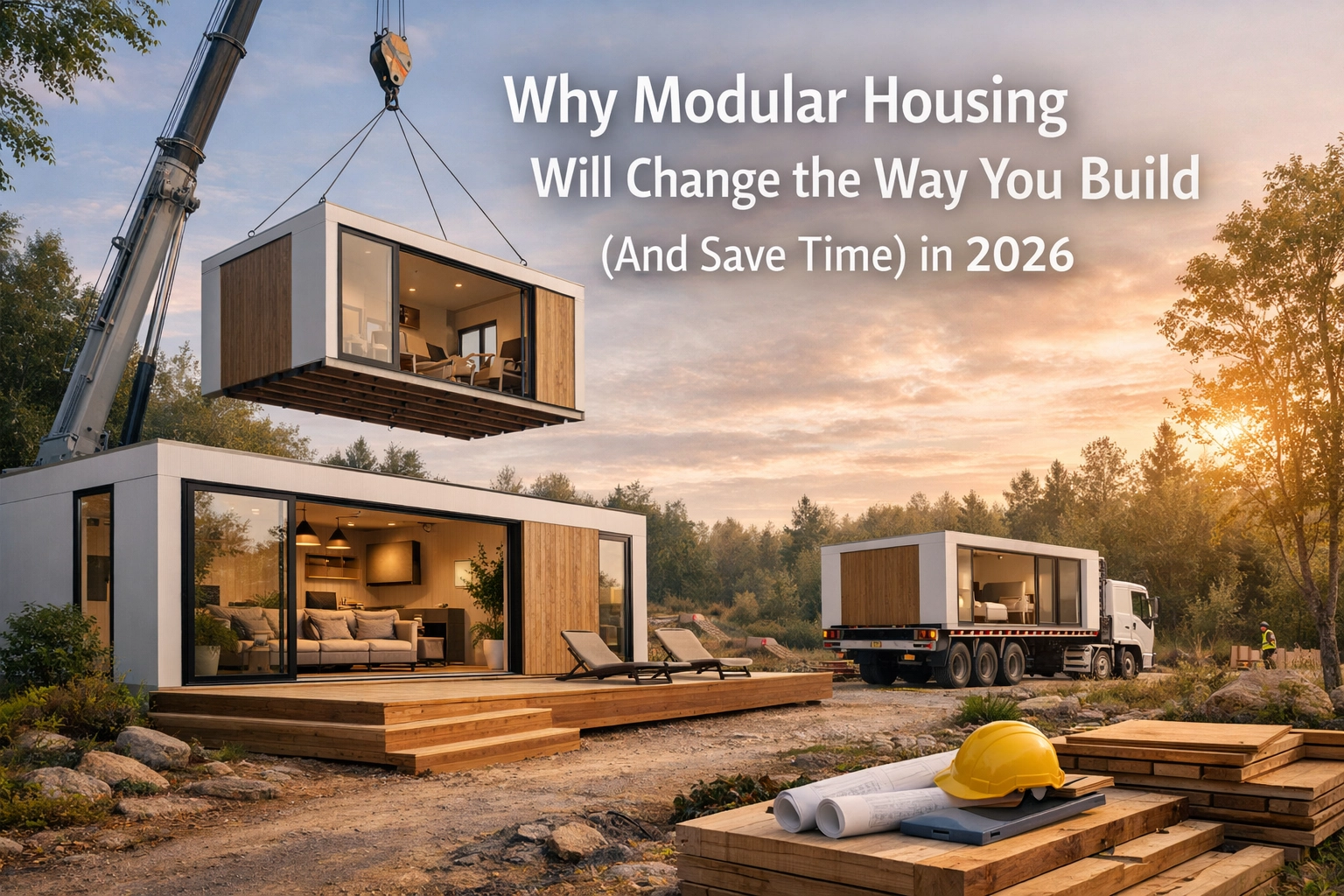
The future of Australian construction isn't just arriving; it’s being craned into place. Modular housing has moved from a "niche alternative" to the gold standard for savvy property owners and investors who value their time as much as their bank balance. At EcoHub Homes, we’ve seen the tide turn. Here is why modular is the only way to build in 2026.
The Speed Advantage: From Empty Lot to Move-In Ready in Weeks
The biggest hurdle in traditional construction has always been the timeline. We’ve all heard the horror stories: a "six-month build" that stretches into two years because of rain, missing supplies, or a site supervisor who stopped answering their phone.
In 2026, time is the ultimate currency. Modular construction slashes traditional build times by 30% to 60%. While a standard site-built home might take 12 to 18 months to complete, an EcoHub modular home is typically ready in 3 to 6 months.
How? It’s simple. We build the modules in a controlled factory environment while your site is being prepared. By the time the footings are ready, your house is already 90% complete. We aren’t waiting for the rain to stop or for a specific contractor to show up. Everything happens simultaneously, like a well-oiled machine.
Why Precision is the New Premium
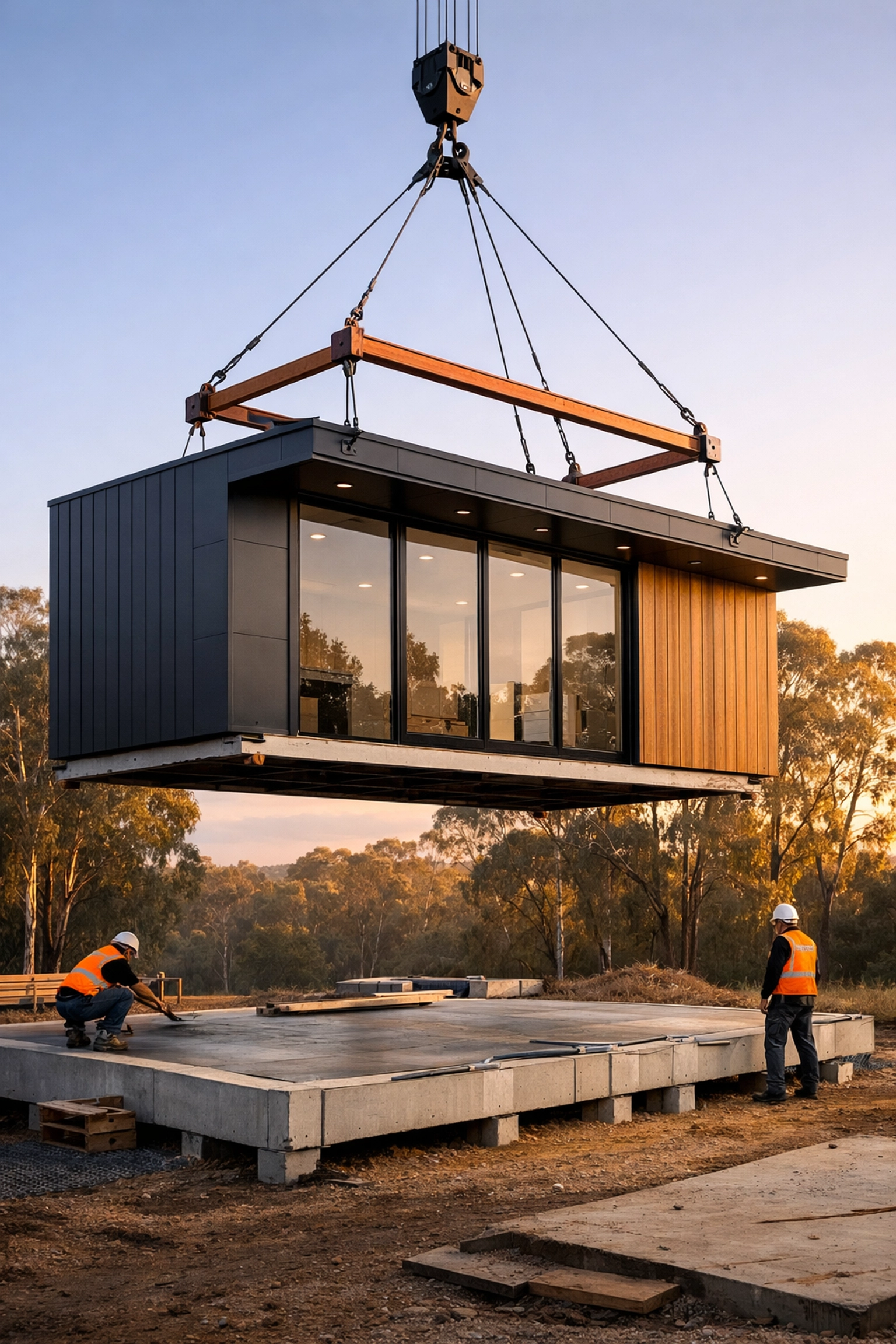
There’s a common misconception that "fast" means "cheap" or "low quality." In the modular world, the opposite is true. Because our homes are built inside a specialized facility, we achieve a level of precision that is physically impossible on a traditional building site.
Think about it: in a factory, we use laser-guided cutting tools, standardized steel frames, and a permanent team of craftsmen who work in perfect conditions every day. There’s no moisture getting into the timber while it sits in the mud for three weeks. There’s no wind blowing the insulation around.
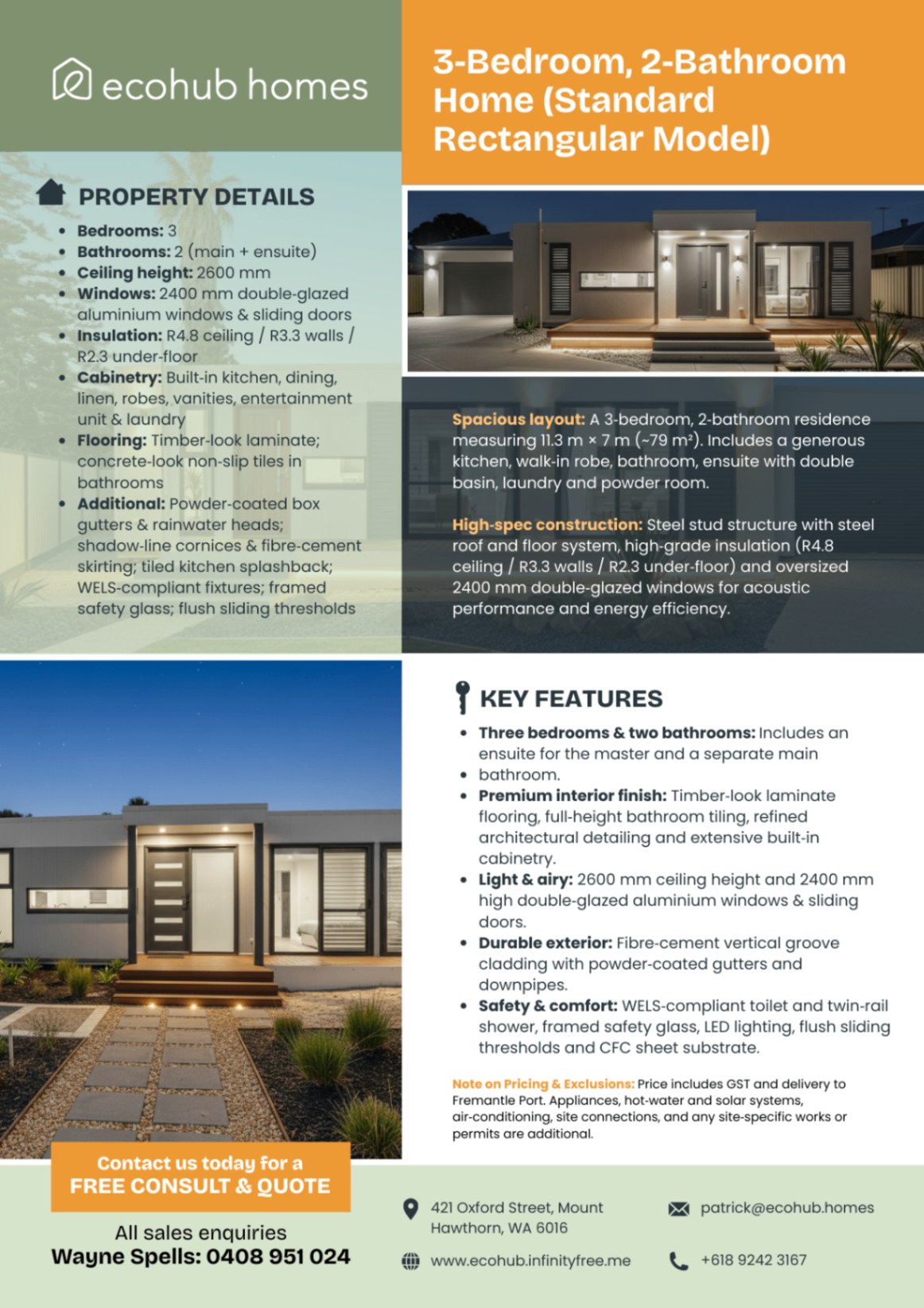
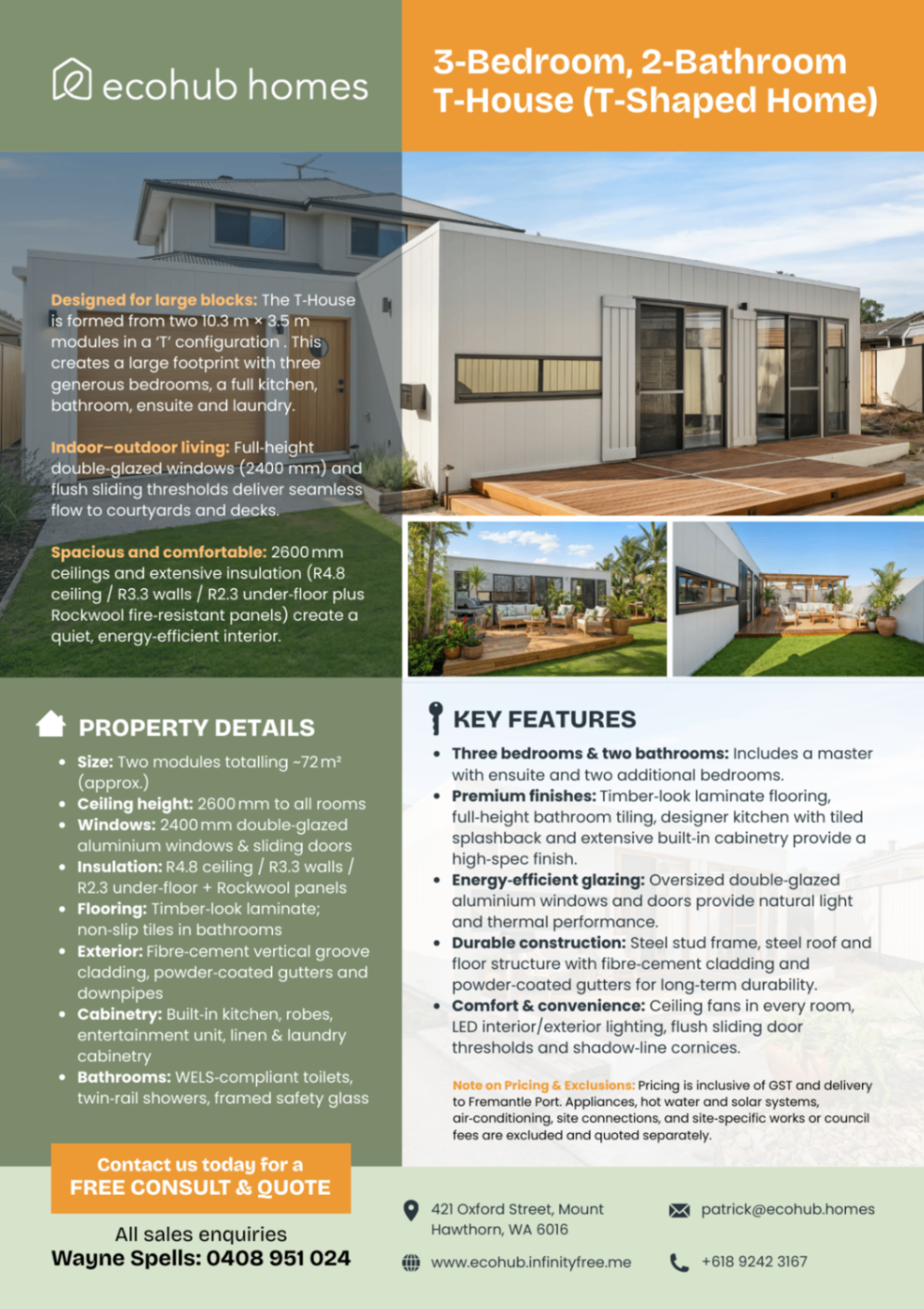
The result? Straighter walls, tighter seals, and significantly better energy efficiency. When you look at our 10-star three-bedroom, two-bathroom home, you aren't just looking at a fast build: you’re looking at a masterpiece of thermal engineering that will save you thousands in energy bills over the next decade.
The Investor’s Edge: Radical ROI
If you’re a property investor, the "time is money" cliché has never been more literal. Every month your land sits empty is a month of lost rental income and mounting interest on your construction loan.
By choosing modular, you’re shrinking that "dead time" by a year or more.
- Faster Occupancy: Get tenants in by next season, not next year.
- Fixed Pricing: Traditional builds are notorious for "variations" that blow the budget. Our modular process offers much higher price certainty.
- Sustainability Sells: In 2026, renters are actively seeking eco-friendly homes to avoid soaring utility costs.
Investors are increasingly using modular solutions for "ancillary dwellings" (Granny Flats) to generate passive income. Adding a one-bedroom home to an existing block can be done with minimal disruption to the main house, turning a backyard into a high-yield asset in a matter of months.
Sustainability Isn’t an "Add-On": It’s the Core
In 2026, building "green" isn't a luxury; it’s a necessity. Australian building codes have tightened, and the climate is demanding more from our structures. Modular housing is inherently more sustainable than traditional builds for three main reasons:
- Reduced Waste: Factory production allows us to recycle off-cuts and manage materials with extreme efficiency. Traditional sites often see 10-15% of materials end up in a skip bin. We’ve virtually eliminated that.
- Superior Insulation: Our homes, like the EcoHub T-House, feature premium double-glazed windows and high-spec wall and floor insulation as standard.
- Low Site Impact: Because the home is delivered in modules, we don't need a parade of heavy machinery tearing up your land for a year. We crane the modules onto piers, leaving the natural landscape: and its carbon-sequestering plants: mostly intact.
Navigating the 2026 Market: Why Now?
We are currently seeing a perfect storm in the Australian housing market. Government support for factory-built housing is at an all-time high as states look for ways to solve the housing crisis. Banks have also caught up: financing a modular home is now as straightforward as financing a traditional one, with many lenders offering "green loans" with better rates for 7-star and 10-star rated homes.
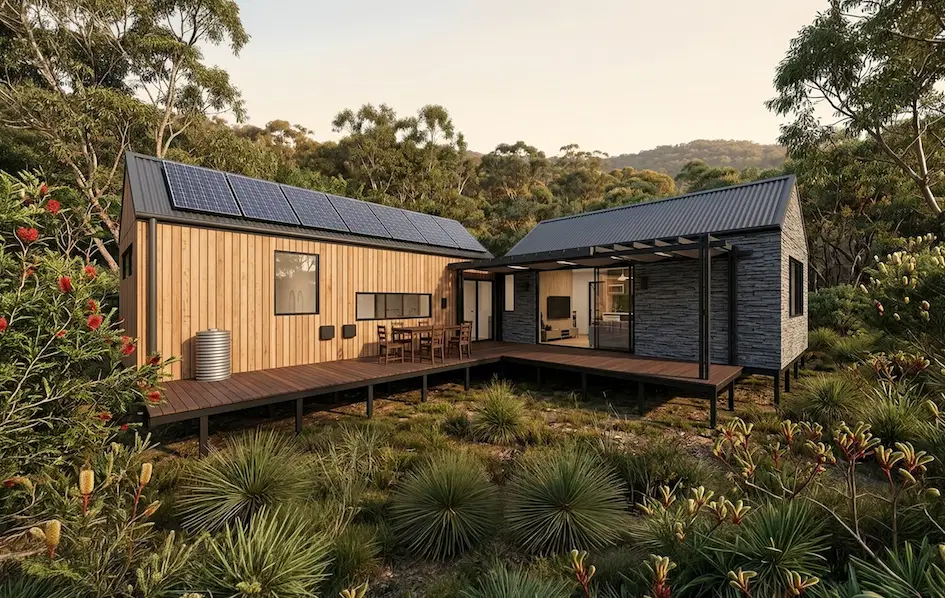
Furthermore, with the rise of remote work, more Australians are looking to build on regional or bushland lots. These areas are often difficult and expensive for traditional builders to access. Modular homes are the perfect solution for remote builds. We can transport a fully finished home to the most secluded bush block, providing a high-end modular retreat without the logistical nightmare of managed site labor in the middle of nowhere.
What's Inside? Breaking Down the Specs
When we talk about "premium finishes" at EcoHub, we mean it. The homes we are rolling out this year are a far cry from the "portable cabins" of the past. We’re talking:
- High Ceilings (2600mm+): Creating a sense of space and luxury.
- Full-height Tiling: In bathrooms for that high-end hotel feel.
- Steel Frame Construction: For durability and termite resistance.
- Smart Home Ready: Integrated systems for energy monitoring and security.
Whether you are looking at a compact two-bedroom layout or a sprawling family home, the quality is consistent. You aren't compromising on aesthetics to get the speed; you’re actually getting a more refined product because it was built under a roof, not under the sun.
Your Move: How to Start Building Smarter
The "old way" of building is becoming a relic. The risk of delays, the uncertainty of costs, and the environmental impact of traditional construction are no longer acceptable for the modern property owner.
If you want to be ahead of the game in 2026, you need to look at how your home is made, not just where it sits. Modular housing is the liberation from the construction site grind. It’s the smart way to build a sustainable, high-value asset without losing your mind in the process.
Ready to see the future of your property?
Don’t just take our word for it. Explore our range of designs in the EcoHub Shop or see the full list of what’s possible on our Sitemap.
If you’re ready to stop waiting and start building, we’re here to help. Our team can guide you through everything from site suitability to final installation.
Book a Free Consultation with the EcoHub team today and let’s get your 2026 build moving, literally.