
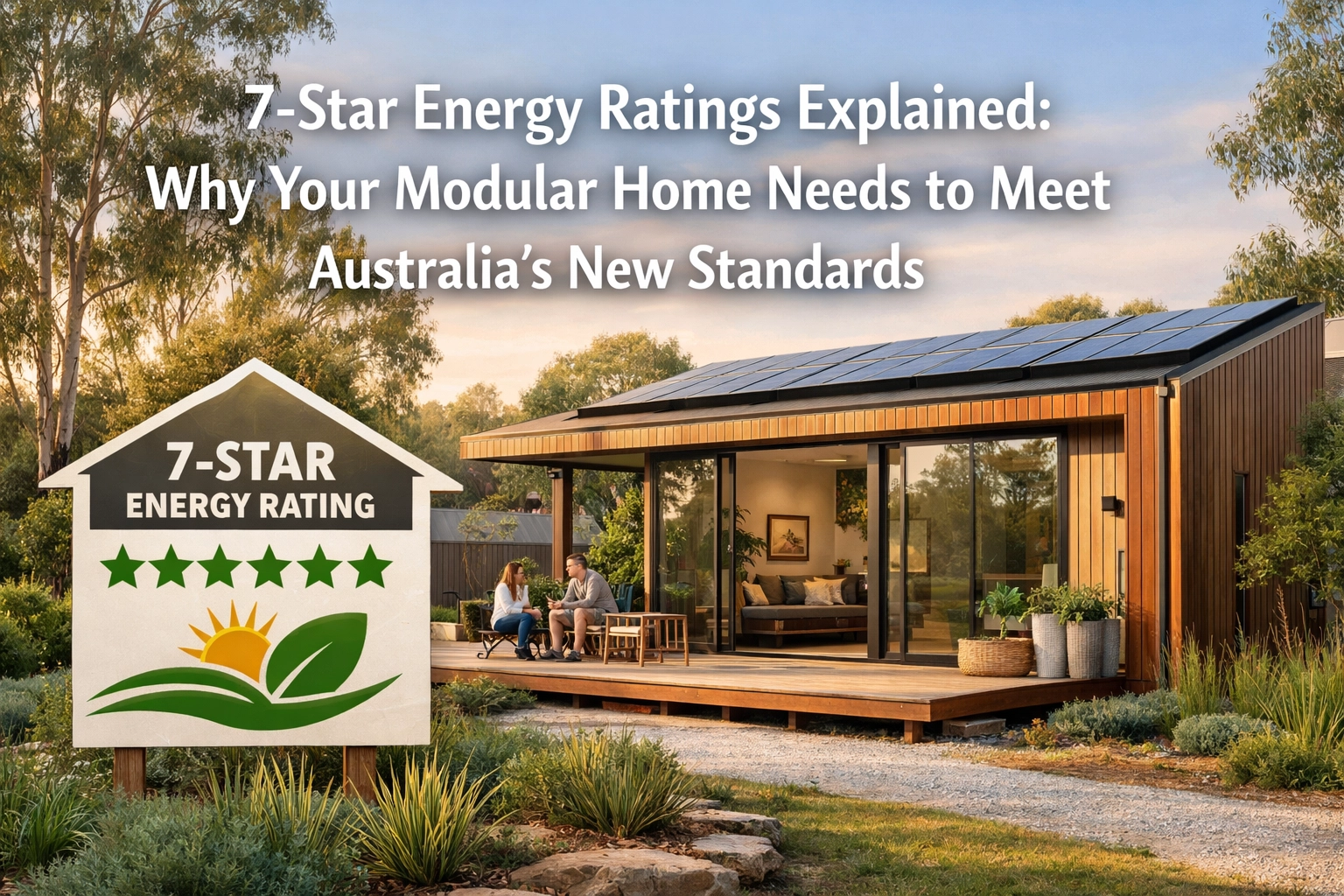
If you're planning a new home in Australia right now, you've probably stumbled across the term "7-star energy rating" more than once. Maybe your builder mentioned it. Maybe your local council sent you documentation. Maybe you're just wondering why everyone's suddenly obsessed with stars.
Here's the short version: 7-star energy ratings are now mandatory for new homes across most Australian states, and they're not just regulatory box-ticking: they're a genuine game-changer for how comfortable, affordable, and sustainable your home will be.
Let's break down what this actually means, why it matters, and how EcoHub Homes delivers 7-star performance without the greenwashing.
What Is a 7-Star Energy Rating?
The 7-star rating comes from the Nationwide House Energy Rating Scheme (NatHERS), which assesses residential buildings on a scale of 0 to 10 stars. Think of it as a thermal efficiency scorecard for your home.
A 7-star rating means your home is designed to maintain comfortable temperatures year-round with minimal energy input. It's not about solar panels or smart thermostats: those help, but they're not the core of the rating. The real focus is on the building shell itself: walls, roof, windows, floors, and how they work together to keep heat in during winter and out during summer.
Accredited NatHERS assessors use computer modelling to evaluate your design based on insulation levels, window placement, orientation, and construction materials. The higher your star rating, the less you'll rely on heaters and air conditioners to stay comfortable.
The Mandatory Timeline Across Australia
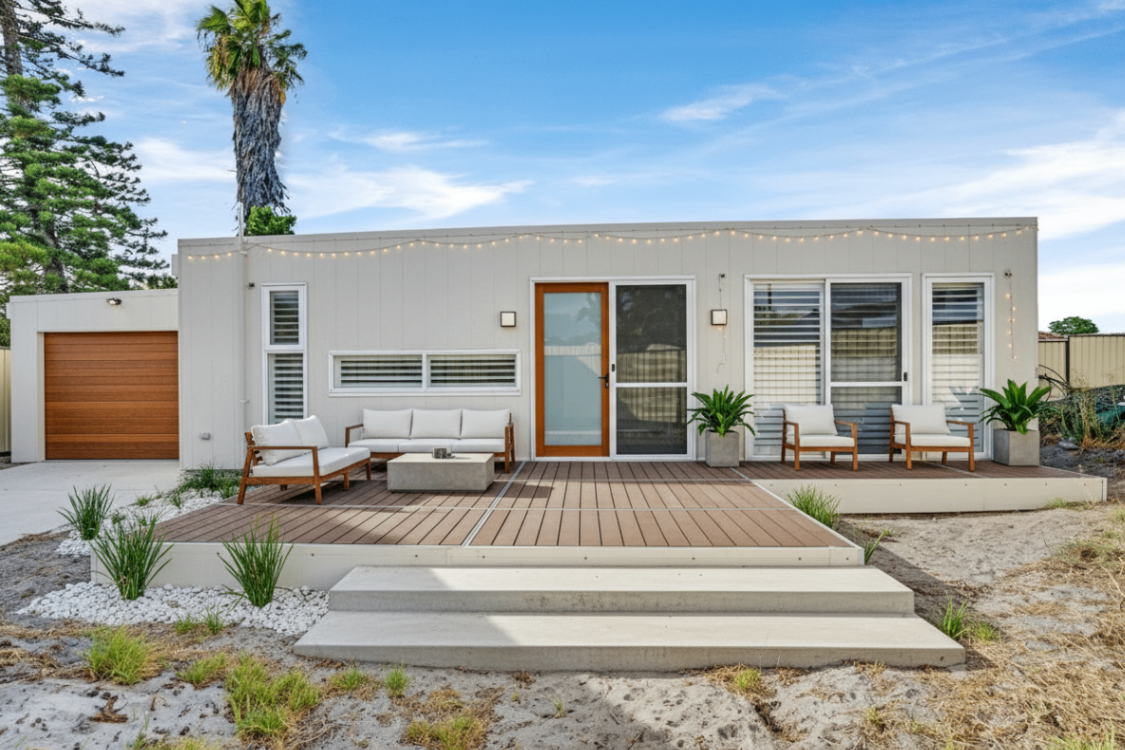
Here's where things get official. Multiple states have rolled out mandatory 7-star requirements over the past few years:
- Victoria and Melbourne – From May 1st, 2024, all new homes must hit a minimum 7-star NatHERS rating.
- Western Australia – From May 1st, 2025, new homes and apartments require 7 stars.
- New South Wales – BASIX standards updated October 1st, 2023, raising compliance from 5 stars to 7 stars.
- Queensland – New houses and townhouses must achieve 7 stars.
If you're building in any of these states, 7-star compliance isn't optional: it's built into your building approval process. That means your builder needs to prove your home meets the standard before construction even begins.
Why 7-Star Performance Actually Matters
Forget the regulatory jargon for a moment. Let's talk about what a 7-star home feels like to live in.
Lower energy bills. A 7-star home uses 25% less energy than a 6-star home. That's not a rounding error: it's real money back in your pocket. Australian homeowners with 7-star homes report annual electricity savings reaching up to $980 compared to older, less efficient designs.
Year-round comfort without cranking the AC. A well-designed 7-star home stays naturally cooler in summer and warmer in winter. You're not constantly adjusting the thermostat or running heaters at full blast. The building itself does the heavy lifting.
Environmental impact. Residential homes account for 29% of Australia's total electricity use and 11% of greenhouse gas emissions. When your home uses less energy, you're directly reducing your carbon footprint: and doing your part to ease pressure on the grid during peak demand periods.
How EcoHub Homes Achieves 7-Star Performance
Here's where the rubber meets the road. Achieving a 7-star rating requires deliberate design choices and premium materials: not just ticking boxes on a compliance form.
Insulation That Actually Works
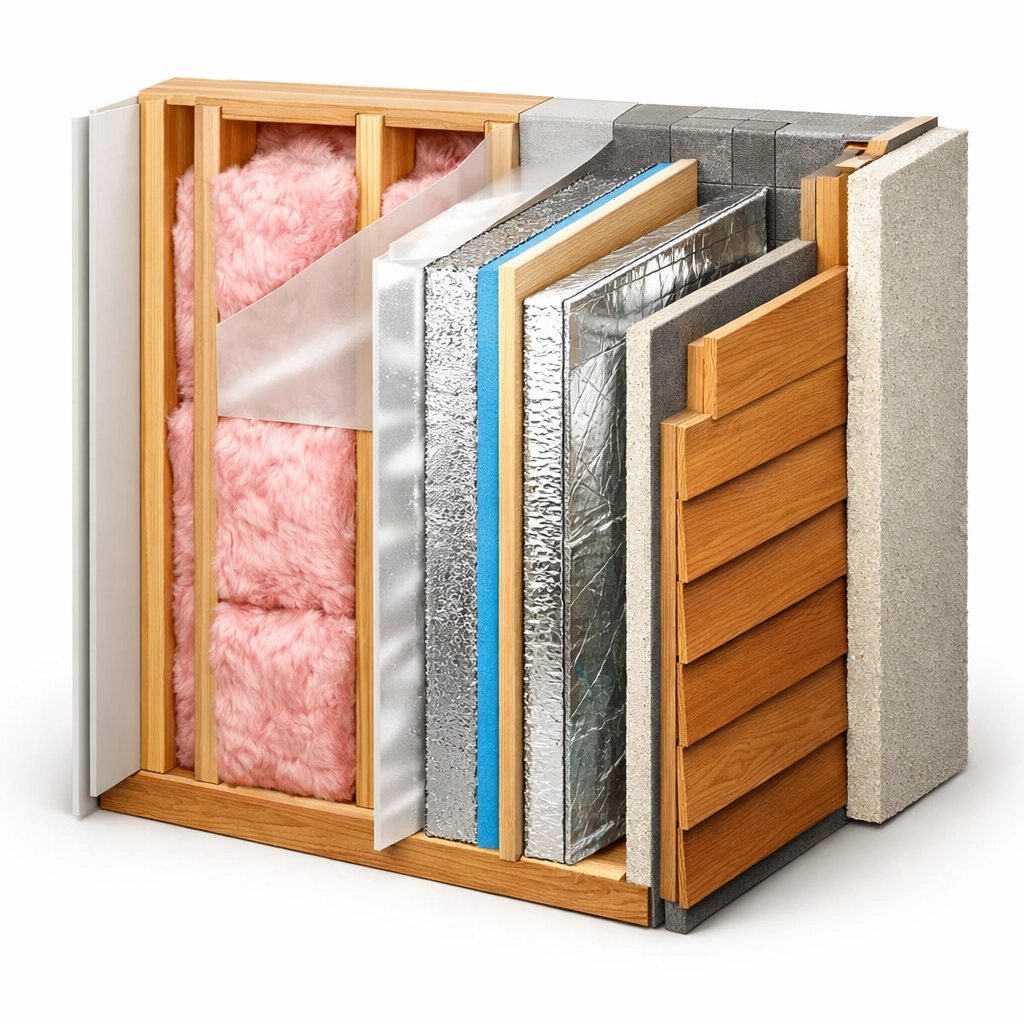
We spec high-performance insulation across every part of the building envelope. Roof, walls, and floors all receive insulation with appropriate R-values for your climate zone. This isn't the bare minimum: it's what genuinely keeps your home thermally stable.
Poor insulation is the fastest way to watch your energy bills skyrocket. It's also one of the most common shortcuts builders take to cut costs. We don't play that game.
Double-Glazed Windows as Standard
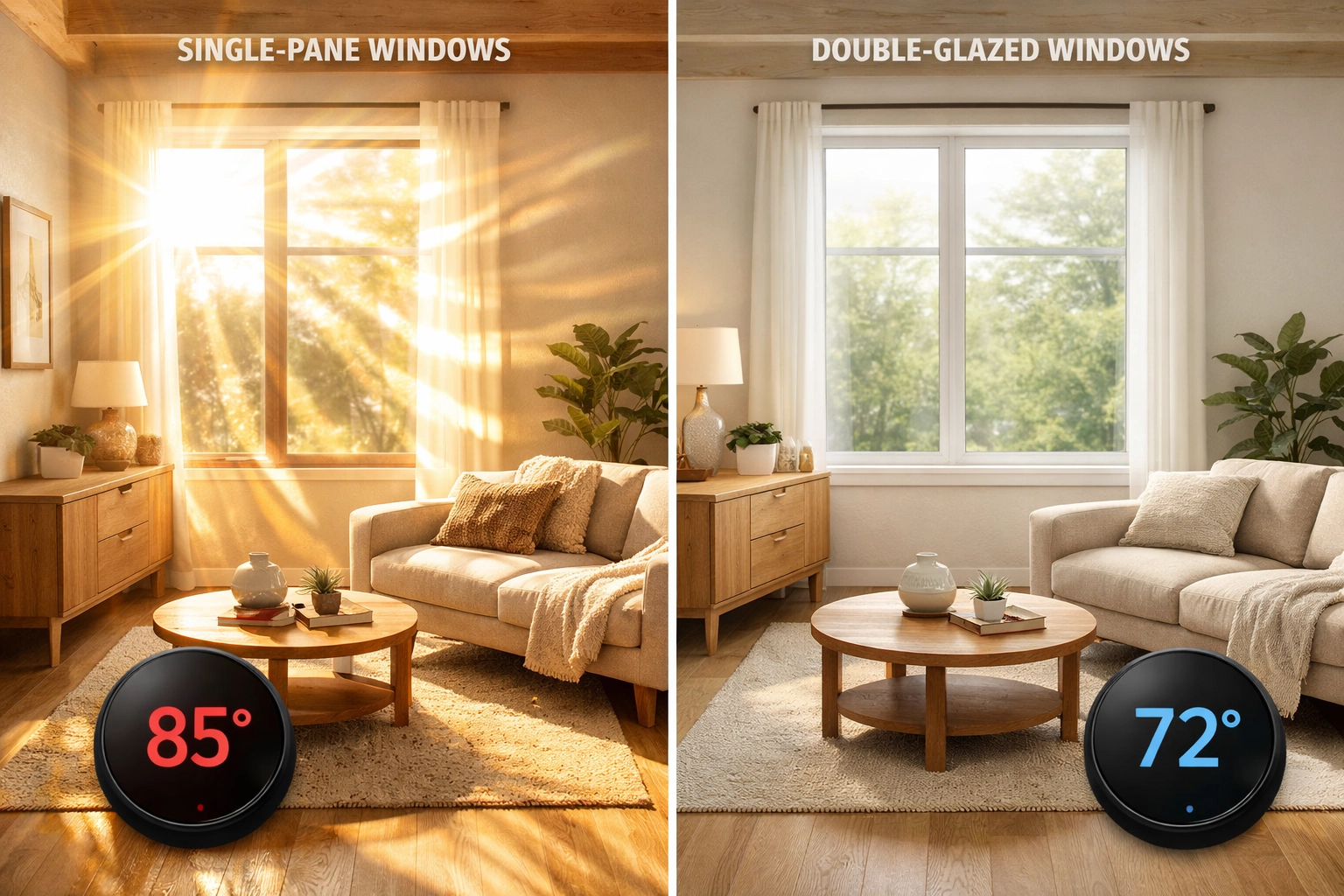
Single-glazed windows are thermal black holes. They account for up to 40% of heat loss in winter and 87% of heat gain in summer. Double glazing dramatically reduces this transfer, keeping your interior temperature stable without forcing your heating and cooling systems into overdrive.
All EcoHub homes come with double-glazed windows as standard. No upgrades. No optional extras. Just thermal efficiency baked into the design from day one.
Strategic Orientation and Passive Design
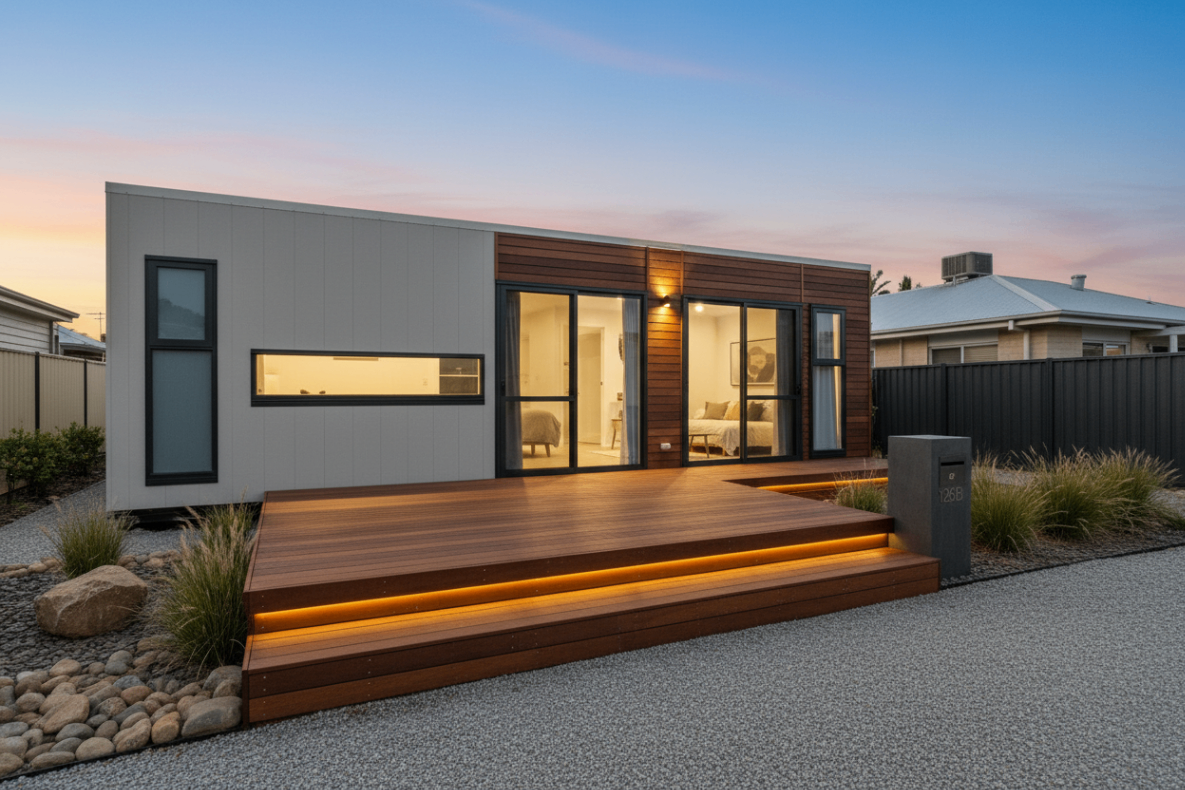
Passive design principles: north-facing windows, strategic shading, cross-ventilation: are the unsung heroes of energy-efficient homes. During the design phase, we consider solar access, prevailing winds, and seasonal sun angles to maximise natural heating in winter and minimise heat gain in summer.
This isn't something you can retrofit easily. It's locked in during the design stage, which is why working with experienced designers who understand Australian climates makes all the difference.
Solar-Ready Roof Structures
While solar panels aren't part of the NatHERS rating itself, we design every roof to be solar-ready. That means structural support, optimal pitch angles, and electrical conduit planned from the outset. When you're ready to add solar down the track, the infrastructure's already there.
Avoiding the Greenwashing Trap
Let's be honest: the prefab and modular housing industry has a greenwashing problem. Plenty of builders slap "eco-friendly" and "sustainable" on marketing materials without backing it up with actual performance data.
Here's how to cut through the noise:
Ask for the NatHERS certificate. A legitimate 7-star home will have an official NatHERS certificate from an accredited assessor. If a builder claims 7-star performance but can't produce documentation, walk away.
Insist on specifics. What R-value insulation are they using? Are windows double-glazed as standard or an optional upgrade? What's the roof design? Vague answers are red flags.
Compare like for like. Some builders quote 7-star ratings for a single floor plan optimised for one specific location. Ask if your actual design, on your actual site, will achieve the same rating.
At EcoHub Homes, every design undergoes NatHERS assessment before construction begins. We provide full documentation, and our specs are transparent: no fine print, no surprises.
The Real-World Difference: Comfort You Can Feel
Here's what 7-star performance looks like in practice:
You walk into your home on a 38°C Perth summer day. The interior is noticeably cooler: not because the air conditioning's been running all day, but because the insulated walls, double-glazed windows, and strategic shading have kept the heat out.
On a cold Melbourne winter morning, your home retains warmth overnight. You're not waking up to a freezing house that requires an hour of heating before it's liveable. The building envelope holds onto the heat you generated the night before.
That's the 7-star difference. It's not abstract. It's tangible comfort that reduces stress, lowers bills, and makes your home genuinely enjoyable to live in.
Why Modular Construction Has the Edge
Modular homes have a built-in advantage when it comes to achieving 7-star ratings: precision manufacturing.
When wall panels, roof trusses, and floor systems are constructed in a controlled factory environment, quality control is tighter. Insulation is installed correctly. Seals are airtight. Materials are consistent.
On-site construction, by contrast, is vulnerable to weather delays, inconsistent workmanship, and material variations. That's not a criticism of traditional builders: it's just the reality of building outdoors.
At EcoHub, our modules are engineered to 7-star specifications in a factory, then transported and installed on-site. That means you get high-performance thermal efficiency without the variability of traditional construction methods.
What This Means for Your Build
If you're planning a new home in 2026, 7-star compliance isn't something to stress about: it's an opportunity to future-proof your investment.
Work with builders who understand passive design principles, use premium materials as standard, and provide transparent documentation. Ask questions. Demand specifics. Don't accept vague assurances.
And if you're exploring modular options, you're already ahead of the curve. Factory-built homes deliver the precision and consistency needed to hit 7-star performance reliably.
Want to see how EcoHub Homes designs for 7-star performance? Check out our range of energy-efficient modular homes or dive deeper into how energy-efficient design slashes your power bills.
We're not just meeting the standard: we're designing homes that make 7-star performance feel effortless.