
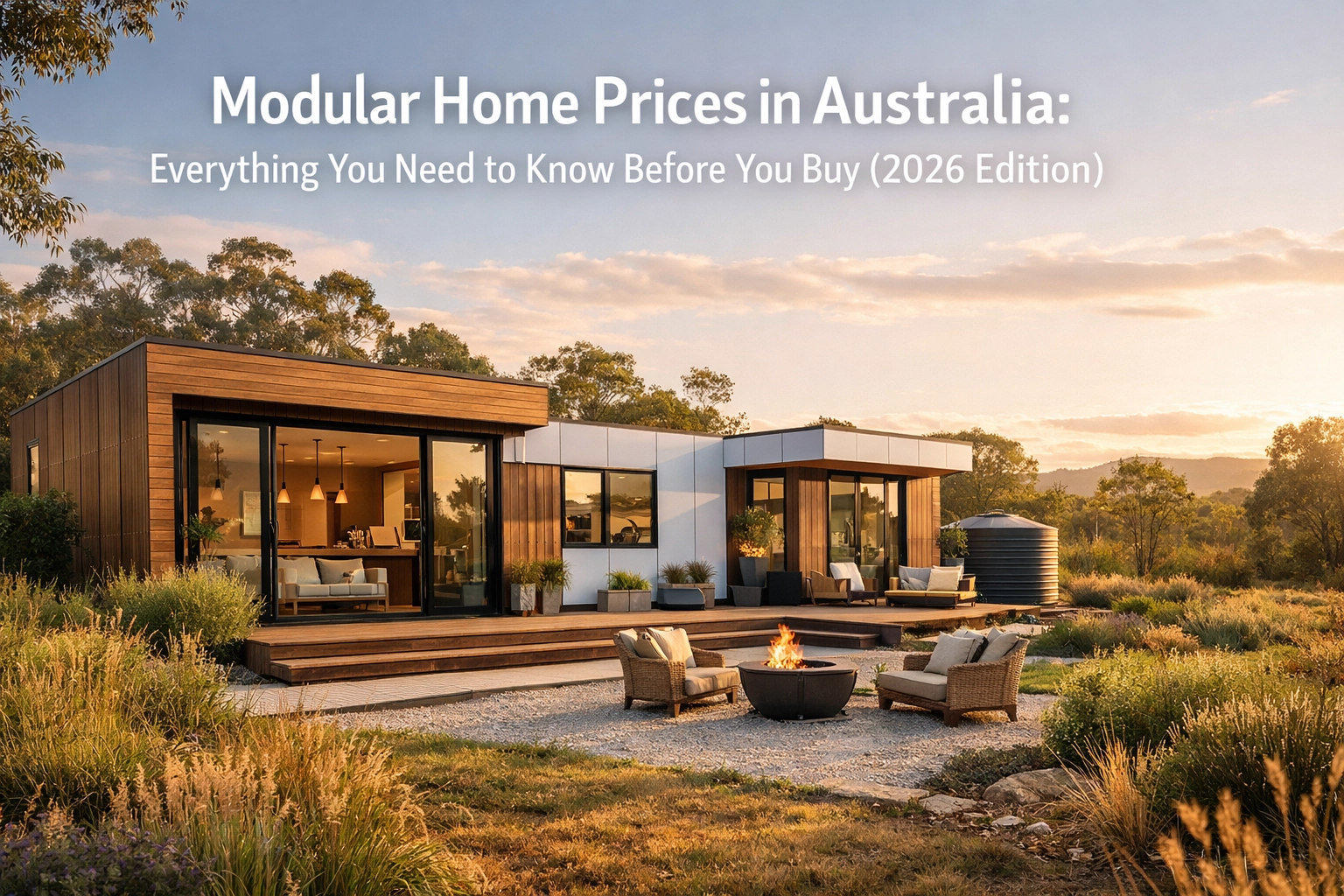
You're ready to build. You've got the land (or you're eyeing it), and you know modular homes make sense: faster, more predictable, often more affordable. But then you start googling "modular home prices Australia" and get hit with a bewildering range: $50,000 to over $700,000. What's the real number? What are you actually paying for? And how do you avoid getting stung by hidden costs?
Let's cut through the noise. Here's everything you need to know about modular home pricing in Australia in 2026: no fluff, just the facts that'll help you budget smart and build sooner.
The Real Numbers: What Modular Homes Cost Right Now
The Australian modular home market spans a massive price spectrum. Entry-level studio or granny flat setups start around $50,000–$120,000. Standard two-bedroom homes typically land between $250,000–$380,000. Larger three-to-four-bedroom family homes? You're looking at $400,000–$700,000+, with premium custom builds pushing past $1 million for architecturally designed luxury.
Industry averages sit at $2,500–$3,000 per square metre, but that's a rough guide at best. Size, finishes, location, and customisation all swing the final figure dramatically. A 36 m² single-module studio might cost $95,000–$125,000, while a spacious 112 m² dual-module home ranges from $265,000–$295,000.
Here's the catch: modular homes still make up less than 5% of new builds nationally. That means most Australians are overpaying and over-waiting with traditional construction: often without realising there's a faster, more transparent alternative.

What Actually Drives Your Final Price?
Understanding where your money goes matters. Here's how costs typically break down across a modular build:
- Base building (modules and structure): 40–55%
- Interior finishes and fixtures: 15–25%
- Site preparation and foundations: 10–15%
- Services and connections (electrical, plumbing, utilities): 10–20%
- Professional fees (design, engineering, permits): 5–10%
This breakdown reveals something crucial: the module itself is only half the story. Site prep, connections, and council approvals add substantial costs that many first-time buyers underestimate.
Size and Design Complexity
More square metres = more cost. But it's not linear. A second module doesn't just double the price: it adds complexity in transport, craning, joining, and finishing. Multi-level designs, custom layouts, and architectural features all push the price upward.
Material Choices and Finishes
Budget vinyl flooring and laminate benchtops keep costs down. Premium timber-look flooring, stone benchtops, high-end appliances, and designer fixtures elevate both aesthetics and price tags. Steel framing costs more upfront than timber but delivers superior durability and bushfire resistance: particularly valuable in Australian conditions. Colourbond cladding, double-glazed windows, and extensive insulation add to the initial investment but slash long-term energy bills.
Location, Land, and Logistics
Building in regional areas costs significantly less than metro zones: both for the module and site work. Already owning land saves massively compared to purchasing first. But here's what most builders won't tell you upfront: remote or difficult-access sites can blow out transport and craning costs dramatically. A standard metro delivery might cost $5,000–$10,000, while remote regional sites can hit $20,000+.

The EcoHub Homes Approach: Premium Quality, Transparent Pricing
We've built our entire business around one frustration: Australians deserve to know exactly what they're paying for: and get genuine value for every dollar.
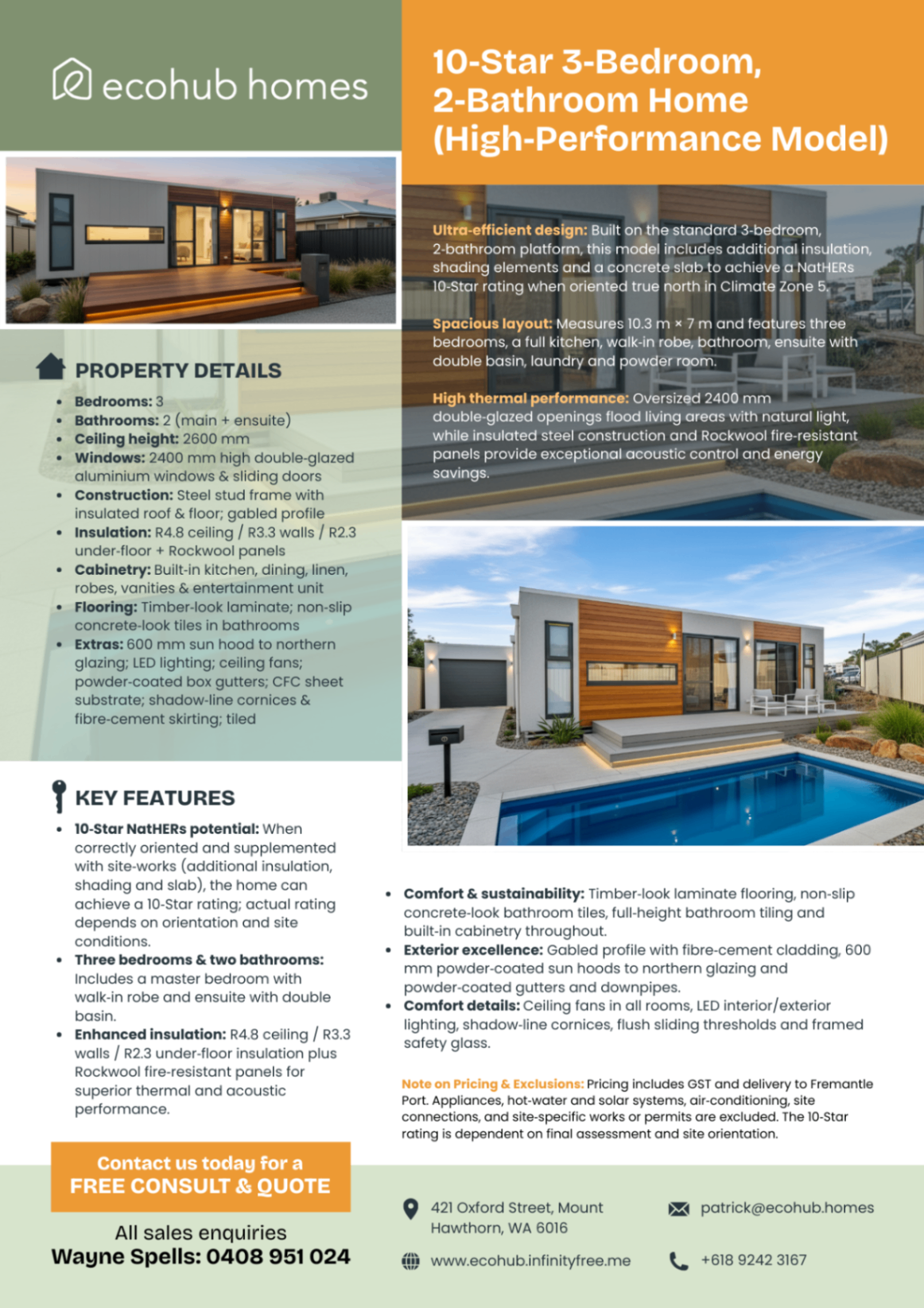
EcoHub Homes start from $99,000 for our entry-level models, delivering premium finishes, energy-efficient design, and full transparency from day one. Our three-bedroom, two-bathroom T-House: a spacious family home with 2,600 mm high ceilings, full-height double-glazed windows, R4.8 ceiling insulation, and timber-look laminate flooring throughout: represents the sweet spot between affordability and quality.
Every EcoHub home includes:
- Steel frame construction for strength and bushfire resistance
- Double-glazed aluminium windows (standard 2,400 mm height) for thermal and acoustic performance
- Comprehensive insulation (R4.8 ceiling, R2.5 walls, R1.5 floors) targeting 10-Star NatHERS ratings
- Premium finishes including stone benchtops, soft-close cabinetry, and modern fixtures
- Solar-ready design with optimised roof orientation and electrical infrastructure
- Full-height bathroom tiling and built-in wardrobes in bedrooms
We don't upsell you on "essentials" that should be standard. We don't hide costs in vague line items. You get a detailed quote upfront, covering the module, delivery, installation, and connections: so you can budget with confidence.

Hidden Costs Traditional Quotes Often Miss
Even with modular homes, several expenses sit outside the base module price. Savvy buyers account for these early:
Land preparation and foundations: Expect $15,000–$40,000+ depending on soil conditions, slope, and access. Rocky or clay-heavy sites need more extensive engineering. Sloping blocks require cut-and-fill or engineered retaining walls.
Utility connections: Connecting water, sewer, electricity, and gas to your site varies wildly. Urban connections might cost $5,000–$15,000 total. Rural properties requiring septic systems, water tanks, or long electrical runs can hit $30,000–$60,000+.
Council permits and approvals: Development applications, building permits, and engineering certifications typically run $5,000–$15,000. More complex sites or non-standard designs cost more.
Landscaping and driveways: Often overlooked but essential for a finished property. Budget $10,000–$30,000 for basic driveways, paths, fencing, and lawn.
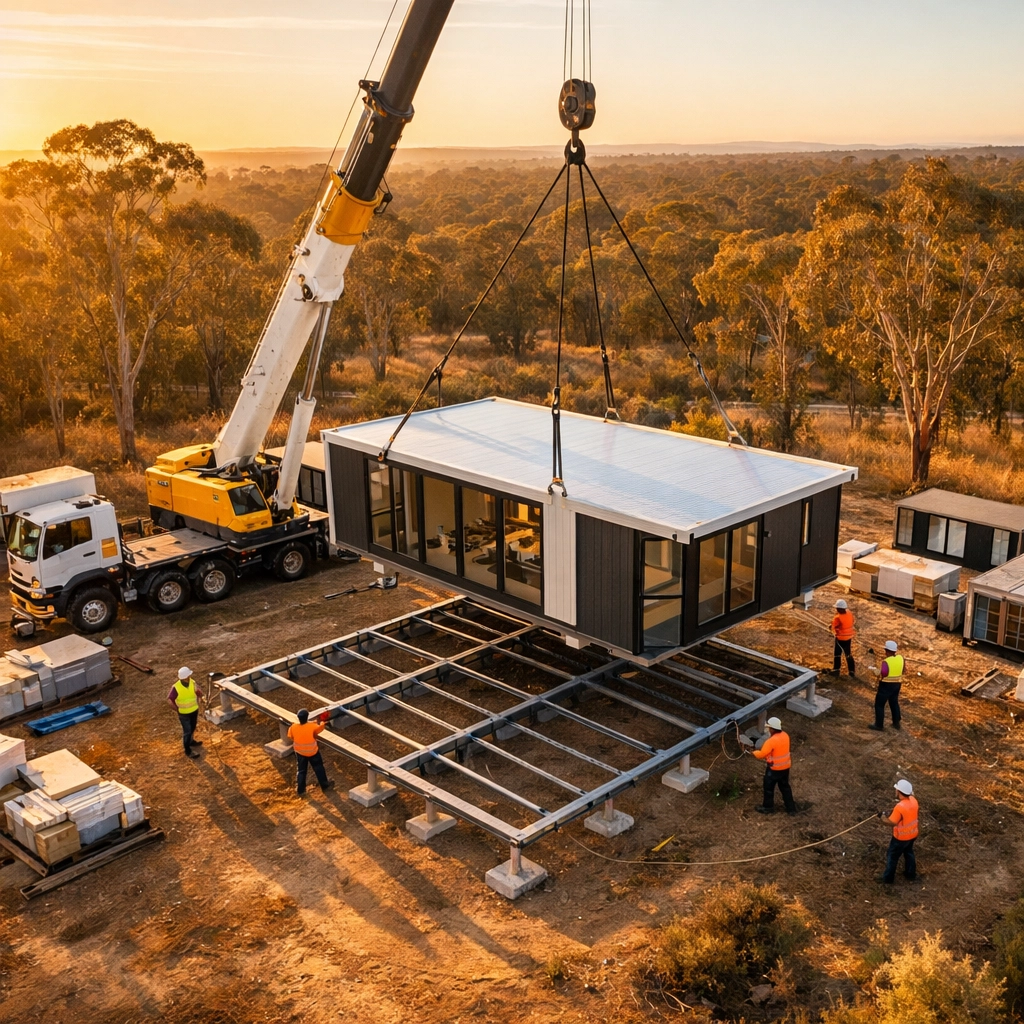
Transport and craning: Included in many quotes, but verify this. Oversized modules, difficult access, or remote locations add costs.
At EcoHub Homes, we walk you through every cost during your free consultation—no surprises, no hidden fees discovered weeks before installation. If you want a quick overview of how we build and what’s included, start at our homepage: www.ecohub.homes.
Why Modular Beats Traditional on Cost and Speed
The biggest advantage modular homes offer isn't just affordability: it's predictability. Traditional builds in 2026 face material shortages, labour scarcity, and weather delays. Quoted prices balloon. Timelines stretch from 12 months to 18+ months. Stress compounds.
Modular construction flips the script entirely. Your home is built in a controlled factory environment using production-line efficiency. Weather doesn't delay progress. Material wastage drops dramatically. Labour costs stay consistent.
Timeline advantage: Most EcoHub homes move from order to move-in within 14–20 weeks. That's factory construction (8–12 weeks), transport and installation (1–2 weeks), and final connections and finishing (3–6 weeks). Compare that to traditional builds averaging 12–18 months: you're saving nearly a year of rent, temporary accommodation, or mortgage interest on an incomplete property.
Cost certainty: Your quote is your final price (barring site-specific surprises during preparation). No mid-build variations. No contractor blowouts. No material price escalations eating into your budget.
Energy efficiency savings: EcoHub homes are designed for Australian climates with extensive insulation, double-glazing, and optimised orientation. Lower energy bills from day one mean lower lifetime costs: often $1,500–$3,000 annually compared to older traditional builds.
Making Your Budget Work in 2026
Whether you're downsizing, building a first home, adding a granny flat for rental income, or creating a sustainable retreat, modular homes deliver genuine value in today's market.
Start by defining your non-negotiables: size, number of bedrooms, energy efficiency standards, and finishes. Then work backwards from your maximum budget, accounting for land, site prep, and connection costs beyond the module price.
Remember: the cheapest option upfront isn't always the smartest long-term investment. Energy-efficient design, quality materials, and proper insulation cost more initially but deliver decades of comfort and lower running costs. A $20,000 investment in double-glazing and premium insulation can save $50,000+ over the home's lifetime.
Your Next Step: Get a Real, Transparent Quote
Modular home pricing doesn't have to be confusing. With the right builder, you get upfront clarity, predictable timelines, and premium quality without the traditional build stress.
Ready to see what your budget actually gets you? Start by exploring our modular home models and floor plans, then get in touch via our contact page for a free consultation and quote. We’ll map out real numbers for your block—site prep, connections, delivery, installation, and timelines—so you can move from “researching” to “ready to build” with total clarity.
No pressure. No hidden costs. Just honest advice—and modular homes built for Australian conditions.