
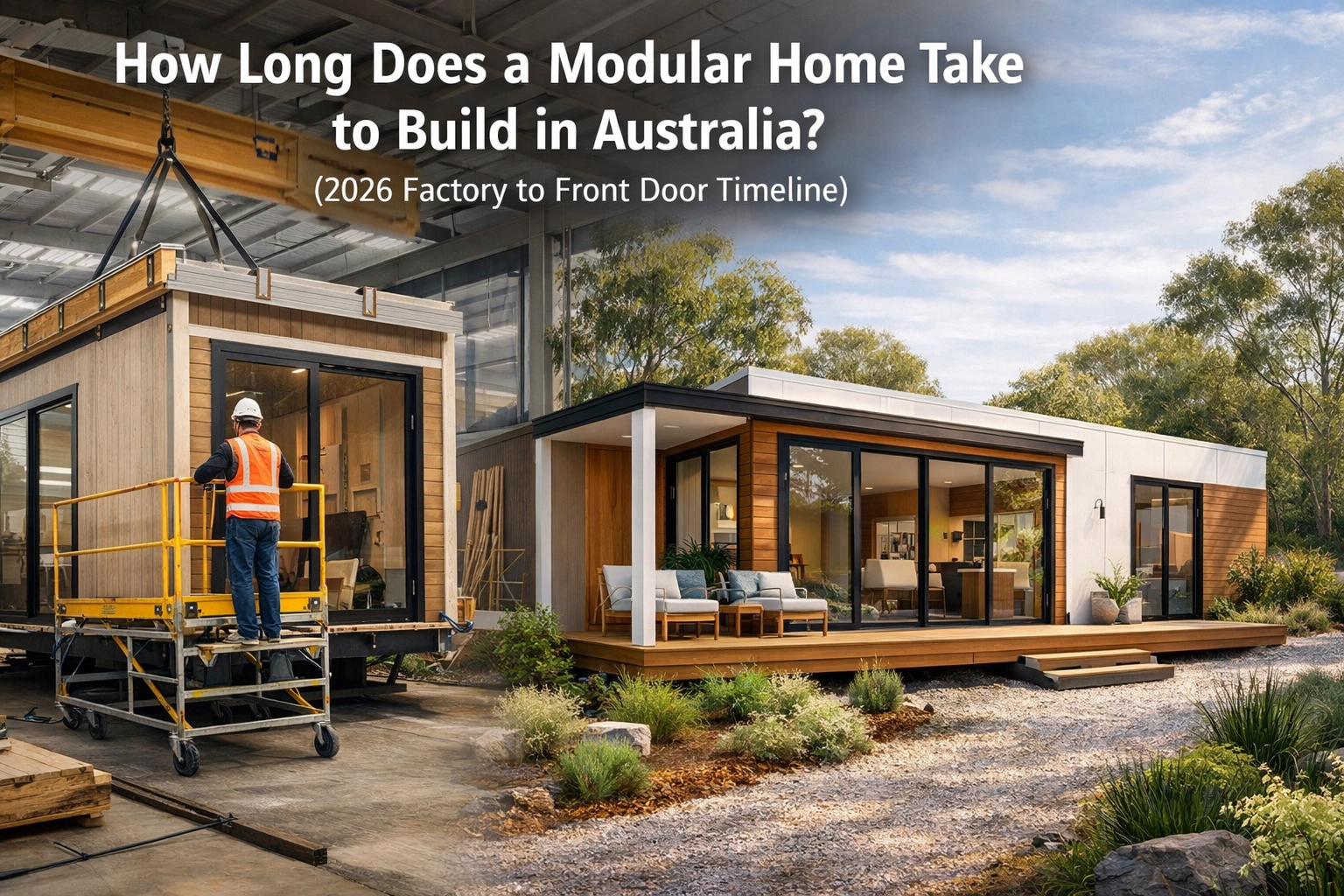
You're probably here because you've heard the horror stories. The neighbour who started their build in 2024 and they're still not moved in. The mate who's blown through their budget waiting for tradies who never show. The endless delays caused by three days of rain that somehow turns into three weeks of downtime.
Traditional Australian home construction has become a nightmare of uncertainty, 12 to 24 months of crossed fingers, weather watching, and budget anxiety.
Modular construction flips that entire equation on its head.
The Short Answer: 16–22 Weeks from Factory Start to Keys in Hand
Here's the number that makes traditional builders uncomfortable: 16 to 22 weeks. That's roughly four to five months from the moment your home starts taking shape in our factory to the day you're walking through your front door.
Not 12 months. Not 18 months. Four to five months for 90% of builds.
The actual factory-to-installation phase? Even faster, 8 to 16 weeks depending on your design complexity and site conditions. While traditional builders are still arguing with their framer about when they can start (weather permitting, of course), your entire home is being precision-built in a controlled environment where rain is irrelevant and tradies actually show up.
The Complete Modular Timeline: Every Phase Explained
Let's break down exactly what happens from the moment you decide "yes, let's do this" to move-in day. Transparency matters, you deserve to know what you're signing up for.
Phase 1: Consultation & Design (2 Weeks)
This is where your vision meets reality. We work with you to nail down exactly what you want, room layouts, finishes, fixtures, the works. Think of it as collaborative design without the architectural firm's hourly rate.
Our design team takes your wishlist and site constraints and turns them into detailed plans. No surprises, no hidden "oh by the way, that'll cost extra" moments down the track.
Phase 2: Contract Preparation (4 Weeks)
The paperwork phase. Engineering specifications get finalised, your quote becomes a locked-in contract, and we sort out the boring-but-essential details like warranties and deposit schedules.
This phase moves faster than traditional builds because we're not waiting on multiple subcontractors to price every individual trade. We know our costs. You know your costs. Done.
Phase 3: Council Approvals (3–4 Months)
Here's the annoying part: the one phase we can't control. Council approval timelines vary wildly across Australia. Metro Sydney or Melbourne? Could be 12–16 weeks. Regional area with a switched-on council? Maybe 8–10 weeks.
The good news? This delay affects traditional and modular builds equally. The difference is what happens after approval lands.
Phase 4: Site Preparation (Parallel with Factory Build)
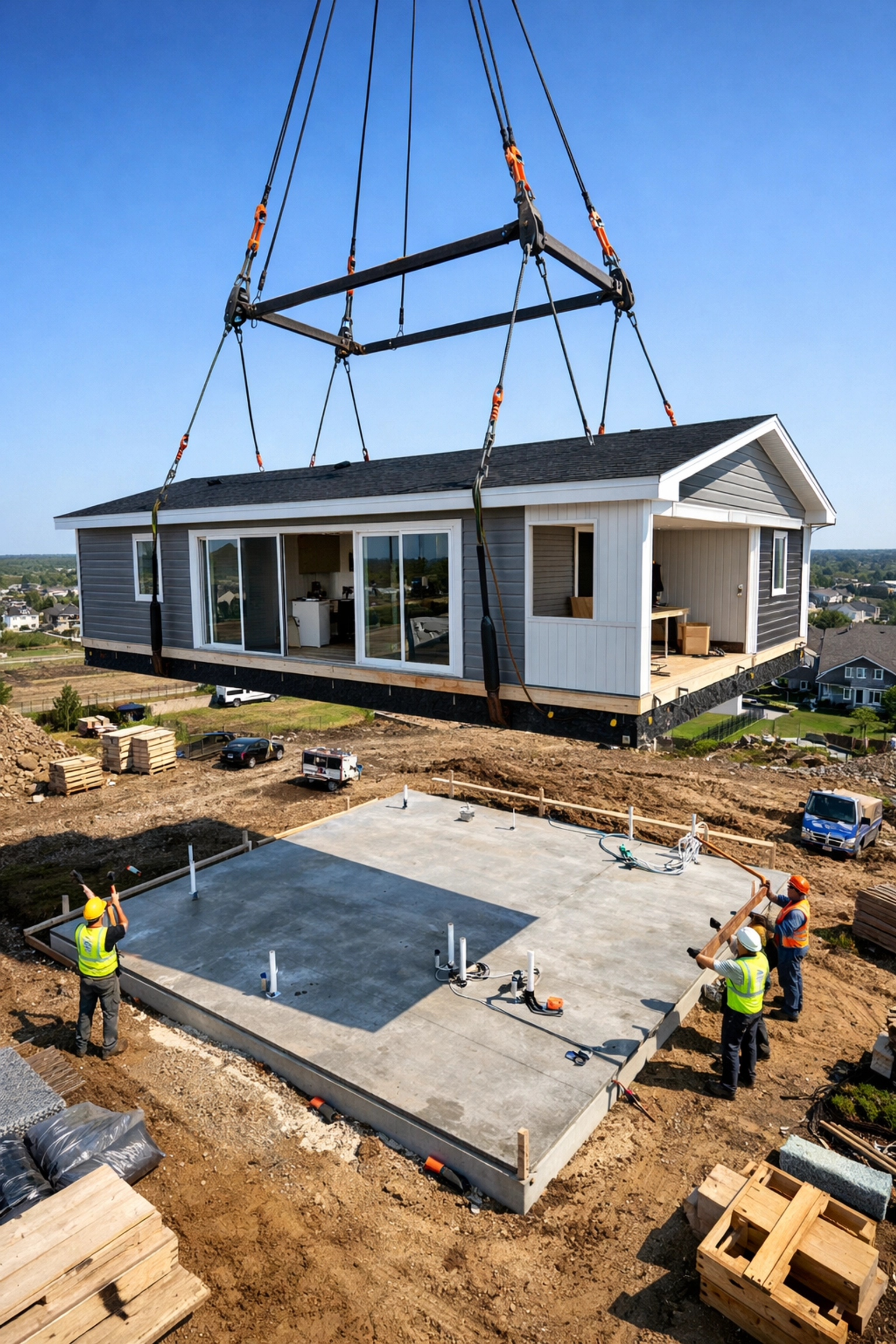
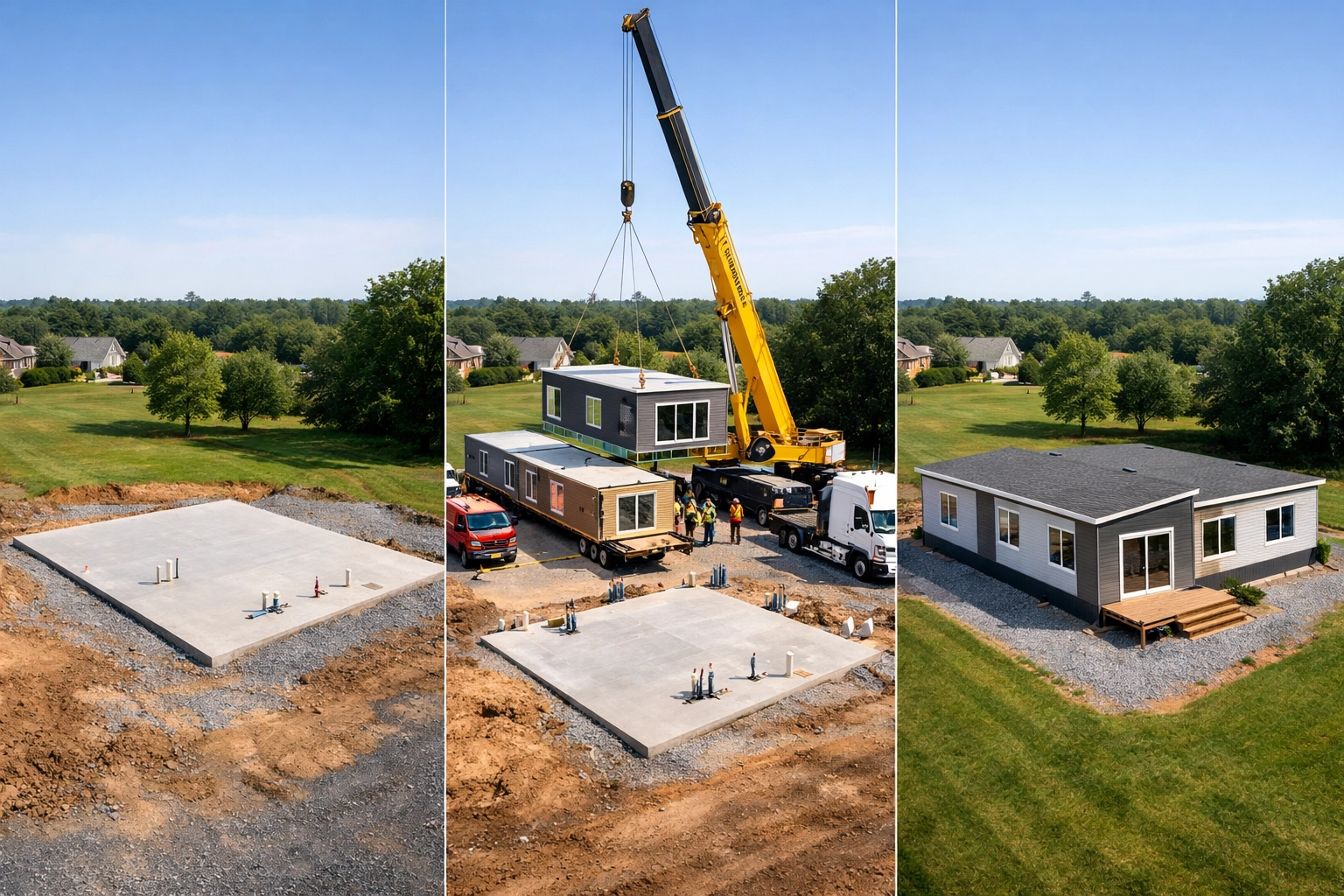
While your modules are being constructed in our factory, your site is being prepped: slab poured, services connected, everything ready for installation day.
This is the magic of modular construction: parallel workflows. Traditional builds must complete each phase sequentially. We're doing two things at once, cutting months off your timeline without cutting any corners on quality.
Site prep typically takes 4–6 weeks depending on your land's condition. Sloping block? Might take longer. Flat, accessible site? We're done in a month.
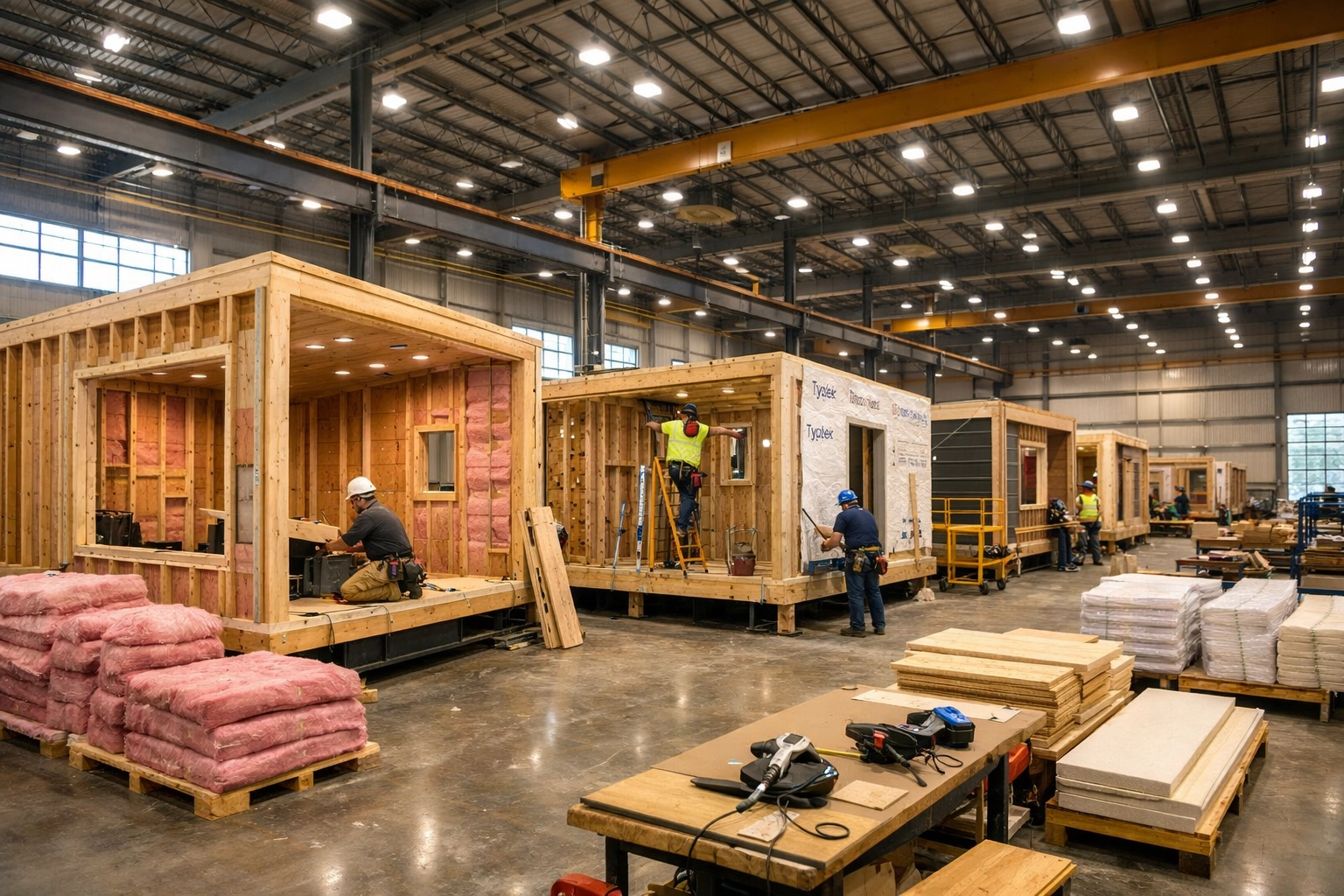
Phase 5: Factory Construction (8–16 Weeks)
This is where modular construction shows its true superiority. Your home is being built in a weatherproof facility by skilled tradies who work on modular homes every single day.
No rain delays. No materials sitting in the weather getting damaged. No tradies who don't show because they got a "better job" across town. Just consistent, quality-controlled construction that progresses every single day.
A standard 3-bedroom, 2-bathroom home like our T-House? Usually 10–12 weeks. Want to compare options? Browse our full range of modular home designs and see which floor plan matches your block and budget. Larger custom design with premium fit-outs? Closer to 14–16 weeks.
By the time your modules leave the factory, they're approximately 90% complete. Walls, windows, insulation, wiring, plumbing, fixtures: it's all installed, inspected, and quality-checked before it ever sees your land.
Phase 6: Delivery & Installation (1–2 Days)
The day the semi-trailers arrive is genuinely exciting. Your entire home: built, finished, tested: arrives on the back of trucks and gets craned into position.
Most installations happen in a single day. Larger or more complex designs might stretch to two days. Either way, you go from empty slab to weatherproof home in 48 hours maximum.
Neighbours lose their minds watching this happen. It's home construction as performance art.
Phase 7: Final On-Site Works (2–4 Weeks)
Once your modules are positioned and secured, our team completes the finishing touches. This includes:
- Joining and sealing modules together
- Connecting utilities (power, water, sewer, gas)
- Installing final fixtures and fittings
- Completing any on-site customisation
- Final inspections and quality checks
- Landscaping and external finishes
This phase typically takes 2–4 weeks. Not months. Weeks.
Phase 8: Handover & Move-In (1 Day)
The best day. Final walkthrough, demonstration of systems and features, keys handed over, and you're home.
Total timeline from contract signing to moving in: 28–30 weeks on average. That's 7–8 months when you account for council approvals. Fast-track approvals or simple designs? Some clients are in within 6 months. Complex custom builds with slow council areas? Might stretch to 10–12 months.
Compare that to traditional construction's 12–24 month slog, and the modular advantage becomes impossible to ignore.
Why Modular Construction Is Genuinely Faster
The speed advantage isn't marketing spin: it's structural efficiency built into the process.
Weather Cannot Stop Us
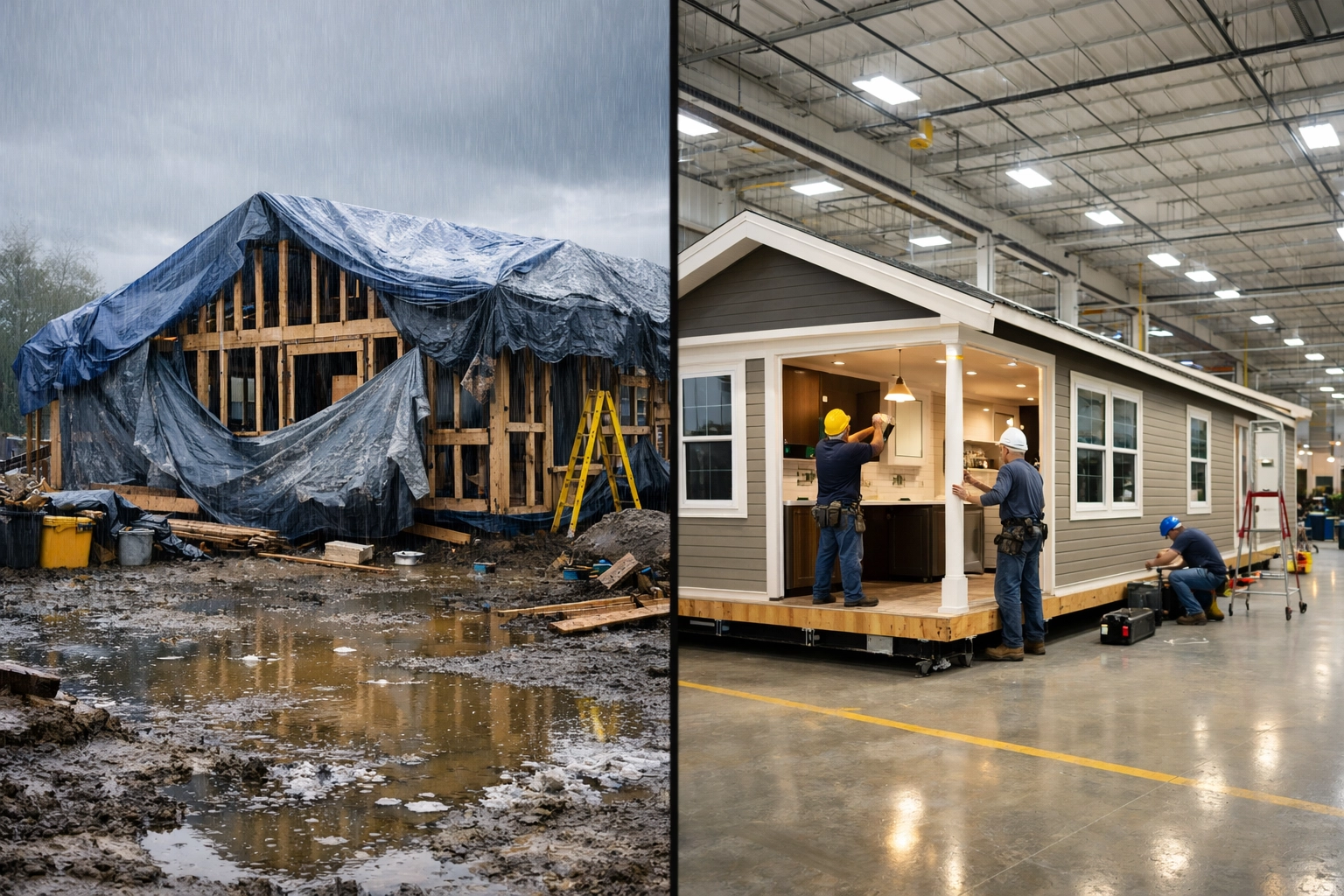
Traditional builders lose weeks every year to rain. Concrete can't be poured. Frames can't go up. Materials get damaged. Tradies reschedule. The delays compound exponentially.
Our factory-controlled environment eliminates weather as a variable entirely. We're building in sunshine when it's bucketing down outside. Your timeline stays locked regardless of what the sky does.
Parallel Workflows Save Months
While traditional builds must complete foundation work before framing, and framing before electrical, and electrical before plaster: each phase waiting for the previous: modular construction runs multiple streams simultaneously.
Your site prep happens while your home is being built 200 kilometres away in our factory. By the time the slab cures, your modules are ready to install. No waiting. No sequential bottlenecks.
Specialist Teams Work Faster
Our factory teams build modular homes every single day. They're not generalist chippies who do houses, renovations, decks: whatever comes in. They specialise in modular construction, which means faster build times and fewer mistakes.
Specialisation equals efficiency. Always has, always will.
Quality Control Happens During Construction
In traditional builds, problems get discovered late: often after walls are closed up and finishes are installed. Fixing issues means rework, delays, and cost overruns.
Factory construction allows for continuous quality inspection throughout the build process. Issues get caught and corrected immediately, without derailing your timeline.
What Can Affect Your Timeline?
Even with modular's efficiency advantages, some factors can influence your specific timeline:
Design Complexity
Standard designs with proven configurations build faster than highly customised layouts. If you're pushing boundaries with your design, expect to add 2–4 weeks to factory construction time.
Site Accessibility
Is your block easily accessible to semi-trailers and cranes? Urban sites with tight access or remote rural properties might need special delivery arrangements, potentially adding time.
Council Responsiveness
This remains the wildcard. Metro councils in Sydney and Melbourne are notoriously slow. Regional councils can be surprisingly quick. Budget 3–4 months for approvals and hope for faster.
Site Condition
Flat, cleared, accessible land? Site prep is straightforward. Sloping blocks requiring extensive earthworks or sites with challenging soil conditions? Preparation takes longer.
Service Connections
If your land requires new utility connections: particularly in rural areas: allow extra time for your electricity, water, or sewer authority to complete their work.
The Bottom Line: Predictable Timelines Matter
Speed isn't just about getting into your home sooner: though that's obviously valuable. Speed means predictable costs, reduced holding expenses, and less time exposed to market volatility or changing interest rates.
Traditional construction's uncertain timelines create cascading financial risks. Modular's compressed, reliable timeframes contain those risks dramatically.
When we tell you 16–22 weeks from factory start to handover, that's not a sales pitch: it's an engineered timeline we consistently deliver. Rain or shine, literally.
Ready to Experience the Fast-Build Advantage?
If you're tired of hearing construction horror stories and ready for a genuinely modern building approach, we should talk.
Explore our range of modular home designs or get in touch for a free consultation where we'll walk you through exactly how modular construction could work for your specific situation.
If you’re ready to replace uncertainty with a locked-in plan, start here:
- Explore floor plans and inclusions: EcoHub Homes and our models
- Talk to our team about your site, timeline, and approvals: Contact EcoHub Homes
Your timeline starts now (not 18 months from now).