
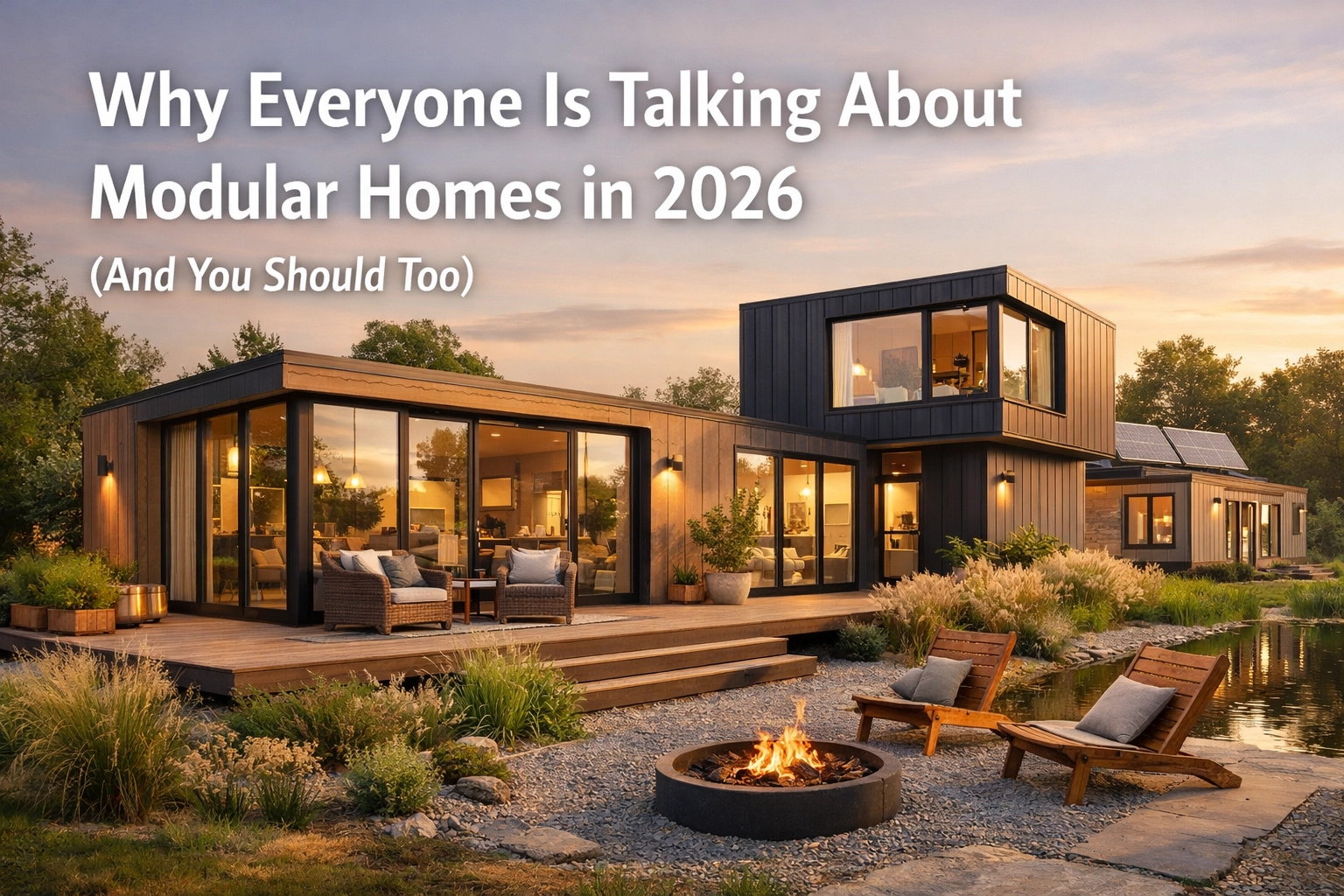
If you’ve spent any time looking at the Australian property market lately, you’ve probably noticed something has shifted. The days of waiting two years for a traditional brick-and-mortar build, while battling skyrocketing material costs and unpredictable weather delays, are quickly becoming a relic of the past.
It’s March 2026, and the "Great Modular Shift" is no longer just a trend; it’s the new standard. Whether you’re an investor looking for rapid ROI or a homeowner desperate to move into your dream space without the grey hairs, modular housing is the conversation everyone is having.
At EcoHub Homes, we’ve seen the demand surge first-hand. But why now? Why is 2026 the year modular construction finally claimed the crown? Let’s break down the reality of building today and why going modular is the smartest move you can make.
The Speed Revolution: From Slab to Sofa in Months, Not Years
The most significant pain point in the Australian housing market has always been the timeline. In 2026, time isn't just money, it's everything. Traditional construction currently faces a massive backlog, with many builders quoting 12 to 18 months just to get a roof on.
Modular construction has flipped the script. Because our homes are built in a controlled factory environment, we aren't at the mercy of the Perth winter or East Coast storms. While your site is being prepared, your home is being precision-engineered simultaneously.
Industry data shows that 81% of people choosing modular cite "speed to market" as their primary motivator. We’re talking about a complete build-to-install timeline of 3 to 6 months. For an investor, that’s an extra year of rental income. For a family, that’s a year of life not spent in a cramped rental or a caravan on-site.
Why "Factory-Built" Means Better Quality
There’s an old-school misconception that "prefab" means "temporary." In 2026, that couldn’t be further from the truth. In fact, factory-built homes often exceed the quality of site-built homes.
Think about it: would you rather have your home’s structural frame welded and bolted in a rain-soaked paddock, or in a precision-controlled facility using BIM (Building Information Modeling) and digital twins?
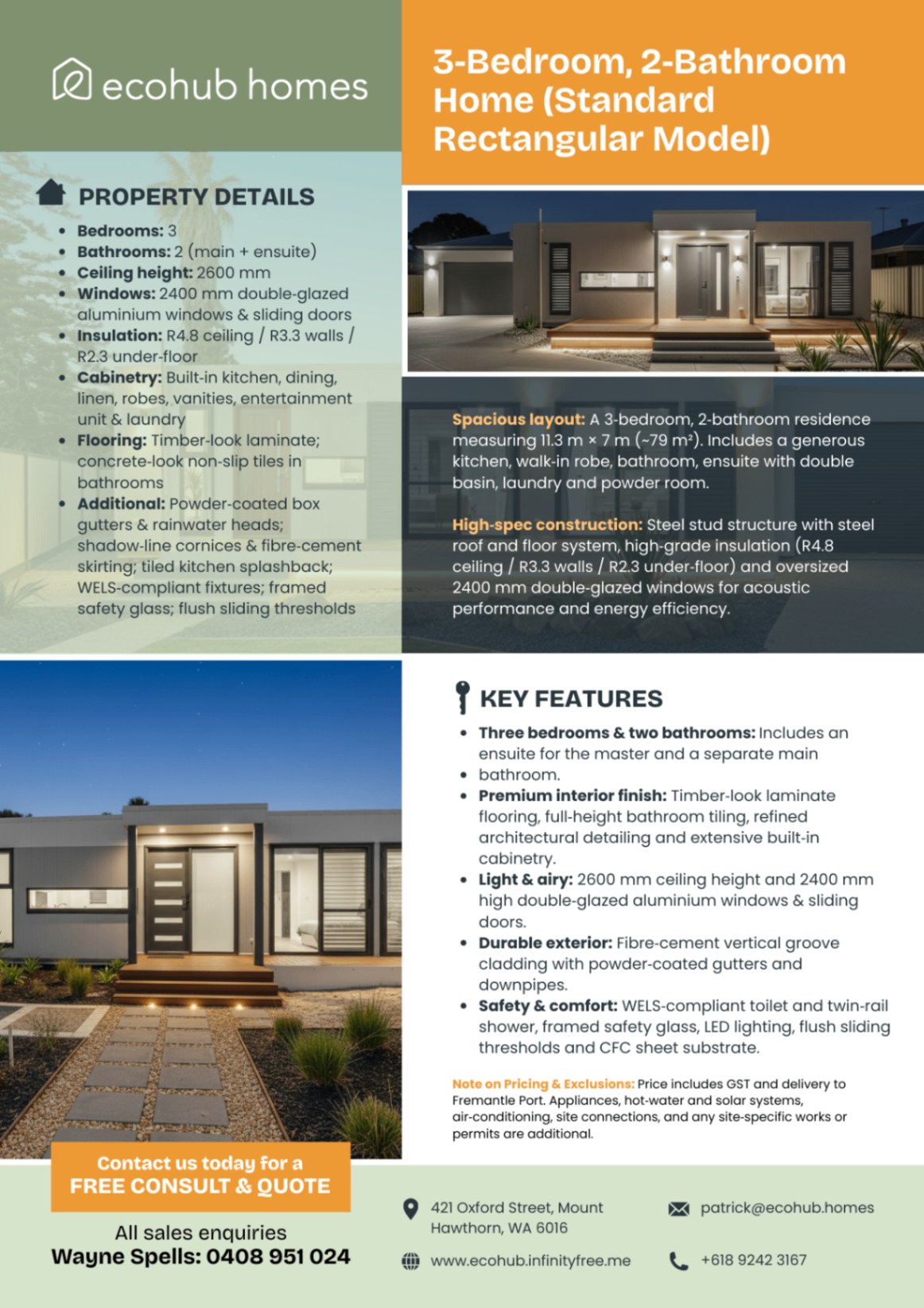
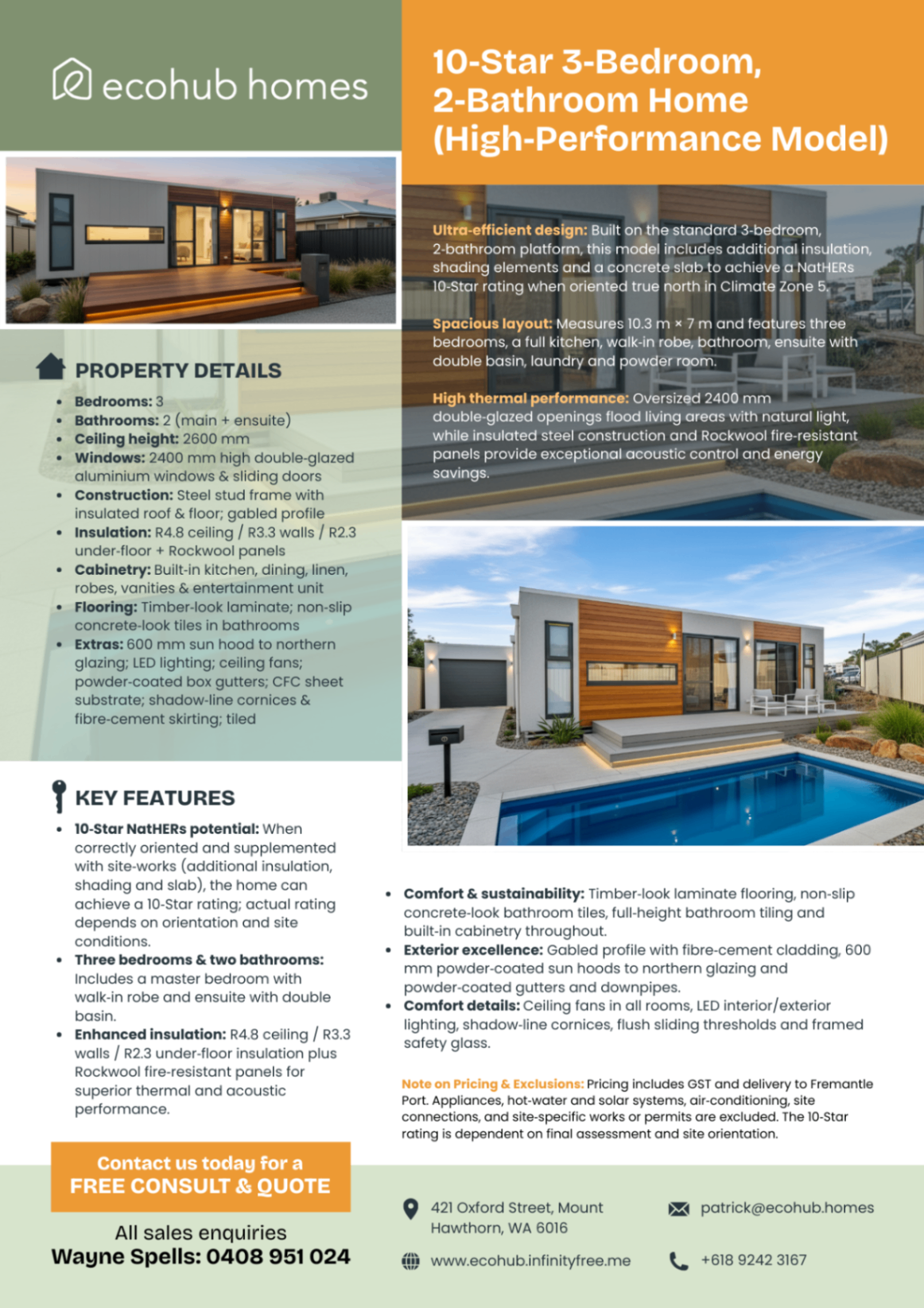
At EcoHub Homes, every joint is laser-accurate. We use steel frames and durable fibre-cement cladding that are designed to withstand the harsh Australian climate. When your home is built indoors, the materials stay dry, the tradespeople work in optimal conditions, and the quality control is rigorous. By the time our 3-bedroom, 2-bathroom T-House leaves the floor, it has been inspected more times than a traditional build would be in its entire lifecycle.
Sustainability: The 10-Star Goal
In 2026, sustainability is no longer a "nice-to-have" feature, it’s a financial necessity. With energy prices continuing to fluctuate, Australians are looking for homes that practically run themselves.
Modular homes are leading the charge in energy efficiency. Because they are built with advanced insulation and airtight seals, they can reduce energy consumption by up to 30% compared to standard builds.
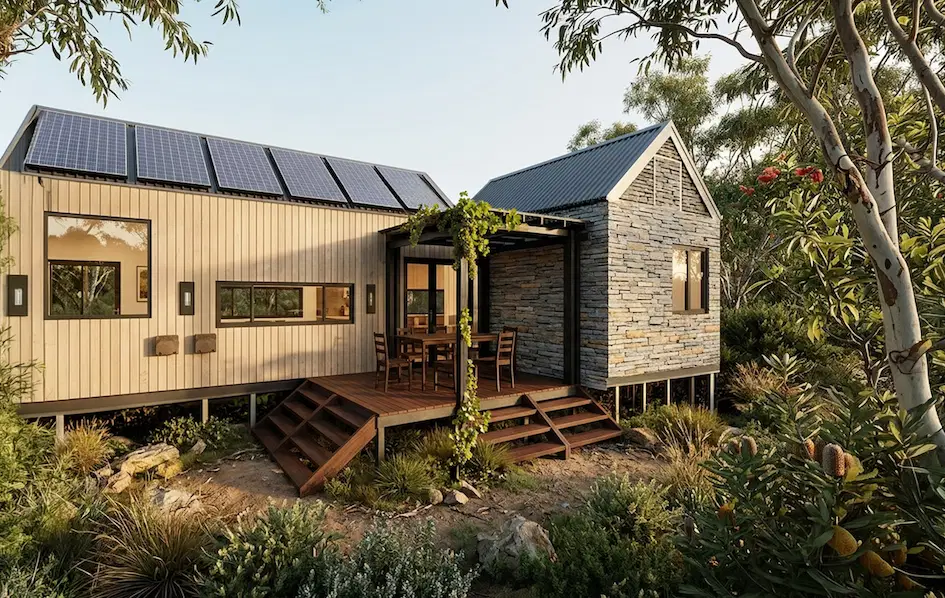
Many of our designs, like the one-bedroom, one-bathroom model, are engineered for high NatHERS ratings. We incorporate:
- Full-height double-glazed windows as standard.
- Solar-ready roofing systems.
- Recycled and sustainable timber accents.
- Minimal site disturbance (homes are often elevated on piers).
This doesn't just help the planet; it protects your wallet. A sustainable home in 2026 has a significantly higher resale value and lower holding costs.
The Financial Edge: Cost Certainty in an Uncertain World
If you’ve talked to anyone who built a traditional home in the last five years, they likely have a horror story about "variations." Price hikes on timber, steel, and labour have left many Australians with half-finished houses and depleted bank accounts.
Modular construction offers something traditional building rarely can: Price Certainty.
Because we manufacture in a controlled environment, we can lock in material costs and labour early in the process. When you sign a contract for an EcoHub Home, you know exactly what you’re paying. No "weather delay" surcharges. No "oops, the price of copper went up" phone calls.
For property investors, this is the holy grail. You can calculate your yield with precision, knowing exactly when the keys will be handed over and the first tenant can move in.
Customization: It’s Not One-Size-Fits-All
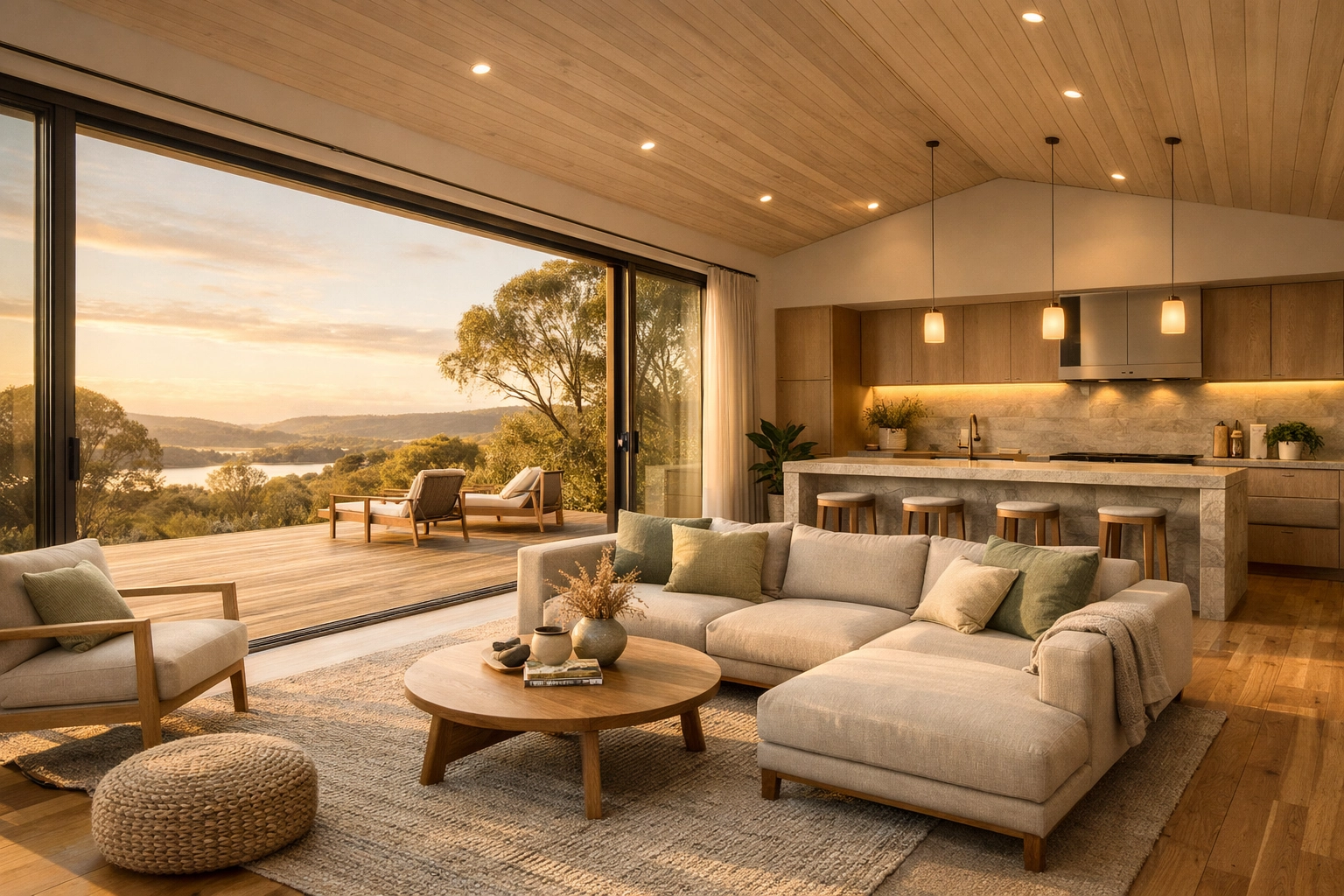
The "cookie-cutter" reputation of prefab homes is officially dead. In 2026, buyers are demanding flexibility. Whether it’s adding a dedicated home office for remote work or a guest wing for multi-generational living, modular design is incredibly adaptable.
Over 70% of modern buyers now prioritize customizable layouts. We’ve moved past the "pick a plan and stick to it" mentality. Our modular systems allow for various configurations: meaning you can start with a core living space and potentially add modules as your family or investment portfolio grows.
The aesthetics have evolved, too. We’re seeing a huge trend toward "Modern Australian Bush" styles: combining sleek, minimalist lines with natural textures like stone and timber. It’s about creating a home that feels like it belongs in the landscape, not one that was just dropped onto it.
Smart Tech Integration
Welcome to the era of the "Digital Twin." In 2026, we don't just build a house; we build a smart ecosystem. Most modular homes now come standard with integrated energy management systems.
From your smartphone, you can monitor your solar production, adjust your smart thermostat, and manage your security. Because the wiring is planned in a digital environment before a single piece of steel is cut, the integration is seamless. No more messy retrofitting or "dead zones" in your Wi-Fi because of poorly placed internal walls.
How to Get Started (The Right Way)
The demand for modular is high, but that doesn't mean you should rush the process. Building a home is still one of the biggest investments you’ll ever make.
If you’re curious about how this could work for your specific block of land: or if you’re an investor looking to maximize a small lot: the best first step is education. We regularly host Modular Seminars where we pull back the curtain on the manufacturing process, talk through the council approval stages, and show you exactly how we achieve those 10-star energy ratings.
Key Questions to Ask Your Modular Builder:
- Is the price truly fixed? (Ensure site works and delivery are clearly outlined).
- What is the NatHERS rating? (Don’t settle for the bare minimum).
- Can I customize the floor plan? (Your home should fit your life, not the other way around).
- What are the warranty terms? (At EcoHub, we stand by a 10-year structural warranty).
The Verdict: Why Wait?
The construction industry has changed. The old way of building: slow, wasteful, and unpredictable: is being replaced by a smarter, faster, and more sustainable alternative.
In 2026, choosing a modular home isn't just about being "trendy." It's about taking control of your timeline, your budget, and your environmental footprint. Whether you are looking at a compact one-bedroom retreat or a sprawling family T-House, the future of Australian housing is being built in a factory today.
Ready to see what the future looks like for yourself? Check out our full range of homes or join us at our next Modular Seminar. The "Great Modular Shift" is happening: don't get left behind in the dust of a traditional construction site.