
Your backyard is sitting there doing nothing while you could be banking $36,000 a year. That's not a get-rich-quick fantasy, it's the reality for property owners across Sydney, Melbourne, Perth, and Brisbane who've added modular granny flats to their rear lots.
The rental market is brutal right now. Vacancy rates in metro areas are hovering under 1%. Tenants are fighting over every halfway-decent rental, and they're paying premium prices for quality spaces. That spare land behind your house? It's suddenly become prime real estate.
Here's what that looks like in actual dollars: $700 per week rental income × 52 weeks = $36,400 annually. And unlike stocks or crypto, this investment sits on land you already own, appreciating alongside your main property while generating consistent cash flow.
Let's break down exactly how this works, and why modular construction is the only sensible way to pull this off in 2026.
The Real Numbers: What $36K Annually Actually Means
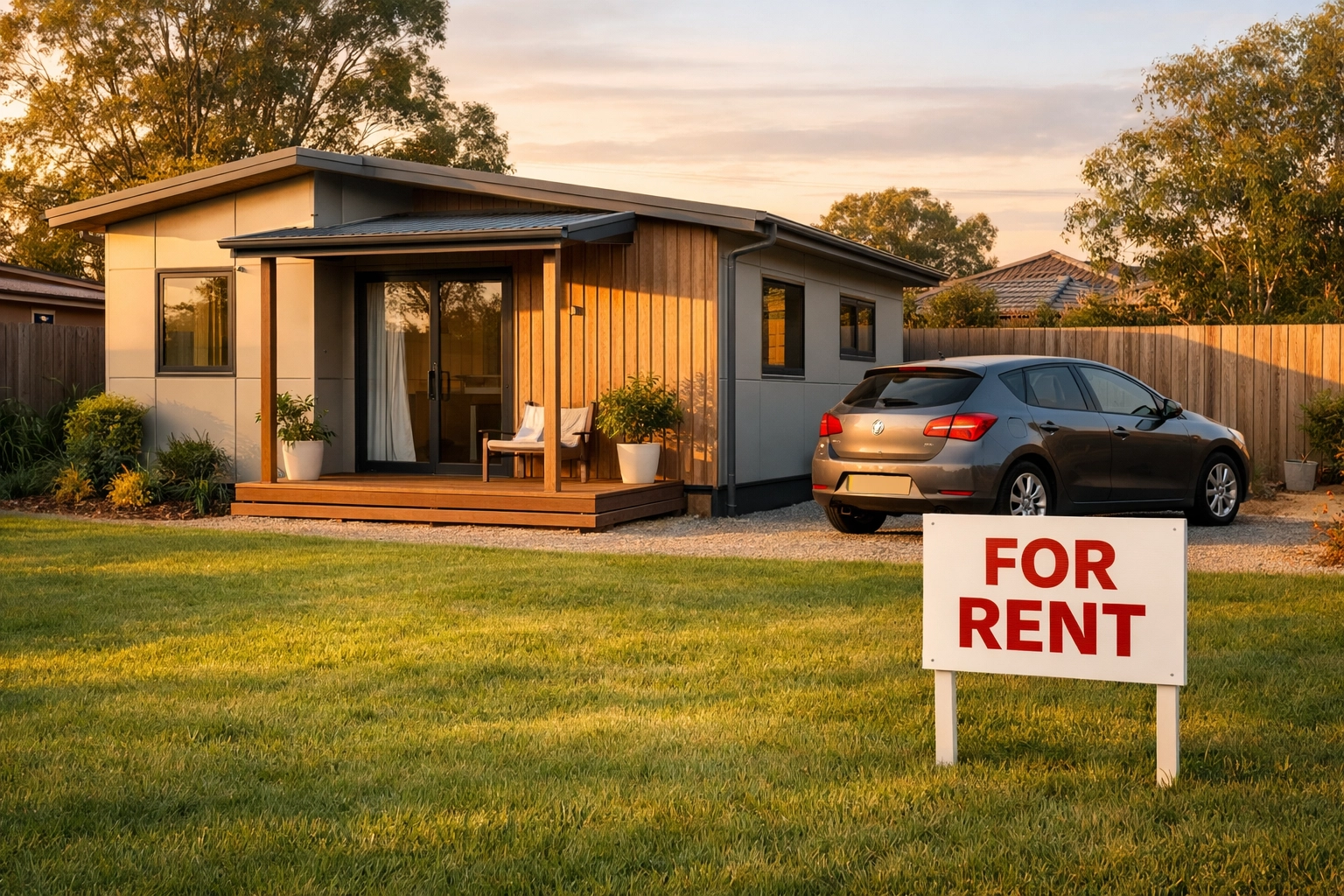
That $700/week figure isn't pulled from thin air. It's what one and two-bedroom granny flats are commanding right across Australian capital cities, often more in tight rental markets.
Perth Metro? A well-finished 1-bed granny flat easily hits $650-$750/week. Sydney's Inner West? Try $800-$900. Melbourne's established suburbs are sitting around $650-$800 for quality units. Brisbane's rental crisis has pushed granny flat rates past $700 in most areas.
Here's the financial snapshot:
- Gross annual income: $36,400 at $700/week
- Typical build cost: $180,000-$250,000 for a turnkey modular unit
- ROI timeline: 5-7 years to full payback (conservative estimate)
- Property value increase: 20-35% boost to your overall land value
The real magic happens after year seven. Once the granny flat pays for itself, that $36K becomes pure profit, minus minimal maintenance and insurance bumps. Over twenty years, you're looking at $700,000+ in rental income from land you were already holding.
Compare that to traditional investment properties where you're juggling mortgages, strata fees, and property management costs on a separate title. A backyard granny flat operates on fundamentally better economics.
Why Modular Beats Traditional Construction by a Mile
Traditional granny flat builds take 6-12 months. Weather delays. Tradie shortages. Material price fluctuations. Council inspections that drag on for weeks.
Modular flips that timeline completely.
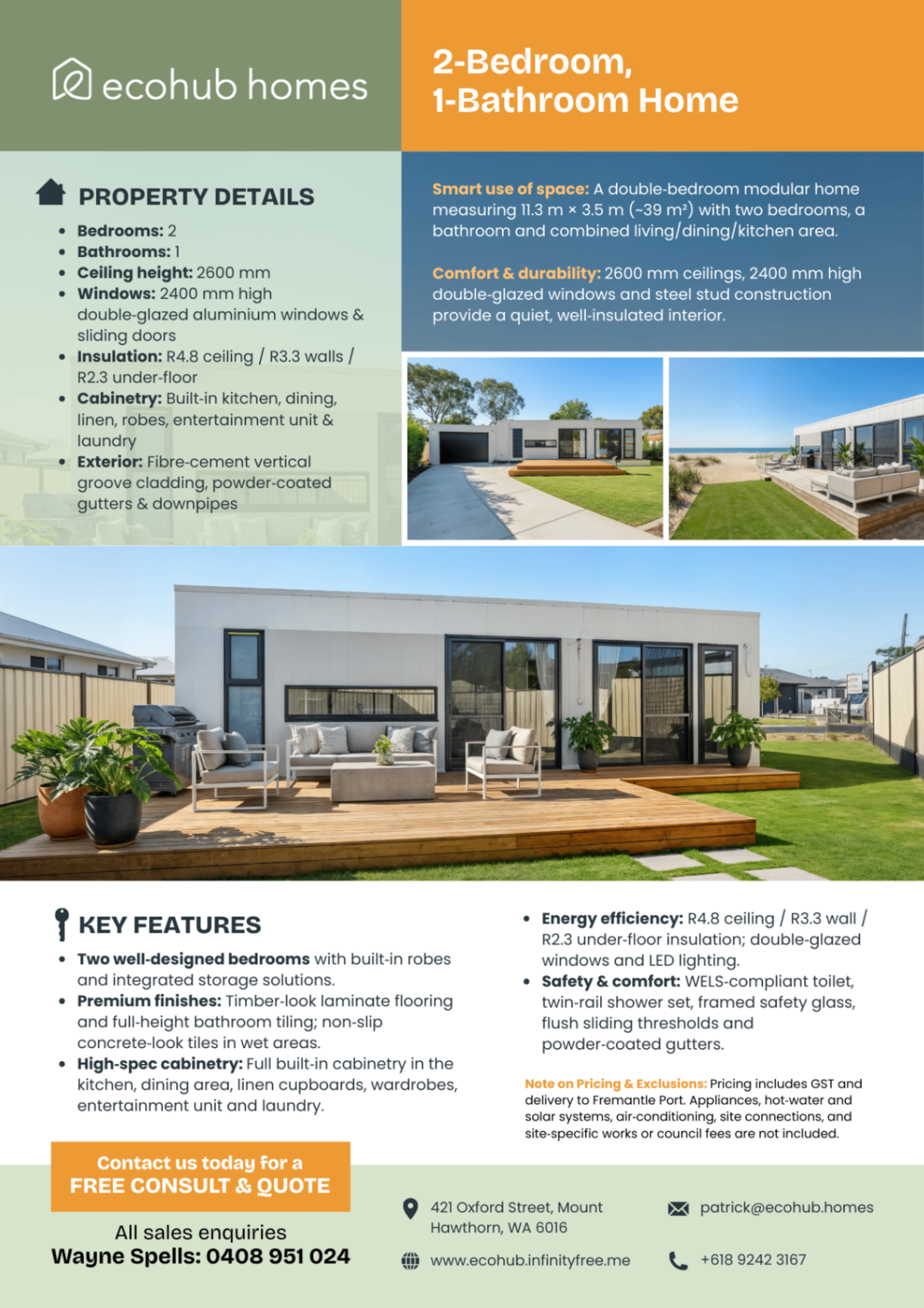
EcoHub granny flats are factory-built while site prep happens simultaneously. From approval to move-in? You're looking at 8-12 weeks total. Your tenants are paying rent by month three while your mate who went traditional is still arguing with his builder about waterproofing.
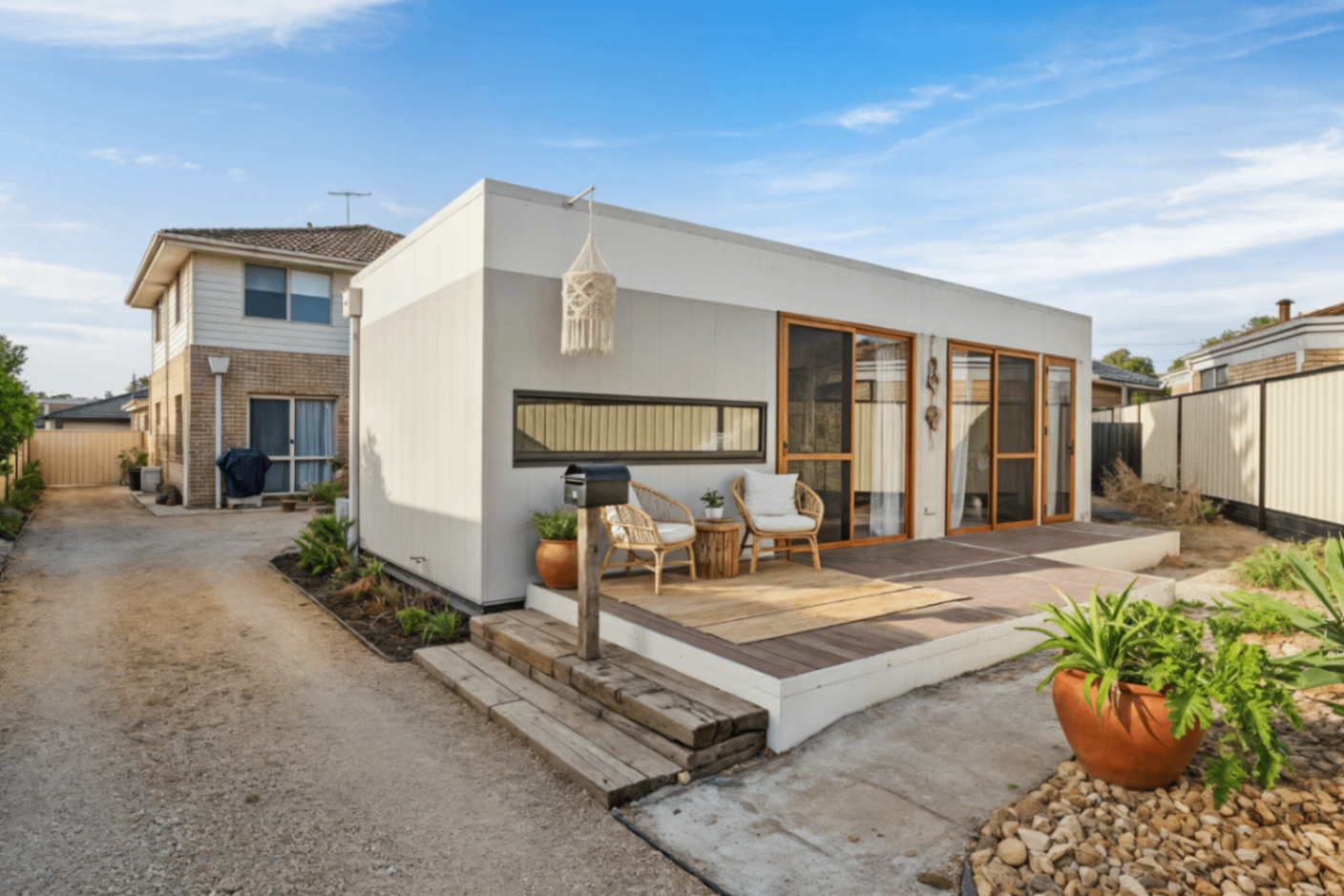
Speed translates directly to ROI. Every month without rental income is money left on the table. Get a modular unit installed in March, and you've captured nine months of rental income before the year's done, $23,625 in your pocket instead of watching concrete cure.
The quality control advantage is massive too. Factory construction means every wall, window, and fixture gets installed in controlled conditions. No rushed Friday arvo work. No rain-soaked framing. No "she'll be right" shortcuts. EcoHub units come off the production line meeting every NCC standard before they touch your property.
Here's what that looks like in practical terms:
- Double-glazed windows throughout: energy efficiency that keeps tenant power bills low
- R4.8 ceiling insulation and fully insulated walls/floors
- 2600mm high ceilings that make 60sqm feel spacious
- Premium fixtures that won't need replacing in three years
- Turnkey finish including kitchen, bathroom, flooring, everything
You're not delivering a budget rental that'll depreciate. You're installing a quality dwelling that'll command top-tier rent and hold its value.
The Permit Nightmare You Won't Have to Deal With
Let's talk about the part that stops most people: council approvals.
Granny flats fall under different regulations depending on your state and local council. Some require full development approval. Others qualify for complying development if you tick specific boxes. Get it wrong, and you're in for months of back-and-forth with planning departments.
EcoHub handles this entire mess.
We've processed hundreds of granny flat permits across WA, NSW, VIC, and QLD. We know which councils move fast, which ones require specific documentation, and exactly how to structure applications for quick approval. More importantly: we submit on your behalf and manage the entire process.
Site prep is included too. Footings. Slab or pier foundation (depending on your site). Utility connections. Driveway access if needed. You're not coordinating five different subcontractors. You're working with one team that delivers a finished, connected, rental-ready dwelling.
The permit timeline typically breaks down like this:
- Week 1-2: Site assessment and documentation
- Week 3-6: Council submission and approval process
- Week 7-8: Site prep and foundation work
- Week 9-10: Module delivery and installation
- Week 11-12: Final connections, inspections, and handover
Twelve weeks from "let's do this" to "here's your first rent cheque." Compare that to the traditional path where you're still selecting kitchen cabinet handles at month six.
What Properties Actually Qualify
Not every backyard can accommodate a granny flat: but more can than you'd think.
Minimum lot size varies by council, but you're typically looking at 450-600sqm total land area with rear access or a side setback wide enough for delivery. Corner blocks are golden: easy access, maximum street appeal for your rental.
Setback requirements usually demand 3-6 metres from rear boundaries and 1-2 metres from side fences. Most established suburbs with standard residential blocks clear these hurdles easily.
The quick qualification checklist:
- Lot size over 500sqm (rough guideline)
- Rear or side vehicle access for delivery
- Existing utilities reasonably close (power, water, sewer)
- No heritage overlays or flood zones
- Residential zoning (R20, R25, or equivalent)
Even properties with slight complications: sloping blocks, tight access, or older utility connections: can usually work with the right planning approach. EcoHub's site assessment process flags issues early so you're not three months into approvals before discovering a deal-breaker.
The value-add calculation is straightforward. If your property's currently worth $800K and you're spending $220K on a quality granny flat, you're looking at a conservative 20% value increase: $160K equity boost plus $36K annual income. That's a combined first-year benefit of nearly $200K against a $220K investment.
Run those numbers past your accountant. The tax benefits around depreciation, rental income offset against expenses, and negative gearing (if that's your strategy) make this even more compelling.
Your Next Move
Here's what happens when you reach out: we run a 15-minute assessment of your property, check council records for any obvious blockers, and give you a straight answer on whether your lot qualifies. No sales pitch. No pressure. Just whether this works or doesn't.
If it does, we'll walk you through costs, timeline, and what the finished unit looks like. Most conversations end with people saying "I wish I'd done this three years ago."
DM us through our website or check out our granny flat options to see what actually gets built. Let's turn that backyard into $36,000 a year: starting this quarter.
The rental market isn't cooling down. Supply stays tight. Demand stays high. Your property's already sitting there. Might as well make it work harder.