
Building a home in the Australian bush has always been about balancing the dream of a rugged, natural lifestyle with the reality of our environment. As we move through 2026, those realities have shifted. Bushfire Attack Level (BAL) ratings have become more stringent, and for those looking to build in "Flame Zone" (BAL-FZ) areas, the regulatory landscape can feel like a maze of non-combustible materials and expensive engineering.
At EcoHub Homes, we believe that a high fire risk shouldn't mean the end of your building dreams. In fact, the precision of modern modular construction is proving to be one of the most effective ways to meet the extreme demands of BAL-FZ standards without breaking the bank or sacrificing style.
What Exactly is BAL-FZ?
Before we dive into the "how," let’s look at the "what." BAL-FZ is the highest bushfire attack level in Australia. It indicates a site is at risk of direct exposure to flames from a fire front, in addition to heat flux and intense ember attack.
In technical terms, we are talking about a radiant heat exposure of 40 kW/m² or greater. To survive this, a building cannot simply be "fire-resistant": it must be a fortress. Traditional building methods often struggle here because the level of precision required to seal a home against 1,000-degree flames is incredibly difficult to achieve on a standard, exposed construction site.
Why Modular Design is the 2026 Solution for Flame Zones
One of the biggest hurdles with BAL-FZ compliance is the "3mm rule." Every gap, every vent, and every joint in the building's exterior must be sealed or screened to prevent embers and flames from entering the structure.
This is where the EcoHub Homes factory-controlled environment changes the game. When we build a modular home, we aren't fighting the wind, dust, or variable lighting of a traditional build site. We use precision-engineered steel frames and CNC-cut materials that fit together with absolute accuracy.
By the time a module leaves our facility, every seal has been checked and every joint verified against the 2026 Australian standards. This level of quality control is nearly impossible to replicate when you're building out in the elements.
The Anatomy of a BAL-FZ Modular Home
To meet Flame Zone standards, we’ve had to rethink the entire "skin" of the home. In 2026, the technology has evolved to allow for beautiful aesthetics that happen to be incredibly tough.
1. Non-Combustible Steel Framing
Timber is a classic, but in a Flame Zone, steel is king. Our modular units are built on high-tensile steel chassis and frames. This provides the structural integrity needed to support heavy fire-rated materials while ensuring the skeleton of the home won't contribute to a fire’s fuel load.
2. Specialized Fibre-Cement Cladding
Gone are the days when fire-rated cladding looked like a grey bunker. We utilize advanced, high-density fibre-cement cladding that mimics the look of natural timber or sleek metal but offers total non-combustibility. These panels are specifically tested to withstand direct flame contact without cracking or losing structural integrity.
3. Fire-Rated Glazing and Metal Shutters
Windows are usually the weakest point in a fire. For BAL-FZ, standard double glazing isn't enough. We integrate specialized fire-rated glass systems often paired with proprietary non-combustible metal shutters. These shutters are designed to be sleek and unobtrusive during the off-season, but they provide a literal shield for your home when it matters most.

Precision Engineering: The 3mm Clearance Challenge
The most common reason for a BAL-FZ home to fail inspection is "gap creep." As a traditional house settles or is built by different sub-contractors, small gaps appear around doors, windows, and eaves. If a gap is larger than 3mm, an ember can get in. Once an ember is inside your wall cavity, the home is lost.
Because EcoHub Homes are built as integrated units, we design the "sealed system" into the architecture from day one. We use fire-rated level (FRL) systems that are pre-certified. This means when your local building certifier or fire engineer comes to inspect the site, the hard work is already done. The certifications are signed off in the factory, providing you with a much smoother path to council approval.
Is It More Expensive?
There is no sugar-coating it: building in a Flame Zone costs more than building in a BAL-12.5 or BAL-29 zone. The materials: the fire-rated glass, the steel shutters, and the specialized insulation: carry a premium.
However, modular construction offers a massive cost-saving through time. A traditional BAL-FZ build can take 18 to 24 months because of the complexity of the materials and the need for specialized trades. At EcoHub, we can deliver a fully compliant, turnkey home in a fraction of that time. When you factor in the reduced holding costs of your land and the avoidance of "on-site" delays, modular becomes the most financially sensible way to tackle a high-risk site.

The 2026 Design Aesthetic
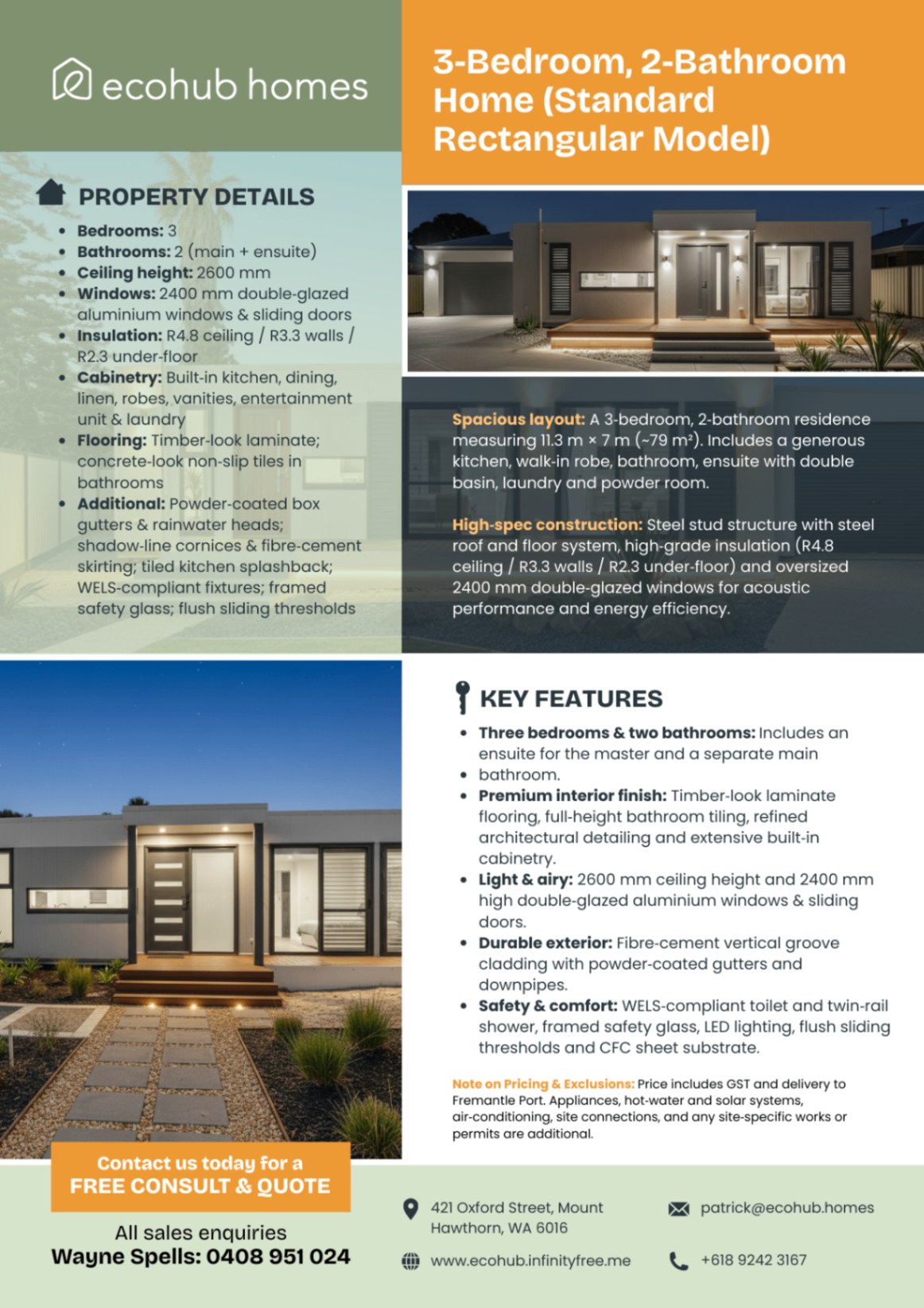
One of the most exciting developments this year is that "fire-proof" no longer means "ugly." Our 2026 designs feature open-plan indoor-outdoor living, 2600mm high ceilings, and full-height windows. By using clever architectural shadowing and integrated shutter housings, we can create a home that feels light, airy, and connected to the bush, while remaining completely compliant with BAL-FZ requirements.
You can explore our range of designs and see how we integrate these safety features into our luxury finishes at ecohub.homes/shop.
Navigating the Certification Process
Building in a BAL-FZ zone requires professional sign-off at multiple stages. This usually involves:
- A formal Bushfire Attack Level (BAL) Assessment by a qualified consultant.
- Consultation with a Fire Engineer to approve the specific FRL (Fire Resistance Level) of the wall and roof systems.
- Final certification from a building surveyor.
When you work with a modular specialist, much of this technical "heavy lifting" is handled by our design team. We provide the engineering specs and testing results for our modular systems, making life much easier for your consultants.
Ready to Build Safely?
Living in a high-fire-risk area doesn't mean you have to settle for a home that feels like a prison. With the right technology and a precision-led modular approach, you can have a sustainable, beautiful, and: most importantly: safe home in the heart of the Australian landscape.
If you’re looking at a block of land and the BAL-FZ rating has you worried, let's chat. We can walk you through our tested systems and show you exactly how we meet the 2026 standards.
Don't let the red tape stop your dream. Contact EcoHub Homes today for a free consultation and let’s look at what’s possible for your site.