

You've got the land. You've seen the rental income calculations. Now you're seriously considering a modular granny flat: and wondering what actually happens between "great idea" and "tenants moving in."
Smart thinking, because the gap between concept and completion is where most landowners hit unexpected snags. The good news? Modular construction eliminates about 80% of the headaches that come with traditional builds. The reality? There are still critical boxes to tick before that crane rolls up your driveway.
Here's your complete pre-build checklist: the ten things every landowner needs to sort before committing to a modular granny flat.
1. Nail Down Zoning and Council Approvals First
Before you fall in love with a specific design, confirm your property actually qualifies for a secondary dwelling. Zoning laws vary wildly across Australian councils: some allow granny flats as exempt development with minimal paperwork, while others require full development applications.
Check your local council's secondary dwelling policies, setback requirements from boundaries, and maximum floor areas. Many councils now permit granny flats up to 60 square metres under complying development pathways, which means faster approvals and lower costs. But if your block has heritage overlays, bushfire zones, or flood risks, expect additional scrutiny.
The timeline here matters. Council approvals can take anywhere from four weeks to four months depending on the pathway and complexity. Factor this into your overall schedule: it's the one delay that modular construction can't eliminate.
2. Site Access Will Make or Break Your Delivery Day
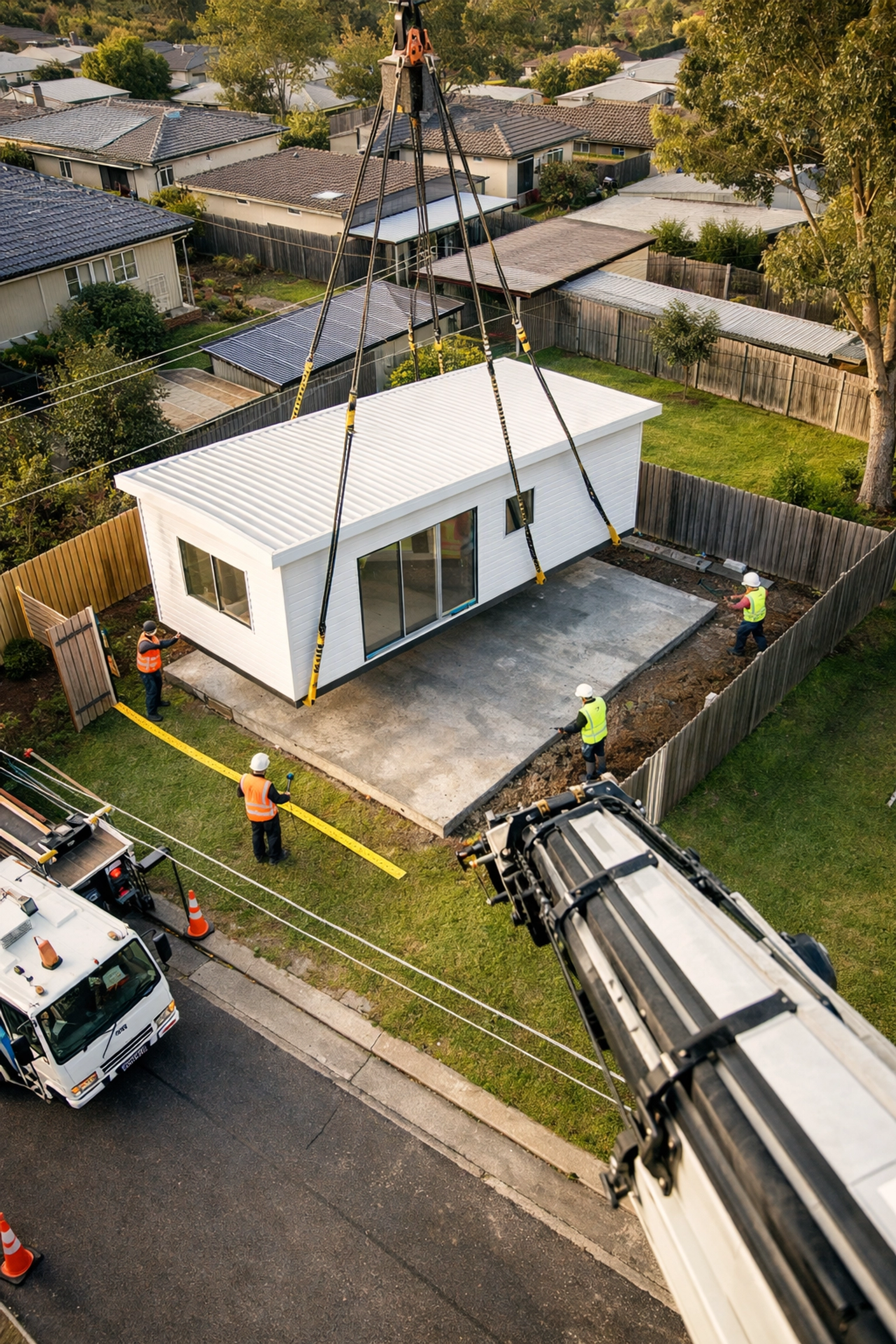
That crane delivering your modular home? It needs a clear 30-metre approach path and stable ground to operate safely. Site access isn't just about whether a truck can reach your property: it's about overhead powerlines, overhanging trees, narrow side gates, and ground conditions that support heavy machinery.
Most modular granny flats arrive in one or two sections weighing several tonnes each. If your property has restricted access, expect additional costs for smaller cranes, traffic management, or even temporary fence removal. The delivery crew needs room to maneuver, position, and lower modules precisely onto prepared foundations.
Book a free site assessment with your modular provider early. Experienced teams can identify access challenges before they become expensive problems. They'll measure driveway widths, assess soil stability, and flag any obstacles that need addressing before delivery day.
3. Essential Services Connection Isn't Optional
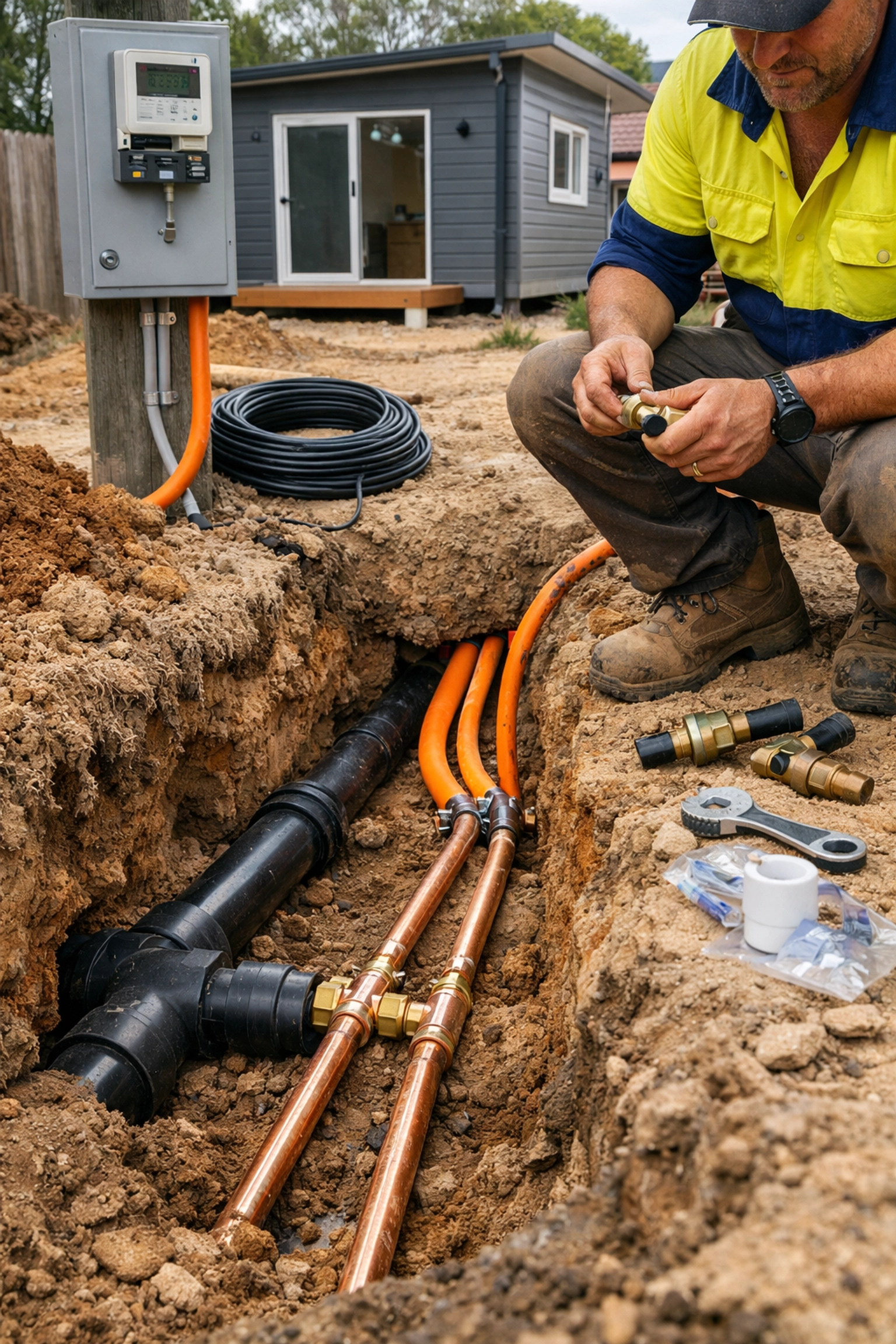
Your granny flat needs water, power, and sewer connections: and depending on your property's existing infrastructure, this can range from straightforward to surprisingly complex.
Water and sewer: If your main house has accessible connection points near the build location, plumbers can typically extend services without major drama. Properties on septic systems may need upgrades to handle additional wastewater load, which requires council approval and additional expense.
Power: Electrical connection costs vary based on distance from your switchboard and whether you need a separate meter for tenant billing. Many landowners opt for submetering arrangements that allow separate utility accounts without full service upgrades. Solar-ready designs can future-proof your investment: EcoHub modules come prewired for panel installation.
Internet and communications: Don't overlook NBN or equivalent connectivity. Tenants expect reliable internet, and properties with solid digital infrastructure command higher rents.
Get quotes for all services during the planning phase. These costs sit outside the modular unit price and can add $15,000–$30,000 to your total project budget depending on complexity.
4. Rental Yields That Actually Make Sense
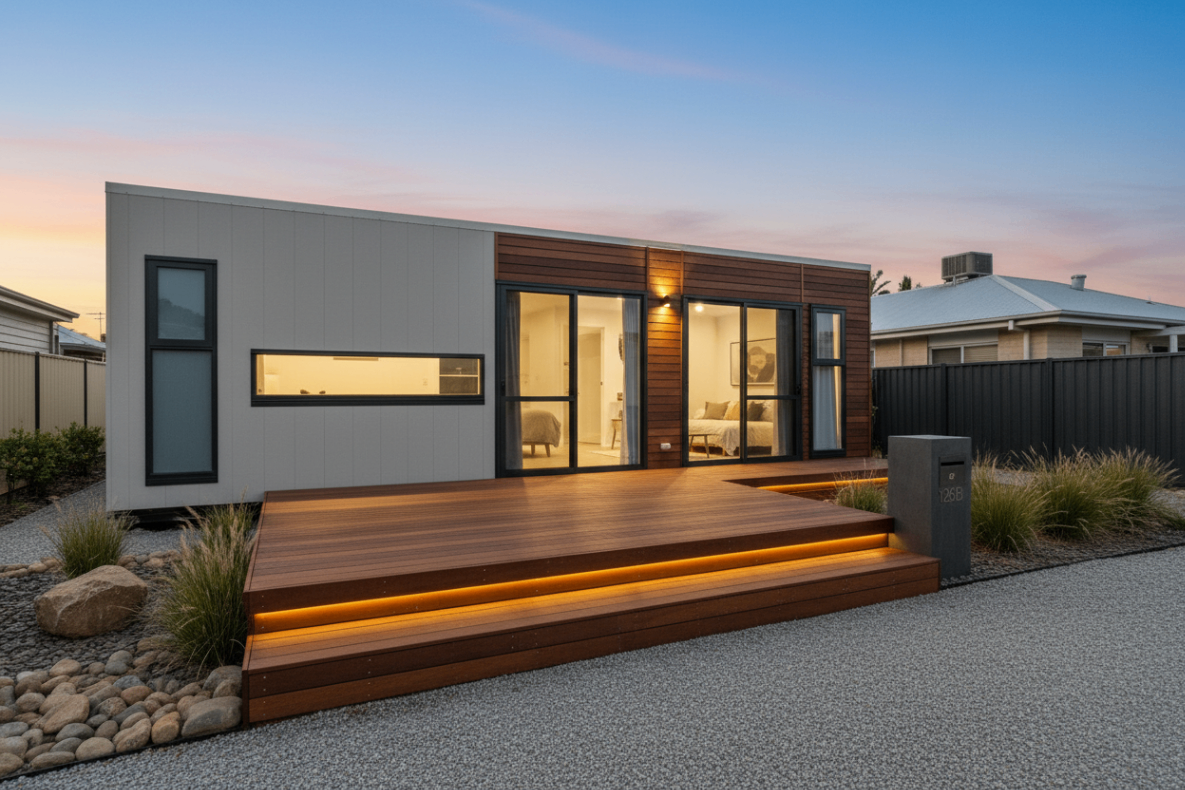
The rental income potential is probably why you're reading this article. Current market data shows one-bedroom granny flats generating $400–$550 per week in major metro areas, while two-bedroom configurations can command $550–$750+ depending on location and finishes.
That translates to $20,800–$39,000 annually: enough to cover mortgage payments, offset property costs, or provide genuine passive income. Areas with rental vacancy rates below 2% see even stronger yields, particularly for well-designed, energy-efficient units that appeal to professional tenants.
Run your numbers conservatively. Factor in vacancy periods, maintenance costs (usually 5–10% of rental income), and property management fees if you're not handling tenancy yourself. Most landowners targeting investment returns aim for 5–7% gross rental yield minimum.
The payback calculation is straightforward: a $180,000 granny flat generating $28,000 annually delivers a 15.5% return on investment before expenses. Even after costs, you're looking at returns that significantly outperform most conventional investments. Explore more about investment opportunities on our landowner page.
5. Privacy and Screening Requirements
Good fences make good tenants: and satisfied neighbours. Privacy considerations affect both your relationship with tenants and council approval prospects. Most councils require adequate screening between main dwelling and granny flat, particularly for windows and outdoor living areas.
Smart design addresses privacy through strategic placement, window positioning, and landscaping. Position outdoor decks away from main house living areas. Use frosted glass for bathroom and bedroom windows facing neighbouring properties. Plant screening vegetation that reaches maturity quickly: fast-growing natives like Lilly Pilly or bamboo species create natural barriers within 12–18 months.
Acoustic privacy matters too. Quality modular construction includes proper insulation that minimizes sound transfer, but outdoor activities still need consideration. Clear access paths that don't require tenants to walk past your main dwelling windows maintain everyone's comfort and privacy.
6. Construction Timeline Advantages You Can Actually Bank On
Traditional granny flat construction takes 6–8 months minimum, weather permitting. Modular builds compress that timeline to 8–12 weeks from order to occupancy: and approximately 90% of construction happens off-site in controlled factory conditions.
Here's the realistic breakdown:
- Council approvals: 4–12 weeks (concurrent with manufacturing)
- Site preparation and foundations: 2–3 weeks
- Factory construction: 6–8 weeks
- Delivery and installation: 1–3 days
- Final connections and finishing: 1–2 weeks
The speed advantage isn't just convenient: it directly impacts your return on investment. Every month saved is rental income earned. A modular granny flat generating $2,000 monthly that's completed four months earlier than traditional construction delivers an extra $8,000 in your pocket.
Weather delays? Virtually eliminated. Trade scheduling conflicts? Non-existent. That compressed timeline represents genuine financial advantage for investment-focused landowners.
7. Cost Comparison and Budgeting Reality
Modular granny flats typically start around $130,000 for one-bedroom configurations and range to $300,000+ for larger, premium designs. That's substantially more cost-effective than equivalent traditional construction: often 20–30% savings when comparing like-for-like specifications.
Factory construction efficiency drives those savings. Bulk material purchasing, streamlined labor processes, and zero weather delays create genuine cost advantages that flow through to you. There's no builder margin stacking, no surprise variation claims, and pricing is typically fixed from contract signing.
Budget for these additional costs:
- Site preparation and foundations: $15,000–$30,000
- Services connection: $15,000–$30,000
- Landscaping and paths: $5,000–$15,000
- Council fees and certifications: $2,000–$5,000
- Contingency buffer: 10% of total project cost
A realistic all-in budget for a quality two-bedroom modular granny flat including site works typically lands between $200,000–$280,000. Get detailed pricing information on our modular homes cost page.
8. Property Value Impact Worth Considering
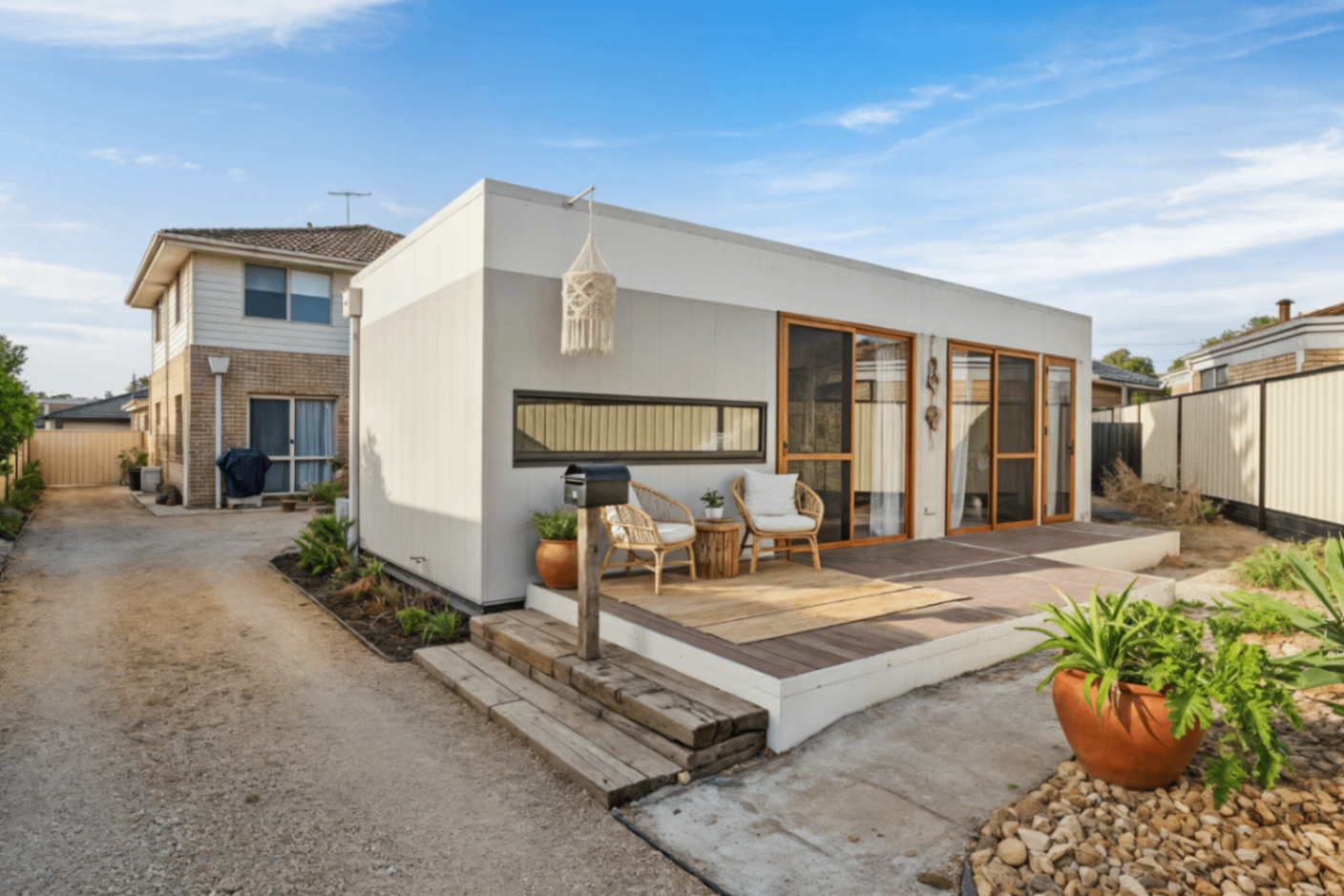
Installing a quality granny flat typically increases your property value by $100,000–$200,000 depending on location and execution quality. That's not just theoretical: valuers recognize secondary dwellings as genuine value-adds, particularly in high-demand rental markets.
The investment math becomes compelling when you consider both rental income and capital appreciation. A $200,000 granny flat that generates $28,000 annual rental income while adding $150,000 to property value delivers returns through multiple channels.
Future sale appeal strengthens significantly. Properties with income-generating secondary dwellings attract investor buyers willing to pay premium prices. Even owner-occupier buyers value the flexibility: potential for multigenerational living, teenager retreats, or home office space.
9. Design Flexibility That Matches Your Block
Modular doesn't mean cookie-cutter. Modern prefab construction offers extensive customization within efficient manufacturing frameworks. EcoHub's range includes one, two, and three-bedroom configurations designed specifically for Australian conditions and lifestyle preferences.
You can select:
- External cladding materials and colors
- Window and door configurations
- Internal finishes and fixtures
- Deck sizing and positioning
- Energy efficiency upgrades
- Smart home integration
The key is choosing a manufacturer who offers genuine flexibility while maintaining factory efficiency. Browse our complete range of modular home designs to see what's possible within your budget and block constraints.
10. Quality Control and Warranty Protection
State building inspections happen at the factory during construction: not scattered across months of on-site work. This concentrated inspection regime actually delivers superior quality assurance compared to traditional builds where different trades work independently across extended timeframes.
Factory construction means climate-controlled conditions, precision machinery, and consistent workmanship standards. Materials aren't exposed to weather during construction. Everything's squared, leveled, and finished before transport.
Warranty coverage typically includes structural guarantees, weatherproofing, and major systems. EcoHub provides comprehensive warranty protection covering manufacturing, installation, and structural integrity. That peace of mind matters when you're relying on rental income to service your investment.
Your Next Move
These ten considerations separate successful granny flat projects from expensive mistakes. The landowners who get it right start with thorough planning, realistic budgets, and experienced modular partners who understand both construction and investment returns.
Ready to see what's actually possible on your property? Book a free site assessment with our team. We'll assess access, discuss design options, and provide accurate costing based on your specific situation. No obligation: just straight answers from people who've installed hundreds of granny flats across Australia.
Visit EcoHub Homes or contact our team directly to get your site assessment scheduled. Your backyard's income potential is waiting( let's unlock it together.)