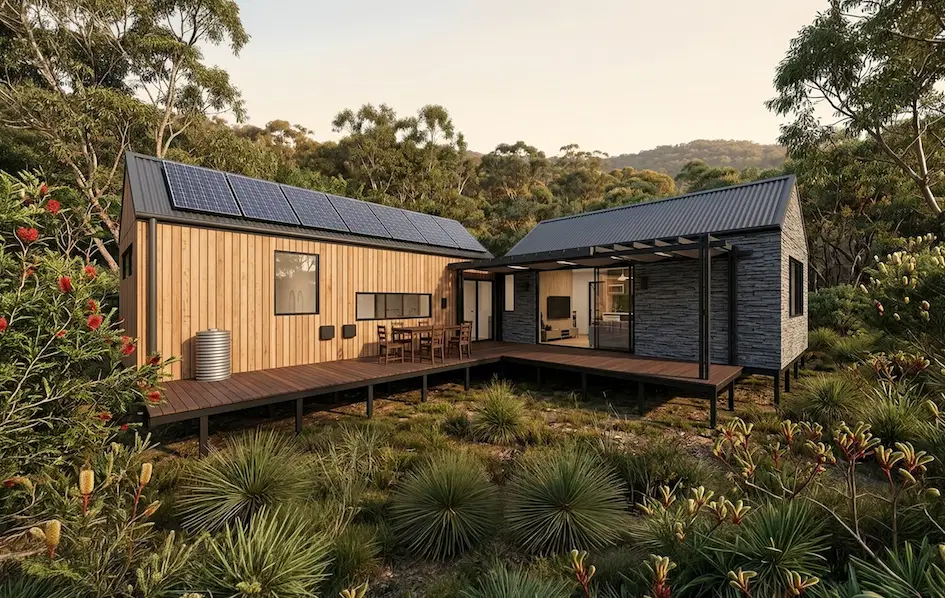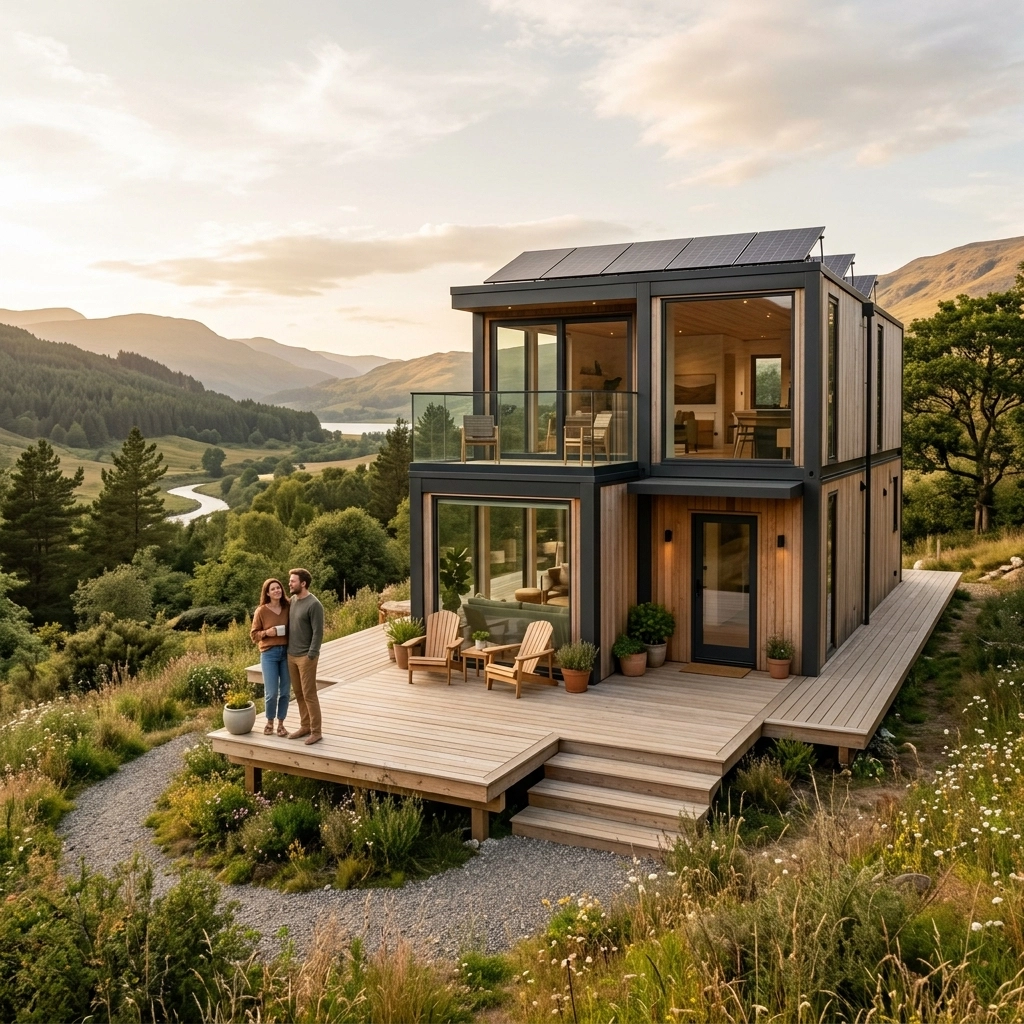
Let’s be honest: the traditional way of building a house in Australia has become a bit of a headache. If you’ve looked at construction lately, you’ve probably seen the same story everywhere: sky-high labor costs, supply chain hiccups that never seem to end, and timelines that stretch out longer than a summer cricket match.
But it’s April 2026, and the game has officially changed.
The modular housing industry hasn't just "caught up" to traditional building; it has sprinted past it. At EcoHub Homes, we’ve seen a massive shift in how Australians think about property. Whether you're a first-time buyer looking for a way into the market or an investor trying to maximize rental yields, the 2026 modular trends are the key to building smarter, faster, and: most importantly: cheaper.
The "Speed Revolution": From Foundation to Finished in Weeks
The biggest trend of 2026 is the sheer speed of delivery. Gone are the days when building a home meant living on a dusty site for twelve months. Today’s modular homes are moving toward platform-based standardization.
What does that actually mean for you? It means we use repeatable, high-precision grids and connection points that allow us to scale a design from a simple studio to a massive family residence without having to reinvent the wheel every time.
Because we build in a controlled factory environment, we aren’t at the mercy of the Perth weather or local trade shortages. Models like our I-Home 160 can now be installed on-site in as little as two weeks. While your neighbors are still waiting for their bricklayer to show up, you’re already moving the furniture in and hosting your first housewarming BBQ.
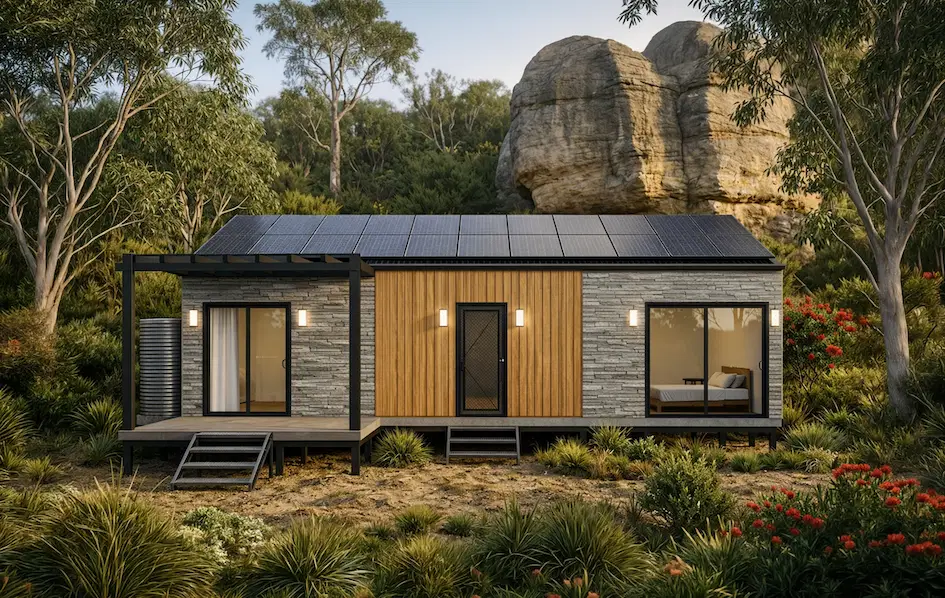
Energy Performance is No Longer an "Upgrade"
In the past, making a home "eco-friendly" was a luxury add-on that cost a fortune. In 2026, that script has been flipped. High-performance energy efficiency is now the baseline standard for modular construction.
We are seeing a massive shift toward A+ energy ratings becoming the default expectation. At EcoHub Homes, we integrate features that used to be "premium" directly into our standard builds. We’re talking:
- Triple-glazed windows as a standard inclusion to keep the heat out in summer and the warmth in during winter.
- Advanced aerothermy heating systems that use a fraction of the power of traditional HVAC.
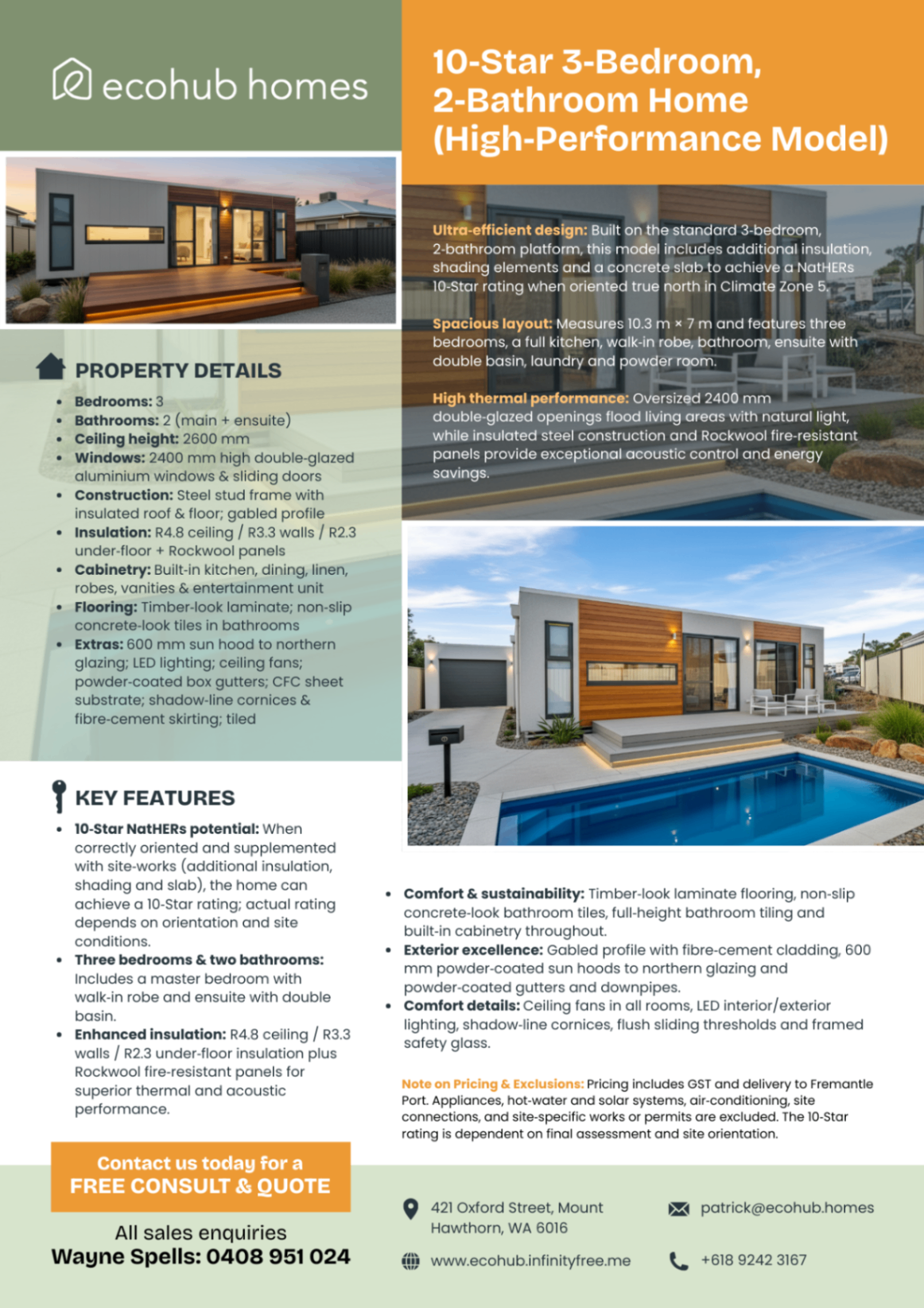
- 10-Star NatHERS potential through superior insulation and thermal break technology.
When you choose a 10-star three-bedroom home, you aren't just saving the planet: you’re effectively firing your electricity provider. In 2026, the real way to save money isn't just in the construction cost; it's in the decades of near-zero utility bills that follow.
Precision Engineering: The Death of the "Construction Error"
If you’ve ever built a traditional home, you know the "oops" moments. A wall that isn't quite straight, a window that doesn't seal properly, or plumbing that needs to be ripped out and redone.
The 2026 trend is all about BIM-to-factory workflows. This is a fancy way of saying that our digital models talk directly to the machines in our factory. This removes the human error that plagues traditional sites. Every cut is precise to the millimeter, and every joint is perfect.
This level of precision doesn’t just mean a better-looking house; it means less waste. Traditional construction sites can see up to 30% of materials end up in a skip bin. Modular construction reduces that to almost zero. In 2026, avoiding waste isn't just a green initiative: it’s a massive cost-saving measure that we pass directly on to you.
Why Investors are Flooding the Modular Market
If you’re looking at modular home costs from an investment perspective, 2026 is your year. Property investors have realized that the "time to market" is the most important metric for ROI.
If it takes a traditional builder 18 months to finish a rental property, that’s 18 months of mortgage payments with zero income. If EcoHub Homes can get that same property tenanted in 4 months, the investor is already over a year ahead in rental returns.
Furthermore, lenders and banks in Australia have matured. They now see modular homes as lower-risk investments because the costs are fixed. There are no "nasty surprises" halfway through the build. What we quote is what you pay. For a developer or someone looking into a subdivision, this financial certainty is worth its weight in gold.
"Modular construction is no longer the alternative; it is the default choice for anyone looking to balance high-end design with financial sanity. The predictability of the factory environment is the only way to beat the rising costs of traditional site labor." : Industry Insight, 2026
Design Freedom: It Doesn't Look "Modular" Anymore
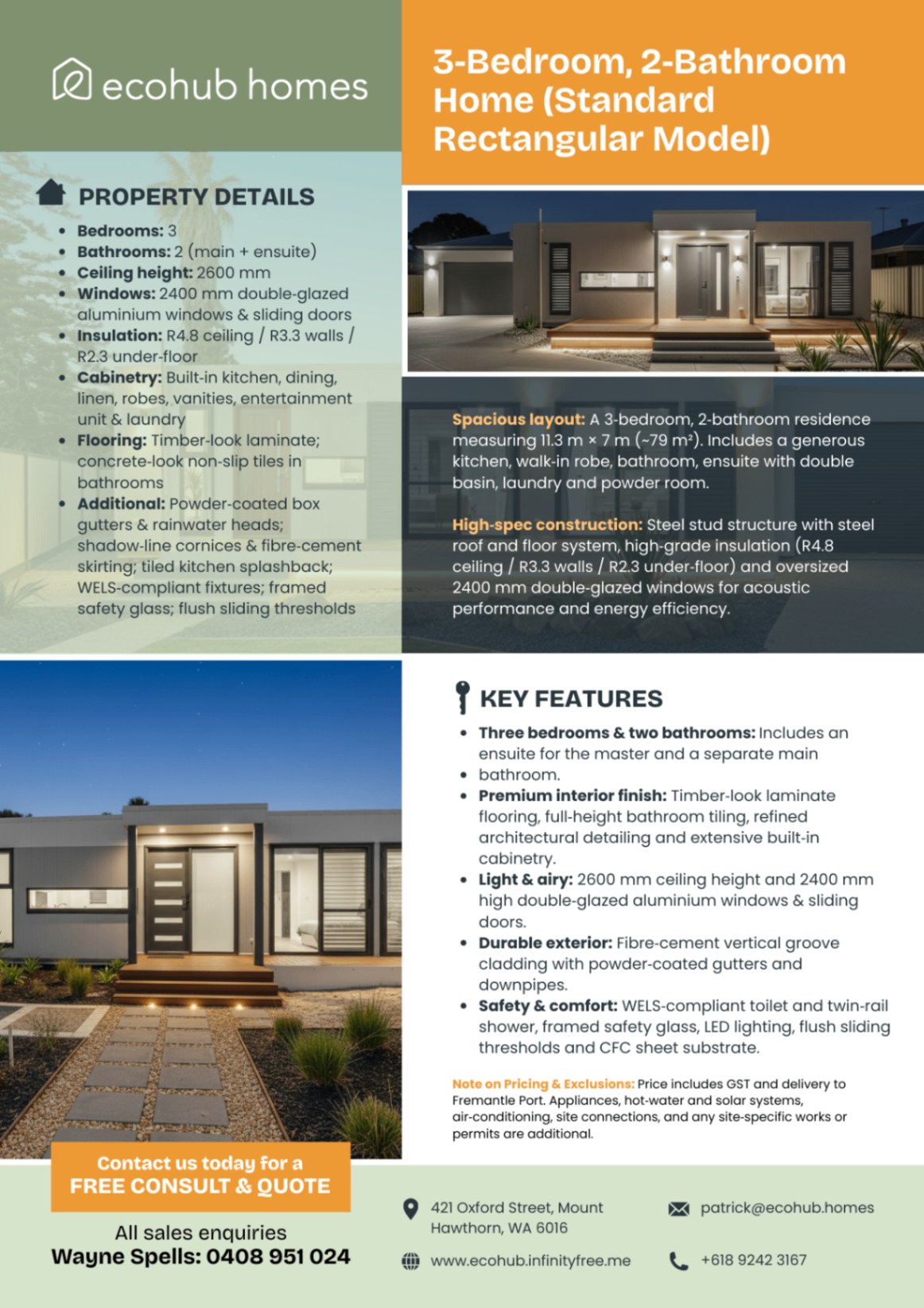
Forget the "transportable" look of the past. One of the most exciting trends of 2026 is the architectural evolution of prefab. We are seeing high ceilings, full-height double-glazed windows, and premium stone exteriors as standard features.
Whether you want a one-bedroom retreat for a granny flat or a sprawling three-bedroom family home, the aesthetics are indistinguishable from (and often superior to) traditional builds. The use of timber cladding, mixed textures, and seamless indoor-outdoor flows makes these homes perfect for the Australian landscape.
The Tech-Integrated Interior
Inside the home, 2026 is all about the "Smart Core." We are now pre-wiring homes for full electrification and smart-grid integration during the factory phase. This means your home is ready for battery storage, EV charging, and automated energy management from day one.
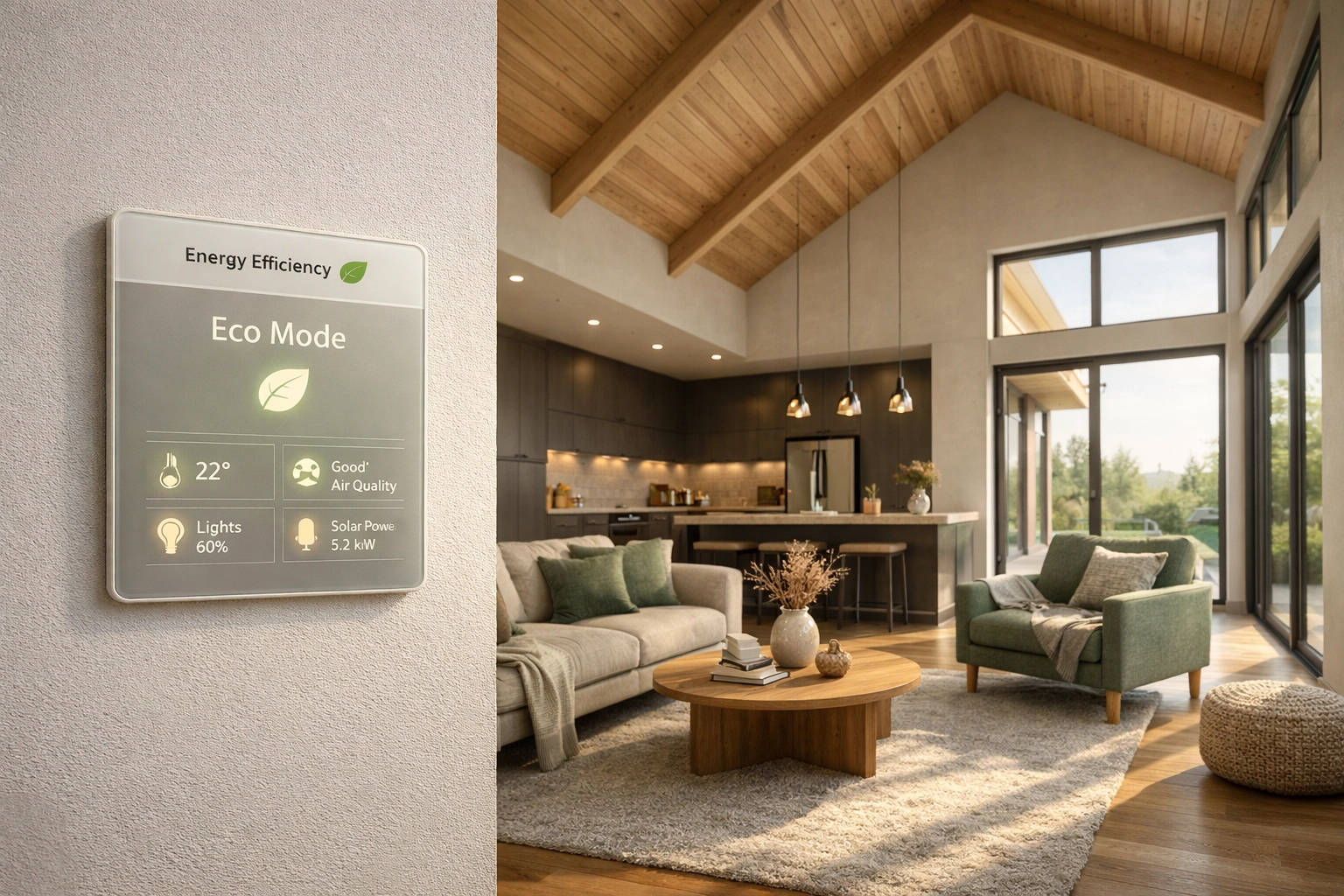
High ceilings and open-plan layouts are no longer structural challenges in modular design. Because we use high-strength steel frames, we can create vast, light-filled spaces that feel much larger than their actual footprint. This "living large in a smaller footprint" trend is essential as land prices in Australia continue to rise.
How to Get Ahead of the Game
If you’re sitting on a piece of land: or thinking about buying some: you need to act now to take advantage of these 2026 efficiencies. The demand for modular is skyrocketing, and the smartest property owners are moving toward modular homes in Australia to beat the queue.
Building a home shouldn't be a test of your patience or your bank account. It should be an empowering experience that sets you up for a better financial future.
Ready to see how much you can save?
The best way to start is by looking at the numbers. Whether you're a landowner or a professional developer, we can show you exactly how the 2026 trends apply to your specific project.
Don’t get stuck in the slow lane of traditional construction. The future of building is here, it’s factory-built, and it’s more affordable than you think.
- Explore our range: Check out our 3-bedroom T-House for the ultimate in modern modular living.
- Get expert advice: Attend our free investment seminar to learn about the financial benefits of prefab.
- Start your journey: Book a free consultation with our team today and let’s get your 2026 build moving.