
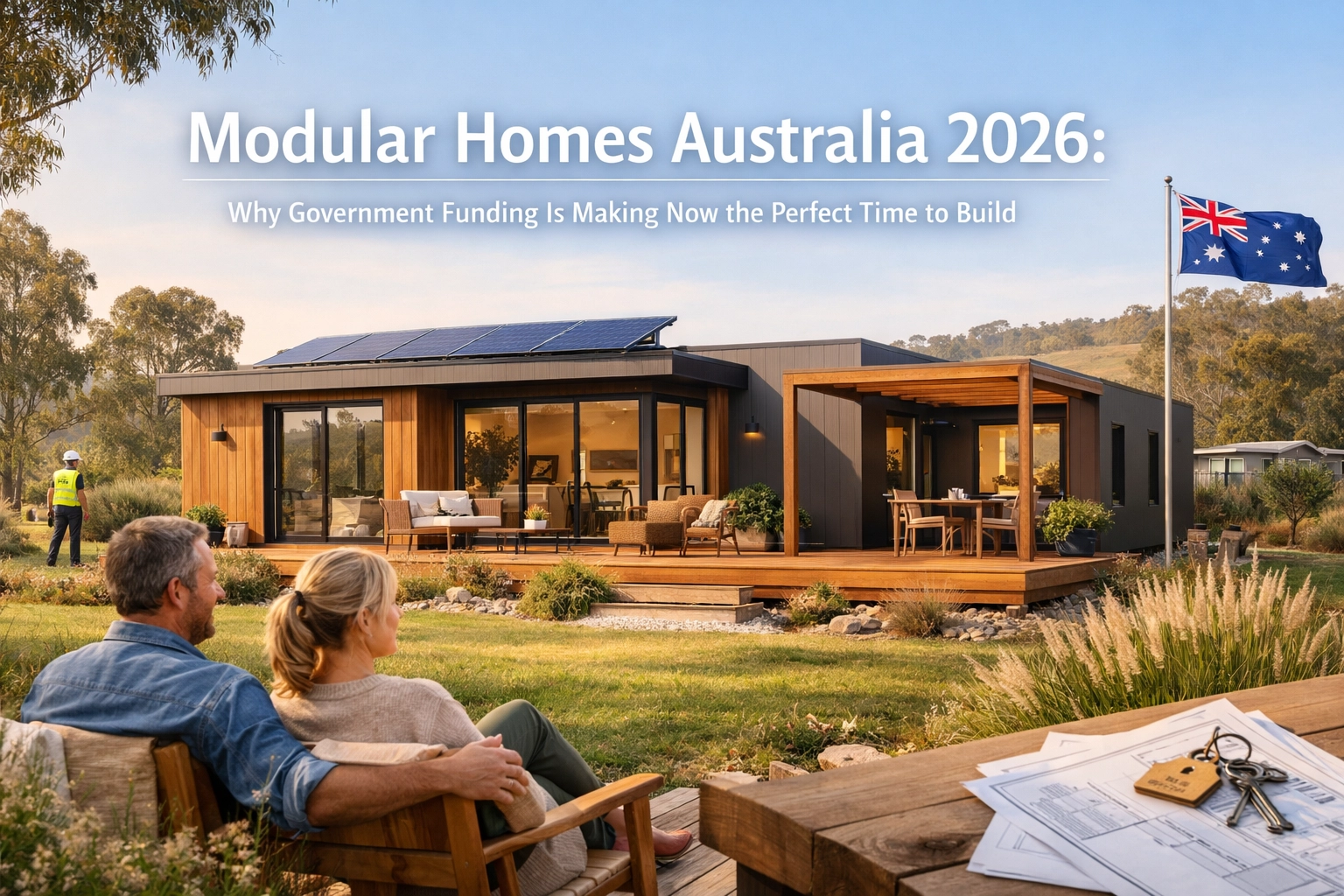
If you've been sitting on the fence about building a new home in Australia, 2026 might just be the year that tips the scales. The government has thrown serious money behind modular and prefab housing: not just token gestures, but genuine funding that's reshaping the market and making now the smartest time to build in a generation.
Here's what's changed: federal and state governments are finally recognising that traditional construction timelines and costs aren't cutting it anymore. Australia needs homes, and it needs them fast. Modular construction delivers exactly that, which is why the funding tap has been turned on full blast.
The Numbers Behind the Push
The Australian Government allocated $54 million in the 2025–26 federal budget specifically for prefabricated and modular home construction. This isn't a pilot program or a trial: it's a full-scale commitment to making modular housing a mainstream option for Aussies.
Here's how that money breaks down:
- $49.3 million goes directly to state and territory governments to expand local prefab and modular housing programs
- $4.7 million funds a voluntary national certification process that cuts through red tape and speeds up approvals
But that's just the beginning. The Government also committed up to $4.5 billion through the Housing Support Program and New Homes Bonus to address infrastructure backlogs. That means better roads, utilities, and services in areas where new housing developments are happening: creating the perfect ecosystem for modular home projects to thrive.
What This Means for Your Wallet
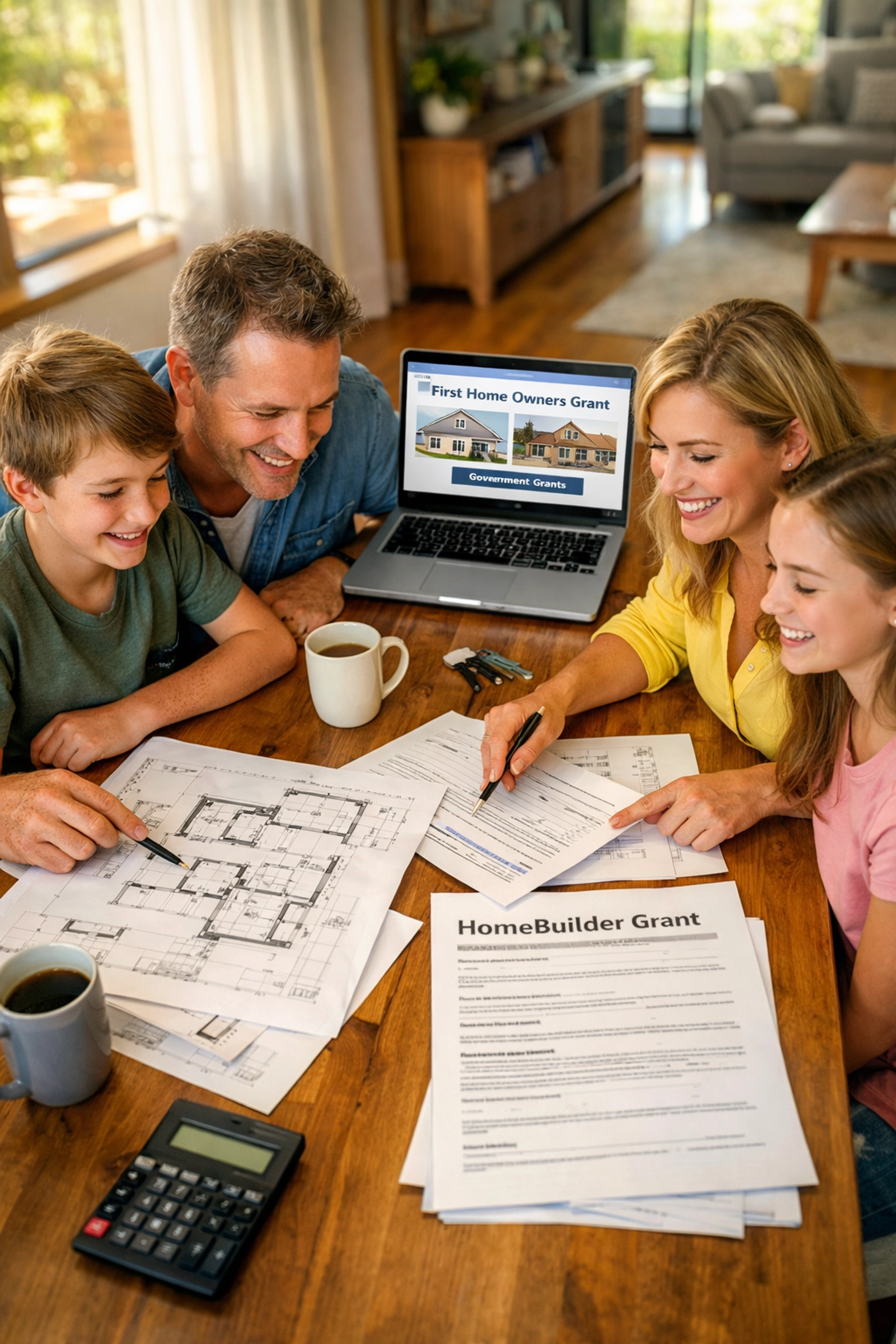
Government support translates directly into savings. Multiple grants and schemes are available right now, and the best part? You can often stack them to maximise your benefit.
First Home Owner Grant (FHOG)
First-time buyers purchasing brand-new modular homes can access between $10,000 and $30,000, depending on your state or territory. That's a significant chunk off your deposit or construction costs.
First Home Guarantee (5% Deposit Scheme)
This is the big one for first-home buyers. Instead of scraping together a 20% deposit: which on a $500,000 home means $100,000: you only need 5% ($25,000). You'll also avoid Lenders Mortgage Insurance, which typically costs thousands. With 35,000 places available annually, there's genuine opportunity here.
Regional Home Buyer Support
Thinking about building outside metro areas? Regional purchasers can access up to $30,000 in additional grants. The Regional Home Guarantee lets you build with just a 5% deposit regardless of whether you're a first-home buyer or not.
Energy Efficiency Incentives
Modular homes that meet high energy efficiency standards: like those designed by EcoHub Homes: qualify for additional rebates. The ACT, for example, offers zero-interest loans for energy-efficient improvements. Other states have similar schemes that reward sustainable building choices.
The strategic move? Combine multiple grants. A first-home buyer building regionally with an energy-efficient modular home could potentially access $50,000+ in combined support.
Why Governments Are Backing Modular Construction
This isn't just about throwing money at a housing crisis. Governments have recognised that modular construction delivers genuine advantages that align perfectly with national priorities.
Speed to Market
Traditional construction timelines are measured in months: sometimes stretching beyond a year when you factor in delays, weather issues, and labour shortages. Modular homes deliver faster. NSW's Shellharbour social housing project completed three homes in 14–16 weeks from development approval to occupancy. That's not an outlier: modular construction consistently delivers homes up to 20% faster than traditional methods.
Every week saved on construction means earlier occupancy, lower holding costs, and faster relief for Australia's housing shortage. Governments need solutions that work now, not next year.
Quality Control
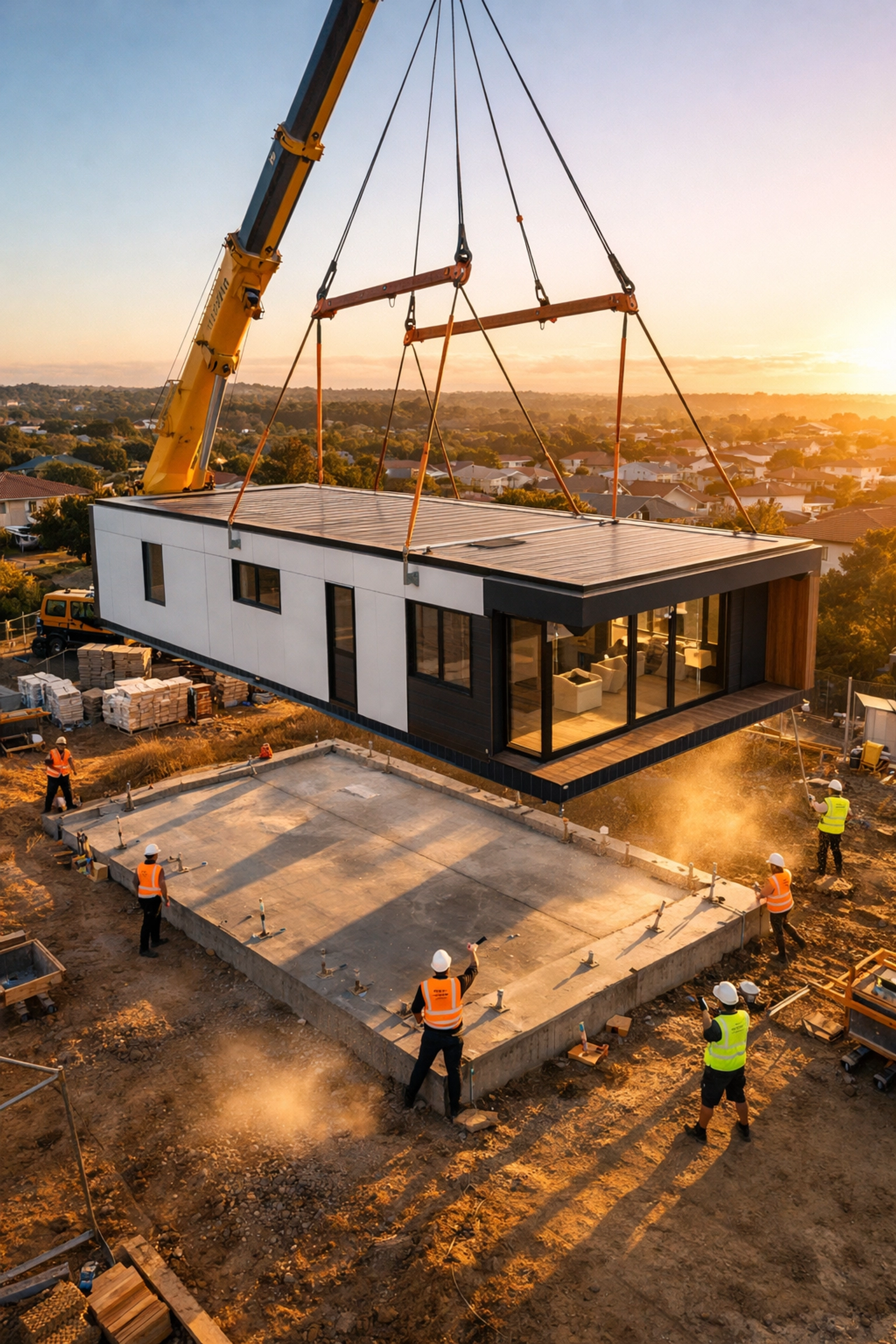
Factory construction means consistent quality. Components are built in controlled environments, inspected at multiple stages, and assembled by specialised teams. Weather doesn't delay progress. Materials don't sit exposed to the elements. The result is a home that meets: and often exceeds: Australian building standards without the variables that plague on-site construction.
Sustainability Goals
Australia has committed to ambitious emissions reduction targets, and residential construction is a major piece of that puzzle. Modular homes generate less construction waste, use materials more efficiently, and when designed properly, deliver superior energy performance compared to traditional builds.
This is where companies like EcoHub Homes are leading the charge. Our designs incorporate extensive insulation (R4.8 ceiling insulation as standard), full-height double-glazed windows, and solar-ready roofs. These aren't add-ons: they're built into the design from day one. Homes targeting 10-Star NatHERS ratings aren't just good for the planet; they'll save you thousands in energy costs every year.
The Construction Speed Advantage in Practice
Let's talk real numbers from real projects. In 2025, eight modular social homes were completed across NSW. By the end of 2026, that number will reach 90 homes. That's not gradual scaling: it's exponential growth made possible because modular construction removes the bottlenecks that plague traditional building.
For private buyers, this speed advantage translates into:
- Lower financing costs (less time paying interest on construction loans)
- Earlier rental income (if you're building an investment property or granny flat)
- Reduced accommodation expenses (if you're building your primary residence and currently renting)
- Less stress (shorter projects mean fewer things that can go wrong)
The 14–16 week timeline from approval to occupancy in Shellharbour isn't theoretical. It's happening. And with government support expanding capacity across the modular construction industry, these timelines are becoming standard rather than exceptional.
Energy Efficiency: Where Modular Excels
High-performance homes aren't optional anymore: they're essential. Energy costs continue climbing, and buyers are increasingly savvy about long-term running costs. The government knows this, which is why energy efficiency incentives are woven throughout current grant programs.
Modular homes deliver superior energy performance for several reasons:
Precision Manufacturing
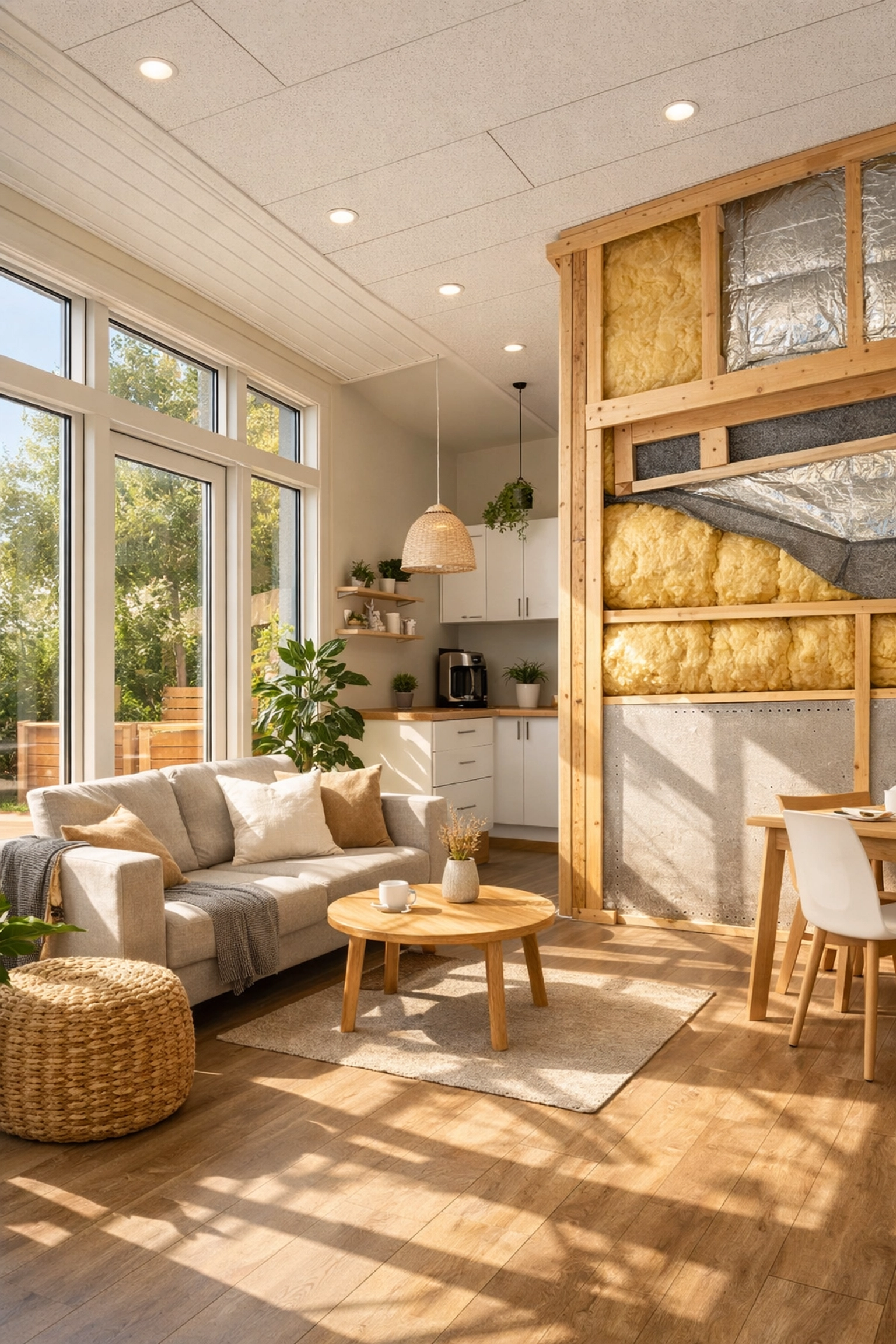
Factory construction allows for precise installation of insulation, airtight sealing, and thermal breaks that are difficult to achieve consistently on building sites. Every millimetre matters when it comes to thermal performance, and factory construction delivers that precision.
Integrated Design
Energy efficiency is designed into modular homes from the beginning, not retrofitted. EcoHub Homes' 3-bedroom, 2-bathroom T-House, for example, features 2600mm high ceilings for better air circulation, strategically positioned windows for passive heating and cooling, and comprehensive insulation throughout floors, walls, and ceilings.
Quality Glazing
Full-height double-glazed windows aren't just about aesthetics: they're thermal barriers that dramatically reduce heat transfer. Combined with proper orientation and shading, they transform how a home regulates temperature naturally.
The result? Lower energy bills from day one, reduced reliance on heating and cooling systems, and homes that remain comfortable year-round regardless of external temperatures.
What This Means for You Right Now
The convergence of government funding, streamlined approvals, and mature modular construction technology creates a genuine window of opportunity in 2026.
If you're a first-home buyer, the combination of deposit assistance, grants, and faster construction timelines means you could be in your own home within months: not years: while saving tens of thousands in the process.
If you're a property owner considering a granny flat or investment property, government incentives combined with modular construction's speed and cost-effectiveness create compelling ROI scenarios. Rental income starts flowing sooner, and energy-efficient designs command premium rents.
The certification processes being funded by government are actively removing regulatory barriers. State and territory governments are expanding their prefab programs. The entire ecosystem is aligning to support modular construction.
That alignment won't last forever. Government programs have cycles. Funding priorities shift. Builder capacity gets booked out as more people recognise the opportunity.
Ready to Explore Your Options?
EcoHub Homes specialises in energy-efficient modular designs that align perfectly with current government priorities: and your long-term interests. Our homes are designed for Australian conditions, built to Australian standards, and optimised for energy efficiency that saves you money for decades.
Whether you're building your first home, adding a granny flat, or developing an investment property, our team can walk you through available grants, expected timelines, and designs that match your vision.
Government support is creating genuine opportunities in 2026. The question isn't whether modular construction is right for you: it's whether you'll act while the funding and incentives are flowing.
Explore our range or get in touch to discuss how government support can work for your specific situation. The homes are ready. The funding is there. Your timeline starts now.