
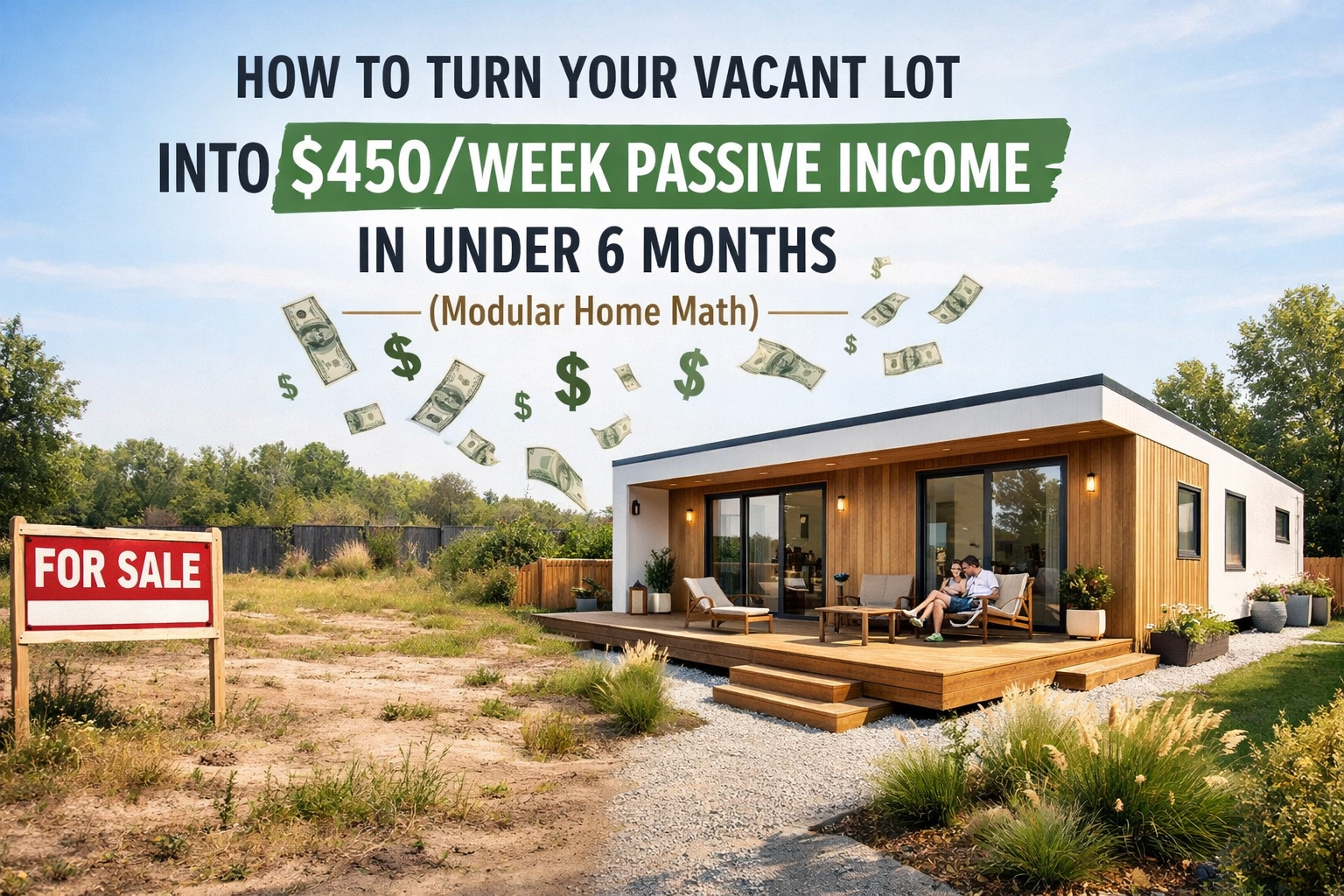
That vacant block you've been holding onto: or eyeing up: isn't just sitting there accumulating rates and land tax. It's a missed revenue opportunity worth roughly $23,400 a year.
The difference between vacant land and cash-flowing property used to be an 18-month construction nightmare. Not anymore. Modular homes have flipped the investment timeline entirely, and the numbers are compelling enough that property investors across Australia are taking notice.
Let me show you the actual math behind turning dirt into dollars in under six months.
The $450/Week Baseline (And Why It's Conservative)
A well-positioned two or three-bedroom modular home in suburban Perth, Melbourne, or Brisbane commands between $420–$550 per week in rental income. We're using $450 as a conservative middle ground.
That works out to:
- $1,950 per month
- $23,400 per year
- $117,000 over five years
Compare that to your current return on vacant land: rates bills, maintenance costs, and exactly zero income. The opportunity cost is brutal when you run the numbers.

The Investment Breakdown: Real Numbers
Here's where modular homes separate themselves from traditional construction: both in cost and timeline.
Total Investment Range: $180,000–$280,000
That includes:
- Modular home: $150,000–$220,000 (depending on size and specifications)
- Site preparation: $15,000–$30,000 (leveling, utilities connection, concrete slab)
- Council permits and approvals: $3,000–$8,000
- Connection fees: $5,000–$12,000 (water, electricity, sewer)
- Landscaping and finishing: $7,000–$10,000
Let's work with a mid-range example: $230,000 all-in for a quality three-bedroom, two-bathroom modular home on a prepared site.
At $450/week rental income, your gross annual yield is 10.17%. After property management fees (7–8%), insurance, rates, and maintenance reserves, you're still looking at a net yield around 7–8%: significantly higher than traditional property investment returns.
The Six-Month Timeline (And How It Actually Works)
Traditional home construction in Australia averages 12–18 months from approval to occupancy. Modular homes australia installations compress that dramatically.
Month 1–2: Planning and Approvals
- DA submission and approval (faster for compliant modular designs)
- Site survey and engineering assessment
- Utility connection applications
- Modular home selection and deposit
Month 3: Site Preparation
- Excavation and leveling
- Concrete slab pour and cure
- Utility rough-ins to site boundary
Month 4: Manufacturing and Delivery
- Your home is being built in a controlled factory environment
- Quality control inspections throughout
- Weather delays? Non-existent
Month 5: Installation and Connection
- Crane delivery and placement (typically 1–2 days)
- Final utility connections
- Internal finishing touches
Month 6: Final Inspections and Tenant Placement
- Building certification
- Property styling and photography
- Tenant screening and lease signing
You're collecting rent by month seven. Compare that to traditional construction, where you'd still be waiting for the frame to go up.
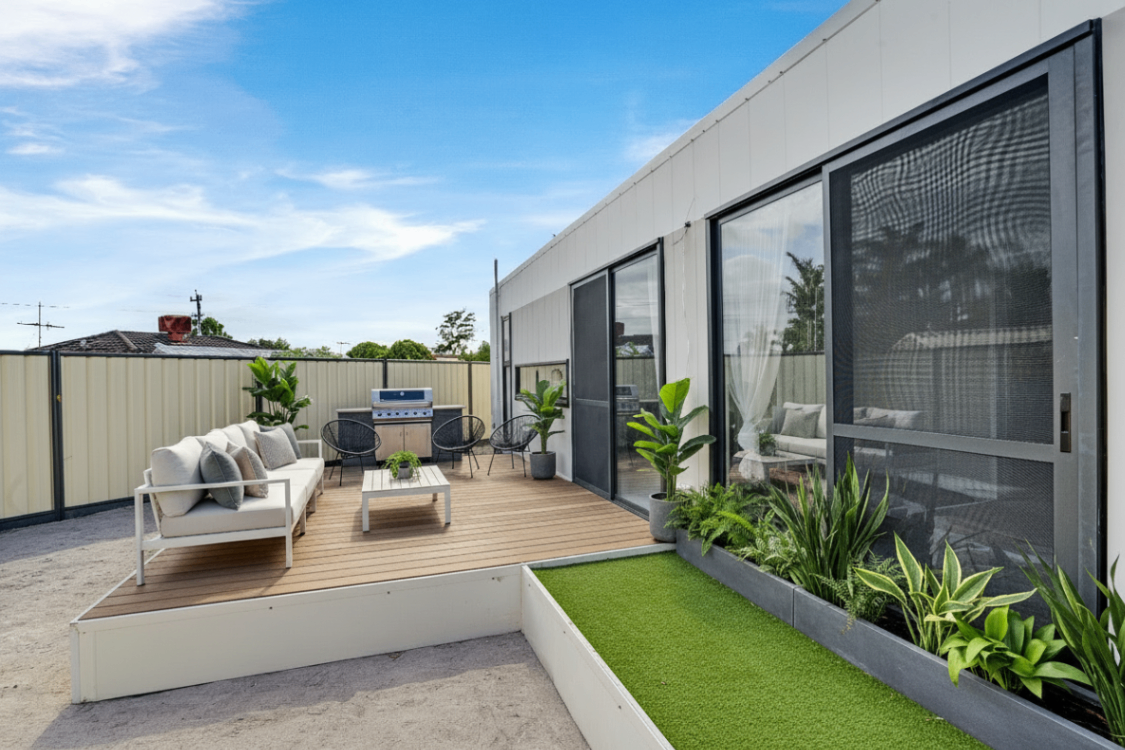
The Cash Flow Reality Check
Let's assume you're financing 80% of that $230,000 investment at current rates (around 6.5%):
Loan amount: $184,000
Monthly repayment: ~$1,240 (principal and interest, 30 years)
Monthly rental income: $1,950
Less loan repayment: -$1,240
Less property management (8%): -$156
Less rates, insurance, maintenance reserve: -$250
Net monthly cash flow: ~$300
That's positive cash flow from day one: increasingly rare in today's property market. And remember, your tenant is paying down your loan while you build equity.
Why Prefab Homes Make This Model Work
The speed advantage isn't just convenient: it's financially material. Every month of traditional construction delay costs you:
- Lost rental income: $1,950/month
- Continued holding costs on the land
- Extended loan interest on construction finance
- Time value of your capital
A six-month construction timeline versus eighteen months saves you roughly $23,400 in lost rental income plus thousands in holding costs. That's enough to cover your entire site preparation and connection costs.
The controlled factory environment also means:
- Consistent quality control (no weather delays or site variables)
- Fixed pricing (no surprise cost blowouts mid-construction)
- Warranty coverage (10-year structural warranty on quality builds)

The Land Requirements (Smaller Than You Think)
You don't need a sprawling suburban block. Modular homes work brilliantly on:
- Standard residential lots: 400–600m²
- Subdivided blocks: Down to 250m² with the right council approval
- Infill sites: Awkward blocks traditional builders avoid
- Regional properties: Where construction timelines are even longer
The key factors councils assess:
- Minimum setbacks from boundaries (varies by council)
- Parking provision (typically one space per bedroom)
- Private open space requirements
- Overshadowing and privacy considerations
Most three-bedroom modular designs fit comfortably on a 350–400m² block with parking and outdoor space. That makes infill development: buying and subdividing existing blocks: a viable strategy in established suburbs.
The Strategic Advantages Nobody Talks About
Beyond the obvious speed and cost benefits, modular homes create unique investment opportunities:
Scalability: Once you've refined the process with one property, replication is straightforward. Same builder, same approval process, same property managers. Some investors are building portfolios of 5–10 modular rental properties using this exact model.
Reduced vacancy risk: Quality modular homes with modern finishes rent quickly. They're brand new, energy-efficient, and low-maintenance: exactly what tenants want.
Depreciation benefits: As a brand new build, you can claim significant depreciation on fixtures, fittings, and the building itself. A quantity surveyor can typically identify $8,000–$12,000 in annual depreciation deductions for the first few years.
Exit flexibility: If the rental market softens, you can sell a near-new home more easily than an older property. Alternatively, these make excellent owner-occupier homes if your circumstances change.
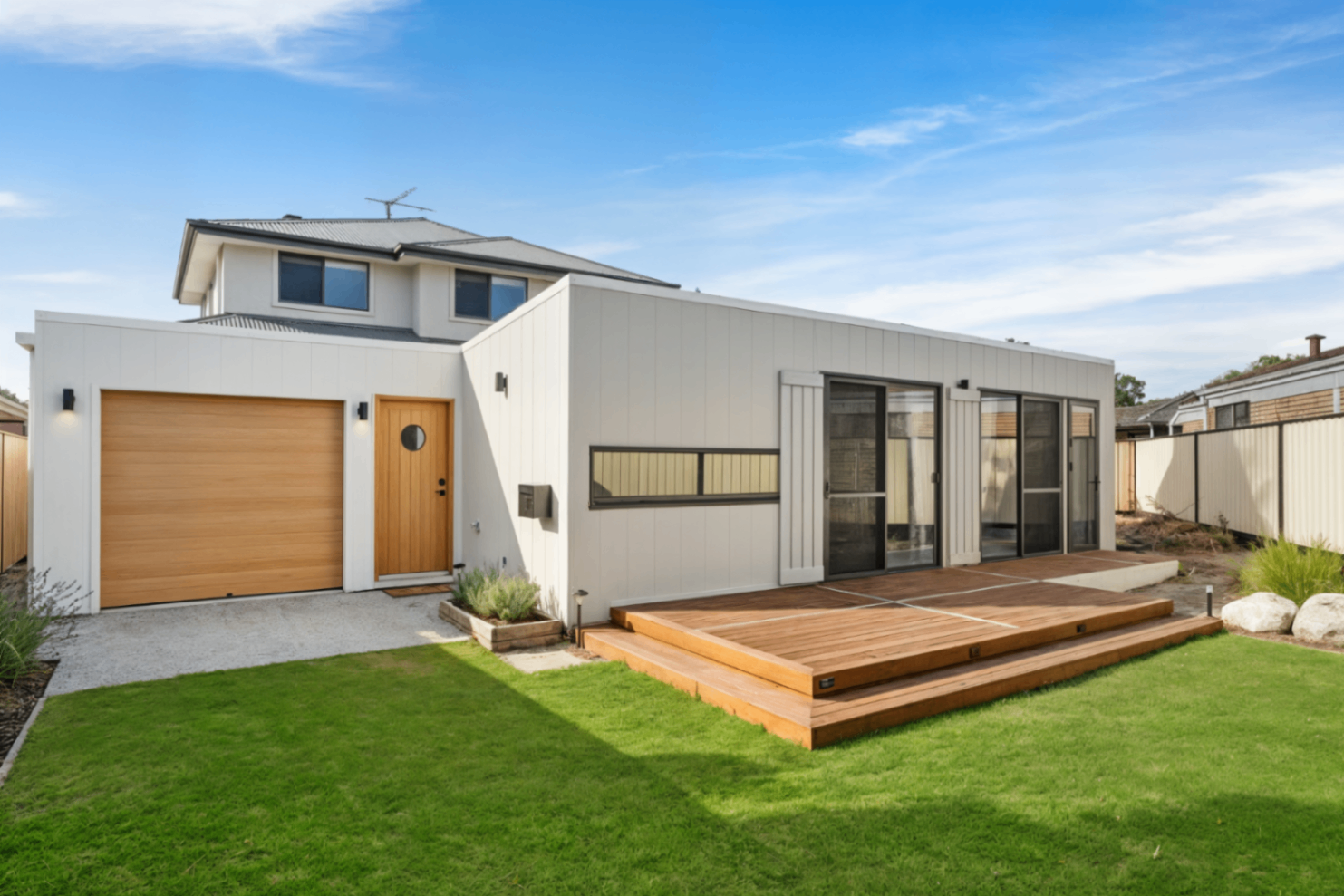
The Financing Angle
Traditional lenders have caught up to modular construction quality. Most major banks now treat completed modular homes identically to traditional builds for lending purposes.
During construction, you have options:
- Land equity release if you own the block outright
- Construction loans (though with shorter draw-down periods than traditional builds)
- Bridging finance for investors with existing property equity
The six-month timeline makes bridging finance particularly viable: interest costs are manageable when you're only holding for half a year before refinancing to a standard investment loan.
Where This Model Works Best Right Now
Regional and outer-metro areas offer the strongest returns. Think:
- Outer Perth suburbs: Baldivis, Byford, Ellenbrook
- SE Queensland growth corridors: Logan, Ipswich, Caboolture
- Melbourne's north and west: Melton, Craigieburn, Wyndham
- Regional centres: Bunbury, Toowoomba, Bendigo
These areas share key characteristics:
- Strong rental demand (affordability-driven population growth)
- Land availability without premium CBD pricing
- Council familiarity with modular construction
- Rental yields above 5–6%
The same $230,000 investment in inner-city Brisbane might achieve $400/week rent (lower yield). That same investment in Ipswich could command $480/week with stronger capital growth trajectory as infrastructure improves.
The Due Diligence Checklist
Before you commit capital, verify:
✓ Council zoning permits residential rental (some areas restrict short-term accommodation)
✓ Utility connections are available at the boundary (extension costs add up quickly)
✓ Site has reasonable access for crane delivery (steep slopes or narrow access complicate installation)
✓ Local rental demand supports your income assumptions (check comparable properties on realestate.com.au)
✓ Your chosen modular builder has local council experience (speeds approval process significantly)
The Real ROI Timeline
Year one is about establishing the asset and proving rental demand. Years two through five is where the model compounds:
- Rent increases: 3–4% annually keeps pace with market growth
- Loan paydown: Your tenant reduces the principal by roughly $4,500/year initially
- Depreciation benefits: Tax deductions improve your after-tax return
- Capital growth: Even conservative 4% annual growth adds $9,200/year to equity
Over five years, assuming conservative 4% growth:
- Rental income collected: $117,000+
- Loan principal paid down: ~$24,000
- Capital appreciation: ~$50,000
- Total position improvement: ~$191,000
Your initial $46,000 deposit (20% of $230,000) has generated a position worth significantly more: while producing positive monthly cash flow throughout.
Your Next Move
The six-month timeline means decisions made today produce income by spring. For investors serious about turning vacant land into productive assets, exploring modular home options is the logical first step.
The math works. The timeline's proven. The rental demand exists.
The only question is whether you're ready to stop paying rates on dirt and start collecting rent on a cash-flowing asset instead. Have a conversation with our team about your specific block: we'll run the numbers for your situation and show you exactly what's achievable.