
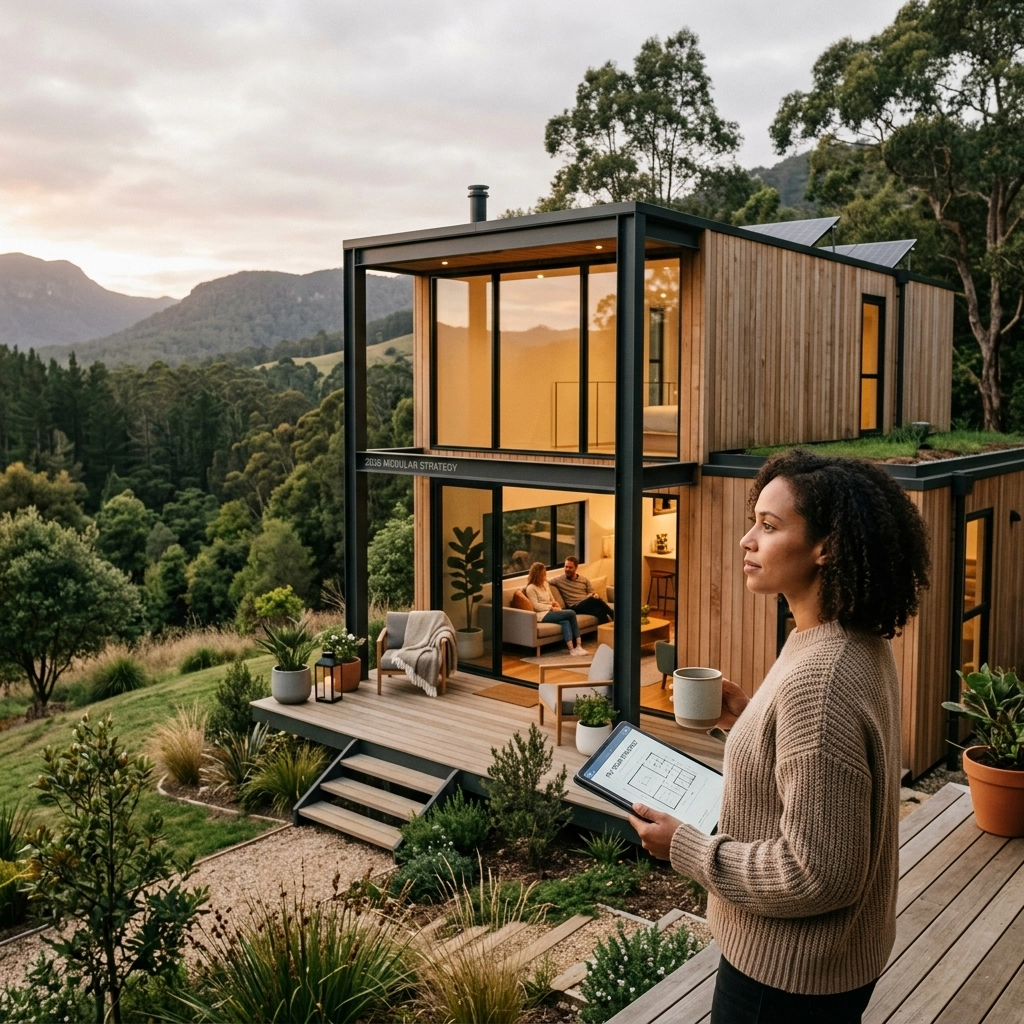
The Australian housing landscape has shifted dramatically over the last few years. By now, in April 2026, the secret is well and truly out: modular housing isn’t just a "backup plan": it’s the primary strategy for smart property owners and savvy investors. With traditional build times still lagging and material costs fluctuating, the speed and precision of prefab construction have become the gold standard.
However, as the market matures, so do the complexities. We’re seeing a new wave of mistakes that can stall a project, blow a budget, or leave you with a home that doesn’t meet the rigorous energy standards of 2026. At EcoHub Homes, we’ve seen it all.
If you want to stay ahead of the game, you need to avoid these seven common pitfalls. Here is how to fix your modular strategy and ensure your next build is a seamless success.
1. Treating Site Access as an Afterthought
In 2026, land is a premium, and many investors are looking at "difficult" blocks: sloped land, narrow suburban infills, or remote bush blocks. The biggest mistake you can make is assuming a modular home can "just be dropped" anywhere.
While modular homes are incredibly versatile, they still require a crane or a specialized heavy-lift trailer to get onto your site. We’ve seen owners fall in love with a design only to realize that overhead power lines or narrow residential streets make delivery impossible without a six-figure logistics bill.
The Fix: Conduct a thorough site accessibility audit before you sign a contract. At EcoHub Homes, we prioritize the site-to-installation service. We look at the "delivery path" just as closely as the floor plan. If your site has a steep gradient, consider an elevated structure on piers. This not only solves the access issue but also minimizes site disturbance: a big win for the environment.
2. Designing for Yesterday’s Energy Standards
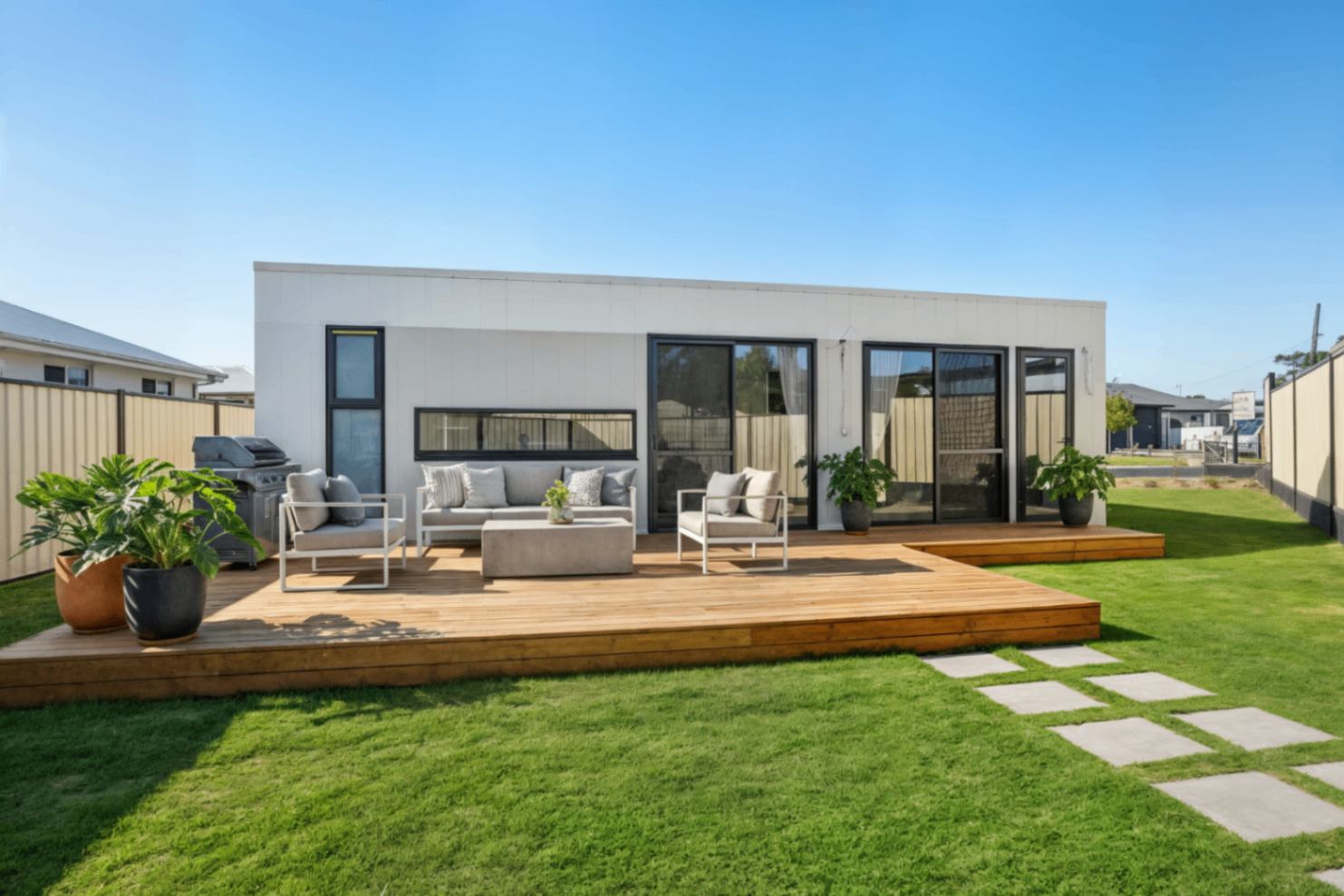
The 2026 building regulations in Australia are stricter than ever. If you are still aiming for the old 6-star NatHERS rating, you are already behind. Investors are now looking for "future-proofed" assets that offer high thermal performance to combat rising energy costs.
The mistake? Skimping on insulation and window quality to save a few thousand dollars upfront. This leads to a home that is expensive to run and less attractive to premium tenants.
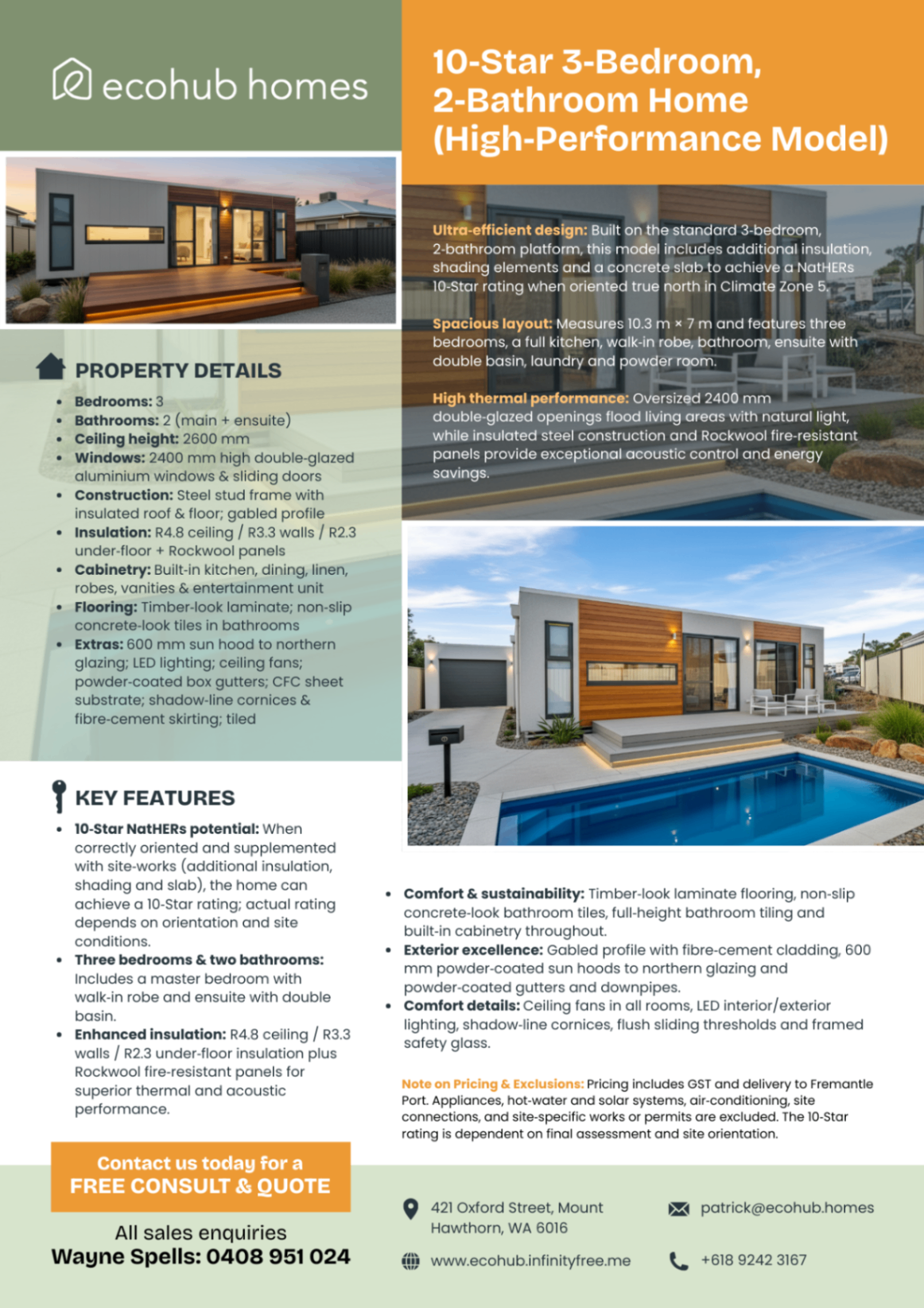
The Fix: Aim for a 7-star rating as your bare minimum, and push for 10-star readiness. Our modular designs, like the 3-Bedroom T-House, come standard with full-height double-glazed windows and extensive insulation in the walls, floors, and ceilings. By integrating solar-ready designs from day one, you transform your home from a cost center into a sustainable powerhouse.
3. Falling into the "Traditional Mortgage" Trap
One of the most frustrating hurdles in 2026 remains financing. Many property owners approach their local bank with a standard residential mortgage application, only to be knocked back because the home is "factory-built." Traditional lenders often struggle with the "progress payment" model of modular construction, where 80% of the build happens off-site.
The Fix: Work with specialized lenders who understand the industrialized construction process. You need a construction loan that recognizes the value of the asset while it’s still in the factory. Securing your finance through brokers who specialize in prefab can save you months of paperwork. Don't wait until you've picked a color scheme to talk to your bank; get your "modular-friendly" pre-approval sorted first.
4. Over-Customizing and Losing the "Speed Advantage"
The entire value proposition of modular housing is speed and cost-effectiveness. In 2026, we’ve seen a trend where owners try to treat a modular build like a bespoke architectural commission. While some customization is great, changing the structural footprint or moving wet areas mid-manufacturing defeats the purpose.
Every time you deviate from the engineered "core" of a modular design, you add weeks to the timeline and thousands to the price tag.
The Fix: Select a floor plan that meets 90% of your needs and use finishes: not structural changes: to personalize it. Our 3-bedroom, 2-bathroom models are designed for maximum flow and livability. By sticking to these proven layouts, you benefit from the efficiency of the assembly line, ensuring your home is delivered in weeks, not years.
5. Underestimating the Durability of Steel vs. Timber
With the Australian climate becoming more volatile, the "mistake of the decade" is choosing materials that can't handle the heat, the humidity, or the termites. In 2026, we are seeing many older modular units (built with cheap timber frames) starting to show their age through warping or pest damage.
The Fix: Insist on a steel-frame construction. Steel is non-combustible, termite-proof, and won't warp over time. All EcoHub Homes use high-tensile steel frames and durable fibre-cement cladding. This isn't just about longevity; it's about insurance. Many insurers in 2026 are offering lower premiums for homes built with non-combustible materials in bushfire-prone areas.
6. Missing the "Passive Income" Open Goal
In the 2026 rental market, demand for small-format housing is at an all-time high. A massive mistake property owners make is building a single large home on a lot that could easily accommodate a primary residence plus a high-yield secondary dwelling (Granny Flat).
With many local councils now fast-tracking secondary dwellings to ease the housing crisis, failing to include a "passive income" unit in your strategy is leaving money on the table.
The Fix: Look at your backyard as a mini-development site. A One-Bedroom Modular Home can be installed in a matter of days. These units are perfect for short-term rentals, multi-generational living, or a high-yield long-term lease. Because they are built to the same premium standards as our larger homes: complete with high ceilings and luxury finishes: they attract high-quality tenants.
7. Neglecting the "Turnkey" Logistics
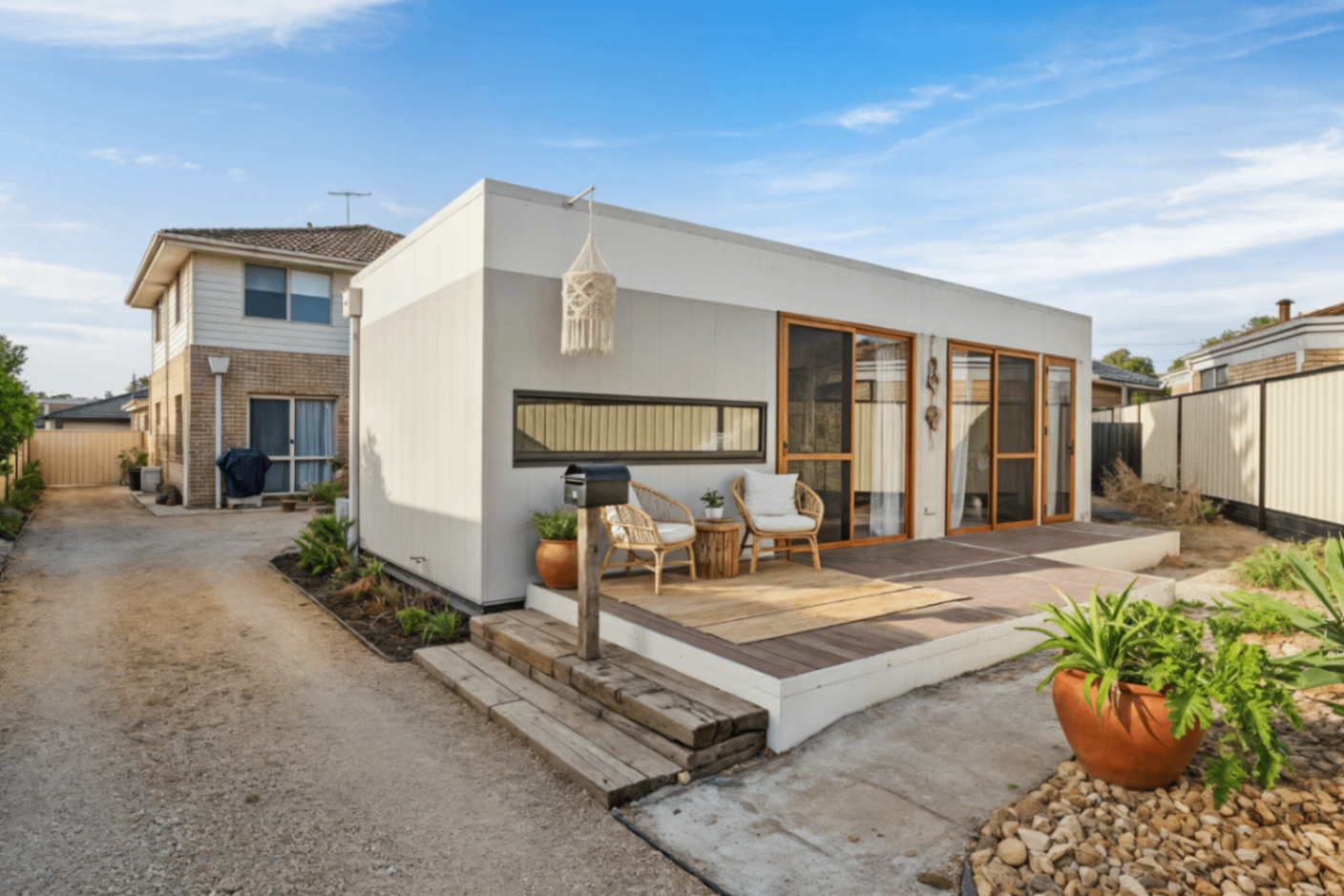
The final mistake is the "DIY" trap. Some owners buy a modular "shell" from a cheap manufacturer, thinking they will save money by managing the site works, plumbing connections, and council approvals themselves. In 2026, the regulatory maze is too complex for the average homeowner to navigate without professional help. Between soil tests, BAL (Bushfire Attack Level) ratings, and utility hookups, the "cheap" shell quickly becomes an expensive headache.
The Fix: Opt for a turnkey solution. You want a partner who handles everything from the initial council consult to the moment you turn the key in the door. This includes the heavy lifting of site preparation and the technical details of off-grid integration if you are building in a remote area.
Why 2026 is the Year to Go Modular
The shift towards modular is no longer a trend; it's a necessity. By 2026, the traditional "stick-built" method has become too slow and too susceptible to weather delays for most investors to tolerate. When you choose a modular strategy, you are choosing certainty. You know the cost, you know the timeline, and you know the quality.
Whether you are looking to build a luxury retreat in the Australian bush or a high-yield rental in the city, avoiding these seven mistakes will put you years ahead of the competition.
"The true value of modular in 2026 isn't just the speed: it's the liberation from the traditional construction headache. By moving the build into a controlled environment, we eliminate 90% of the risks that usually plague property owners." : The EcoHub Team
Ready to Fix Your Strategy?
If you’re ready to stop making these mistakes and start building with confidence, we’re here to help. At EcoHub Homes, we specialize in high-performance, sustainable modular living that stands the test of time.
- Browse our latest designs: Check out our Full Range of Homes.
- Need something specific? Explore our 3-Bedroom T-House for the ultimate family living.
- Maximize your land: See how a One-Bedroom Unit can transform your property's value.
Don't let 2026 pass you by with a strategy stuck in the past. Let’s build something smarter together.