
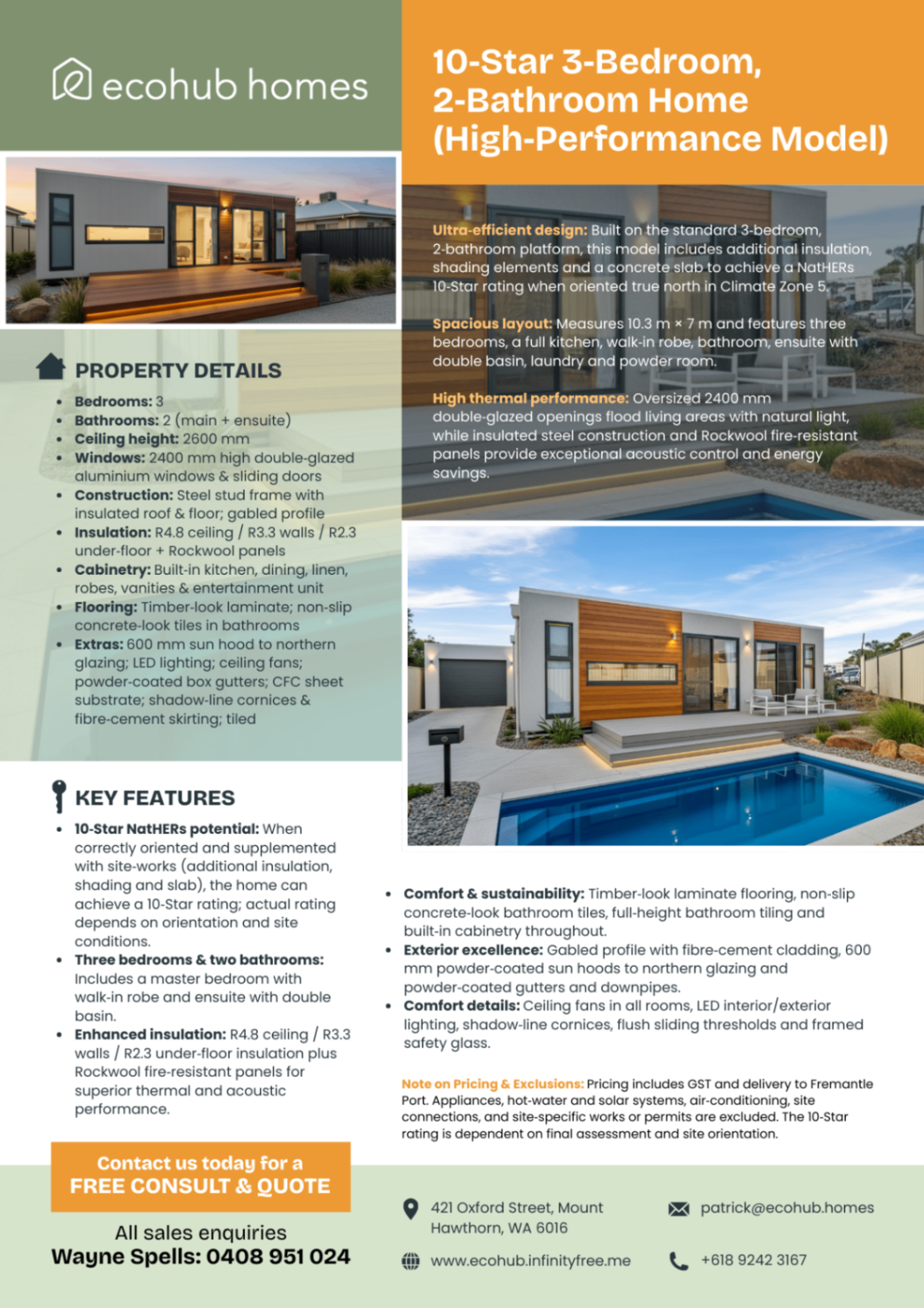
Before we dive into the nitty-gritty of budgeting and bank approvals, take a moment to walk through one of our signature designs. This video tour of our 3×2 modular home shows exactly how high ceilings and premium finishes translate from a floor plan to a finished reality.
https://youtu.be/Kskhm6zG7_c?si=Sjp40wDQ6mvRjJqk
The Australian housing market in 2026 is a different beast than it was just a few years ago. If you’ve looked into building lately, you’ve likely hit the "traditional construction wall", staggering price hikes, labor shortages, and timelines that stretch into the distant future. It’s frustrating. You have the land, you have the vision, but the math just isn't adding up.
This is exactly why modular housing has moved from a "niche alternative" to a mainstream powerhouse. But with popularity comes a flood of information (and some misinformation) about what things actually cost. If you're tired of vague "price per square metre" estimates that don't include the essentials, this guide is for you. We’re stripping back the curtain on 2026 construction costs to give you the clarity you need to build with confidence.
The Base Price vs. The "Real" Price
Let’s talk numbers. At EcoHub Homes, our modular range starts from $99,000. For many, that's an incredible entry point for a high-quality, sustainable dwelling. However, a "starting price" is just that, the beginning. In 2026, the average cost for a high-spec modular home in Australia typically sits between $2,500 and $3,000 per square metre for the building itself.
Why the range? It comes down to your choices. High-end finishes, full-height double-glazed windows, and 10-star NatHERS energy ratings are standard in our premium designs, but customisations will always shift the needle.
You also need to account for the "on-site" reality:
- Site Preparation: This includes everything from clearing the lot to soil testing and site surveys.
- Council Permits: Navigating the 2026 regulatory landscape requires specific approvals that vary by state.
- Transport and Cranage: Getting your home from our controlled factory environment to your lot is a precision operation. Depending on your location and site access, this can range from a few thousand to significant logistics fees for remote areas.
- Utility Connections: Bringing power, water, and sewage to the site.
When you factor these in, a "turnkey" solution is often a more realistic way to budget. It’s about looking at the total investment, from vacant land to moving day, rather than just the cost of the modules.
Financing in 2026: How to Get the Big Banks to Say "Yes"
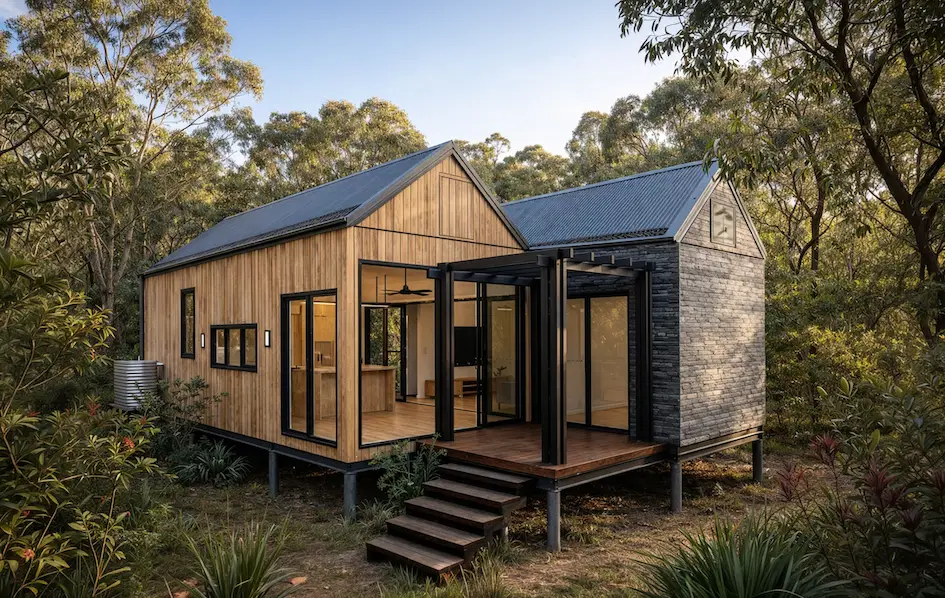
One of the biggest hurdles for modular buyers has historically been financing. In the past, banks were wary of "transportable" homes. Fast forward to 2026, and the landscape has shifted, but you still need to play by the rules.
Major Australian banks will now happily finance modular builds provided they meet three specific criteria:
- Permanent Foundations: The home must be fixed to the land on permanent piers or a slab. It cannot be "wheels-on" or temporary.
- Class 1a Classification: This is the Australian Building Code standard for a primary residence.
- Fixed-Price Contracts: Banks love certainty. A detailed, fixed-price building contract from a reputable builder like EcoHub Homes is your golden ticket to a standard construction loan.
The key is a "progressive drawdown" loan. Unlike a traditional build where the bank pays the builder in 5 or 6 stages over 12 months, modular builds happen fast. You’ll need a lender who understands the accelerated timeline of factory construction. We often assist our clients by providing the specific documentation, stamped plans, engineering certs, and warranty details, that bank valuers need to see to approve the loan based on the "as-completed" value.
The BAL-FZ Factor: Building in Bushfire Zones
If you’re building in one of Australia’s beautiful regional or fringe-suburban areas, you’ve likely heard of BAL (Bushfire Attack Level) ratings. The highest, and most challenging, is BAL-FZ (Flame Zone).
Building in a Flame Zone in 2026 isn't just about safety; it’s a significant budget consideration. Standard materials won't cut it. To meet compliance, you’re looking at:
- Specially tested fire-resistant cladding.
- Automated bushfire shutters or specialized BAL-FZ-rated double-glazing.
- Non-combustible roofing and subfloor protection.
Does this add to the cost? Yes: often between $50,000 and $120,000 depending on the size of the home. However, the modular advantage is massive here. Achieving an airtight, fire-resistant seal is far easier in a controlled factory environment than it is on a windy, dusty building site. We design our BAL-FZ modules to be robust from the frame up, ensuring you pass inspection the first time without costly on-site retrofitting.
Investment Potential: Turning Vacant Lots into Passive Income
In 2026, savvy investors are moving away from the "wait 18 months for a brick-and-mortar build" model. The holding costs: interest on the land, taxes, and lost rent: can kill your ROI before the first tenant even moves in.
Modular homes offer a "speed-to-market" that traditional building can't touch. While a standard build might take 12 to 18 months, an EcoHub modular home can be ready for delivery in a fraction of that time.
- The Math: If you can start collecting $600/week in rent 12 months earlier than you would with a traditional builder, that’s over $31,000 in additional income straight to your pocket.
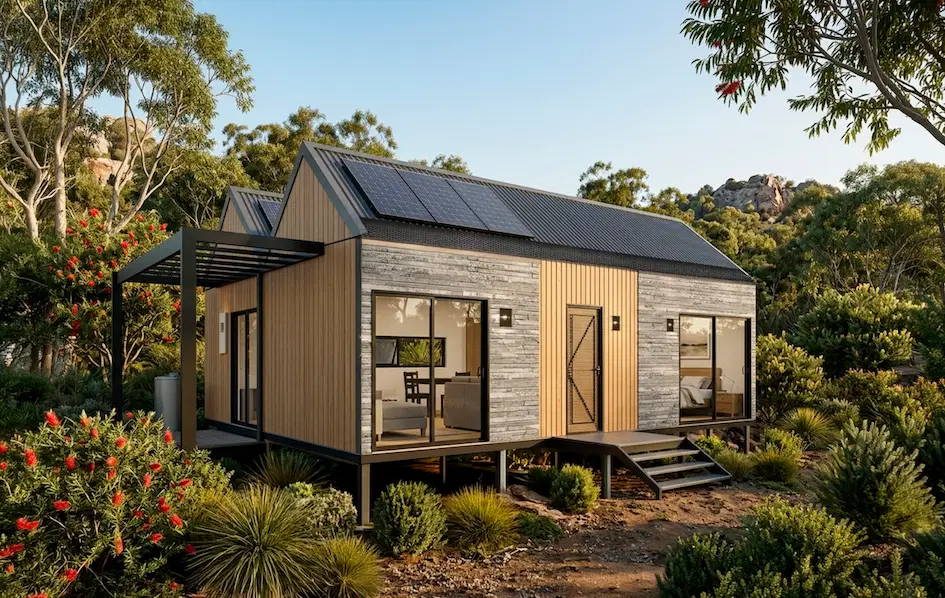
- Passive Income: We help property owners turn underutilised backyard space or vacant regional lots into smart investment vehicles. A two-bedroom modular unit in the backyard (where council regulations allow) is one of the fastest ways to generate high-yield rental income in today's market.
Sustainability as a Cost Saver, Not Just a Buzzword
Sustainability is often framed as an "extra" cost, but in 2026, it’s actually a long-term financial strategy. With energy prices continuing to climb, a home that isn't energy-efficient is a liability.
Our designs feature:
- High-Performance Insulation: Keeping the heat out in summer and in during winter without relying on the AC.
- Double-Glazed Windows: Standard in our builds to ensure thermal and acoustic comfort.
- Solar-Ready Design: Many of our clients opt for integrated solar panels, effectively bringing their electricity bills down to near zero.
By building to a 7-star or higher NatHERS rating now, you are future-proofing your investment. A "cheap" home that costs $4,000 a year to heat and cool is significantly more expensive over a ten-year period than a premium modular home that runs for pennies.
Expert Quote: The Reality of 2026 Building
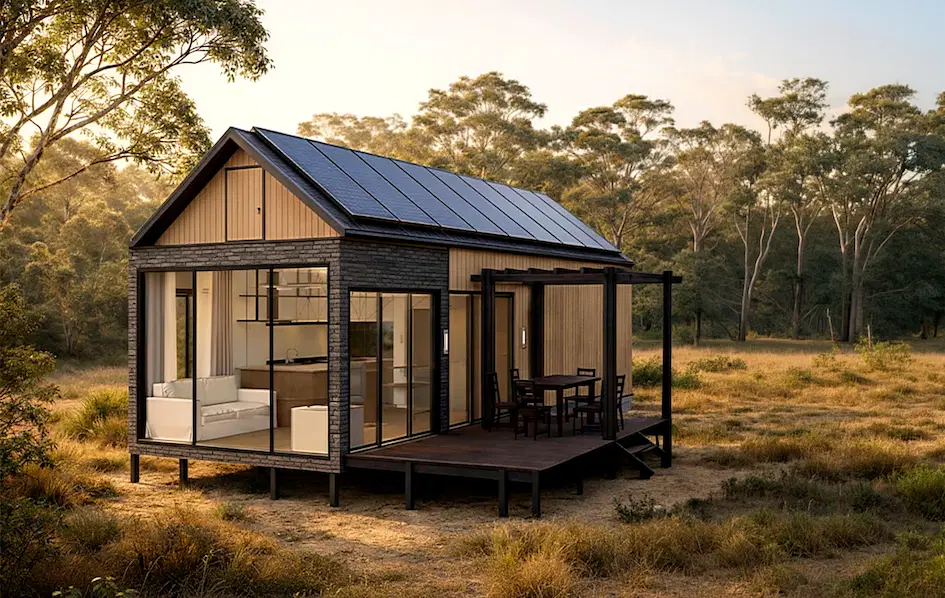
"The biggest mistake people make in the 2026 market is assuming that 'modular' means 'cheap.' It doesn't. It means 'efficient.' You aren't paying for less quality; you're paying to eliminate the waste, the delays, and the weather-related cost blowouts that define traditional construction. You’re buying certainty." : EcoHub Homes Design Team
Ready to Master Your Build?
Mastering 2026 construction costs is about looking beyond the sticker price and understanding the total value of time, sustainability, and compliance. Whether you’re dreaming of a remote retreat, a family home, or a smart rental investment, the modular path offers a level of control that traditional building simply can't match.
We’re here to help you navigate the process from initial 3D visualization to the day we hand over the keys.
Explore our range of One, Two, and Three-Bedroom Modular Homes or contact our team today to discuss your site and start your journey toward a faster, smarter, and more sustainable build.