
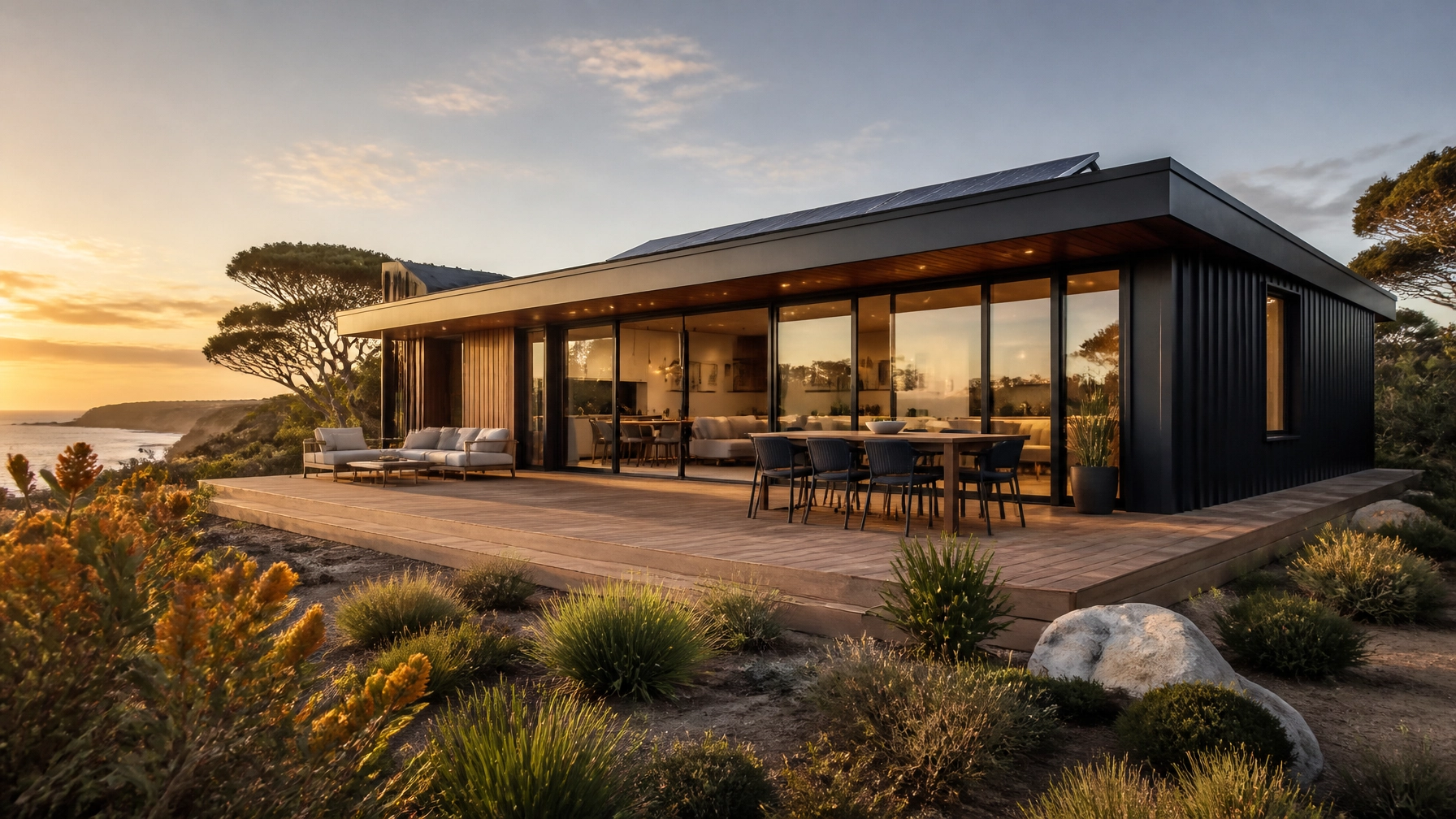
If you're considering building a new home, take a moment to watch this video tour of our 3×2 modular home to see the quality and finishes for yourself: EcoHub Homes 3×2 Modular Home Tour
The Australian housing landscape has shifted: permanently. In 2026, the traditional brick-and-mortar build isn't just slow; it’s becoming a relic of an era that couldn't keep up with the demand for speed, sustainability, and cost-certainty. We’ve all seen the headlines about rising material costs and labor shortages that stretch "six-month" builds into two-year sagas.
At EcoHub Homes, we’ve watched the modular industry evolve from a niche alternative into the gold standard for savvy property owners and investors. This guide isn't just about what's "new": it’s a roadmap for succeeding in a market where efficiency is the only true currency. If you want to build a home that is future-proof, fire-safe, and financially smart, here is everything you need to know about the state of modular housing in 2026.
1. The Cost Landscape: Real Numbers for 2026
Budgeting for a home used to feel like throwing darts in the dark. In 2026, transparency has become the industry's greatest asset. Modular construction allows for a level of price protection that traditional builds simply cannot match, primarily because we build in a controlled factory environment where waste is minimized and schedules are fixed.
For a high-quality modular home in today's market, you should expect the following price ranges:
- Entry-Level / Studio Designs: Starting from approximately $99,000. These are perfect for granny flats or single-living solutions.
- Mid-Range / 2-Bedroom Homes: Generally falling between $180,000 and $250,000, featuring premium finishes and full energy-efficiency packages.
- Premium / 3+ Bedroom Family Homes: Ranging from $350,000 to $600,000+, depending on customisations, solar integration, and architectural complexity.
The real "saving" isn't just in the sticker price: it’s in the time. A project that finishes 40% faster means months of saved rent or months of additional rental income. That is genuine financial liberation.
2. Financing Decoded: Banks are Finally on Board
One of the biggest hurdles in the past was getting major banks to understand the modular "off-site" model. In 2026, the tide has turned. Major Australian lenders now recognize that modular homes meet the exact same building codes (Class 1A) as any other residential structure.
The shift in lending:
- Progress Payments: Banks have moved away from "completion-only" loans. Most major banks now offer products that include factory-stage progress payments, provided the builder is accredited and the contract is fixed-price.
- Valuation Parity: Because modular homes are permanent structures once installed, valuations now align with traditional builds in the same area.
- Government Incentives: Modular homes are now frequently eligible for First Home Owner Grants and various energy-efficiency rebates, making them more attractive to lenders who want lower-risk, sustainable assets in their portfolios.
If you’re looking to finance your build, ensure your builder provides a comprehensive 10-year warranty and full 3D visualisation: this level of detail is exactly what bank valuers need to see to green-light your loan.
3. Sustainable Living: Beyond the 7-Star Minimum
In 2026, sustainability is no longer a "nice to have": it’s a prerequisite for capital growth. Energy prices haven't exactly plummeted, and homeowners are demanding dwellings that stay cool in summer and warm in winter without costing a fortune to run.
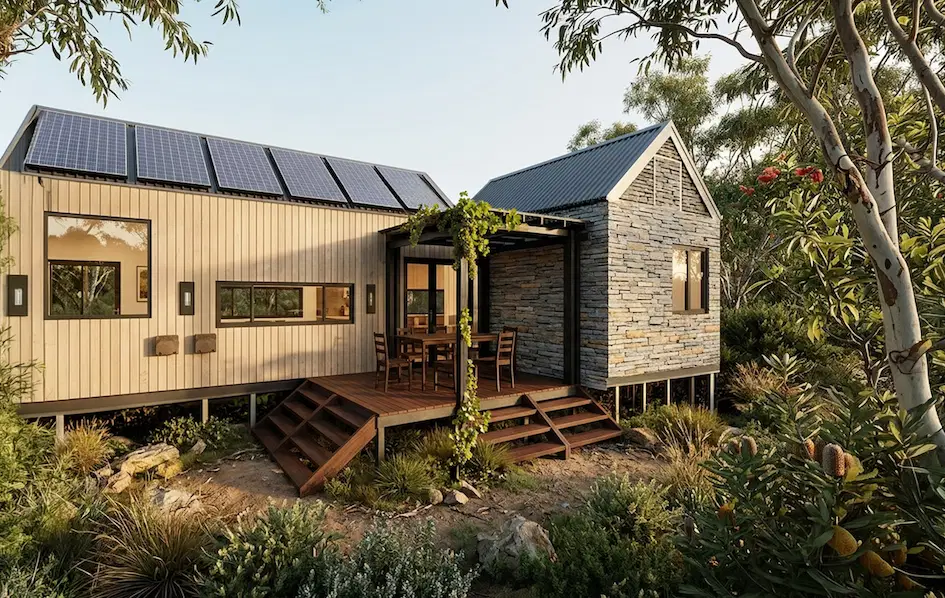
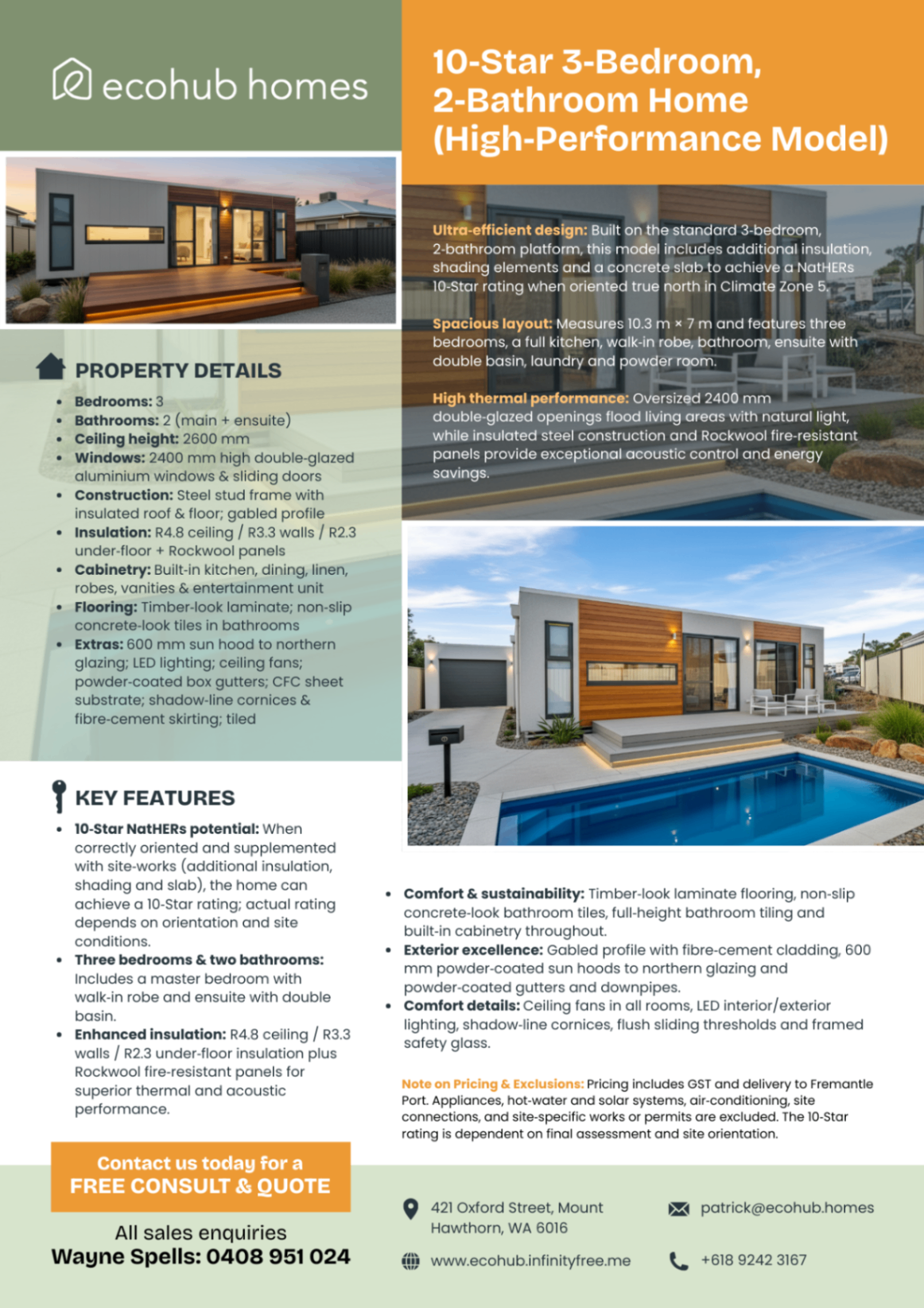
Modular homes are uniquely positioned to lead here. By using high-performance insulated wall panels and full-height double-glazed windows, our designs at EcoHub Homes achieve thermal performance that leaves standard builds in the dust.
What a 2026 eco-spec looks like:
- Solar-First Design: Roofs are no longer just "solar ready"; they are optimized for maximum PV output and integrated battery storage.
- Double Glazing as Standard: In 2026, single-pane glass is effectively obsolete in quality modular builds.
- Low Volatile Organic Compounds (VOCs): We use materials that don't just protect the planet, but protect your health by ensuring superior indoor air quality.

4. Fire-Safe Living: Navigating BAL-FZ Compliance
With climate shifts, bushfire safety has moved from a rural concern to a nationwide priority. Many property owners are discovering their land is rated as BAL-FZ (Flame Zone): the most stringent bushfire attack level.
In 2026, achieving BAL-FZ compliance in a modular home is not only possible; it’s a specialty. While it does increase the cost per square metre due to the need for non-combustible cladding (like certain metals or fibre-cement), toughened glass, and fire shutters, the modular process allows these elements to be integrated seamlessly during the factory phase.
"Building in a Flame Zone requires a surgical approach to detail. There can be no gaps, no exposed timber, and no compromises. Modular construction allows us to control these critical junctions far better than an on-site crew battling the elements." : EcoHub Homes Engineering Lead
5. Turning Dirt into Dollars: The Investment Playbook
If you have a vacant lot or a large backyard, you are sitting on a passive income goldmine. In 2026, the "Granny Flat" has been rebranded as the "Investment Module."
Why investors are choosing modular:
- Speed to Rent: You can go from an empty lot to a rent-paying tenant in under 20 weeks.
- Minimal Site Disruption: Because 90% of the build happens off-site, you don't have tradespeople, dust, and noise on your property for a year. This is crucial if you are living in the main house or have existing tenants.
- High Yields: In many Australian metro and regional areas, a two-bedroom modular home costing ~$200k can command rents of $500–$700 per week. The ROI speaks for itself.
Whether it’s a holiday home in the hills or a smart rental in the suburbs, the modular approach allows you to scale your property portfolio without the traditional headaches of construction management.
The Path Forward
The "Ultimate Guide" isn't just about reading the trends: it's about acting on them. The future of Australian housing is fast, smart, and sustainable. By choosing a modular path, you are choosing a build process that respects your time, your budget, and the environment.
At EcoHub Homes, we handle the entire journey: from that first 3D design to the final permit and installation. Your dream home shouldn't be a source of stress; it should be your greatest asset.
Ready to see how a modular home fits your lifestyle? Explore our range of products or contact us today to discuss your site's potential. Let's build something extraordinary together.