Before we dive into the latest trends in sustainable living, take a moment to walk through one of our most popular designs in this video tour:
https://youtu.be/Kskhm6zG7_c?si=Sjp40wDQ6mvRjJqk
In 2026, building a sustainable home in Australia isn’t just a "nice-to-have" or a premium upgrade, it is the new baseline. With the latest building regulations firmly in place, the industry has finally caught up to what we’ve known all along: energy-efficient modular homes are the smartest way to build for both your wallet and the planet.
Gone are the days of "greenwashing" where a single solar panel qualified a house as eco-friendly. Today, high-performance prefab homes are designed from the ground up to be thermal powerhouses. If you’re looking to build in 2026, here is the breakdown of the sustainable design options that actually move the needle on comfort and cost.
The 7-Star Standard and Beyond
As of this year, the 7-star NatHERS rating is the mandatory minimum for new builds across Australia. However, at EcoHub Homes, we view 7 stars as the floor, not the ceiling. Achieving this rating in modular homes Australia-wide is significantly easier than in traditional builds because of the precision of factory construction.
By building in a controlled environment, we eliminate the gaps and poor sealing often found in site-built homes. When you combine this airtightness with our standard R6-rated ceiling insulation and high-performance wall systems, you aren't just meeting a quota, you’re creating a home that stays 22 degrees year-round with minimal help from an AC.
Solar-First Design and Battery Integration
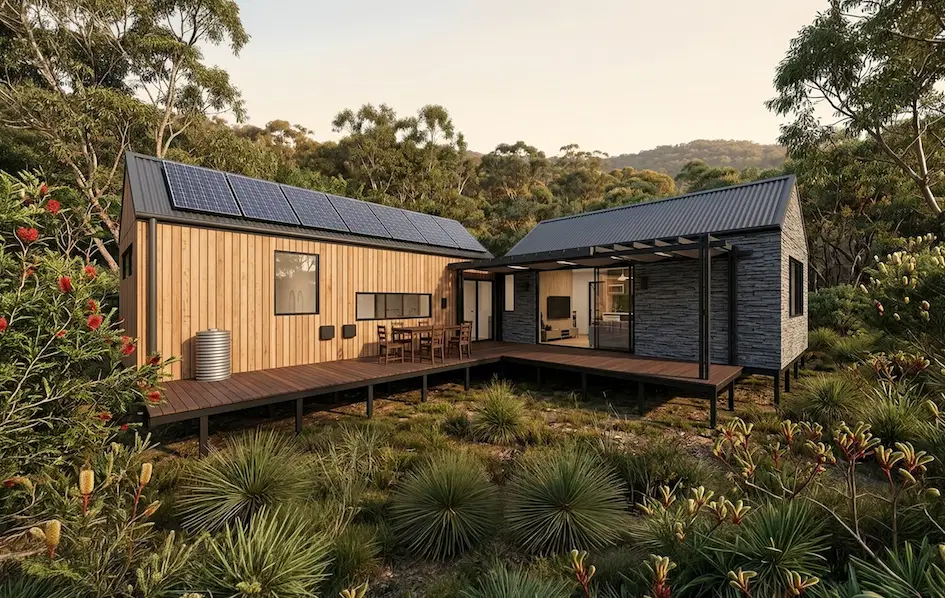
In 2026, we no longer "add" solar; we design for it. A solar-first approach means orienting the roof pitch specifically to catch the Australian sun, ensuring maximum harvest even in the shorter winter months.
The real game-changer this year is the seamless integration of battery storage. With lithium and salt-water battery tech becoming more affordable, most of our clients are now opting for "all-electric" configurations. By pairing a robust solar array with a smart battery system, our prefab homes Australia-wide are effectively becoming their own micro-power plants. Imagine never receiving an electricity bill again, that is the 2026 reality.
Windows: The Standard Has Shifted
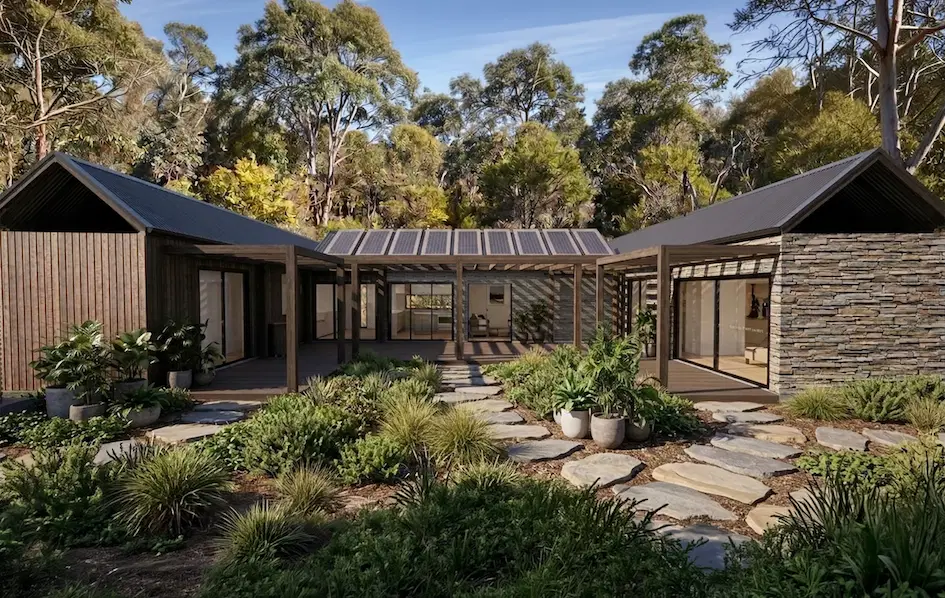
For a long time, double-glazing was a luxury add-on. Today, it’s a non-negotiable standard at EcoHub Homes. Our full-height, double-glazed windows aren't just about the view; they are critical thermal barriers. They keep the heat out during a 40-degree Perth summer and trap it inside during a cold Melbourne winter.
"Sustainability in 2026 is about liberation. It’s about liberating homeowners from rising energy costs and liberating the building process from the waste and delays of the past. We don't just build houses; we build high-performance assets."
, Daniel Margraf, Marketing Manager at EcoHub Homes
Hempcrete and Natural Materials
We’re seeing a massive surge in interest in natural, carbon-sequestering materials like hempcrete. While traditional concrete is carbon-heavy, hempcrete actually breathes, regulating humidity and providing incredible fire resistance, a major plus for our customers building in bushfire-prone areas.
Inside the home, the focus has shifted to what you can't see or smell. We exclusively use low-VOC (Volatile Organic Compound) paints, glues, and finishes. This ensures that the air quality inside your new modular home is as fresh as the landscape outside.

Passive Solar Orientation
It sounds simple, but orientation is the most "cost-effective" sustainable tool we have. By positioning your modular home to take advantage of passive solar gain, we use the sun to heat your home for free in winter while using clever eaves and shading to block it in summer. Because our homes are modular, we can precisely rotate and place them on your site to hit that "sweet spot" for thermal performance.
Turning Sustainability into Income
Many of our 2026 clients are property owners looking to turn a vacant backyard or rural lot into a smart investment. A sustainable, 7-star modular home isn't just a great place to live; it’s a premium rental product. Tenants are increasingly looking for homes with low running costs, making an eco-friendly EcoHub unit a high-yield, passive income machine.
Frequently Asked Questions
Are modular homes as durable as traditional homes?
Absolutely. Our homes are built to exceed Australian building standards and are engineered to withstand the rigours of transport and the harsh Australian climate. We provide a 10-year warranty for total peace of mind.
How much can I save on energy bills?
With a 7-star rating and solar-battery integration, many EcoHub owners report energy savings of 70% to 100% compared to a standard brick-and-mortar home.
Can I customise my eco-friendly features?
Yes. From hempcrete wall options to specific battery storage capacities and rainwater harvesting systems, we tailor the sustainability package to your site and budget.
Ready to see how a sustainable modular home fits your land? Explore our latest designs or contact our team to start your 3D visualisation today.