
If you have been looking at the Australian property market lately, you know the traditional construction industry is in a state of flux. Materials costs are volatile, trade shortages are pushing out timelines, and "budget blowouts" have become the rule rather than the exception. This has led every savvy property owner to the same question: Is a modular home actually cheaper than building traditionally?
The short answer is yes: but perhaps not in the way you think. To understand the true financial advantage of modular construction, you have to look past the sticker price and dive into the total cost of ownership.
Before we break down the hard numbers, take a moment to see what modern modular quality looks like in our detailed walk-through of the 3×2 T-House.
Experience the efficiency and finish quality for yourself by watching our 3×2 modular home tour:
https://youtu.be/Kskhm6zG7_c?si=Sjp40wDQ6mvRjJqk
The Pure Build Numbers: $/sqm
Let’s talk base construction costs. In the current Australian market, traditional custom builds typically range from $3,000 to $5,500 per square metre, depending on your location and the level of finish. When you factor in the inevitable "variations" that occur on a standard site, that upper limit often moves even higher.
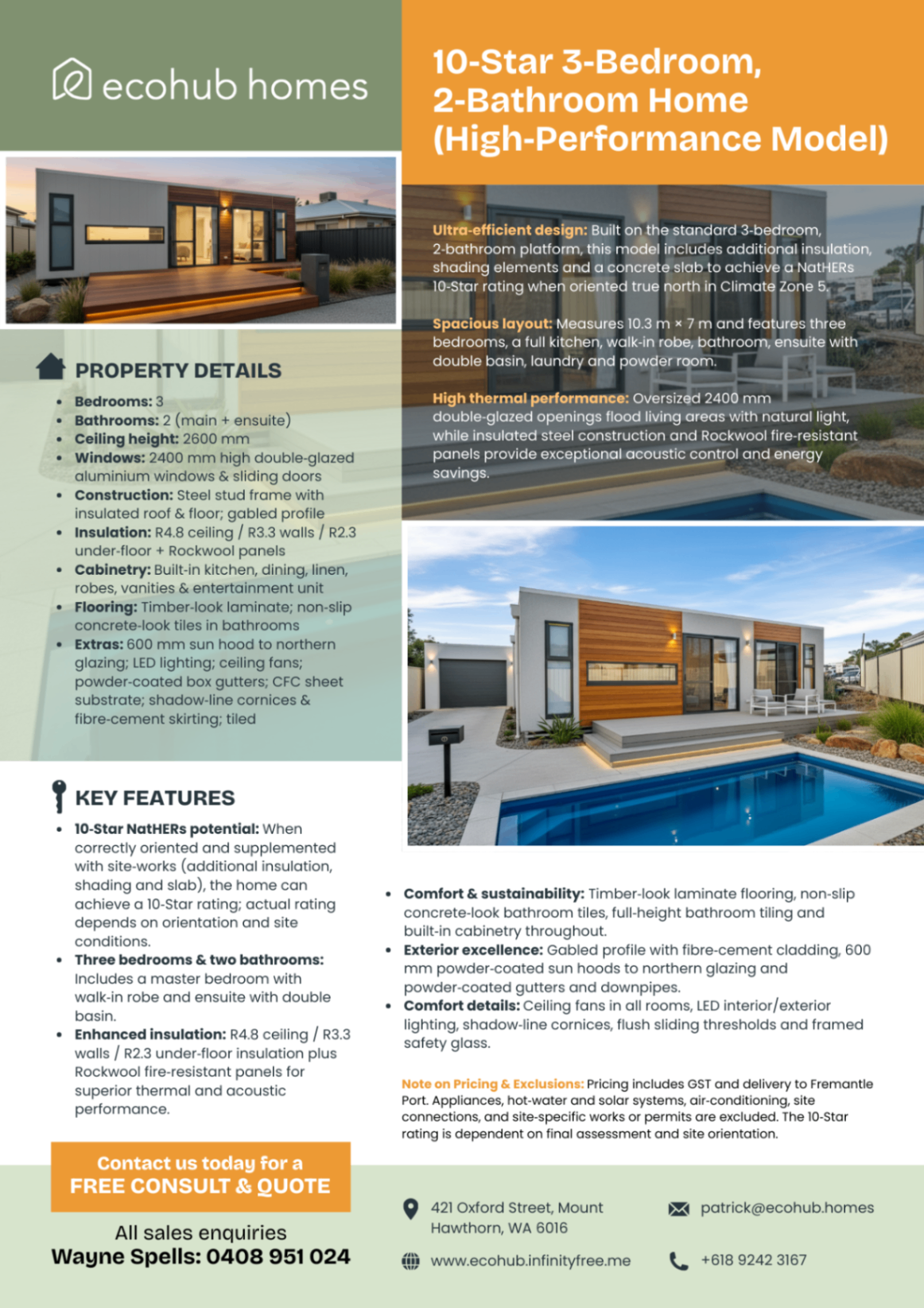
In contrast, an EcoHub modular home starts from just $99,000. On a per-square-metre basis, high-quality modular construction generally sits between $2,500 and $4,800.
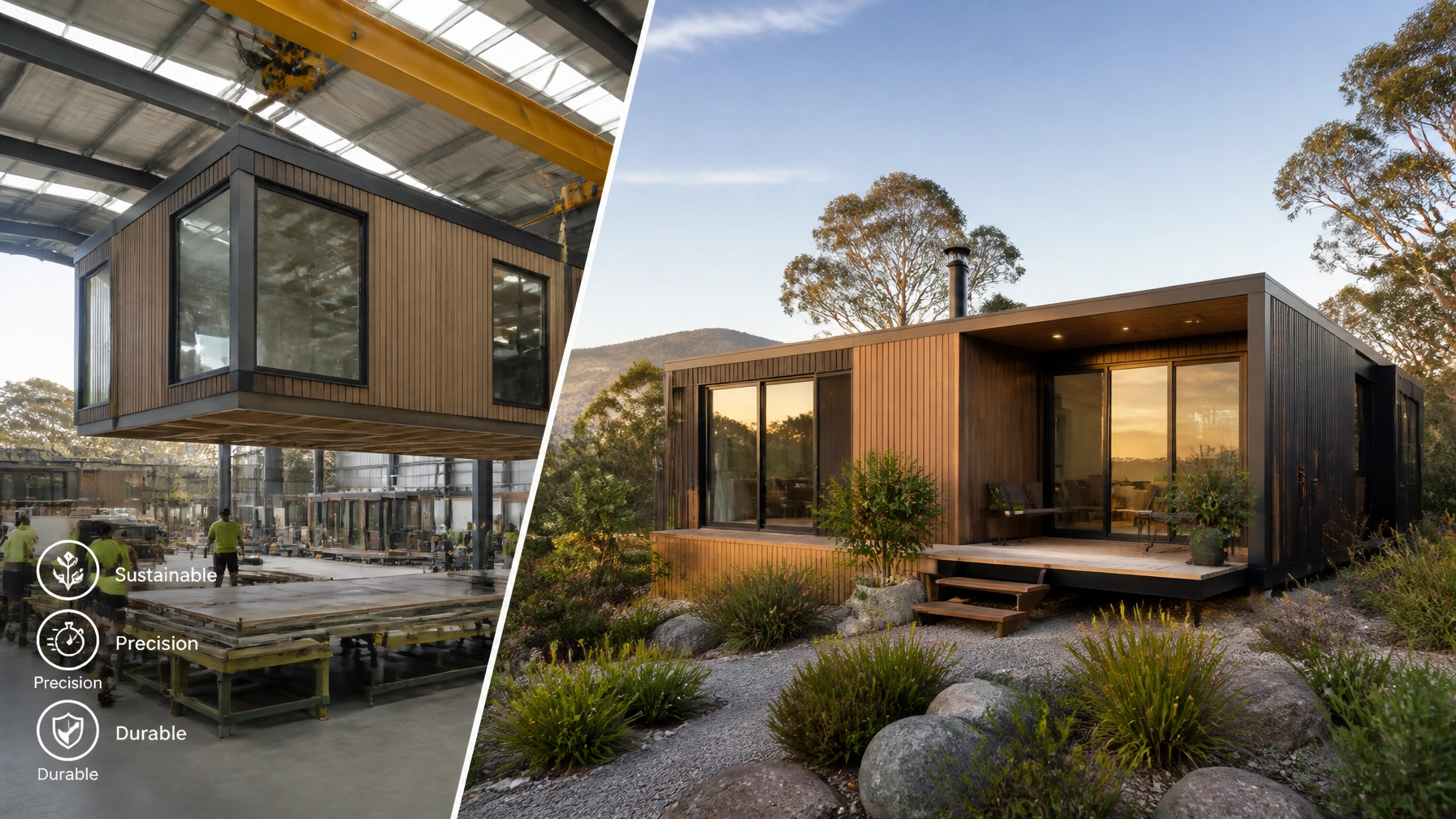
On construction costs alone, modular often provides an immediate 15% to 25% saving. This is achieved through the 60/40 split: approximately 60% of the build happens in a controlled factory environment where material waste is minimised and labour is optimised. The remaining 40% accounts for site preparation, delivery, and installation.
The "Hidden" Savings: Time is Money
Where modular construction truly dominates is in the reduction of "soft costs." Traditional builds are notorious for taking 12 to 18 months: or longer: to reach completion. A modular home can be manufactured, delivered, and installed in a fraction of that time.
This speed creates three massive financial advantages:
- Reduced Holding Costs: If you are paying interest on a land loan or construction finance, every month you aren't living in the house is a month of "dead money." Saving six months on a build can easily save you $15,000–$30,000 in interest alone.
- Closing the Rental Gap: For investors, every week the site is under construction is a week of lost revenue. If your modular home is finished four months early and rents for $600/week, that is a $10,400 windfall in earlier rental income.
- Eliminating the Double-Rent Trap: For owner-occupiers, the faster you move in, the sooner you stop paying rent elsewhere while simultaneously servicing a mortgage.
Fixed-Price Certainty
One of the most dangerous phrases in traditional building is "provisional sums." These are estimates for things like site works or finishes that often balloon once the build starts.
At EcoHub Homes, we operate with fixed-price contracts. Because your home is built in a precision factory environment, we don't deal with the same "surprises" that traditional builders do. There are no weather-related delays that keep trades on-site for extra weeks at your expense. You know the final cost before the first piece of steel is cut.
"The true value of modular isn't just the lower cost per square metre; it's the elimination of financial risk. In a volatile economy, price certainty is the ultimate luxury for an investor or homeowner." – Industry Insight
Long-Term ROI: Energy and Maintenance
A home that is cheaper to build but expensive to run is a bad investment. Traditional Australian "brick and tile" homes are often thermal sieves.
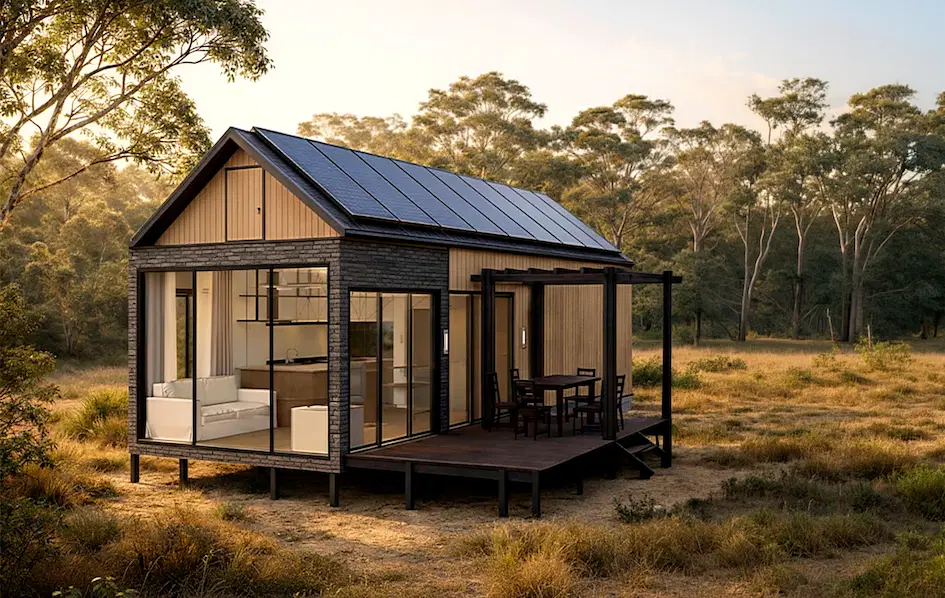
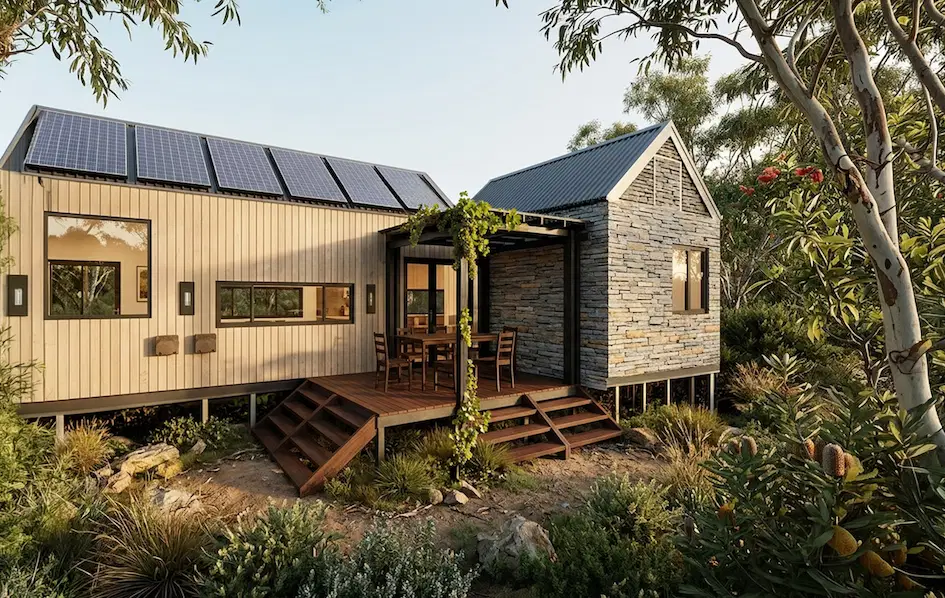
Modular homes are built for the future. With standard inclusions like full-height double-glazed windows, high-density insulation, and solar-ready designs, the total cost of ownership remains low long after the build is finished. Our designs often target high NatHERS ratings, significantly reducing your quarterly energy bills.
The Verdict
Is a modular home cheaper? If you look at the total project cost: the construction price, the interest savings, the avoided rent, and the long-term energy efficiency: the answer is a definitive yes. You aren't just buying a house; you are buying a more efficient way to build.
If you have a vacant lot or a backyard with potential, let’s look at the numbers for your specific site. Whether you are looking for a high-yield rental investment or your own sustainable dream home, the math usually points in one direction.
Explore our range of 1, 2, and 3-bedroom designs and see how we can transform your site into a smart investment.