
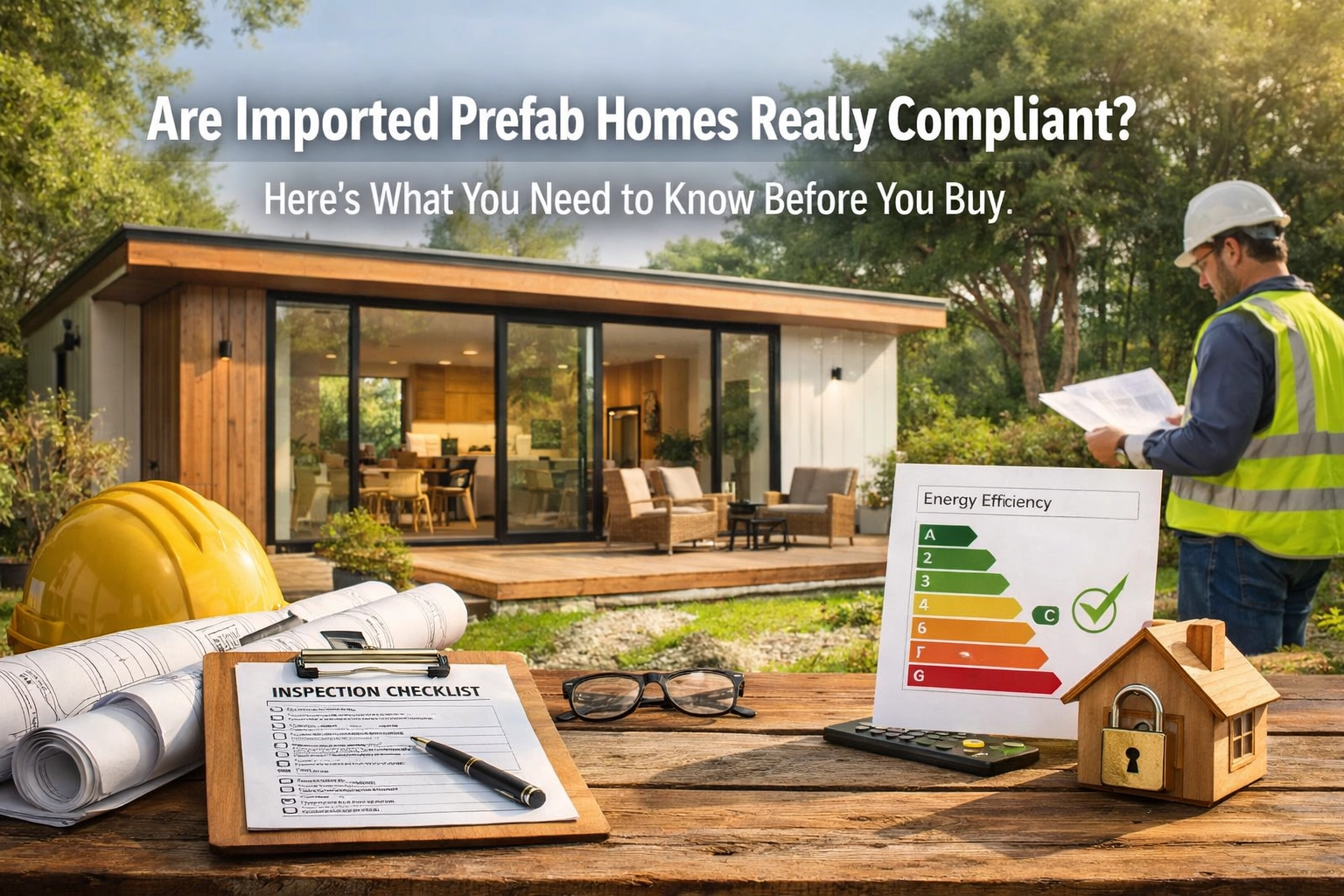
You've seen the ads. A stunning prefab home shipped from overseas for a fraction of what you'd pay locally. The renders look incredible, the price seems too good to pass up, and the salesperson assures you everything is "fully compliant" with Australian standards.
Here's the uncomfortable truth: imported prefab homes aren't automatically compliant with Australian Building Standards, and that gap between promise and reality can cost you tens of thousands of dollars: or worse, leave you with an uninsurable structure you can't legally occupy.
The Compliance Reality Nobody Talks About
When you buy an imported prefab home, you're not just buying a house. You're buying a product manufactured under a completely different regulatory framework, shipped across international borders, and expected to meet one of the world's most rigorous building codes: the National Construction Code (NCC).
The NCC isn't a suggestion. It's a comprehensive set of performance requirements covering everything from structural integrity and fire safety to energy efficiency and accessibility. Every habitable building in Australia must comply, period.
Imported manufacturers may claim compliance, but compliance with what? Chinese GB standards? European CE marking? American HUD codes? None of these automatically satisfy NCC requirements. The documentation proving compliance must be specific to Australian standards, independently verified, and acceptable to your local certifier.

What Australian Building Standards Actually Require
The NCC outlines non-negotiable minimums across multiple performance areas. Your prefab home: imported or otherwise: must demonstrate compliance with structural sufficiency appropriate to Australian conditions, including cyclone ratings for northern regions and bushfire attack levels where applicable.
Energy efficiency standards under NCC Section J require specific thermal performance values. Your home needs proper insulation levels, window glazing specifications, and air sealing that matches Australian climate zones. Imported homes designed for European or North American climates rarely meet these requirements without significant modification.
Fire safety provisions are particularly strict. Materials, construction methods, and spatial layouts must comply with fire resistance levels, smoke alarm requirements, and egress standards that differ substantially from overseas codes. A home that's "fire safe" in another country may not satisfy Australian fire safety performance requirements.
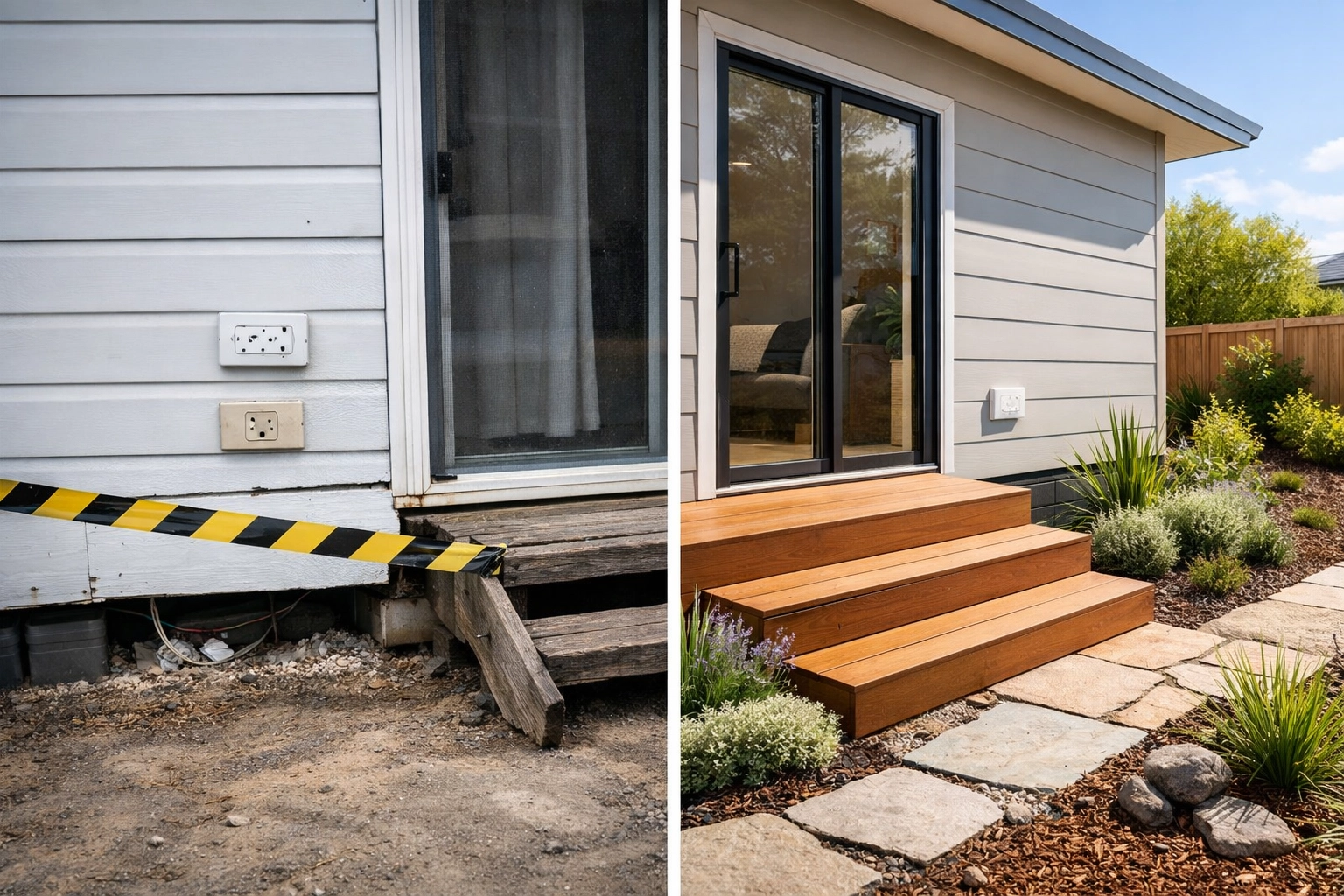
Electrical and plumbing work must comply with AS/NZS 3000 (electrical) and AS/NZS 3500 (plumbing) standards. Imported homes often arrive with electrical systems designed for different voltages, outlet configurations, and safety standards. Retrofitting compliance is expensive: and sometimes impossible without complete system replacement.
The Hidden Risks of Buying Imported
The compliance gap creates a cascade of problems that don't become apparent until after purchase. Your local certifier may refuse to issue an occupancy permit if they can't verify NCC compliance through acceptable documentation. Without an occupancy permit, you can't legally live in the home or rent it out.
Insurance companies frequently decline coverage for non-compliant structures or charge prohibitive premiums. One Western Australian buyer discovered their imported container home was deemed "uninsurable" because the manufacturer couldn't provide Australian-certified structural engineering reports. The home sat empty for eighteen months while they fought for retrospective certification: a process that cost more than buying local would have.
Warranty protection on imported homes is often meaningless in practical terms. If structural issues emerge, pursuing warranty claims against an overseas manufacturer involves international legal action: expensive, time-consuming, and frequently unsuccessful. Compare that to Australian manufacturers who provide enforceable warranties backed by local presence and Australian Consumer Law.

Banks are increasingly cautious about financing imported prefab homes. Without proof of NCC compliance and acceptable certifications, lenders often classify these as "non-standard construction," resulting in higher interest rates, larger deposits, or outright loan rejection.
Why Australian-Made Changes Everything
Australian modular manufacturers like EcoHub Homes build to NCC compliance from the ground up. It's not retrofitted, it's not adapted: it's engineered specifically for Australian conditions, certified by Australian engineers, and approved by local authorities before a single module leaves the factory.
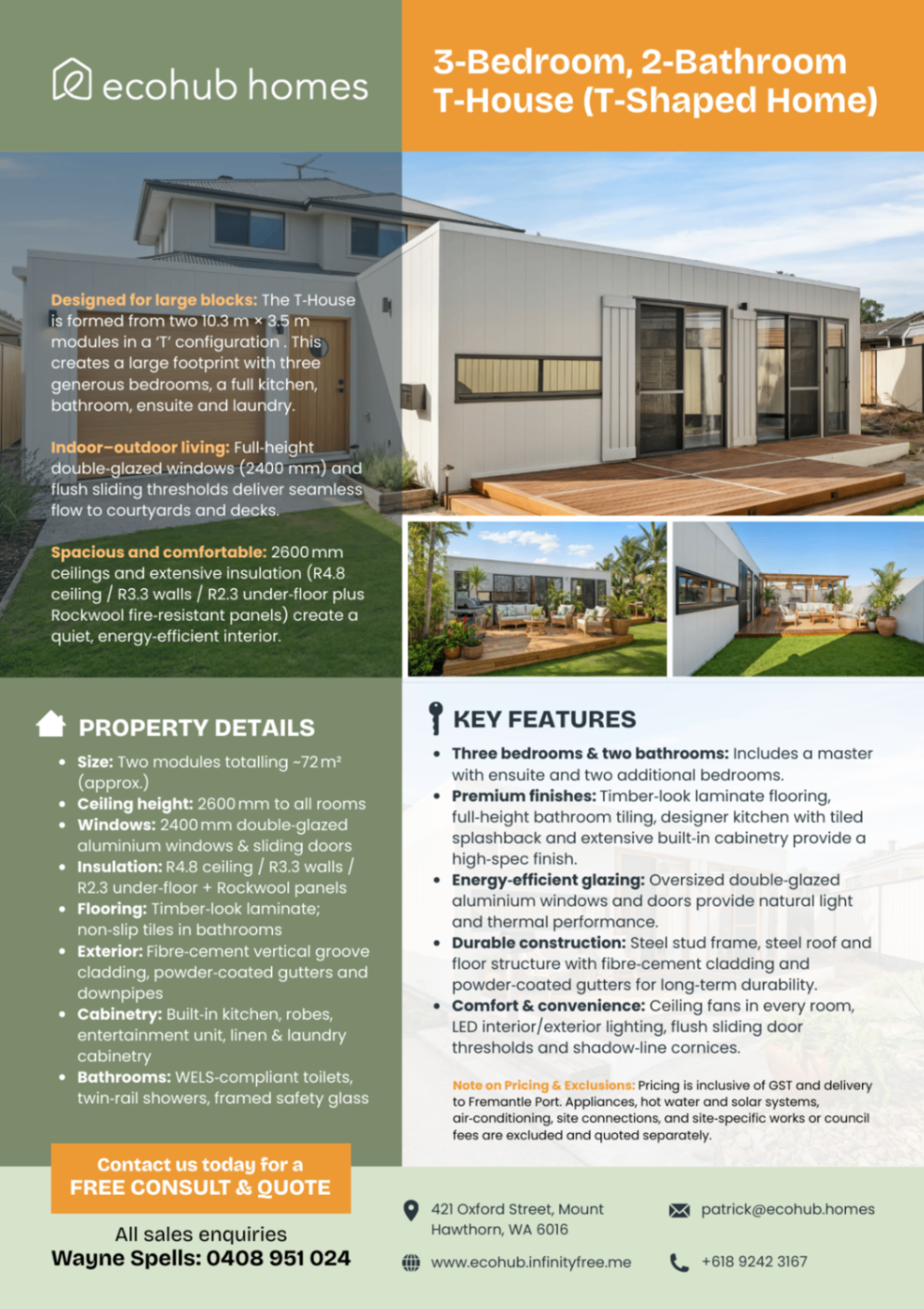
The difference starts with design. EcoHub homes incorporate R4.8 ceiling insulation as standard, appropriate for Australian climate zones. Full-height double-glazed aluminium windows (2400 mm) exceed minimum thermal performance requirements while providing the expansive natural light Australians expect. High ceilings (2600 mm) aren't just aesthetic: they contribute to thermal comfort and natural ventilation that reduces cooling loads.
Structural engineering accounts for Australian wind loads, soil conditions, and seismic requirements. The steel frame construction used in EcoHub homes provides superior durability compared to the lightweight timber framing common in imported units, particularly important in bushfire-prone regions where ember attack is a genuine risk.
Electrical and plumbing systems come installed to Australian standards, inspected and certified before delivery. You're not paying extra to rip out non-compliant systems and start over. The smoke alarms, circuit breakers, outlet locations, and water connections all conform to current codes: ready for immediate connection and certification.
The 10-Year Warranty Difference
EcoHub Homes backs every modular home with a comprehensive 10-year structural warranty: enforceable under Australian Consumer Law, serviced by a local company with physical presence and reputation to protect. This isn't a PDF from an overseas entity with no Australian assets.
When you buy local, you're buying accountability. If an issue emerges, you're dealing with a company operating under Australian business regulations, accessible through Australian legal systems, and motivated to protect their reputation in the domestic market.
The warranty covers structural integrity, weatherproofing, and major building elements. More importantly, it provides peace of mind that someone stands behind the product. Imported home buyers often discover warranty claims require shipping components back overseas, paying international freight, and waiting months for resolution: assuming the manufacturer even responds.
What to Verify Before Buying Any Prefab Home
If you're considering any prefab home: imported or Australian: demand comprehensive documentation before signing contracts. Request complete NCC compliance reports prepared by Australian-certified engineers, not generic international certifications. These reports should specifically address Australian climate zones, wind classifications, and bushfire attack levels relevant to your site.
Confirm electrical and plumbing systems meet AS/NZS standards. Request copies of compliance certificates from licensed Australian electricians and plumbers who've inspected the systems. If the manufacturer can't provide these, you'll be paying for complete system replacement after purchase.
Verify warranty terms in detail. Who issues the warranty? Where are they located? What's the claims process? How long have they operated in Australia? A warranty from a company with no Australian presence is effectively worthless.
Check whether your local council and certifier will accept the manufacturer's documentation. Contact them directly with the manufacturer's compliance paperwork. This single step prevents expensive surprises when you apply for development approval and occupancy permits.
Investigate insurance availability before committing. Contact insurance providers with the home specifications and ask explicitly whether they'll provide coverage and at what premium. Non-standard construction often results in dramatically higher insurance costs that aren't factored into initial purchase comparisons.
The True Cost of "Cheaper"
Imported prefab homes often appear cheaper on paper. That changes fast when you add compliance retrofitting, engineering recertification, electrical and plumbing replacement, extended construction timelines, and the stress of navigating international warranty claims.
Australian-made modular homes from manufacturers like EcoHub Homes cost more upfront because they include everything required for legal occupancy, insurance, and long-term durability. The price reflects genuine compliance, not just claims of compliance.
You're also buying speed and certainty. EcoHub's turnkey installation means your home arrives ready for connection, with all inspections completed and certifications in hand. No surprises, no delays waiting for overseas shipments, no discovering halfway through that major modifications are required.
The finishes in EcoHub homes: timber-look laminate flooring, premium stone benchtops, full-height bathroom tiling: match or exceed what you'd find in traditional construction. These aren't corners cut to hit a price point. They're standard inclusions that reflect Australian expectations for quality and durability.
Making the Smart Choice
Buying a home: even a modular one: is a major investment. The cheapest option upfront is rarely the smartest financial decision over the home's lifetime. Compliance isn't red tape. It's protection against structural failure, fire risk, and financial disaster.
When you choose Australian-made modular construction, you're choosing certainty. Certainty that your home meets every regulatory requirement. Certainty that warranties are enforceable. Certainty that you can insure, finance, and legally occupy your investment from day one.
Explore EcoHub Homes' range to see what genuine compliance looks like in a modern modular home: premium finishes, energy-efficient design, and the confidence of a 10-year warranty from a company that's not going anywhere.
The right home shouldn't come with compliance question marks. It should come with keys, certifications, and the peace of mind that everything was done properly from the start.