
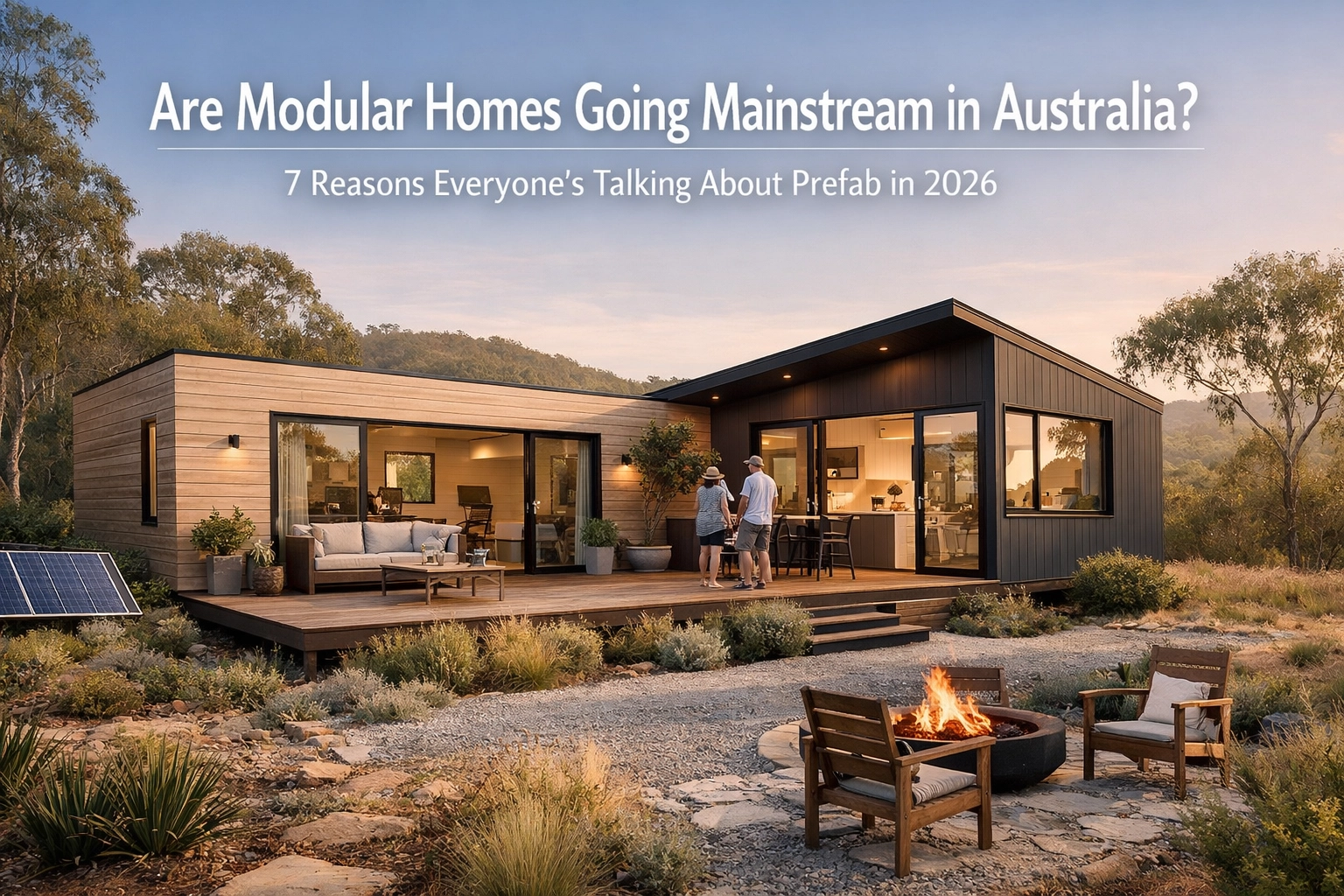
Something's shifting in Australian housing, and if you've been paying attention, you've probably noticed it too. Modular homes aren't just some niche experiment anymore. They're everywhere. From property investors snagging granny flats for passive income to families building their dream home in a fraction of the time, prefab construction is having its moment.
And 2026? This is the tipping point.
Industry projections suggest over 65% of new homes will use advanced modular systems by the end of this year. That's not a maybe, that's happening right now. So what's driving this surge? Why are smart buyers, developers, and families suddenly all looking at factory-built homes as the smarter option?
Let's break down the seven reasons modular homes are going mainstream in Australia, and why you'd be crazy to ignore them.
1. Tradie Shortages Have Turned Site Builds Into a Nightmare
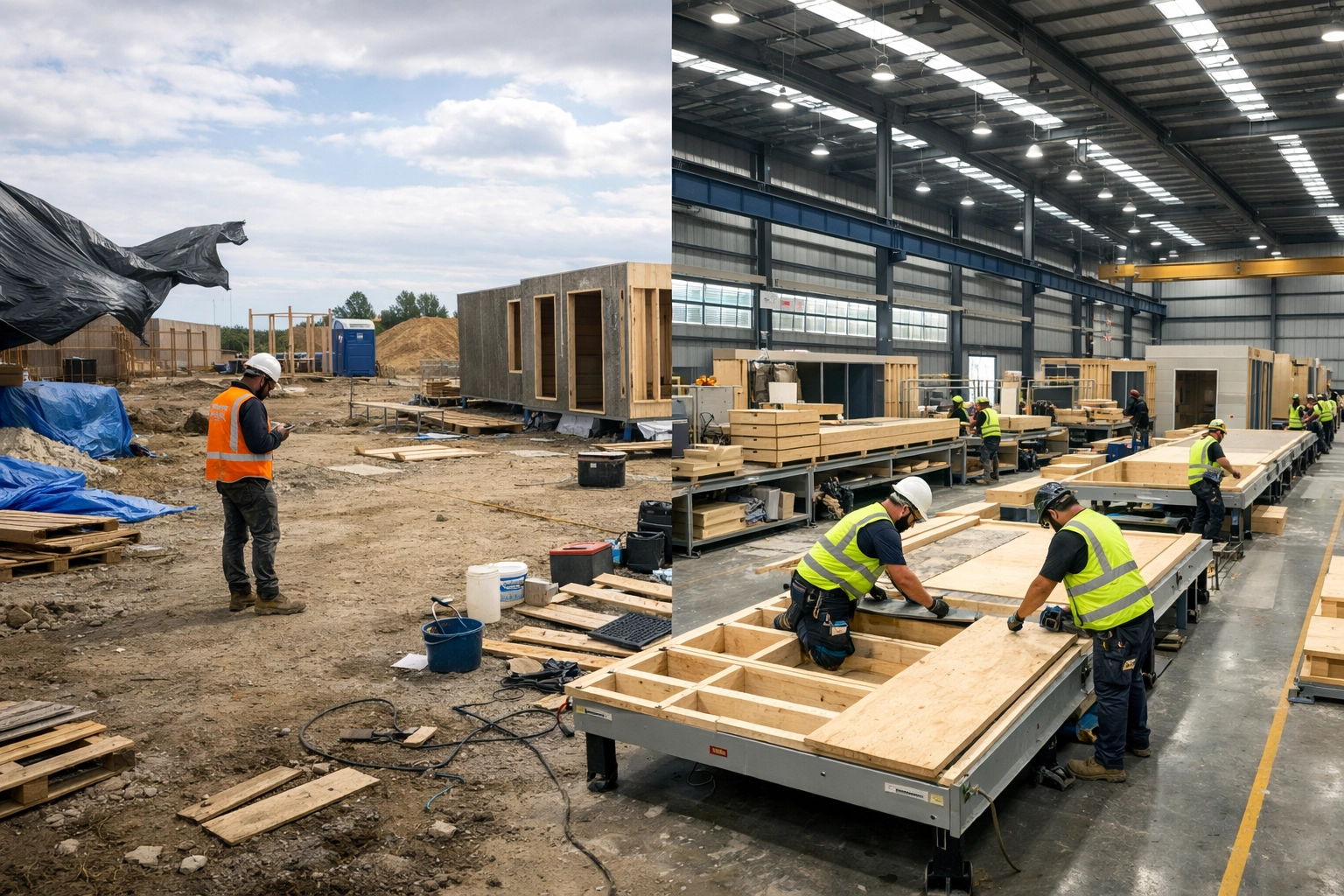
Let's get real: finding reliable tradies has become an Olympic sport. You're looking at months-long wait times, no-shows, inflated quotes, and constant stress trying to coordinate subcontractors who may or may not turn up.
Australia's skilled labour shortage isn't easing, it's getting worse. Traditional site builds are hemorrhaging time because there simply aren't enough qualified workers to meet demand. And when your electrician cancels last minute or your plumber pushes back three weeks, your entire build timeline collapses like a house of cards.
Modular homes sidestep this chaos entirely. Everything happens in a climate-controlled factory with a full-time crew who show up every single day. No weather delays. No coordinating multiple trades. No waiting for someone to call you back. The work gets done, fast, efficiently, and without the drama.
2. High Interest Rates Make Fixed-Price Factory Builds a Financial Safe Haven
When interest rates are sitting high, every extra month your build drags on costs you real money. Traditional construction timelines blow out constantly, a six-month build becomes nine months, then twelve, and suddenly you're paying thousands more in interest than you budgeted for.
Modular construction flips this script. You get a fixed price upfront. No surprise costs. No scope creep. No "just one more thing" adding five grand to your invoice. The price you agree to is the price you pay, and in 2026's economic climate, that certainty is worth its weight in gold.
Factory builds also move faster, meaning you're paying interest on your construction loan for weeks instead of months. For investors, this translates directly to rental income arriving sooner. For families, it means moving into your home, and stopping rent payments, far earlier than a traditional build would allow.
3. 7-Star Energy Requirements? Already Standard in EcoHub Designs
Australia's energy efficiency standards keep tightening, and meeting them with traditional construction methods means extra costs, extra complexity, and constant compliance headaches. By the time your builder figures out how to hit those targets, you've already spent a fortune on consultants and upgrades.
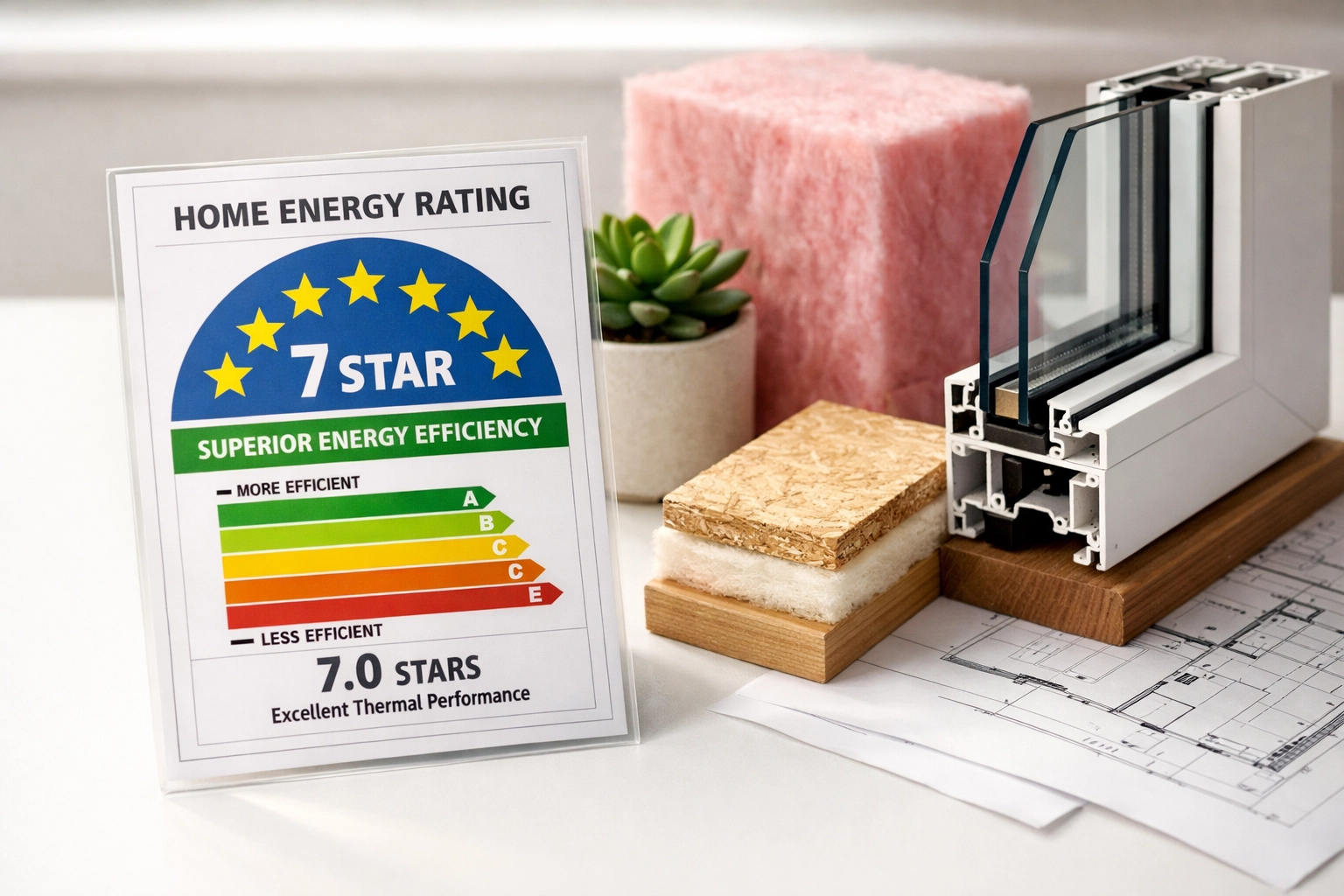
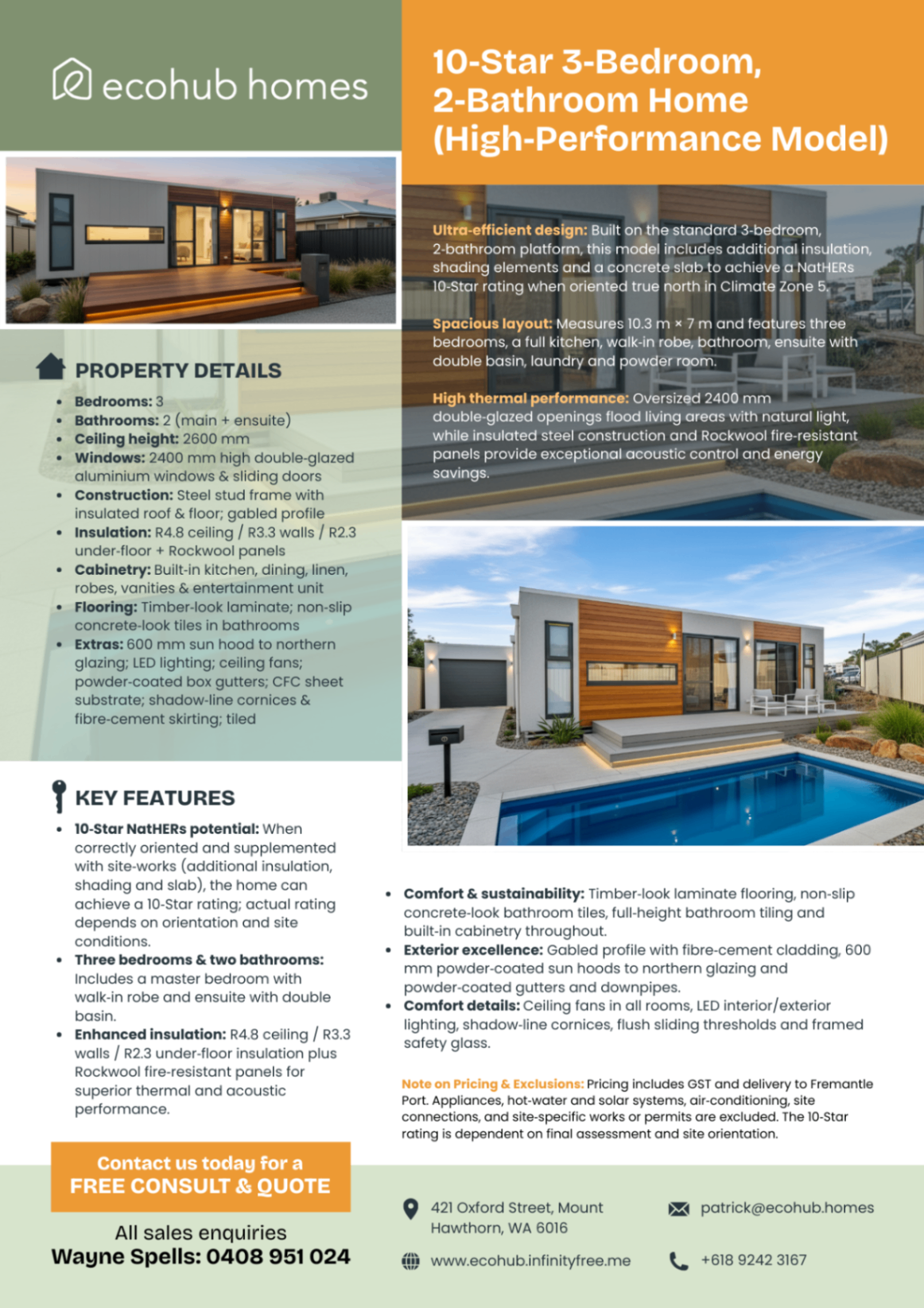
EcoHub Homes builds 7-star energy efficiency into every design as standard. We're talking R4.8 ceiling insulation, double-glazed windows, insulated walls and floors, the works. Our homes are designed from the ground up to slash energy bills and keep you comfortable year-round without cranking the AC.
This isn't an optional upgrade. It's baked into the design. And when energy costs keep climbing, having a home that uses 30% less energy than conventional builds isn't just nice, it's essential.
4. Design Evolution: High Ceilings, Full-Height Windows, Zero Shoebox Vibes
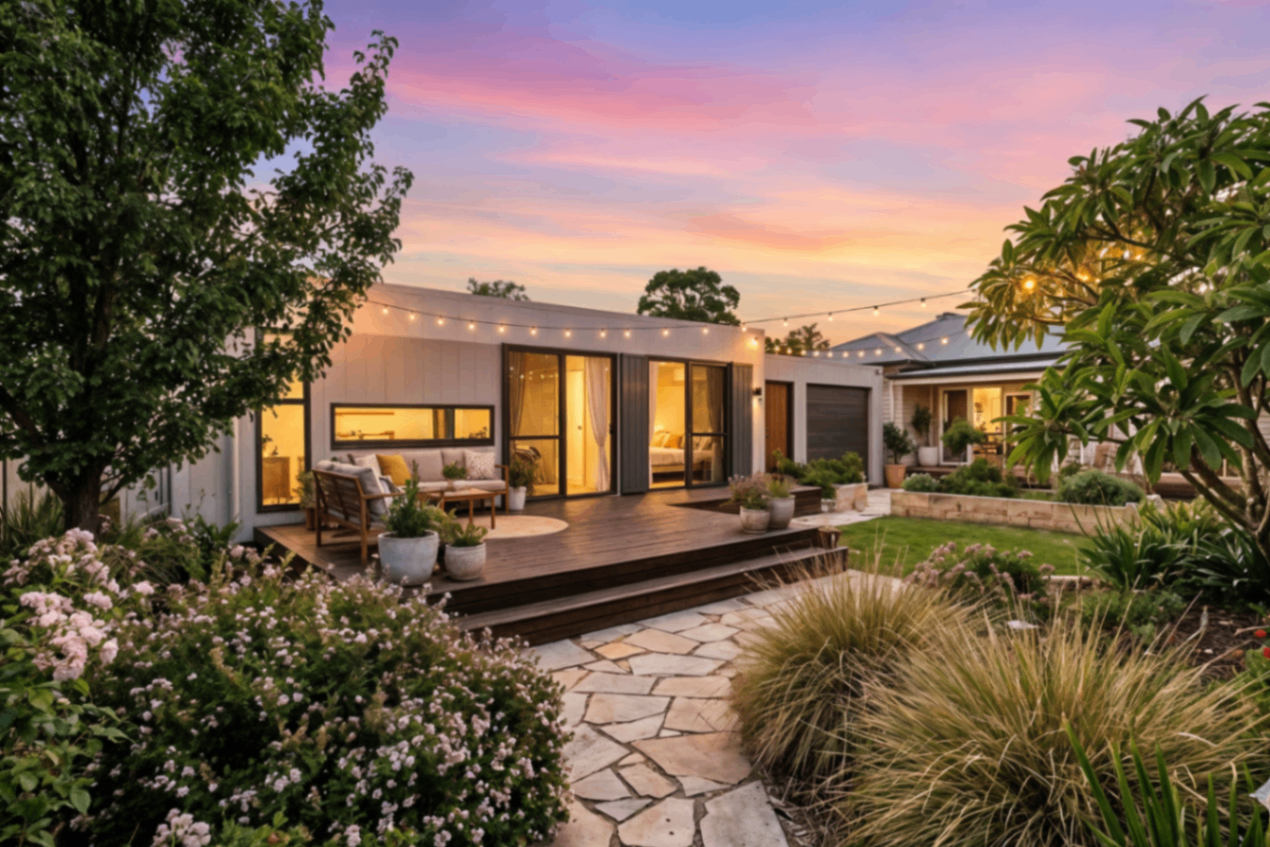
Remember those boxy, dated prefab homes from the '90s? Yeah, forget everything you think you know. Modern modular design has evolved light-years beyond that.
We're talking 2600mm high ceilings that make spaces feel expansive. Full-height double-glazed windows (2400mm) that flood interiors with natural light. Open-plan layouts with seamless indoor-outdoor flow. Premium finishes, timber-look flooring, integrated storage, these homes look and feel like architecturally designed residences, because that's exactly what they are.
The "shoebox" stigma is dead. Today's modular homes rival, and often exceed, the design quality of traditional builds, without the premium price tag or twelve-month wait time.
5. Investment Speed: Rental Income in Weeks, Not Years
For property investors, time is money. A traditional granny flat or dual-occupancy build can drag on for 12–18 months. That's over a year of paying for land, interest, and holding costs with zero rental income.
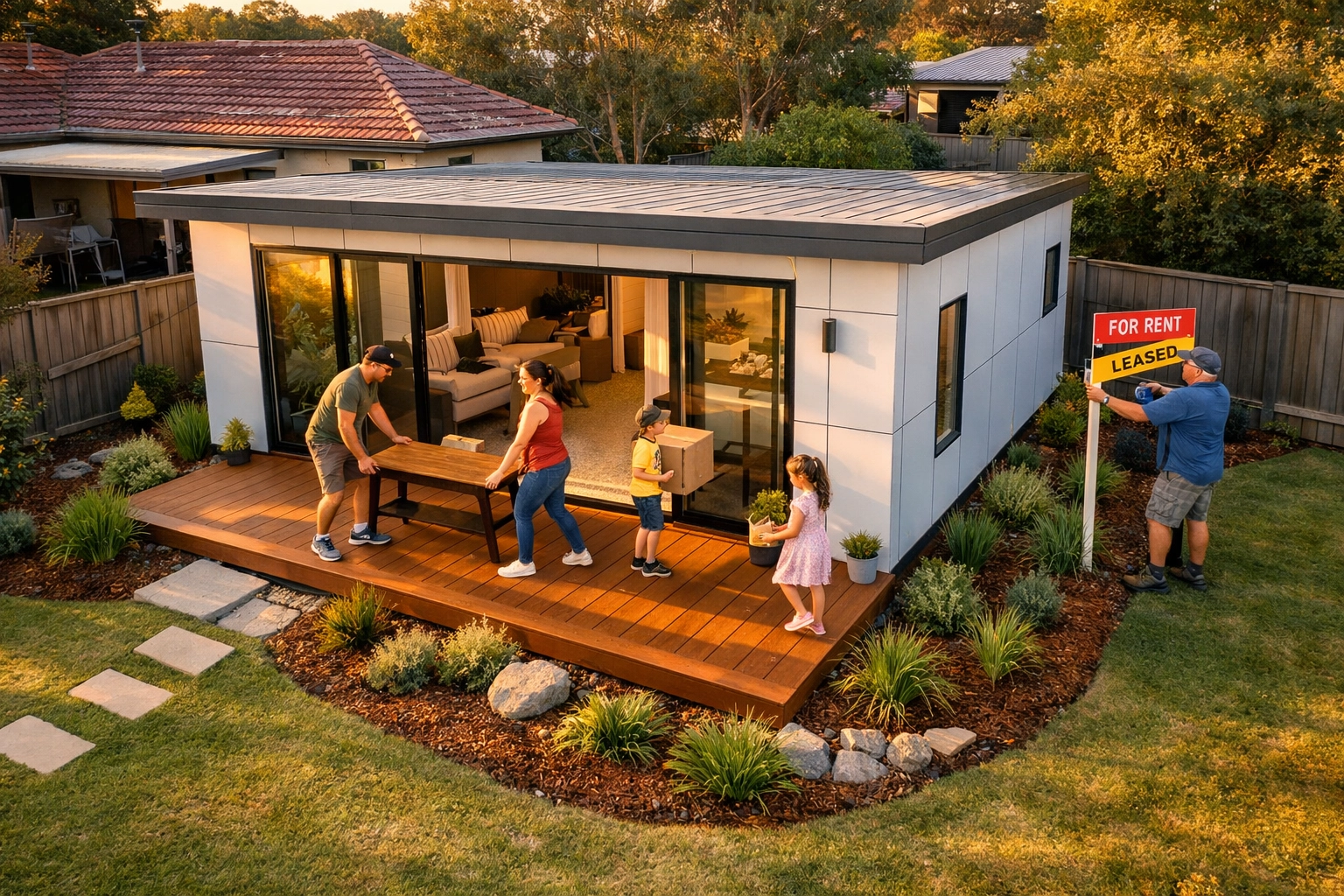
Modular homes compress that timeline dramatically. From order to installation, you're looking at 8–12 weeks for most builds. That means you can have tenants moved in and rental income flowing before a traditional build would've even poured the slab.
This speed advantage is a game-changer for developers and investors. Faster builds mean faster returns, lower holding costs, and the ability to scale your portfolio without getting stuck in construction limbo for years.
Want to explore how this works for your property? Check out our land owner options or developer partnership program.
6. Sustainability: Less Waste, Smarter Construction
Factory construction is inherently more sustainable than traditional site builds. Materials get ordered precisely, cut accurately, and used efficiently. Offcuts get recycled. There's no pile of wasted timber rotting in the rain because someone miscalculated measurements.
Modular homes use up to 30% less energy during both construction and occupancy. The controlled environment means materials stay dry, quality stays consistent, and waste gets minimized at every step. For buyers who care about their environmental footprint, and let's be honest, that's most of us in 2026, this matters.
Plus, our homes are designed for longevity. Steel frames, durable fibre-cement cladding, premium finishes, these aren't throwaway structures. They're built to last decades with minimal maintenance, backed by a 10-year warranty.
7. Precision: Millimetre Accuracy with 3D Design
Here's something most people don't appreciate until they've dealt with a traditional build: site construction is inherently imprecise. Measurements get fudged. Walls aren't quite square. Things don't line up perfectly because, well, humans are building it outdoors in less-than-ideal conditions.
Factory construction operates on a completely different level. Every EcoHub home is designed in 3D software with millimetre accuracy. CNC machines cut materials precisely. Components are pre-assembled and tested before they ever reach your site. The result? Tighter joints, better insulation performance, doors that actually close properly, and finishes that look professionally installed, because they are.
This precision translates to fewer defects, better energy performance, and a home that simply works better from day one. No callbacks. No fixing things that should've been right the first time. Just quality construction, delivered consistently.
The Tipping Point Is Here
So yeah: modular homes are going mainstream in Australia, and 2026 is the year it's all coming together. Tradie shortages, high interest rates, tighter energy standards, design evolution, investment speed, sustainability, and manufacturing precision have created the perfect storm for prefab construction to dominate the market.
Smart buyers are already making the switch. Developers are scaling up. Families are discovering they can get more home, faster, for less money: without sacrificing quality or design.
The question isn't whether modular homes are the future. They're already the present. The real question is whether you're ready to take advantage of it.
Ready to See What's Possible?
Whether you're an investor looking to fast-track rental income, a developer exploring partnership opportunities, or a homeowner ready to build smarter, we've got options tailored to your situation.
DM us to explore our Developer Partner Program, get a custom quote for your property, or browse our full range of homes. Let's talk about what modular construction can do for you: no sales pressure, just straight answers from people who actually know this stuff.