

Living in Australia means embracing a landscape of incredible beauty: but it also means respecting the power of the elements. For many Australians looking to build their dream home, the threat of bushfires isn't just a news headline; it’s a local reality. Whether you’re building in the rolling hills of the Perth hinterland or the dense coastal scrub of New South Wales, fire safety is likely at the top of your priority list.
In recent years, the conversation around residential construction has shifted. We are moving away from traditional "stick-built" timber houses toward more resilient, innovative solutions. At EcoHub Homes, we’ve seen a massive surge in interest in modular homes Australia-wide, specifically because of one core component: the light-gauge steel frame.
When it comes to protecting your family and your investment, steel isn't just a design choice: it’s a structural shield. In this guide, we’ll dive into why steel-framed prefabricated homes are the gold standard for bushfire-prone areas and how they provide peace of mind without compromising on style.
The Science of Survival: Why Steel Wins
The most obvious advantage of steel is also its most important: it doesn’t burn. While this sounds like common sense, the technical difference between steel and timber during a fire event is staggering.
Timber is organic fuel. It ignites at approximately 300°C. In a high-intensity bushfire, temperatures can quickly exceed this, turning the very skeleton of a house into an accelerant. Steel, on the other hand, is non-combustible. It has a melting point of roughly 1,500°C. While no building is "fireproof" in the absolute sense of the word, a steel-framed home does not contribute to the fire load. It won't feed the flames, and it won't help a fire spread from the outside in.
Beyond just not burning, steel maintains its structural integrity longer under heat stress. In a typical building fire, temperatures often hover around 1,000°F. At these levels, steel remains rigid. This predictability is vital for emergency services and for the occupants themselves, providing those crucial extra minutes for evacuation that timber structures simply cannot guarantee.
Understanding BAL Ratings and Compliance
If you’re planning a build in a rural or semi-rural area, you’ve likely encountered the term "BAL": Bushfire Attack Level. This is a scale used to determine the appropriate design and construction requirements for a building based on its potential exposure to ember attack, radiant heat, and direct flame contact.
The ratings range from:
- BAL-Low: Insignificant risk.
- BAL-12.5 to BAL-40: Increasing levels of risk from embers and heat.
- BAL-FZ (Flame Zone): The highest risk level, involving direct exposure to flames.
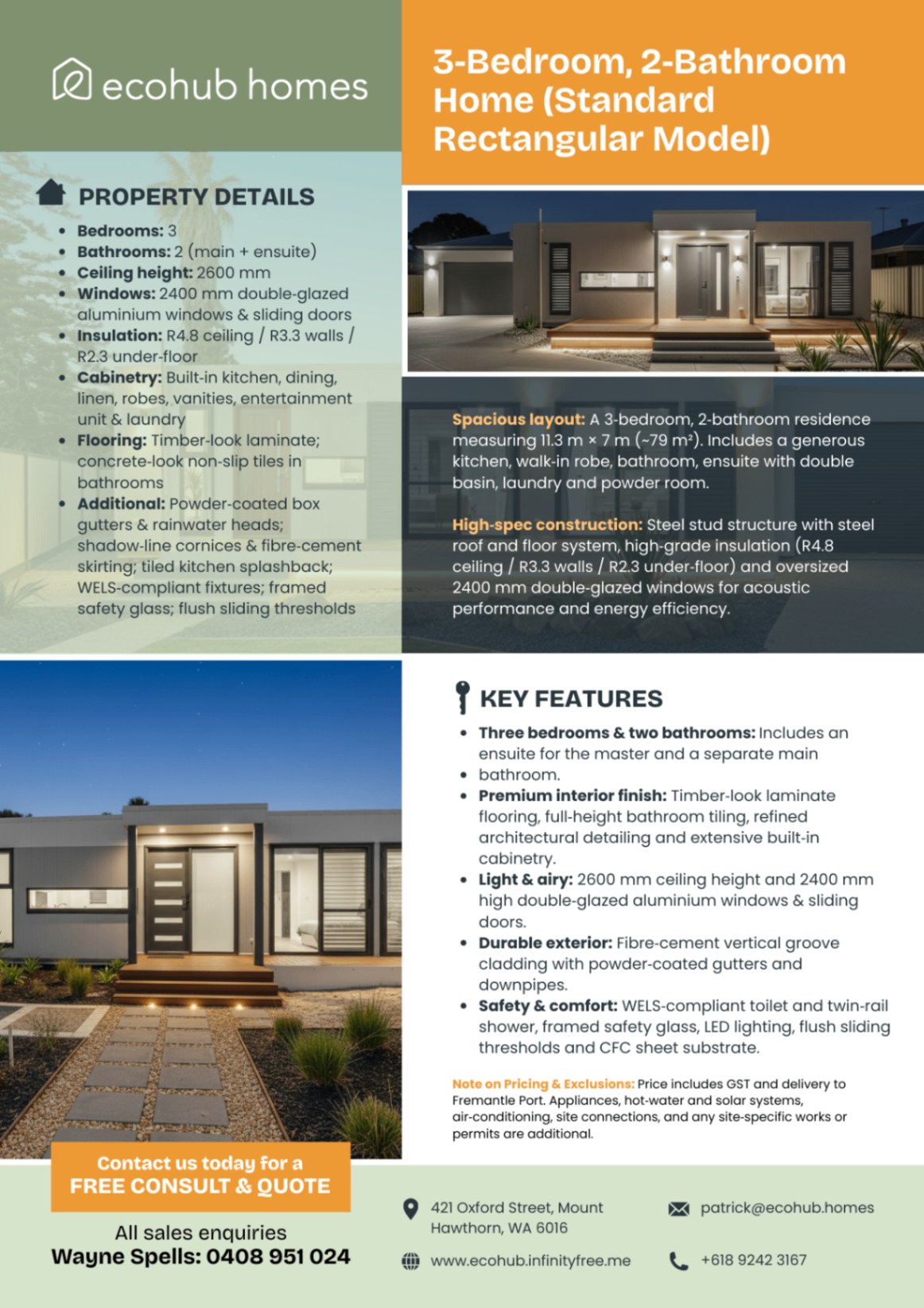
One of the major benefits of choosing prefabricated homes from EcoHub Homes is that our designs are engineered for compliance. Because our homes are built in a controlled factory environment, every joint, seal, and material choice is executed with surgical precision. This level of quality control is much harder to achieve on a traditional, wind-swept building site.
Steel frames are the ideal foundation for reaching high BAL ratings. When paired with non-combustible fibre-cement cladding and double-glazed toughened glass, our modular designs create a "tight" envelope that resists ember entry: the primary cause of most home losses during bushfires.

The "After" Factor: Repair vs. Replace
One aspect of fire safety that many homeowners overlook is what happens after the fire has passed. Research into building resilience has shown that steel-framed structures are significantly more likely to be repairable after a wildfire event.
Timber frames that have been exposed to extreme heat often suffer from internal charring or structural weakening that isn't immediately visible, often requiring a total demolition and rebuild. Steel frames, however, do not warp or shrink in the same way. If the fire has been held at bay by external barriers, the steel "bones" of the home often remain perfectly intact, allowing for a much faster and more cost-effective recovery process.
Durability Beyond the Flame
While fire safety is the headline, the "Steel-Framed Advantage" extends to everyday life. When you invest in an EcoHub build, you aren’t just buying protection against fire—you’re choosing a home that stays stronger, straighter, and easier to live with long-term. Start with our modular home models, then explore what fits your block and budget.
1. Termite Proof
In Australia, termites are a silent threat that can cause as much financial devastation as a fire. Steel is 100% termite-proof. You don’t need to worry about structural integrity being eaten away from the inside, and you can significantly reduce the need for harsh chemical soil treatments.
2. No Warping or Twisting
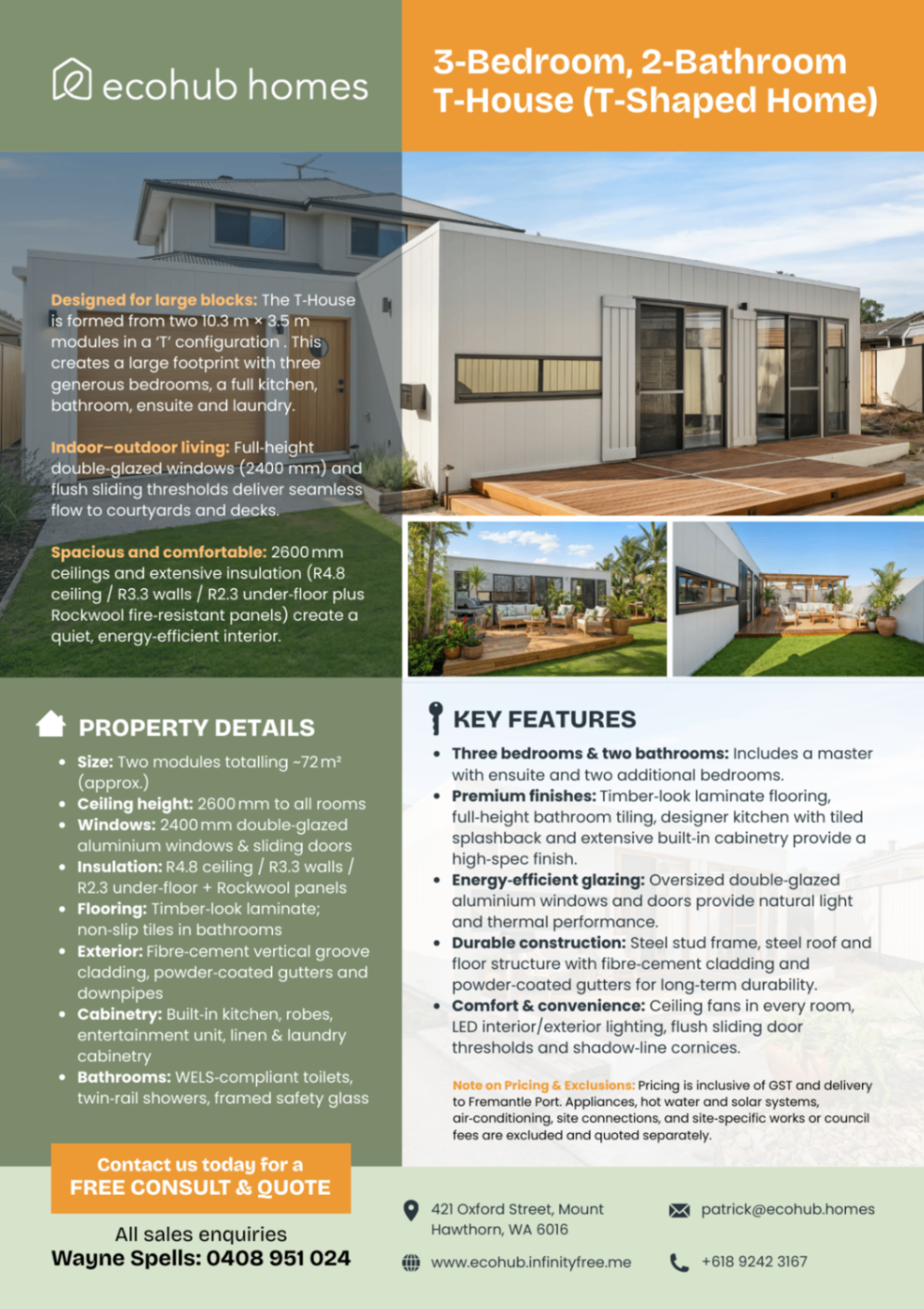
Timber is a "live" material. It absorbs moisture, it dries out, and it moves. This leads to cracked plasterboard, sticking doors, and uneven floorboards over time. Steel is dimensionally stable. It stays straight and true regardless of the humidity or temperature, ensuring your 3-bedroom T-House looks and functions as well in year ten as it did on day one.
3. Lower Maintenance
Because steel doesn't rot or host mould, the long-term maintenance costs of a steel-framed modular home are substantially lower. This is a key consideration for those looking at downsizing or building a low-stress holiday rental.
The Economic Logic of Steel
We often get asked if steel-framed modular homes are more expensive. While the raw material costs for steel can be higher than low-grade timber, the "real-world" cost often balances out in the homeowner's favour.
- Insurance Savings: Many insurance providers offer reduced premiums for homes built with non-combustible materials in high-risk zones. Over the life of a 30-year mortgage, these savings can be substantial.
- Resale Value: As Australian buyers become more educated about climate resilience, "Bushfire Ready" homes are commanding a premium on the market.
- Speed of Build: Because our prefabricated homes are engineered for efficiency, the time spent on-site is minimal. Less time on-site means lower labour costs and less exposure to the "tradie shortage" that is currently slowing down traditional builds across the country.
Precision Engineering in the Factory
The reason EcoHub Homes can offer such high levels of safety is our modular process. By building your home in our facility, we eliminate the variables that plague traditional construction.
When a home is built on-site, materials are often left out in the rain, and gaps in insulation or framing can go unnoticed. In our factory, every steel member is cut to the millimetre by CNC machinery. There is no "near enough is good enough." This precision ensures that the fire-rated seals and non-combustible barriers required for high BAL ratings are installed exactly as the engineers intended.
Whether you are looking for a 10-star energy-rated home or a compact granny flat, our steel-frame methodology remains the same: build it strong, build it smart, and build it to last.

Final Thoughts: Peace of Mind in a Changing Climate
Choosing to build a home is one of the biggest decisions you’ll ever make. In Australia, that decision now involves a serious look at environmental resilience.
A steel-framed modular home isn't just a modern, stylish choice: it’s a proactive one. It’s about knowing that your home has been engineered to withstand the unique challenges of the Australian landscape. It’s about the reassurance that comes from non-combustible materials and precision engineering.
If you’re ready to start your journey toward a safer, smarter home, we are here to help. You can explore our full range of modular home models or, even better, let’s talk through your site, your BAL rating, and the smartest path to compliance.
Next step: explore floor plans—or talk to a real expert
- Browse our full range of modular homes (1, 2, and 3-bedroom designs)
- See a popular option like our 3-bedroom T-House
- Prefer a quick answer? Reach out via our contact page
Ready to build for the future?
Book a free consultation and we’ll map out your ideal layout, site requirements, and timeline—clearly, quickly, and without the runaround.