If you’ve spent any time looking at the Australian housing market lately, you know the story. Building a traditional home has become a bit of a marathon: one filled with supply chain hiccups, skyrocketing labor costs, and timelines that seem to stretch into infinity.
But as we head toward 2026, the conversation is shifting. We’re seeing a massive surge in interest around modular homes in Australia, and for good reason. What used to be seen as a "niche" alternative is now a front-runner for savvy property owners and investors who want high-end design without the three-year wait.
At EcoHub Homes, we’ve seen the landscape evolve firsthand. Whether you’re looking to build your dream sustainable retreat or turn a vacant lot into a smart investment, here are the 10 things you absolutely need to know about prefab homes before 2026 hits.
1. The "12-Week" Move-In is the New Gold Standard
The biggest frustration with traditional builds? The uncertainty. In 2026, speed isn't just a luxury; it’s a necessity. While a standard site-built home can take 12 to 18 months (or more if it rains for a week), modular construction happens in a controlled factory environment.
At EcoHub, our build times are significantly faster because we aren't fighting the weather or waiting for 15 different subcontractors to show up on the same Tuesday. You’re looking at move-in ready timelines of as little as 8 to 12 weeks once site works are ready. That’s not just convenient: it’s a massive saving on rent or bridge financing while you wait.
2. Sustainability is No Longer Optional (It’s Law)
By 2026, the National Construction Code (NCC) updates will be in full swing across Australia. This means 7-star NatHERS ratings are the baseline. Prefab homes are uniquely positioned to win here. Because modules are precision-engineered in a factory, we can achieve levels of airtightness and insulation that are incredibly difficult to replicate on a windy building site.
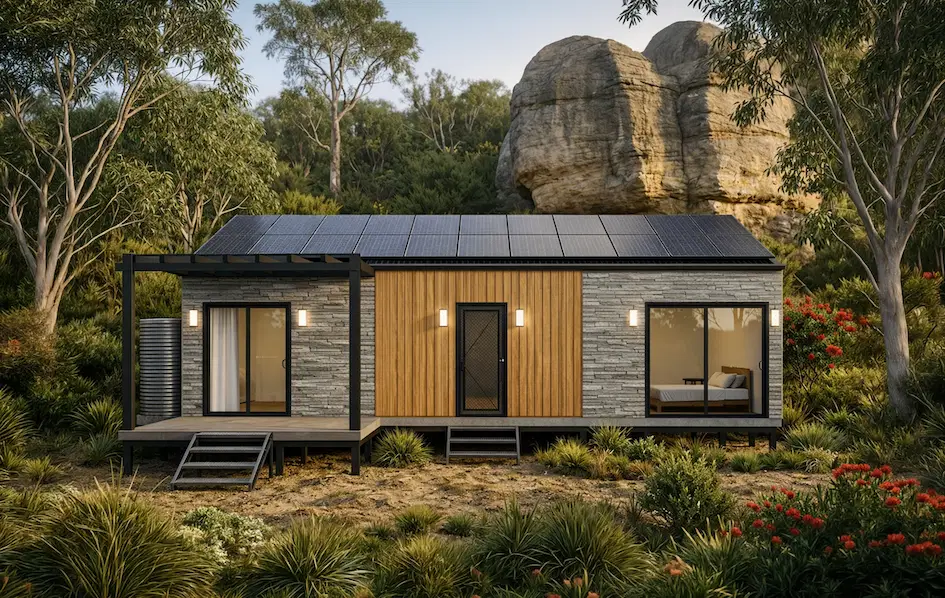
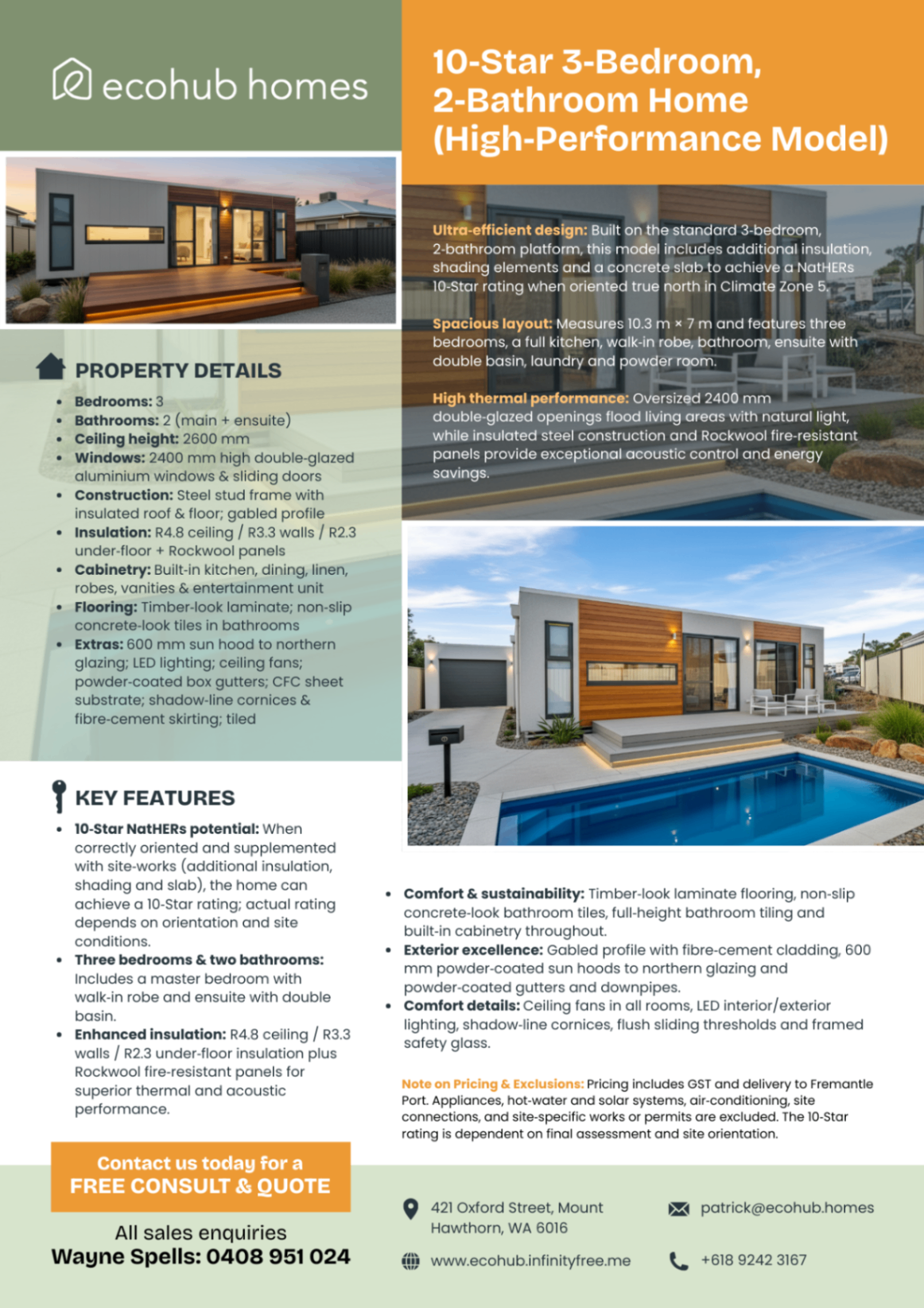
Our designs, like the 10-Star Three-Bedroom Home, feature full-height double-glazed windows and solar-ready roofs. This isn't just about "being green": it’s about slashing your electricity bills by up to 30% from day one.
3. Fixed Costs vs. the "Building Black Hole"
If you’ve talked to anyone who built a house in the last two years, they probably have a horror story about "price variations." Traditional builders often include clauses that allow them to hike prices if material costs jump.
One of the biggest advantages of the prefab model is cost certainty. Because we manufacture efficiently and buy materials in bulk, we can offer much more stable pricing. Our modular homes start from $99,000, and because the majority of the work happens off-site, you’re shielded from the "hidden" site costs that usually blow budgets out of the water. Check out our cost breakdown to see how it compares.
4. Passive Income via the "Granny Flat" Boom
In 2026, land is the most valuable asset you own. Smart investors are realizing they don’t need to buy a second property to build a portfolio. They can just use their backyard.
With the easing of secondary dwelling laws in many Australian states, installing a one or two-bedroom modular unit on a rear lot has become a premier strategy for passive rental income. It’s a turnkey solution: we handle the design, permits, and installation, and you get a tenant in a high-quality, modern space in a fraction of the time.
5. Architectural Freedom: It’s Not Just a "Box"
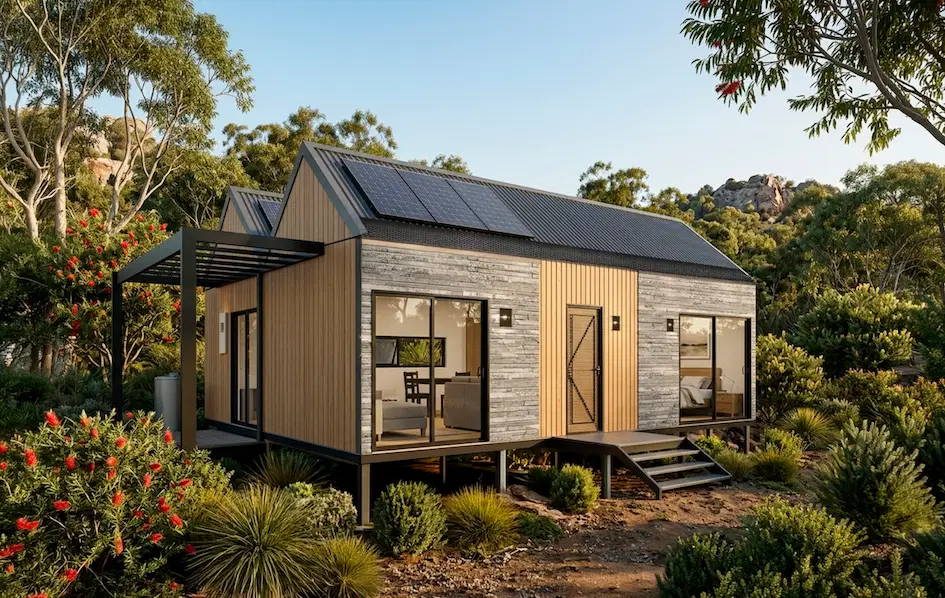
Forget the old-school "donga" or shipping container vibes. Modern prefab is high-end architecture. We’re talking 2600mm high ceilings, premium stone and timber finishes, and seamless indoor-outdoor flows.
Our one-bedroom premium designs feature floor-to-ceiling glass and raked ceilings that make a compact footprint feel incredibly expansive. The 2026 trend is all about "minimalist luxury": using smart design to create homes that feel much larger than their literal square meterage.
6. Factory Precision Means Higher Quality
Think about how your car is made. It’s built in a high-tech facility with millimetre-perfect precision. Why should your house be any different?
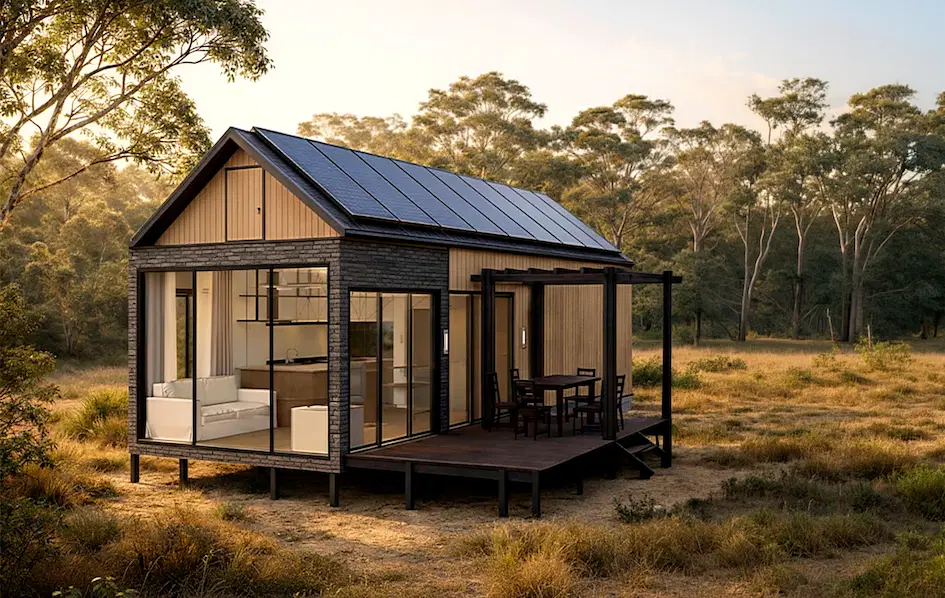
Traditional houses are built in the mud, wind, and rain. Timber sits out in the sun and warps. Modular homes are built on steel frames in a dry, laser-leveled environment. This results in straighter walls, better-fitting joints, and a structure that is literally built to be transported on a truck: making it significantly more robust than a standard site-built frame.
7. Navigating BAL Ratings and Council red tape
As we move toward 2026, climate resilience is a major focus. If you’re building in regional Australia, you need to know your Bushfire Attack Level (BAL) rating.
Building a high-BAL rated home on-site can be a nightmare of specialized labor and expensive materials. Modular providers are experts in this. We design our homes to meet specific Australian standards (AS 3959) right out of the factory, using non-combustible cladding and specialized glazing so you can build in the bush with peace of mind.
8. Banks are Finally Catching Up
For a long time, financing a prefab home was a bit of a headache because banks wanted to see a "finished product" on-site before releasing funds.
The good news? By 2026, most major Australian lenders have modernized their policies. Many now offer specialized progress payments for modular builds. If you’re building a permanent Class 1A dwelling (which all EcoHub homes are), you’re generally eligible for standard home loans and the First Home Owner Grant.
9. Zero-Waste Construction: The Ethical Choice
Construction waste is a massive problem in Australia, with traditional sites sending tonnes of off-cuts to landfill. Factory-built homes reduce this waste by over 70%.
Because we use 3D visualization and precise cutting tech, we know exactly how much material is needed before we even start. Any off-cuts are recycled within the factory. If you’re looking to minimize your environmental footprint, prefab is the only logical choice for 2026 and beyond.
10. The "Last Mile": Logistics and Installation
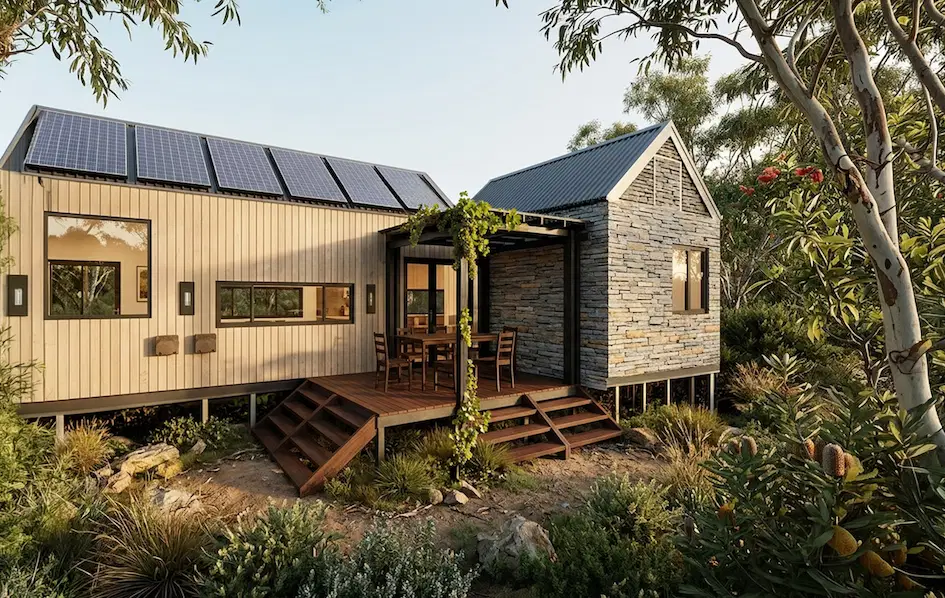
The final thing you need to know is that prefab isn't just about the house: it's about the delivery. In 2026, logistics technology has made it possible to deliver homes to some of the most remote parts of Australia.
Whether you’re on a suburban block in Perth or a remote acreage in the NSW bush, the "last mile" is where the magic happens. We use specialized cranes and transport systems to ensure your home is installed with minimal site disturbance. No months of tradies parking on your lawn: just a few days of site activity and you’re handed the keys.
Is a Modular Home Right for You?
The reality of the 2026 housing market is that we need smarter, faster, and more sustainable ways to live. Prefab isn't just a trend; it's the solution to a broken traditional building model.
If you’re ready to skip the 18-month wait and move into a high-performance, architecturally designed home, we’re here to help. At EcoHub Homes, we handle the entire journey: from that first 3D design to the final permit and installation.
Ready to see what's possible for your block?
Book a free consultation with our team today, or browse our range of modular homes to find your perfect fit.