
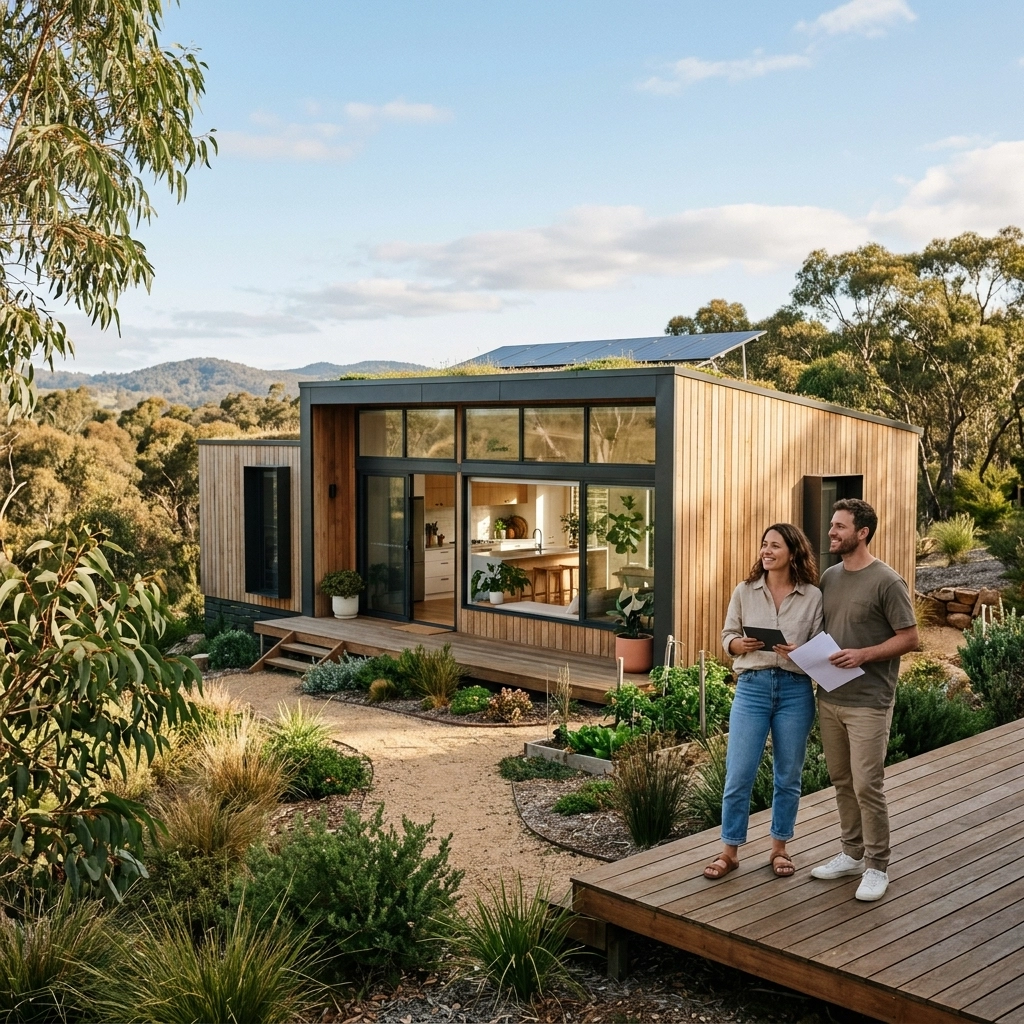
For a long time, the conversation around modular and prefab housing in Australia always hit a brick wall when it reached the bank manager’s office. You’d have the perfect design, a sustainable footprint, and a price tag that actually made sense, only to be told that the bank wasn’t "comfortable" with a home built in a factory.
Well, it’s 2026, and that script has been officially flipped.
If you’re wondering whether you can get a mortgage for a prefab home today, the answer is a resounding yes. Financing a modular build is no longer the "alternative" or "difficult" path it used to be. In fact, with the current housing climate and the push for rapid, sustainable construction, Australian lenders have finally caught up to the reality that factory-built homes are a lower-risk, higher-quality investment than many traditional builds.
At EcoHub Homes, we see clients securing finance every single week. But while the door is open, the process is slightly different from a standard home loan. Here is exactly what you need to know to get your modular dream funded in 2026.
The Big Shift: Why Banks Finally "Get It"
The primary reason banks were hesitant in the past was the "security" of the asset. In a traditional build, the bank can see the progress on your land: the slab goes down, the walls go up: and they feel safe knowing their money is physically tied to the dirt. With a prefab home, the value is created in a factory. To an old-school lender, that felt like handing over a mortgage for something that could, theoretically, be driven away on a truck.
Fast forward to 2026. The major Australian banks: led by pioneers like Commonwealth Bank: have modernised their lending criteria. They now recognise "Assessed Manufacturers." These are builders who have been vetted for their financial stability and quality of construction.
When you work with an established provider, the bank treats the factory phase as a legitimate part of the construction timeline. They understand that the modular homes Australia is seeing today are built to higher tolerances than site-built homes, meaning the end asset is often more durable and energy-efficient: and therefore, a better investment for the bank.
The Magic Number: 80% LVR
The most common question we get is: "How much can I actually borrow?"
In 2026, if you are working with an approved manufacturer, you can typically borrow up to 80% of the total build cost. This brings prefab homes into direct competition with traditional builds. You are looking at a standard 20% deposit, which is the benchmark for most Australian property investors and homeowners.
If you are building something smaller, like a one-bedroom one-bathroom home as a secondary dwelling, the rules are even more flexible. Banks are increasingly viewing these as "equity-boosting" additions to an existing property, often allowing you to tap into the equity of your main home to fund the project entirely.
However, a word of caution: if you choose a manufacturer that hasn’t been "assessed" or vetted by the major lenders, you might find your borrowing capacity capped at 60%. This is why choosing the right partner is just as much a financial decision as it is a design one.
Understanding the Construction Loan Structure
You won’t get a standard "home loan" that pays out in one lump sum. Instead, you’ll be looking at a Construction Loan.
The hallmark of this loan is the progress payment schedule. Instead of the bank giving you $400,000 on day one, they release funds in stages. The big difference with EcoHub Homes is that we’ve aligned our milestones with what lenders expect to see.
Typically, the payment stages look like this:
- Deposit/Contract Signing: To get the ball rolling and secure your spot in the factory.
- Frame/Lock-up: Once the core structure is completed in the factory.
- Fixing Stage: When the internals: kitchens, bathrooms, flooring: are integrated.
- Delivery and Installation: When the home is transported to your site and connected to services.
- Practical Completion: The final sign-off.
The beauty of this for you? You only pay interest on the money that has been drawn down. If your build is in the factory for 8 weeks, you aren't paying interest on the final installation costs until the home actually hits the ground.

Fixed-Price Contracts: The Lender’s Best Friend
One of the biggest hurdles in 2026 is construction inflation. Traditional builders are notorious for "cost-plus" contracts or "provisional sums" that blow out by 20% by the time the roof goes on. Banks hate this. It adds risk.
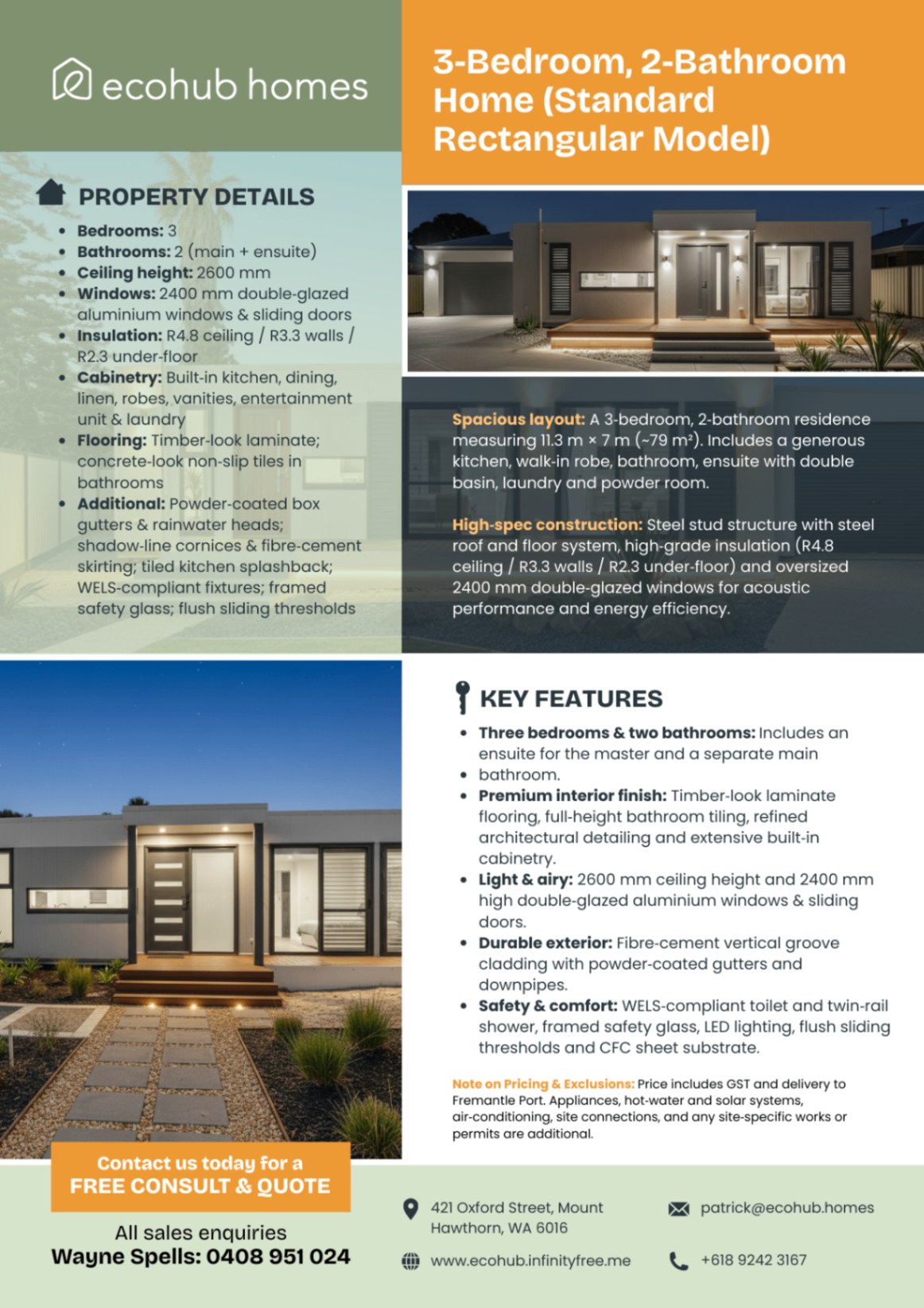
Prefab construction is the antidote. Because we build in a controlled factory environment, we can offer genuine fixed-price contracts. When you take a contract for a three-bedroom two-bathroom home to your bank, the number on that page is the number they can rely on.
This certainty makes the valuation process much smoother. Valuers in 2026 are now very familiar with modular homes, often valuing them at: or even above: traditional builds because of their superior energy ratings and modern finishes.
Government Incentives and Keystart
Don’t forget that being "green" can actually save you green when it comes to financing. With the 2026 focus on sustainability, many lenders offer "Green Home Loans" with lower interest rates if your home meets certain energy-efficient criteria.
Our 10-star three-bedroom two-bathroom home is a prime candidate for these discounted rates. When your home is built to out-perform the grid, you’re not just saving on power bills; you’re a lower-risk borrower in the eyes of the bank.
In Western Australia, programs like Keystart have also evolved. They have recognised the importance of modular housing in solving the supply crisis and offer low-deposit pathways for those who might not have the full 20% but have a solid income and a desire to build fast.
Three Tips to Secure Your Mortgage Faster
If you’re ready to stop renting and start building, follow these three steps to make your bank manager's life easy:
1. Get a Specialist Broker
Don't just walk into your local branch and talk to whoever is behind the desk. Use a mortgage broker who has experience with modular and construction lending. They know which lenders have the most "appetite" for prefab projects this month and can package your application so it sails through.
2. Focus on the Land
Remember, the bank is lending on the total value of the land + the house. If you already own your land, you’re in a fantastic position. The equity in your dirt can often serve as the deposit for the entire modular homes cost, meaning zero cash out of pocket for the build.
3. Have Your Paperwork Ready
Banks want to see the "Council Approval" (or the pathway to it) and a signed building contract from a reputable manufacturer. At EcoHub, we provide a comprehensive documentation pack specifically designed to give lenders exactly what they need to see to tick the "Approved" box.
The Bottom Line
The "stigma" of financing a prefab home is officially dead. In 2026, a modular home is seen as a smart, modern, and high-value asset. Whether you’re looking at a subdivision project or building your first family home, the money is there: you just need to know how to ask for it.
The speed of modular construction means you could be moving in while your neighbour is still waiting for their traditional bricklayer to show up. And in a market where time is money, that’s the best financial return of all.
Ready to see what’s possible on your block? Book a free consultation with our team. We can walk you through the designs, the costs, and the finance pathways to get your project moving before the next interest rate cycle.
Disclaimer: We are modular home experts, not financial advisors. Lending criteria can change, and your individual circumstances will dictate your borrowing power. We always recommend speaking with a qualified mortgage professional to get the latest figures for your specific situation.