
You've done the math. A granny flat on your property could generate $400-$500 per week in rental income, help aging parents stay close, or provide that independent space for adult kids saving for their first home. The numbers work. The motivation is there.
Then you start researching council approvals: and suddenly everything feels like wading through mud in gumboots.
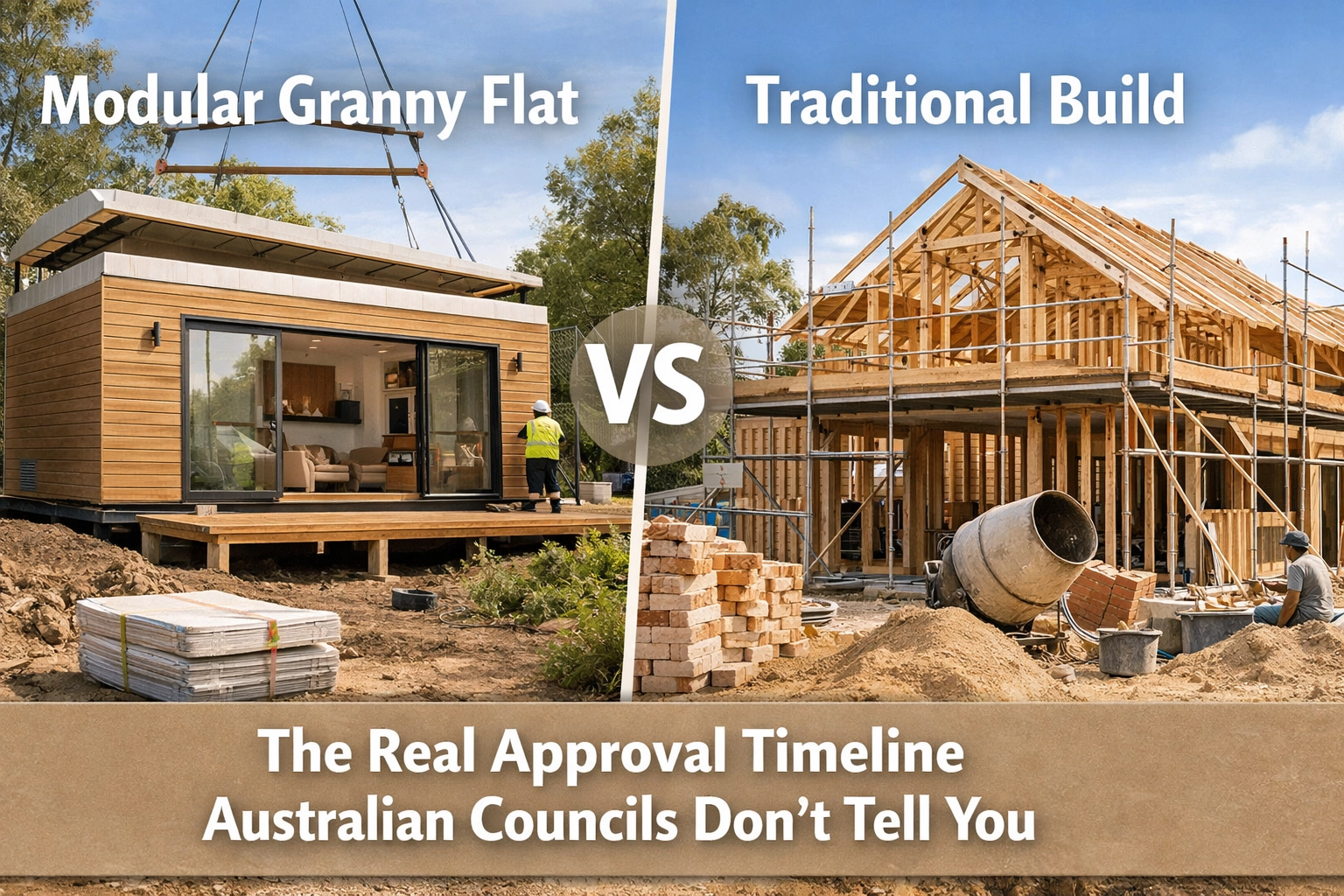
Here's what most Australian property owners don't realise: the approval timeline for a modular granny flat follows a completely different pathway than a traditional build. And councils? They're not exactly advertising which route gets you to rental income faster.
Let's break down the real timelines, the documentation nobody warns you about, and why understanding the difference could save you 6-12 months of frustration.
The Traditional Build Timeline: Longer Than You Think
When you go the traditional construction route for a granny flat, you're looking at a multi-stage approval marathon that most councils downplay in their initial consultations.
First comes the Development Application (DA): the same process whether you're building modular or traditional. This assesses everything from aesthetic impact on your neighbourhood to traffic implications, environmental considerations, and compliance with local planning schemes. Depending on your council's workload and whether your property sits in a heritage overlay or environmental zone, DAs typically take 4-12 weeks for a decision.
But here's where traditional builds get complicated.
After DA approval, you need a Construction Certificate (CC). This requires engaging a private certifier or council to verify that your detailed construction plans comply with the Building Code of Australia. Getting architectural plans to CC-ready standard? Add another 4-8 weeks, minimum. Then the certifier assessment process adds 2-4 weeks on top.
You'll also need BASIX certification: that's the Building Sustainability Index that proves your granny flat meets energy efficiency and water conservation standards. This involves specific design elements, window placement calculations, water fixture specifications, and thermal performance modelling. Most property owners need to hire specialists for this, adding both time and cost.
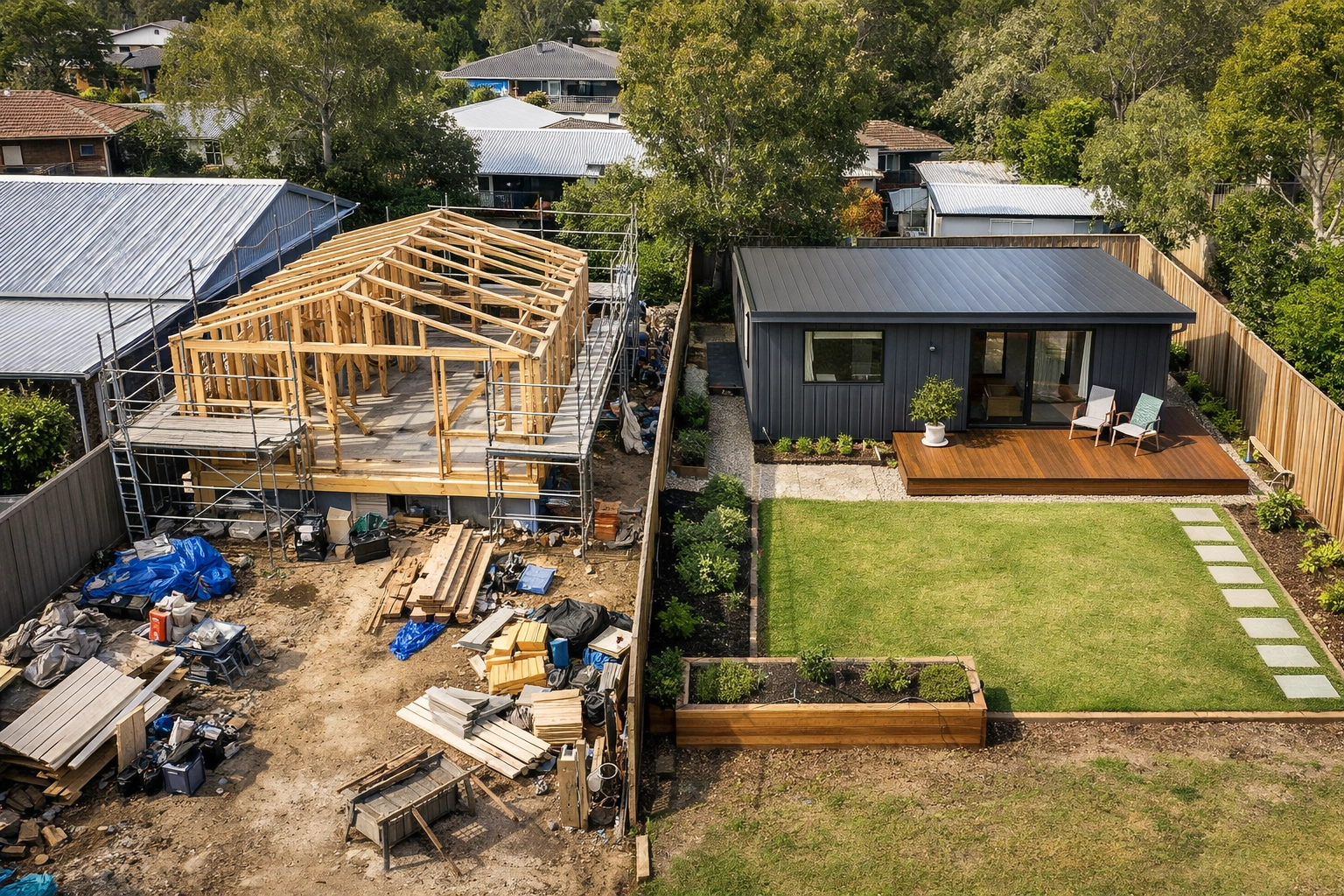
Total traditional build approval timeline: 12-24 weeks minimum, assuming zero complications, no requests for additional information, and no design revisions needed during the CC stage.
And that's before a single shovel hits dirt.
The Modular Granny Flat Pathway: A Different Beast Entirely
Here's the part councils rarely explain upfront: modular granny flats in Australia follow a streamlined approval route that eliminates some of the most time-consuming steps.
Transportable or modular granny flats don't require BASIX certification or Construction Certificates. Instead, they need two specific approvals: your Development Application (same as traditional) and a Section 68 Activity Approval from local council.
The Section 68 approval addresses the installation aspect: ensuring your modular home complies with Australian standards for structural integrity, utilities connections, and site positioning. Because the structure itself is built to certified standards in a controlled factory environment, councils focus primarily on the installation plan rather than scrutinising every construction detail.
This distinction shaves significant time off your approval journey. While traditional builds need separate design, certification, and BASIX processes, modular granny flat approvals consolidate much of this assessment into the S.68 application.
Realistic modular approval timeline: 8-16 weeks total, depending on council responsiveness and site complexity.
The Documentation Reality Check
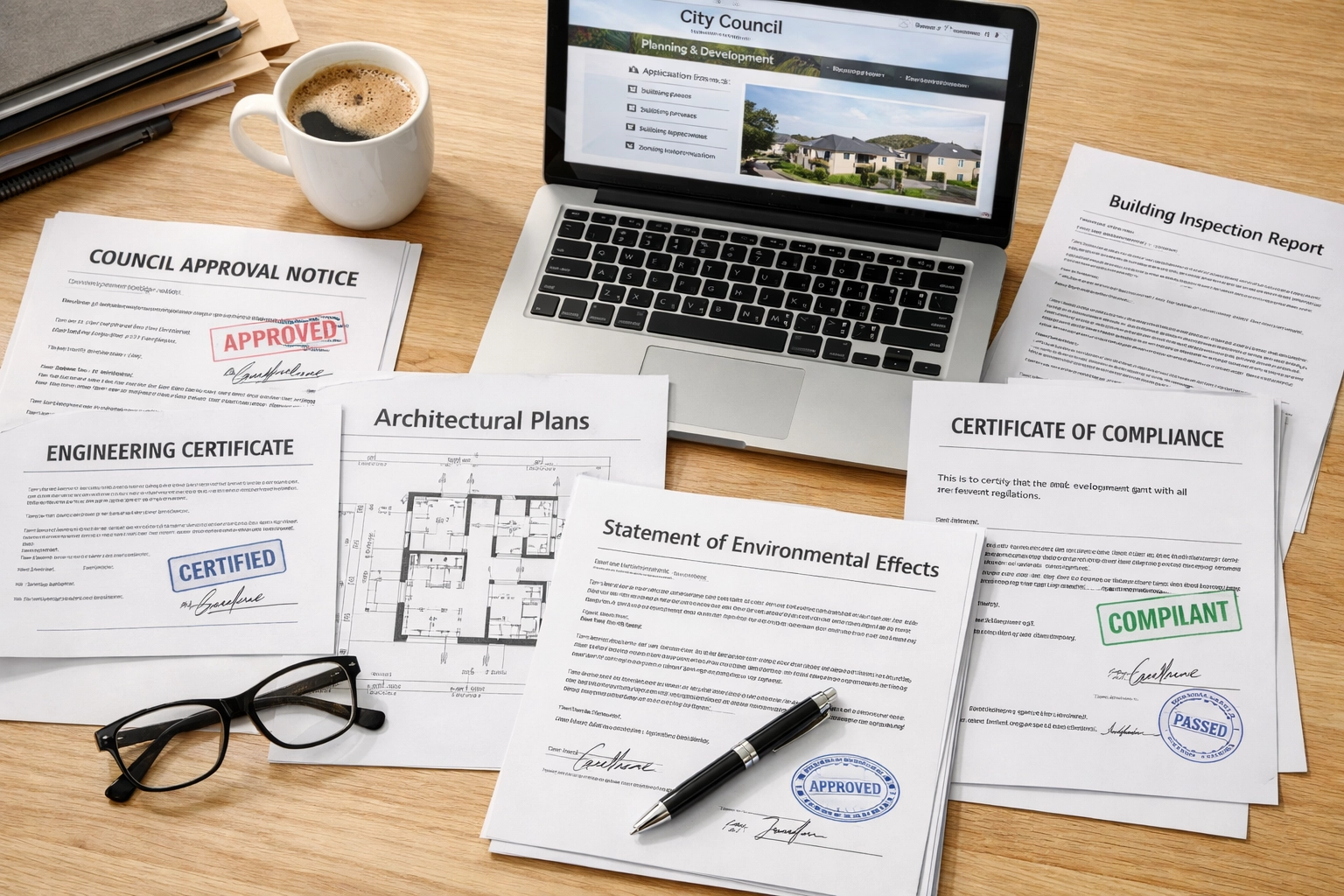
Whether you choose modular or traditional, councils demand substantial paperwork before they'll even begin assessment. But the documentation requirements differ in crucial ways.
For traditional builds, expect to provide:
- Detailed architectural plans (multiple revisions likely)
- Structural engineering specifications
- BASIX certificate
- Energy efficiency calculations
- Stormwater management plans
- Waste management strategy
- Landscaping plans showing setbacks and tree preservation
For modular granny flats, the list looks different:
- Site and floor plans (usually provided by your modular home company)
- Engineering certificates from qualified engineers (typically supplied with the manufactured home)
- Civil Engineer's Structural Compliance Certificate
- Glazing, electrical, and gas compliance certificates (standard with Australian-certified modular homes)
- Soil test reports
- Environmental impact statements
- Bushfire/flood assessments if applicable
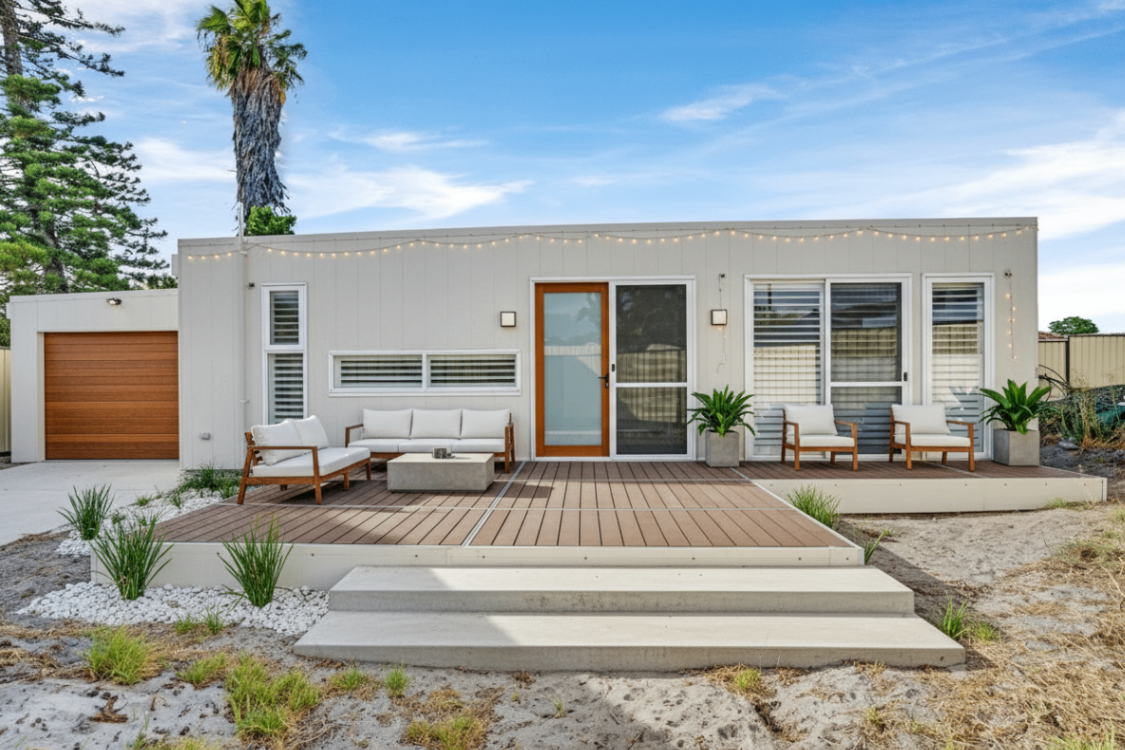
The critical difference? With modular homes from reputable Australian manufacturers, many compliance certificates come standard with your purchase. The structure has already been engineered, tested, and certified to Australian standards before it arrives on-site.
The Hidden Variables Councils Don't Emphasize
This is where property owners get blindsided: and where the timeline difference between modular and traditional can stretch from weeks to months.
Zoning regulations aren't always straightforward. Some councils have specific granny flat policies buried in local environmental plans that your initial enquiry might not reveal. Heritage overlays, environmental protection zones, and neighbourhood character statements can trigger additional assessment requirements.
Site-specific constraints dramatically affect approval speed. Properties in bushfire-prone areas need bushfire attack level (BAL) assessments. Flood zones require elevation certificates and hydraulic reports. Coastal properties might face additional environmental scrutiny.
For modular granny flats specifically, cyclone-prone areas like Tropical North Queensland require manufacturers to provide cyclone rating documentation. If your modular home isn't appropriately rated for your location, you'll face delays or outright rejection: something property owners often discover after committing to a purchase.
Council capacity varies wildly across Australia. Some progressive councils have dedicated granny flat assessment teams and fast-track processes. Others are understaffed, overwhelmed, or philosophically opposed to secondary dwellings despite state government directives encouraging them.
States like Western Australia recently introduced reforms allowing granny flats without council approval in certain circumstances. Queensland, Victoria, and New South Wales continue adapting regulations to reduce processing times: but implementation at the local level remains inconsistent.
How EcoHub Homes Cuts Through the Approval Maze
This is where choosing the right modular homes Australia partner makes the difference between a smooth 3-month process and a 9-month nightmare.
At EcoHub Homes, we don't just manufacture modular granny flats: we manage the entire approval pathway with you. Our team handles:
- Pre-purchase council consultation to identify site-specific requirements before you commit
- Complete documentation packages with all engineering certificates and compliance paperwork
- Liaison with council planners and certifiers throughout the DA and S.68 process
- Site assessment for soil conditions, utilities access, and installation logistics
- Coordination with private certifiers when it accelerates your timeline
Because we work with councils across Australia regularly, we know which local governments have streamlined processes, which require specific documentation formats, and how to anticipate information requests before they delay your approval.
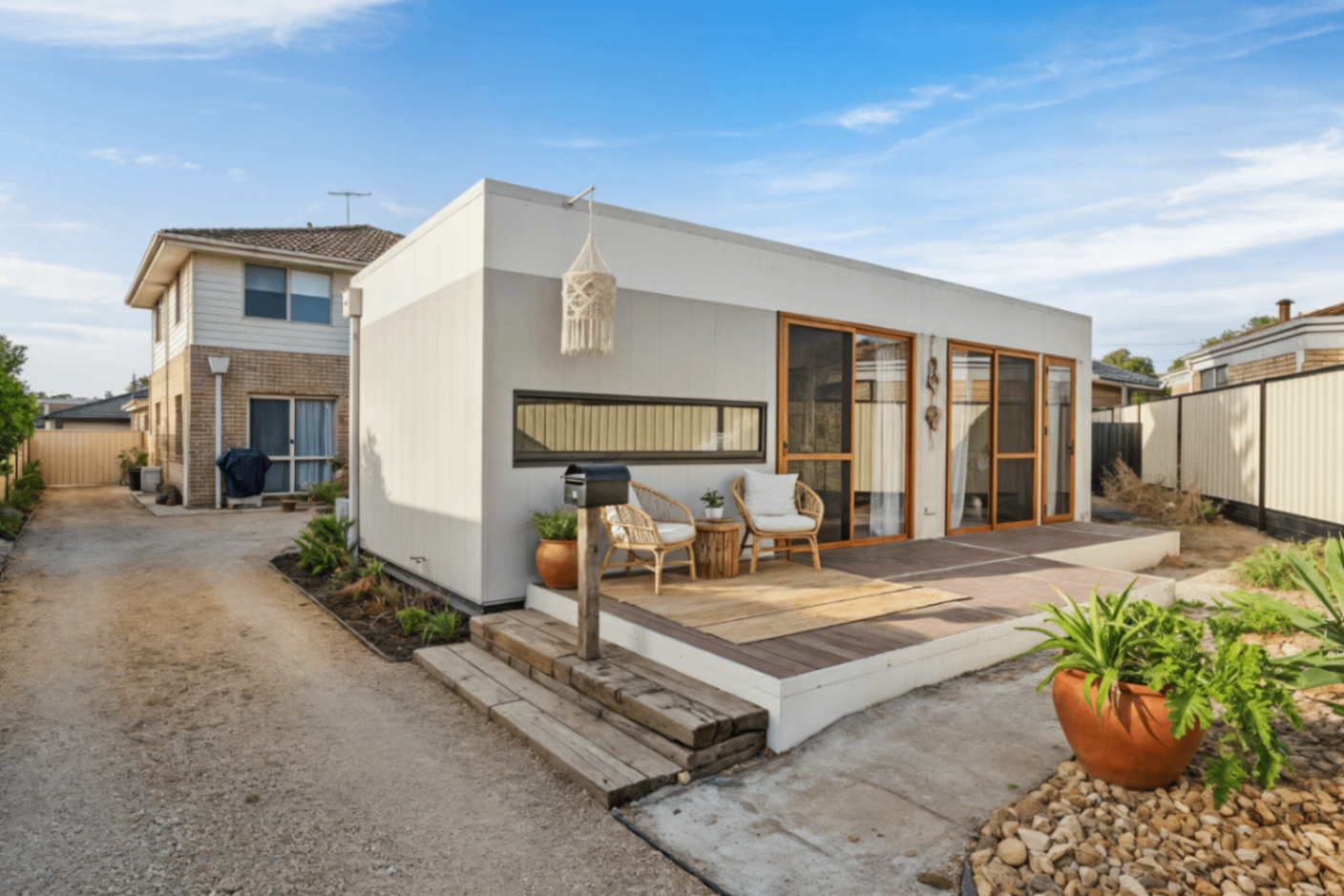
Our modular granny flats arrive with structural compliance certificates, energy efficiency documentation, and Australian standards certifications already completed: eliminating the back-and-forth that plagues traditional builds.
The Real Timeline Comparison: What to Expect
Let's get specific with realistic timeframes for an average suburban property without significant complications:
Traditional Build:
- DA preparation and submission: 3-4 weeks
- DA assessment: 6-12 weeks
- Construction Certificate preparation: 4-8 weeks
- CC assessment: 2-4 weeks
- BASIX certification: 2-3 weeks (often concurrent with CC prep)
- Total approval time: 17-31 weeks
- Construction time: 20-40 weeks
- Total project completion: 37-71 weeks (9-17 months)
Modular Granny Flat:
- DA preparation and submission: 2-3 weeks (with EcoHub Homes assistance)
- DA assessment: 6-12 weeks
- Section 68 application and approval: 2-4 weeks
- Total approval time: 10-19 weeks
- Manufacturing time: 8-12 weeks (often concurrent with approvals)
- Site preparation and installation: 2-4 weeks
- Total project completion: 20-35 weeks (5-8 months)
That's a potential time saving of 4-9 months: which translates directly into rental income you're either collecting or missing out on.
Your Next Step: Skip the Guesswork
The approval pathway for granny flats in Australia doesn't have to be mysterious or overwhelming. Understanding the fundamental difference between traditional and modular approval processes gives you the clarity to make informed decisions about your property investment.
If you're serious about adding a granny flat to your property: whether for rental income, family accommodation, or future resale value: the modular route offers a defined timeline, predictable costs, and significantly less stress.
Ready to explore what's actually possible on your specific property? Our team at EcoHub Homes provides free site assessments and council requirement consultations for Australian property owners. We'll tell you exactly what approvals your council requires, realistic timelines, and whether modular construction makes sense for your situation: no obligations, no sales pressure.
Let's turn that vacant backyard space into consistent rental income faster than you thought possible.