
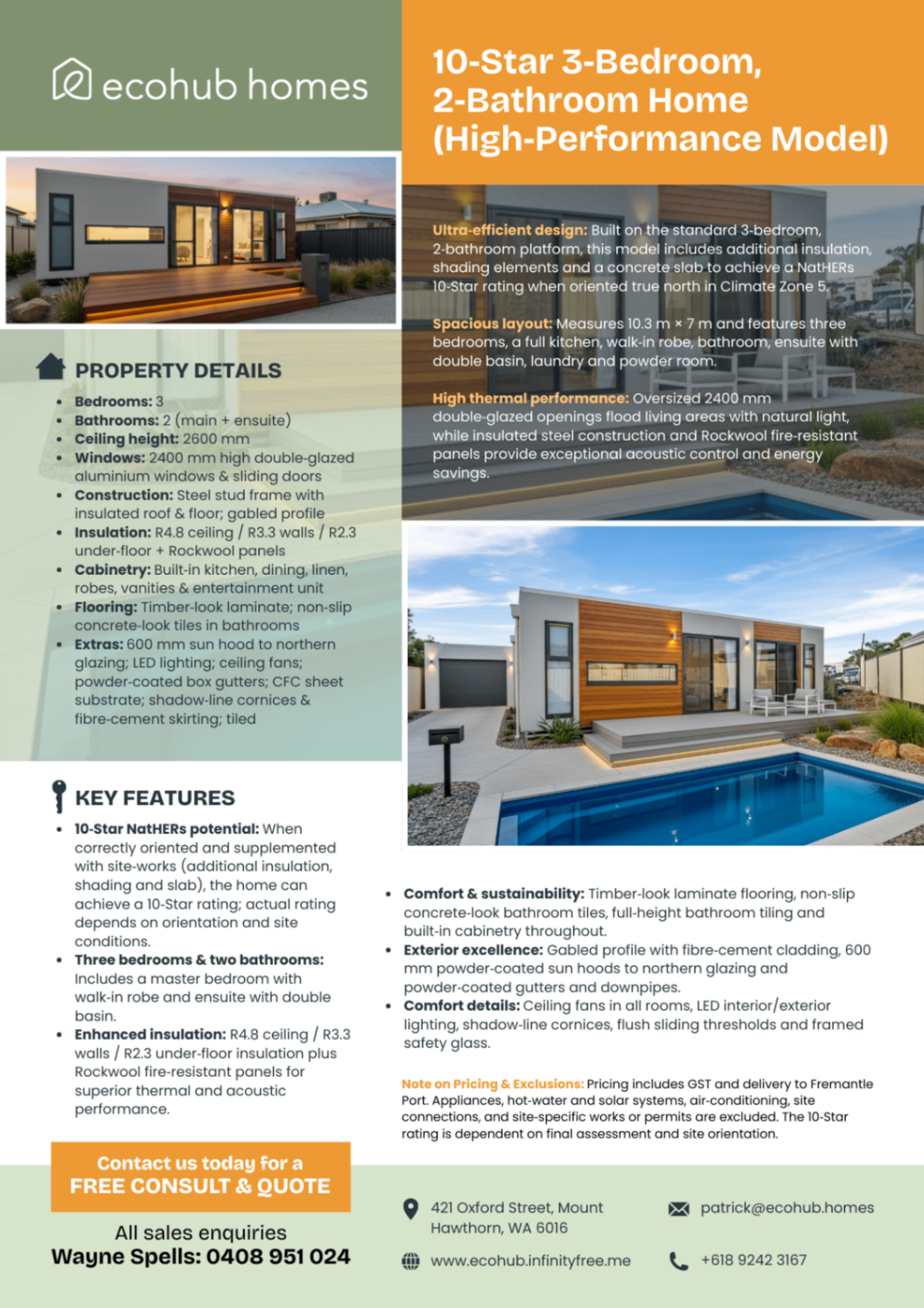
Before we dive into the hard numbers and financial comparisons, take a moment to walk through one of our most popular designs to see what modern modular living actually looks like in 2026.
Watch the 3×2 Modular Home Tour here
If you’ve been watching the Australian property market lately, you’ve probably noticed the "standard" way of building is becoming a bit of a financial minefield. In 2026, the traditional construction industry is still grappling with labour shortages and material price volatility that can send a "fixed-price" contract into a tailspin.
For property owners and investors, the choice between modular and traditional isn't just about the look of the house: it's about the bottom line. Whether you're looking to build your dream home or turn a vacant lot into a high-yield rental asset, understanding the shift in construction economics is vital. At EcoHub Homes, we’ve seen a massive surge in modular interest precisely because people are tired of their budgets being treated as "suggestions" by site-builders.
The Cost Per Square Metre: Hard Numbers for 2026
When comparing modular vs traditional, the first thing most people look at is the price per square metre. In the current Australian landscape, traditional site-built homes are commonly starting at around $3,000/m² for basic finishes, and that price climbs rapidly as you add the features modern buyers expect, like double glazing and high-performance insulation.
In contrast, modular homes from EcoHub Homes range between $2,000 and $3,500/m², but there is a crucial difference: that price includes premium finishes as standard. While a traditional builder might charge you extra for high ceilings or energy-efficient windows, our modular designs include 2.6m high ceilings and full-height double-glazed windows from the jump.
- Modular 2026 Range: Typically $2,500–$3,000/m² (All-inclusive of premium finishes).
- Traditional 2026 Range: Typically $3,000–$4,000+/m² (Often excludes high-end glazing or insulation upgrades).
Research shows that modular construction is generally 10–25% cheaper than conventional methods. This isn't because the materials are cheaper: in fact, we use high-grade steel frames and eco-friendly finishes: but because the factory process eliminates the waste, rework, and weather delays that plague traditional sites.
Speed is Your Secret Financial Weapon
Most people focus on the construction quote, but they forget about holding costs. If you’re building a home, you’re likely paying interest on a loan, rent for where you’re currently living, or missing out on potential rental income from your vacant land.
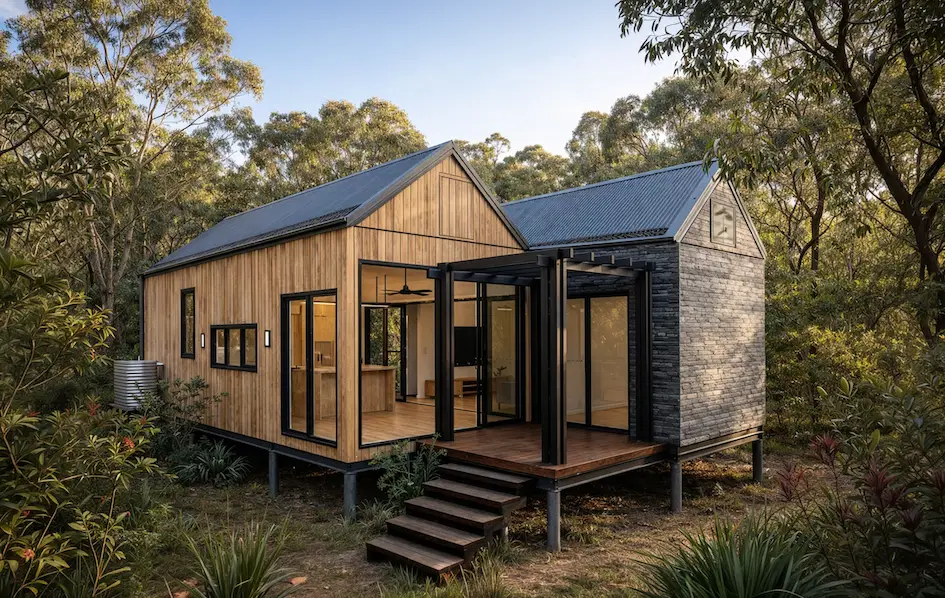
A traditional build in 2026 still takes anywhere from 6 to 12 months: and that’s if everything goes perfectly. Modular homes, however, are built in a controlled factory environment in as little as 12–16 weeks.
Because the site preparation (like foundations and services) can happen at the same time the modules are being built in the factory, the total project timeline is compressed by 30% to 60%. For an investor, that’s six months of extra rental income. For a homeowner, that’s six months of not paying "dead money" in rent while your mortgage interest ticks over.
Financing: Can You Still Get a Mortgage with the Big Banks?
A common myth we hear is that major Australian banks won't finance modular homes. In 2026, this is simply outdated. Mainstream lenders like CBA, Westpac, NAB, and ANZ now have specific construction loan products for permanent modular dwellings.
The key for banks is "permanence." As long as the home is fixed to the land and meets all Australian building standards (as all EcoHub Homes do), it is treated as a standard residential asset.
Pro-tip for your 2026 bank application:
- Ensure it’s a Fixed-Price Contract: Banks love certainty. Our contracts cover the build, transport, and installation, giving the bank’s valuer a clear number.
- Ask About Milestone Payments: Modular loans often use "factory milestones" instead of the traditional "slab, frame, roof" stages. Most major lenders are now very comfortable with this structure.
The Bushfire Premium: Surviving BAL-FZ
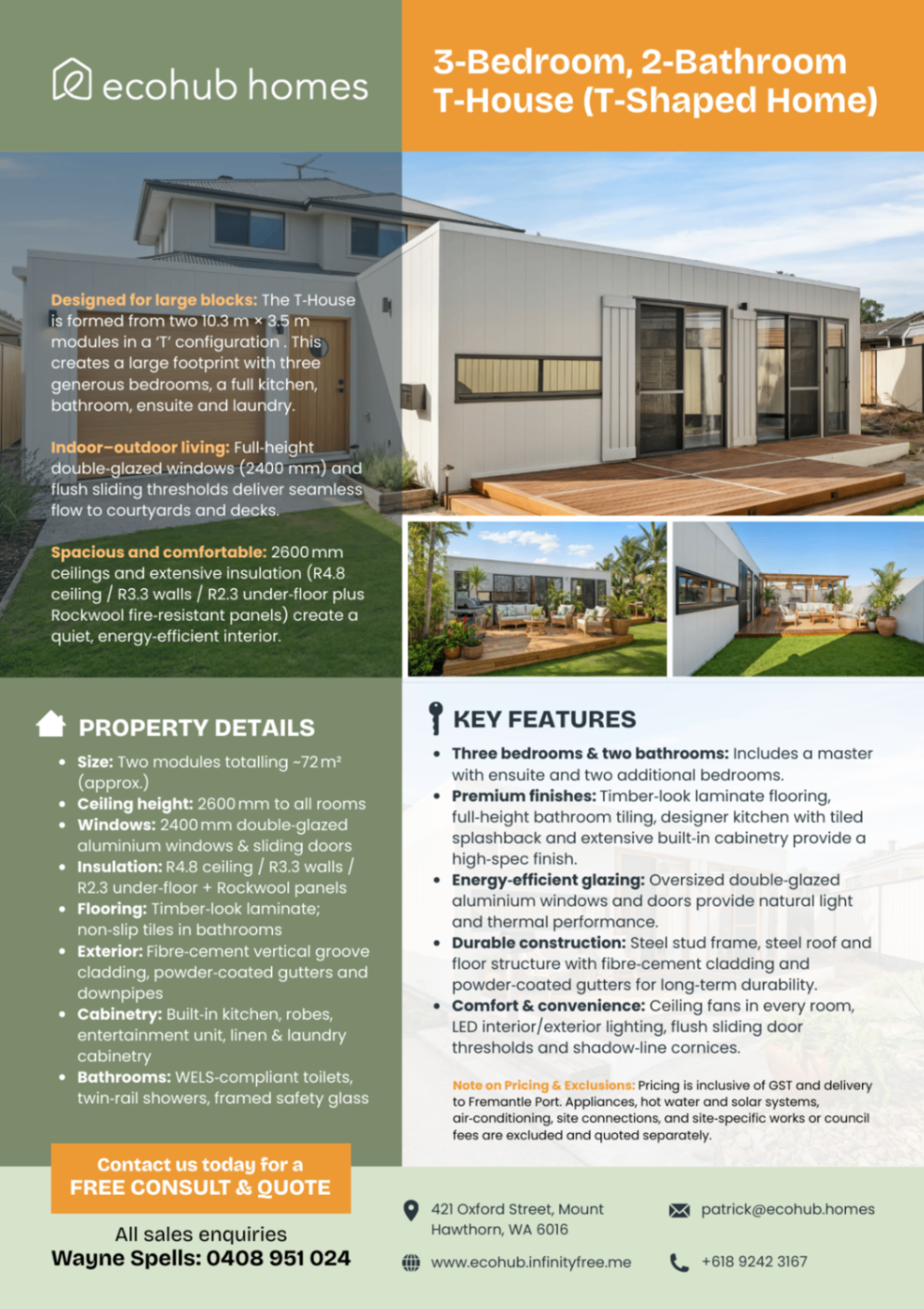
If you are building in a bushfire-prone area, specifically a Flame Zone (BAL-FZ), your wallet usually takes a massive hit. BAL-FZ compliance requires non-combustible walls, specialized roofing, and toughened fire-resistant glazing.
On a traditional building site, achieving BAL-FZ compliance can add 15% to 35% to your total cost. Why? Because the labour required to correctly seal every ember-entry point and install heavy fire-rated materials on-site is astronomical.
Modular wins here through precision. In a factory, we can ensure every seal is airtight and every piece of fire-rated cladding is installed to the exact millimeter. This consistency makes the certification process much smoother and often more cost-effective than trying to manage a specialized fire-zone build on a remote, exposed site.
"Modular construction is the most reliable way to meet the stringent requirements of BAL-FZ without the project blowing out in both time and cost. Factory precision eliminates the human error often found in high-pressure on-site fire compliance." : Industry Compliance Insight
Sustainability as an Investment Strategy
By 2026, energy efficiency isn't just about "doing the right thing": it's about property value and running costs. A home with a 7-star NatHERS rating (or higher) is significantly cheaper to heat and cool.
Every EcoHub home comes standard with:
- Full-height double-glazed windows (reducing thermal transfer).
- High-performance insulation (keeping the home temperate year-round).
- Solar-ready designs (allowing you to slash your electricity bills).
While a traditional builder might charge you $20,000+ to upgrade a basic design to these standards, we’ve baked them into the DNA of our homes. This makes your property more attractive to future buyers and higher-quality tenants who are increasingly conscious of their utility costs.
Turning Vacant Land into Passive Income
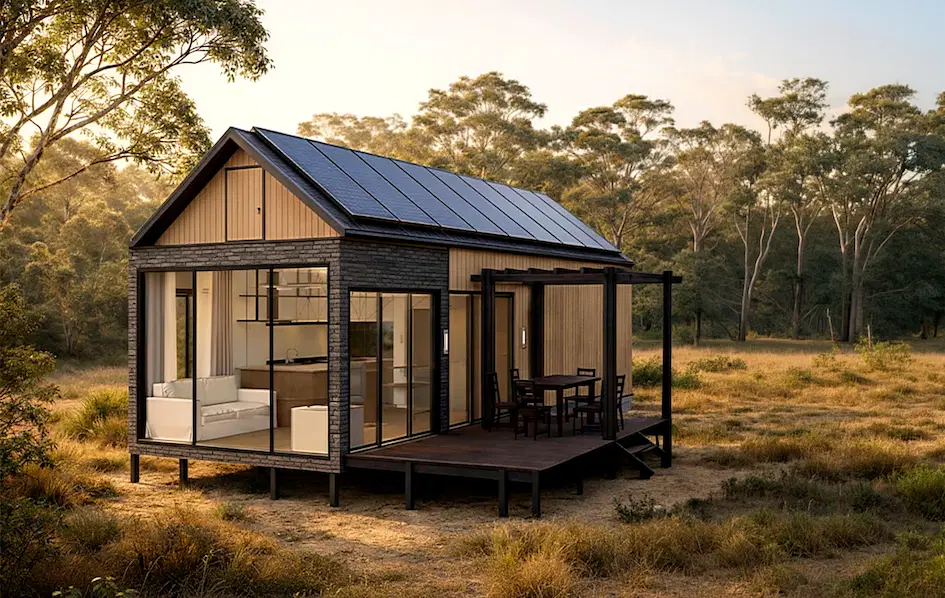
If you have a vacant lot or a large backyard, 2026 is the year of the "Smart Investment." With the Australian housing shortage continuing to drive up rents, modular homes are the fastest way to generate passive income.
Our one and two-bedroom units start from just $99,000. Because the build time is so short, you can go from an empty patch of grass to a rent-paying asset in a matter of months. This speed-to-market is something traditional construction simply cannot match.
Verdict: Which Is Better for Your Wallet?
In 2026, the "better" choice depends on your priorities, but the financial data is leaning heavily toward modular.
- Choose Traditional if: You have a highly complex, one-off architectural design that cannot be broken into modules, and you have no time constraints on the build.
- Choose Modular if: You want a premium, high-spec home with fixed costs, a 10-year warranty, and a move-in date that is months: not years: away.
At EcoHub Homes, we believe that your dream home shouldn't be a financial burden. From handling permits and site prep to delivery and installation, we streamline the entire process so you can focus on the result: a beautiful, sustainable home that respects your budget.
Ready to see how modular stacks up for your specific site? Book a free consult and quote with us today and let's get your 2026 project moving.