
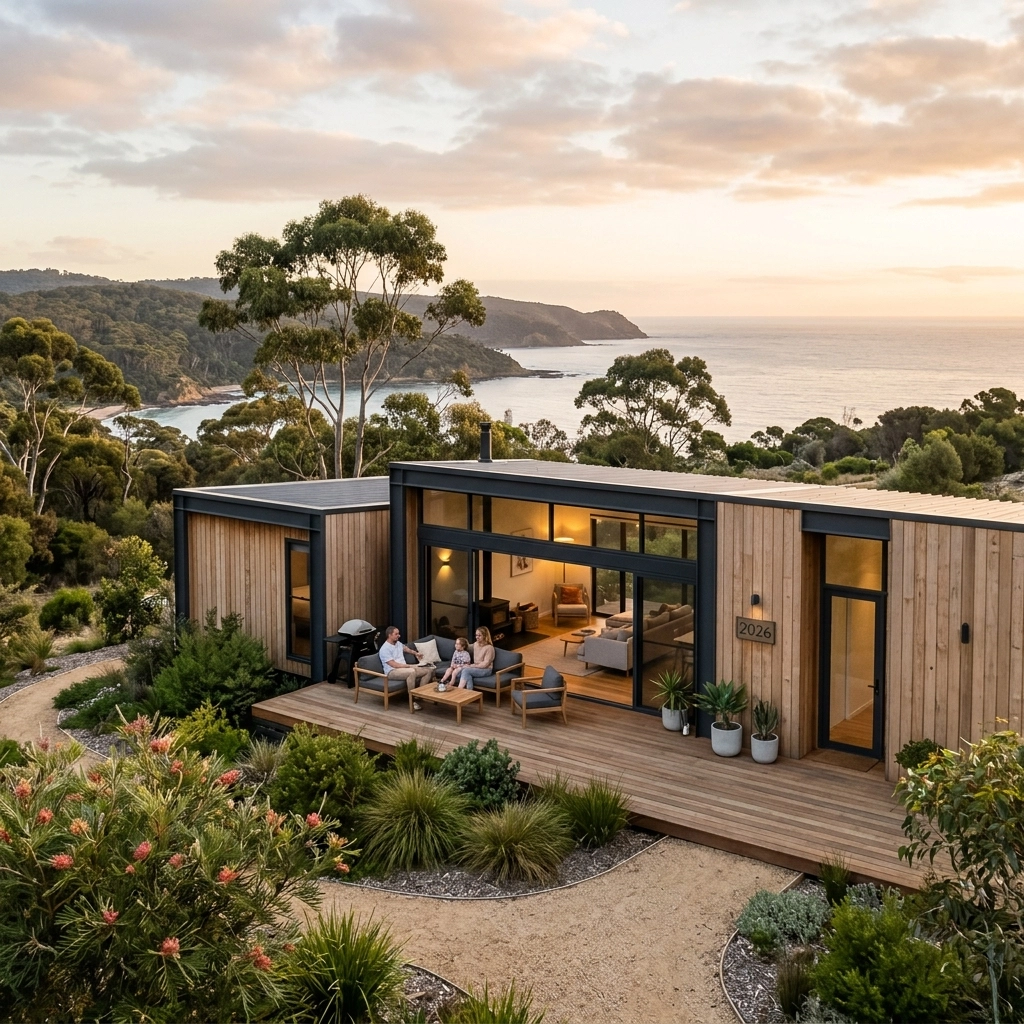
It’s April 2026, and the Australian property landscape looks a lot different than it did even a few years ago. If you’ve tried to build a traditional home lately, you know the drill: skyrocketing material costs, endless "rain days," and a vanishing pool of available tradies. It’s enough to make any property owner or investor want to pull their hair out.
But here’s the good news: there’s a smarter way to play the game. Modular housing has officially moved from a "niche alternative" to the gold standard for savvy Australians. Whether you’re looking to squeeze more value out of your backyard or you're an investor eyeing off a major development, being ahead of the curve in 2026 means thinking inside the box, literally.
At EcoHub Homes, we’ve seen the shift firsthand. People aren't just asking if modular is "good enough" anymore; they're asking how quickly they can get one on their block. Let’s dive into everything you need to know to succeed in the modular market this year.
Why 2026 is the Year of the Modular Revolution
Let’s look at the numbers because they tell a wild story. As of this year, over 65% of new homes in Australia are integrating some form of advanced modular or prefabricated system. The industry has swelled to a massive $11.8 billion market.
Why? Because traditional construction hasn't evolved in decades. We’re still building homes the same way we did in the 90s, but with twice the red tape and half the workers. Modular housing: often called modular homes Australia: is the industry’s answer to a population that’s expected to hit 30 million in the next few years.
Even retail giants like Bunnings have jumped into the space with flat-pack pods, which has only helped normalise the idea that a home can be built in a factory and delivered to your door.
The Need for Speed: From Pad to Pivot in 8 Weeks
In 2026, time is the most expensive commodity. A traditional build can easily drag on for 12 to 18 months. Between council delays and weather-induced site shutdowns, your "move-in date" is usually more of a "maybe-next-year date."
Modular construction flips the script. Because 90% of the building happens in a controlled factory environment, we don't care if it’s pouring rain in Perth or heat-waving in Brisbane. While we’re building your home’s modules, your site is being prepared simultaneously.
The result? Most of our clients are moving into their new homes in as little as 8 weeks.
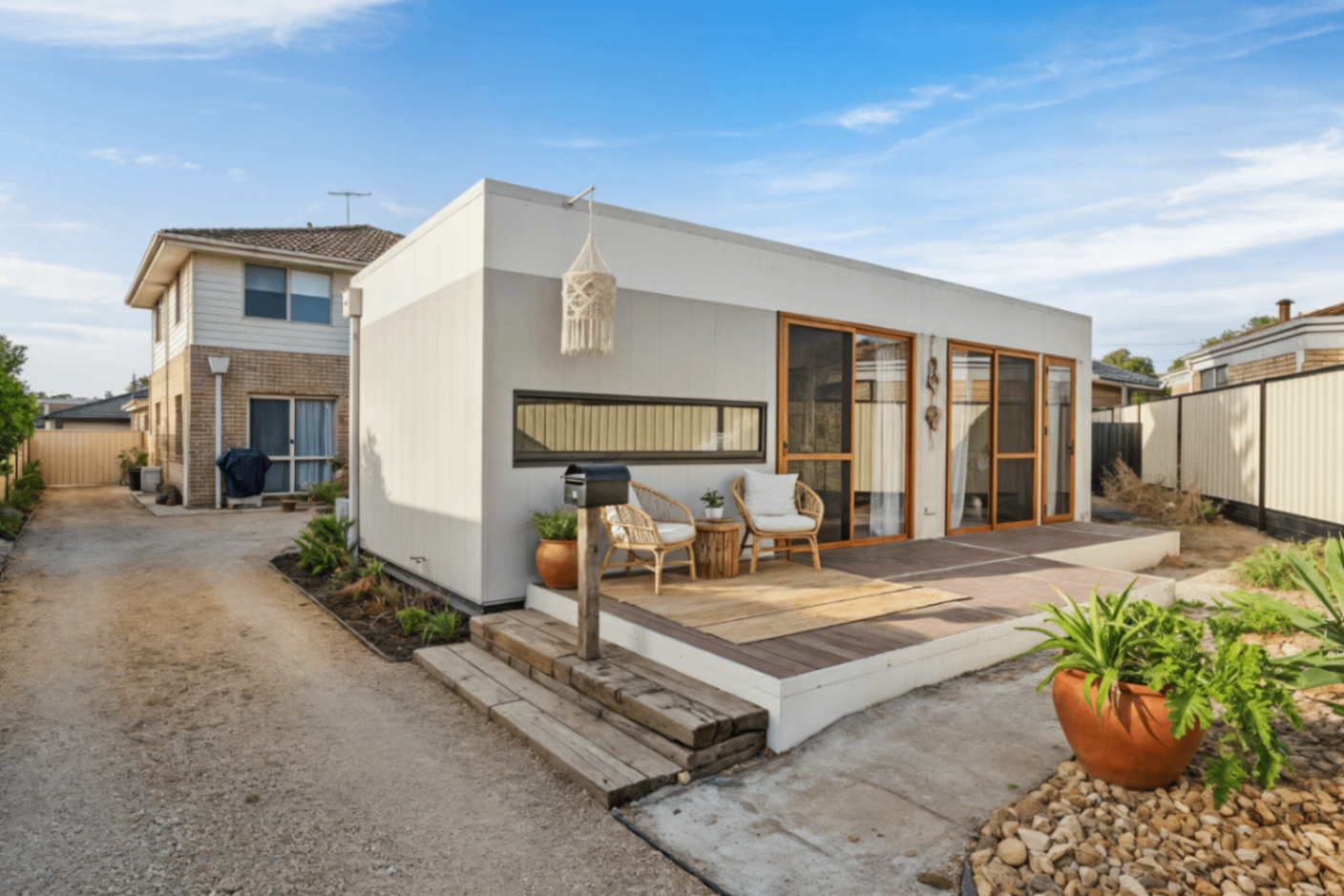
A modern one-bedroom unit installed in a suburban backyard: perfect for passive rental income or a home office.
How Much Do Modular Homes Actually Cost in 2026?
This is the big one. Everyone wants to know the bottom line. Generally speaking, modular builds in Australia are currently 20–30% more cost-effective than conventional builds.
But it’s not just about the upfront price tag. The real "savings" come from:
- Fixed Pricing: Unlike traditional builds where "variations" can eat your budget alive, modular costs are locked in early.
- Reduced Holding Costs: If you’re an investor, every month your site is a construction zone is a month you’re paying interest without rental income. Shaving 12 months off a build time is a massive win for your ROI.
- Labour Efficiency: By building in a factory, we eliminate the need for dozens of different contractors to travel to a remote site every day.
For a detailed breakdown of the current market rates, check out our modular homes cost guide.
Sustainability Isn’t Optional Anymore
In 2026, "eco-friendly" isn't a buzzword: it’s a requirement. With energy prices continuing to fluctuate, the demand for high-efficiency homes has never been higher.
Our modular designs focus on a "10-Star" philosophy. We’re talking about:
- Solar-Ready Design: Every roof is optimized for maximum solar gain.
- Insulation Excellence: Using R4.8 ceiling insulation and high-spec wall batts to keep the heat out and the cool in.
- Double Glazing: Full-height, double-glazed windows come standard, providing massive thermal benefits and soundproofing.
If you’re looking for the pinnacle of green living, our 10-Star three-bedroom home is designed to practically run itself.
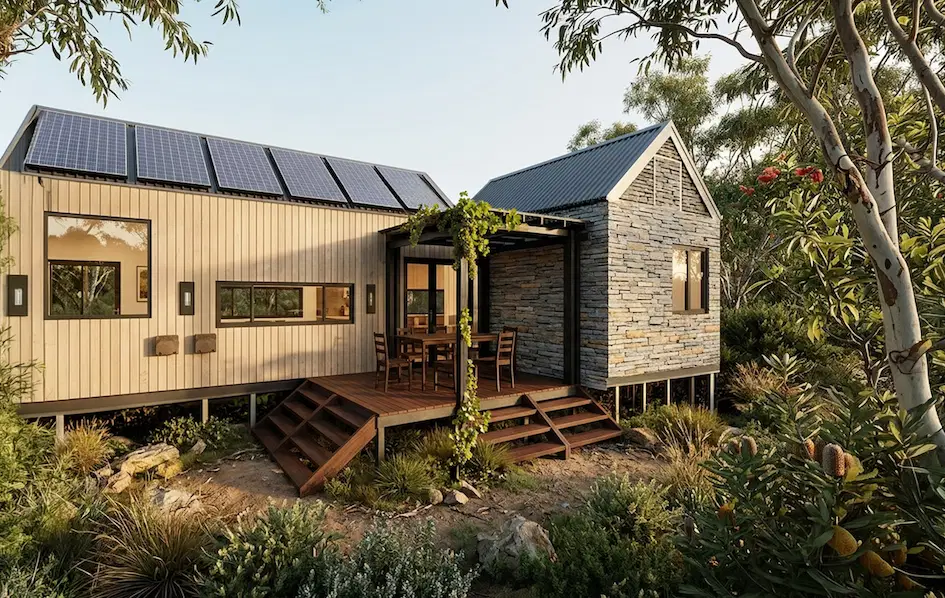
Sustainable design isn't just about the planet; it's about keeping your energy bills at zero.
Regional Hotspots: Where Should You Build?
The modular trend is hitting different states in different ways. Here’s the 2026 regional snapshot:
- Western Australia: In Perth’s outer suburbs, land is available but labour is incredibly scarce. Modular is the only way to get a project finished without waiting two years for a bricklayer.
- Queensland: Brisbane and the Gold Coast are seeing a massive surge in "workforce housing" and subdivisions using modular clusters.
- Victoria: Melbourne remains the hub for architectural modular design, with high-end prefab apartments and social housing initiatives leading the way.
- New South Wales: Sydney property owners are leaning heavily into granny flats and accessory dwellings to combat the housing crisis.
Design Trends: What’s "In" for 2026?
Gone are the days when modular homes looked like shipping containers or glorified demountables. Modern modular architecture is sleek, premium, and often indistinguishable from high-end custom builds.
The current "hero" of our range is the 3-bedroom, 2-bathroom T-House. It features a unique T-shaped layout that maximises natural light and creates distinct "wings" for living and sleeping.
We’re also seeing a huge demand for:
- High Ceilings: 2600mm is the new standard, making even small footprints feel massive.
- Indoor-Outdoor Flow: Large decks and full-height glass sliders are essential for the Australian lifestyle.
- Hybrid Cladding: Mixing timber-look finishes with durable fibre-cement for a "bush-modern" aesthetic.
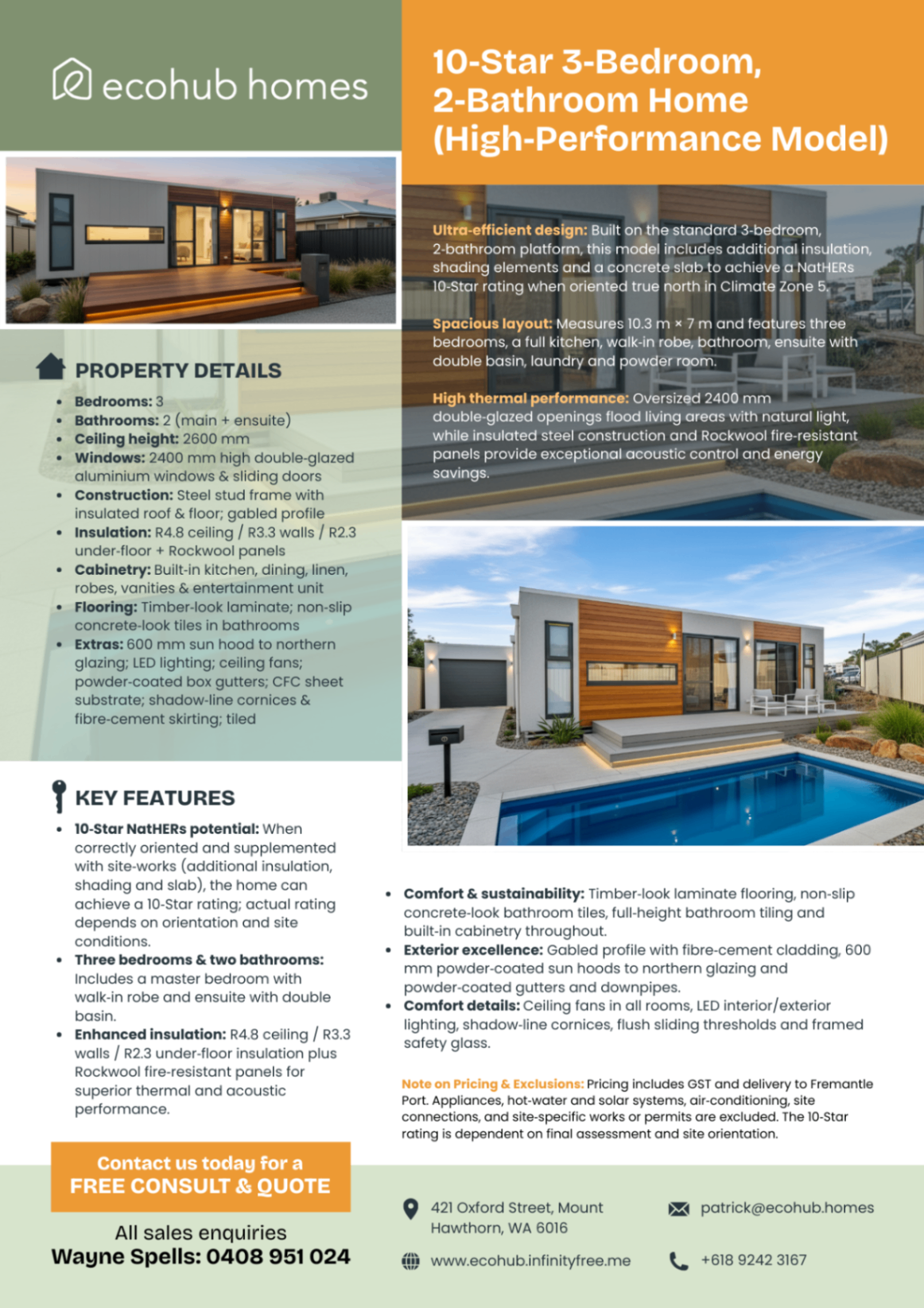
Modern layouts now include gabled facades and integrated outdoor living spaces like pools and decks.
The Developer’s Playbook: How to Succeed
If you’re a land owner or a developer, the strategy for 2026 is all about speed and scalability.
Step 1: Site Audit
Not every block is modular-friendly. You need to consider truck access and overhead power lines. We usually start with a free consultation to see if your land fits the bill.
Step 2: Choosing the Right Model
Don't overcomplicate it. Our two-bedroom home is a favourite for secondary dwellings, while our larger units work perfectly for family homes or long-term rentals.
Step 3: Council and Compliance
The good news is that modular construction meets all Australian Building Codes (NCC). Because the plans are often standardised, the approval process can sometimes be smoother than a "one-off" custom build.
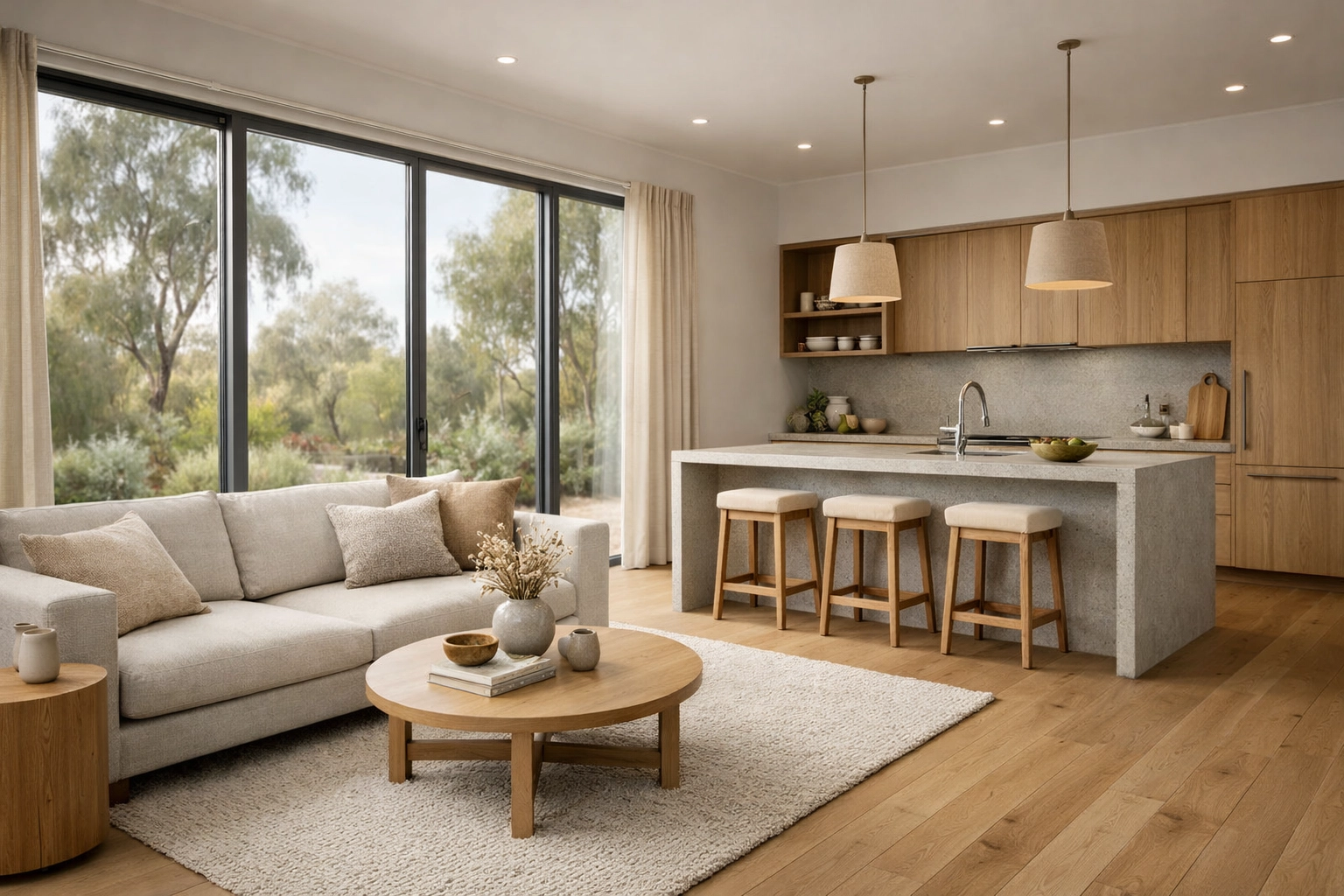
Inside the 2026 modular home: light-filled interiors and premium finishes come as standard, not as upgrades.
Final Thoughts: Don't Get Left Behind
The Australian housing market is tough, but it’s also full of opportunity if you’re willing to look at things differently. Modular housing isn’t just a trend: it’s the logical evolution of how we live.
By choosing modular, you’re opting for a faster build, a more predictable budget, and a home that is built to the highest environmental standards of 2026. Whether you’re looking to house family, create a rental income stream, or build your dream eco-retreat, the time to act is now.
Ready to see what's possible on your block? Explore our services or join us for our next free investment seminar to learn how to maximise your property’s potential.
The future of housing is modular. Let’s build it together.
Want to chat about your project? Book a free consultation today and let's get your 2026 build on the road.