
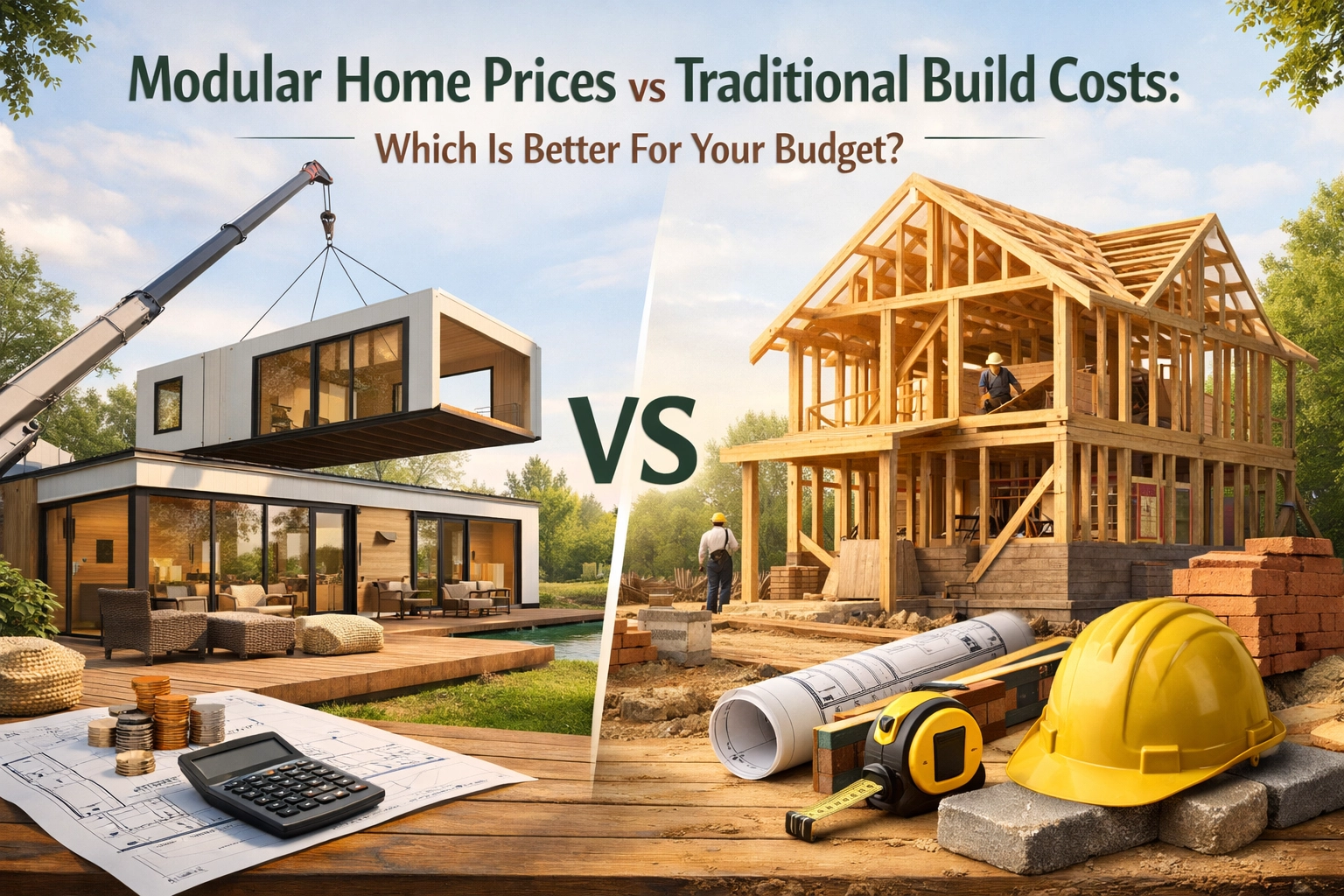
If you've been shopping around for quotes on a new home build, you've probably experienced the sinking feeling that comes with the words "cost-plus contract" and "provisional sums." Traditional construction quotes read like wishful thinking: filled with asterisks, exclusions, and clauses that basically translate to "we'll tell you the real price once we're halfway through."
Modular changes that game entirely.
The question isn't just whether modular homes are cheaper. It's whether you want to know what you're actually paying before you commit: or whether you're comfortable with a moving target that keeps shifting right up until handover.
Let's break down the real numbers, the hidden costs, and why one approach protects your budget while the other leaves it exposed.
The Headline Numbers: What You're Actually Comparing
Industry data shows modular homes typically cost 10-20% less than equivalent traditional builds. But that percentage alone doesn't tell the full story.
A traditional custom home in Australia averages around $2,500-$3,500 per square metre depending on finishes and location. That same footprint in a quality modular build? You're looking at $2,000-$2,800 per square metre: and that figure is locked in from day one.
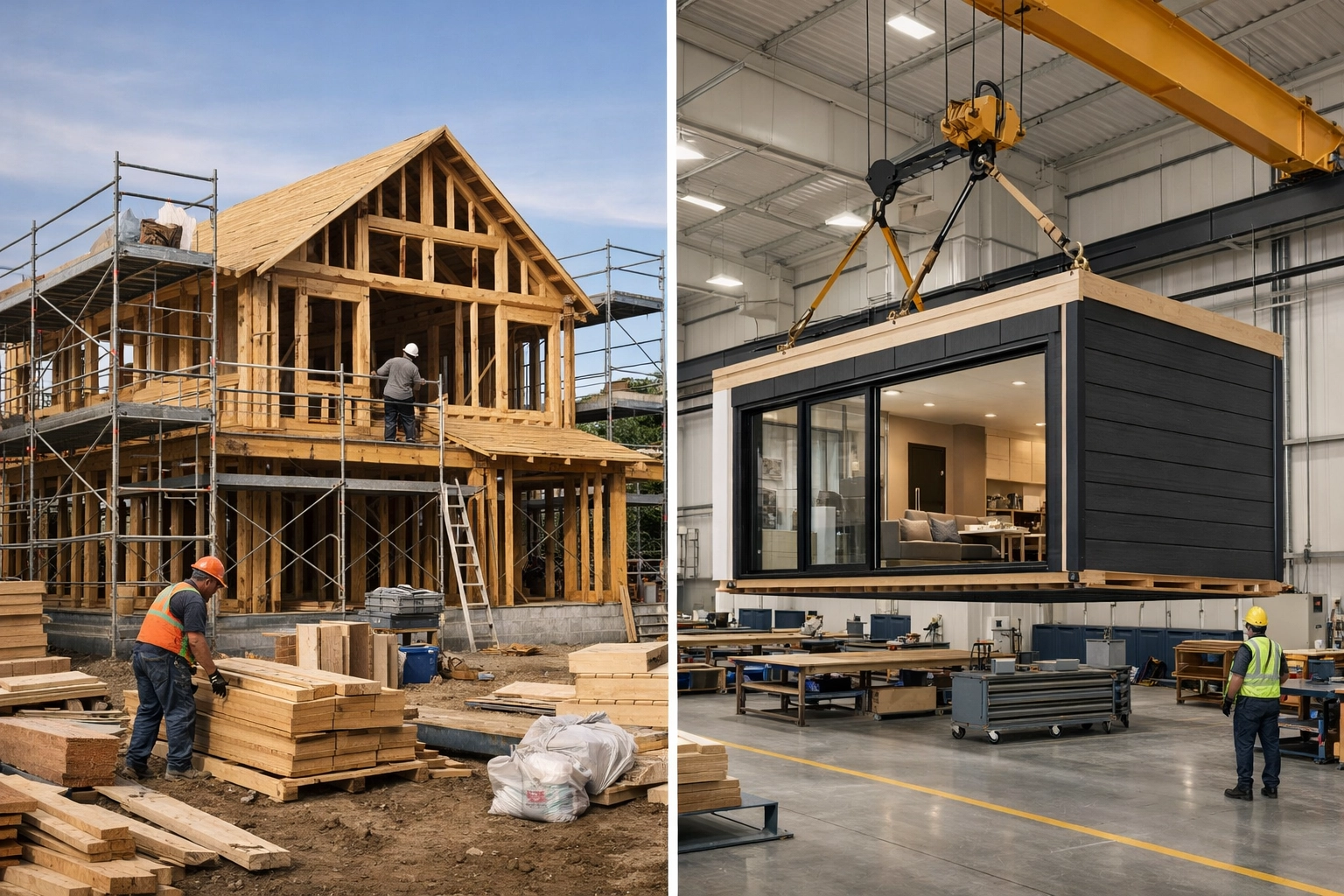
For a 150-square-metre home (roughly 3 bedrooms, 2 bathrooms), here's what the comparison looks like:
- Traditional build: $375,000-$525,000 (and climbing as the project progresses)
- Modular build: $300,000-$420,000 (fixed price, minimal variation)
The difference isn't just about the initial quote. It's about what happens between signing the contract and moving in.
Cost Certainty vs The Cost-Plus Gamble
Traditional builders often operate on a "cost-plus" model. They estimate costs, add a margin, and then pass along any variations as the build progresses. Sounds reasonable until you realise those variations are almost always upward.
Weather delays? You're paying for the extra time. Supplier price increases? That's on you. Discovered an issue during excavation? Add it to the tab. The builder's protected: you're not.
Modular manufacturing flips this entirely. Your home is built in a controlled factory environment with fixed material costs, locked-in labour rates, and predictable timelines. The manufacturer carries the risk of material price fluctuations. They've already built the efficiency into their process, so variations are rare and usually limited to genuine site-specific issues.
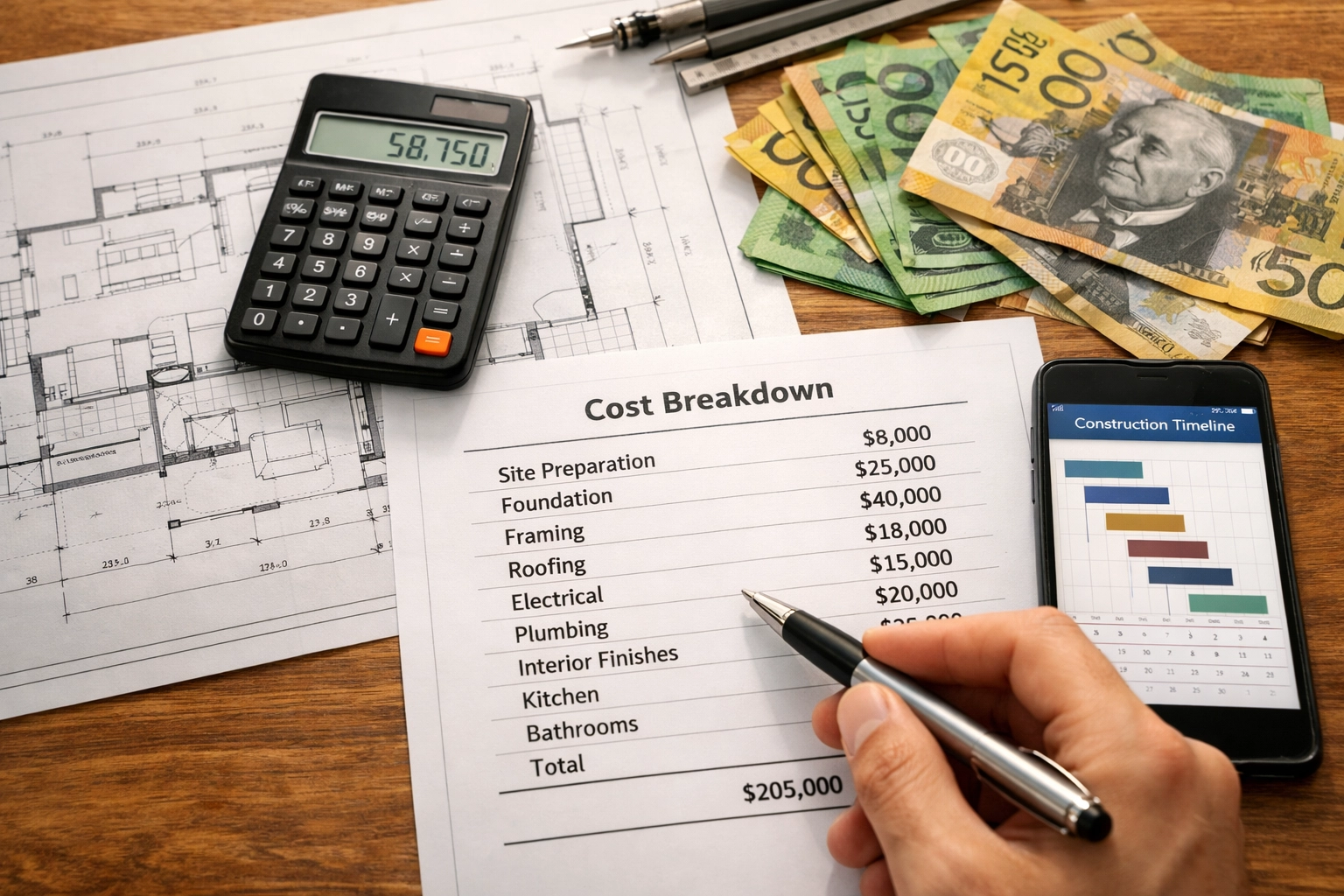
That predictability matters enormously when you're juggling finance approval, selling an existing property, or coordinating a tight move-in deadline. Traditional builds drag on for 12-18 months with costs creeping upward. Modular builds complete in 4-6 months with the price you were quoted at signing.
Where Modular Actually Saves Money
The cost advantage in modular construction isn't about cutting corners. It's about eliminating waste and inefficiency.
Labour costs are lower because factory workers aren't billing by the hour on-site. They're salaried, trained specialists working on an assembly line that produces the same quality day after day. No downtime for weather. No waiting around for materials. No extra charges for "unforeseen complications."
Material costs are lower because manufacturers buy in bulk and eliminate job site waste. A traditional build wastes 10-15% of materials on average: offcuts, damaged goods, over-ordering. Factory construction uses materials with precision. What's cut for one home's wall frame is matched perfectly to another's. Nothing gets binned.
Timeline compression saves money in ways most people don't consider. Every month a traditional build drags on is another month of paying rent, another month of construction loan interest, another month of holding costs if you've already purchased land. Modular's faster turnaround cuts those phantom costs dramatically.
The "Cheaper Materials" Myth (Let's Kill This One)
Here's the misconception that won't die: modular homes must use cheaper materials to hit lower price points.
Absolute rubbish.
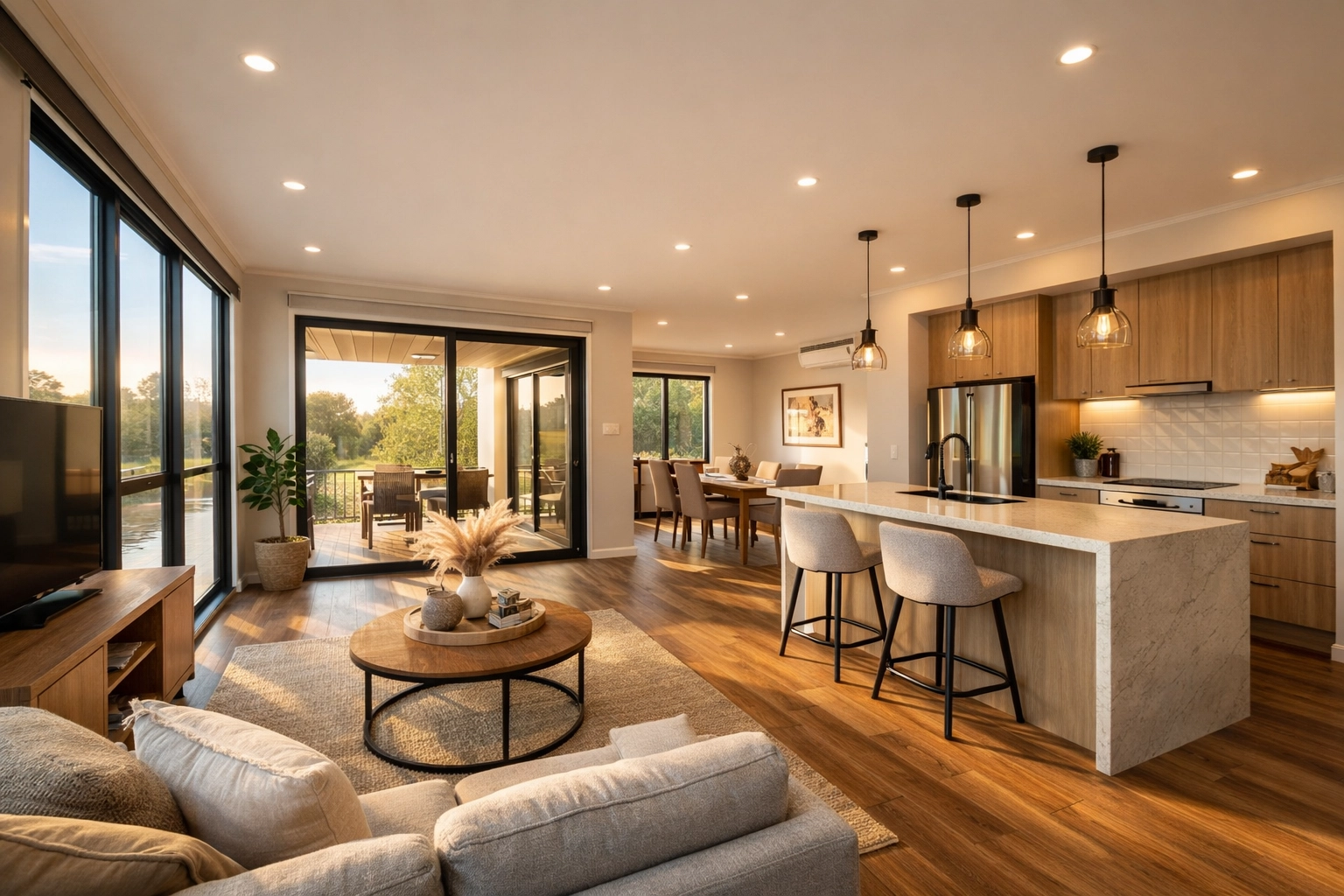
Walk through an EcoHub home and you'll find the same: often better: specifications than project homes:
- Full-height double-glazed windows (2400 mm)
- R4.8 ceiling insulation (R6.0 in some models)
- 2600 mm ceilings as standard
- Premium timber-look laminate flooring
- Stone benchtops
- Quality fixtures and fittings throughout
The difference isn't in what materials are used. It's in how efficiently they're installed. A carpenter framing a wall on-site in the rain is slower and costlier than a factory team assembling that same wall on a jig under lights. The materials are identical. The labour efficiency isn't.
Modular doesn't mean compromise. It means smarter assembly.
Hidden Costs: Where Both Approaches Get Expensive
Whether you choose modular or traditional, certain costs are unavoidable: and both sides have their surprises.
Site costs hit everyone. Preparation, excavation, foundation work, services connections: these expenses are largely the same regardless of construction method. Expect $50,000-$100,000+ depending on your block's condition and location. Sloping blocks cost more. Remote locations cost more. Rocky soil costs more.
Traditional builds hide extras. Councils fees, engineer reports, soil tests, building insurance, temporary fencing, site toilets, waste removal, scaffolding: the list of "not included" items in a traditional quote is staggering. Many buyers don't discover these until they're already committed.
Modular builds are more transparent. Reputable manufacturers provide itemised quotes showing what's included in the factory build and what's handled separately. There's still a site works budget required, but you know about it upfront. No surprises three months in.
One significant cost consideration: transport. If your site is remote, getting a modular home delivered and craned into position adds cost. For metro and regional sites, this is negligible. For truly remote locations, it can be substantial. Traditional builds don't have transport costs: but they do have extended timelines and higher labour costs in remote areas.
Timeline Impact on Your Budget
The faster build timeline in modular construction creates compounding savings most people underestimate.
Consider a typical scenario: You've bought land and need to build within 12 months to avoid additional tax implications. You're currently renting at $600/week.
Traditional build:
- 12-18 month build time
- 52-78 weeks of rent: $31,200-$46,800
- Construction loan interest over 15 months: ~$15,000-$20,000
- Stress, delays, variations: priceless (and costly)
Modular build:
- 4-6 month build time
- 16-24 weeks of rent: $9,600-$14,400
- Construction loan interest over 6 months: ~$6,000-$8,000
- Fixed timeline, minimal stress
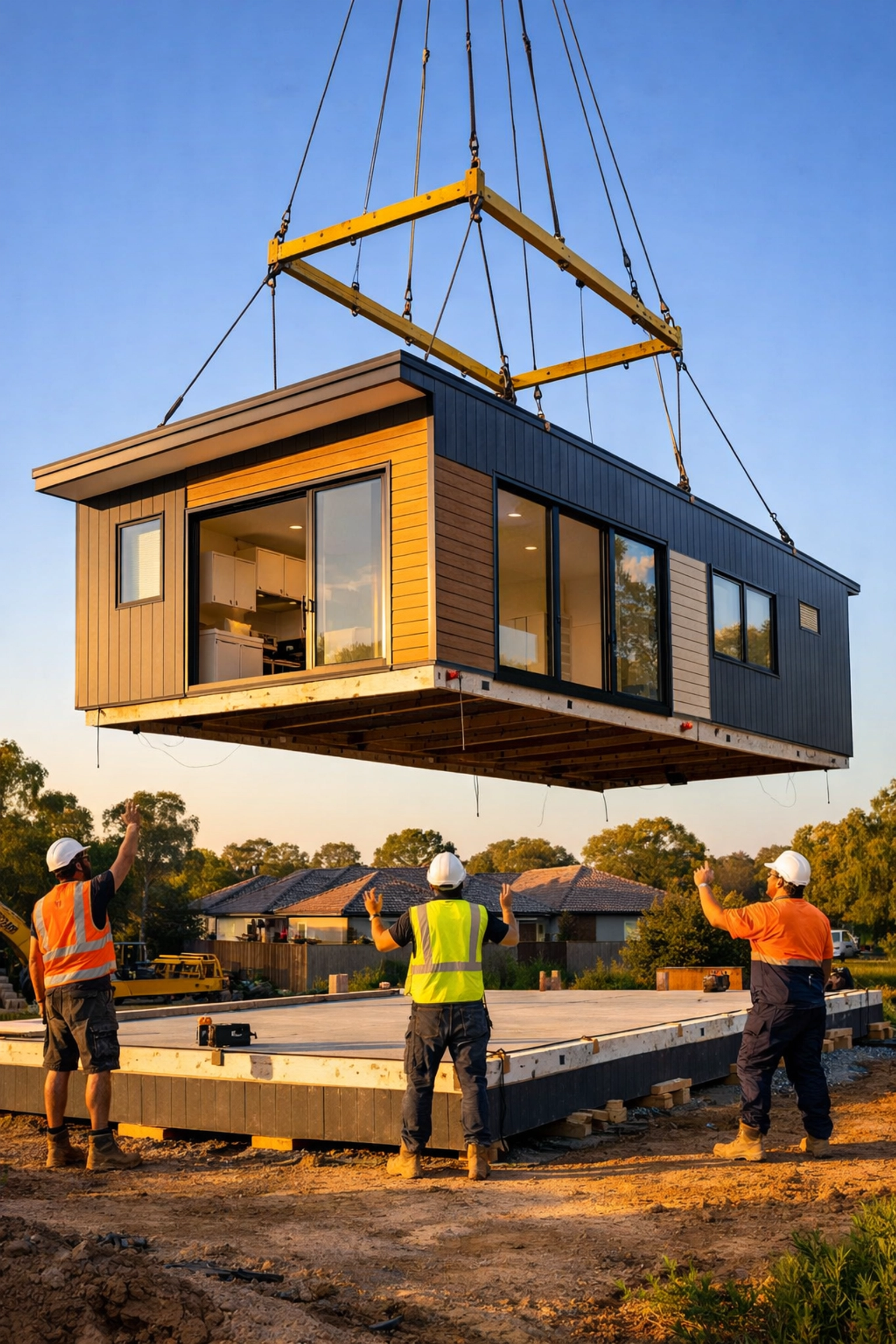
That's a $25,000-$45,000 difference in holding costs alone: enough to fully landscape your property or install a solar system. And we haven't even factored in the mental cost of an 18-month build dragging through summer storms and winter rain.
The Real Question: What's Your Risk Tolerance?
Traditional construction can work beautifully if you've got a complex site, unlimited time, and a buffer in your budget for the inevitable variations. If you're building a sprawling custom design on acreage and cost isn't your primary concern, a traditional builder gives you ultimate flexibility.
But for most Australian families and investors, that's not the reality. You need to know your number. You need it to stay your number. And you need to move in before your rental lease expires or your settlement date hits.
That's where modular wins decisively.
Get The Full Picture on Your Build
Every site is different. Every budget has its own constraints. Whether modular or traditional makes sense for your specific project depends on your land, your timeline, and your priorities.
What shouldn't be up for debate is having complete transparency on costs before you commit.
Get our comprehensive pricing guide that breaks down exactly what's included in an EcoHub build, what site costs to budget for, and how our fixed-price approach protects you from the variation creep that plagues traditional construction. No obligations. Just honest numbers so you can make the right call for your situation.
Because the best budget is the one you can actually stick to.