Let’s be honest: the Australian property market in 2026 doesn't look anything like it did five years ago. If you’re still thinking about building a home the "traditional" way: bricks, mortar, and eighteen months of weather delays: you’re already behind the curve.
We’ve reached a tipping point. As of this year, over 65% of new homes in Australia are integrating advanced modular systems. Why? Because the old way of building is broken. It’s too slow, too expensive, and frankly, too unpredictable for the modern investor or homeowner.
At EcoHub Homes, we’ve seen the shift firsthand. People aren't just looking for a roof over their heads anymore; they're looking for a strategic advantage. They want to know how to beat the housing shortage, how to dodge the skyrocketing costs of onsite labour, and how to get a 10-star energy-rated home without waiting two years to move in.
This is your ultimate guide to the Australian modular strategy in 2026. Whether you're a property owner looking to add value to your backyard or an investor eyeing off a major subdivision, here is how you build faster and smarter.
Why 2026 is the Year of the Modular Revolution
The Australian modular construction market has exploded, recently hitting a valuation of over $11.8 billion. This isn’t a niche trend anymore: it’s the backbone of our national housing strategy. The reason is simple: efficiency.
In 2026, the construction industry is facing a perfect storm of labour shortages and material price volatility. Traditional builders are struggling to provide fixed-price contracts because they don't know what timber or steel will cost in six months. Modular construction solves this. By building in a controlled factory environment, we eliminate the variables.
The Speed Advantage: 12 Weeks vs. 12 Months
The biggest "pain point" we hear from our clients at EcoHub Homes is the timeline. In the traditional world, a three-bedroom home takes 12 to 18 months to finish: if you're lucky. In the modular world, we’re talking about a 12-to-16-week production cycle.
While your site is being prepared (levelling, plumbing, and foundations), your home is being precision-engineered in our facility. By the time the slab is ready, the house is finished. It’s parallel processing for real estate. For an investor, this means your "holding costs": the interest you're paying on a loan while the house is a hole in the ground: are slashed by 70%.
The "Smarter" Build: Precision and Sustainability
Building "smarter" in 2026 means building for the climate. We’ve all seen the shifts in Australian weather patterns. A smart home today isn't just one with a fancy doorbell; it’s one that maintains a comfortable temperature with zero effort.
This is where SIPs (Structural Insulated Panels) and advanced modular framing come into play. Modular homes are inherently more airtight than traditional builds. At EcoHub, our 10-star three-bedroom home is designed to be a thermal fortress.
Energy Efficiency as a Standard, Not an Upgrade
In 2026, energy prices are a major concern for every household. Building a modular home allows for:
- Factory-fitted double glazing: No gaps, no leaks, and perfect insulation.
- Solar-ready designs: Our roofs are engineered to maximize solar gain from day one.
- Waste reduction: Traditional sites waste up to 30% of materials. In our factory, waste is under 5%.
When you choose a modular strategy, you aren't just saving money on the build; you’re saving money on the life of the home.
Strategy for Investors: Unlocking Passive Income
If you’re an investor, the modular strategy is your secret weapon for 2026. The demand for high-quality rental stock has never been higher, and the fastest way to meet that demand is through secondary dwellings or "plug-and-play" investment properties.
The Subdivision Play
Land is the most expensive part of the equation. If you own a large lot, a subdivision is the smartest move you can make. By using a modular approach, you can place a two-bedroom home or a three-bedroom residence on the back of a lot in a fraction of the time it would take a traditional crew to disrupt your existing tenants.
Fixed Costs, No Surprises
The "modular homes cost" is often the first thing people ask about. The beauty of the modular strategy is the transparency. Unlike traditional builds where "variations" can add 20% to your final bill, our pricing is locked in. You can check out our modular homes cost guide to see exactly how the math works in your favour.
"The quality and compliance capability of modular supply has matured significantly. It’s no longer about 'temporary' housing; it's about premium, permanent residences that outperform legacy construction in every metric." : Industry Insight 2026
Design Trends: Customization Without the Chaos
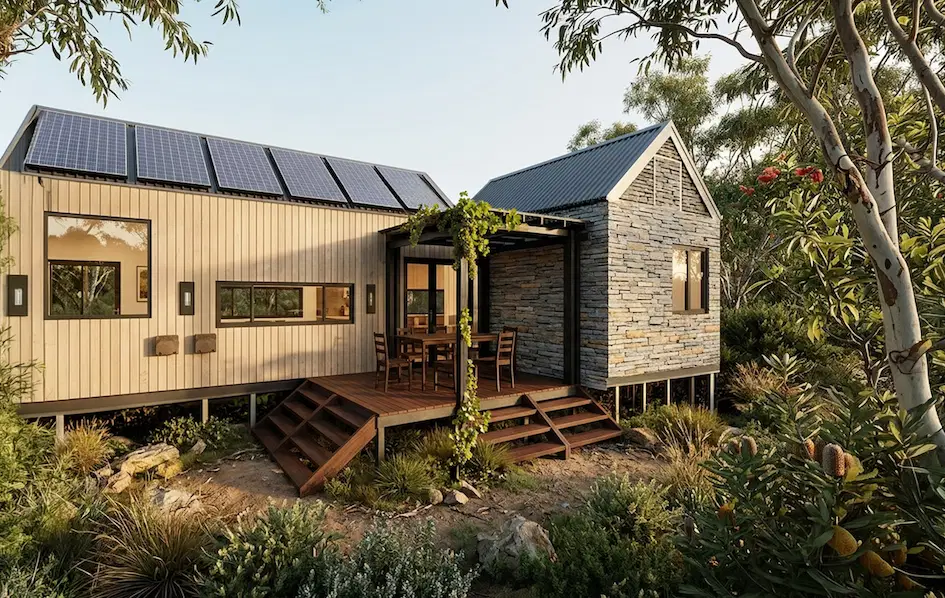
A common myth is that modular homes all look like boxes. In 2026, that couldn't be further from the truth. The trend this year is "Integrated Luxury": blending high-end finishes like timber-look cladding and stone benchtops with the efficiency of a prefab frame.
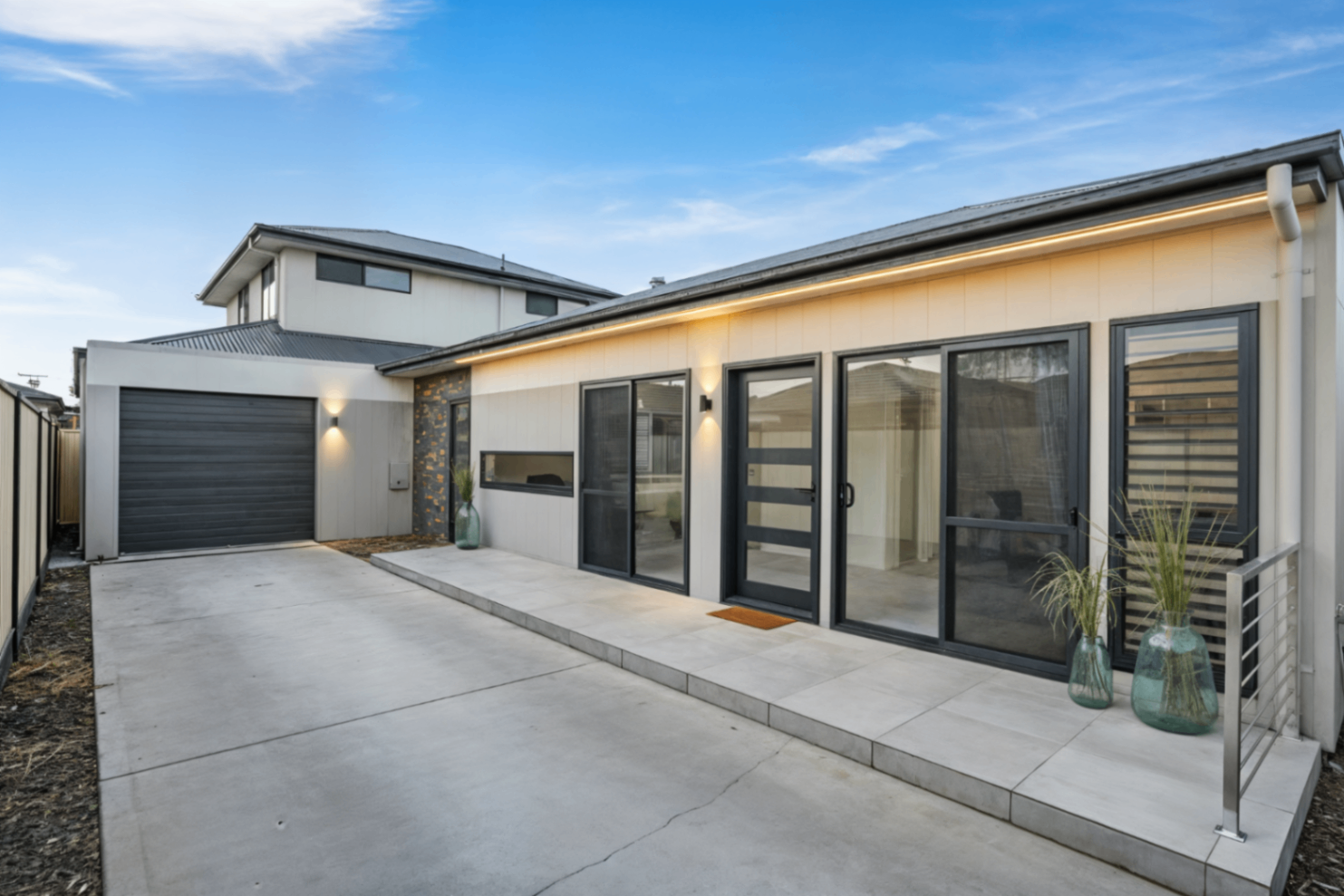
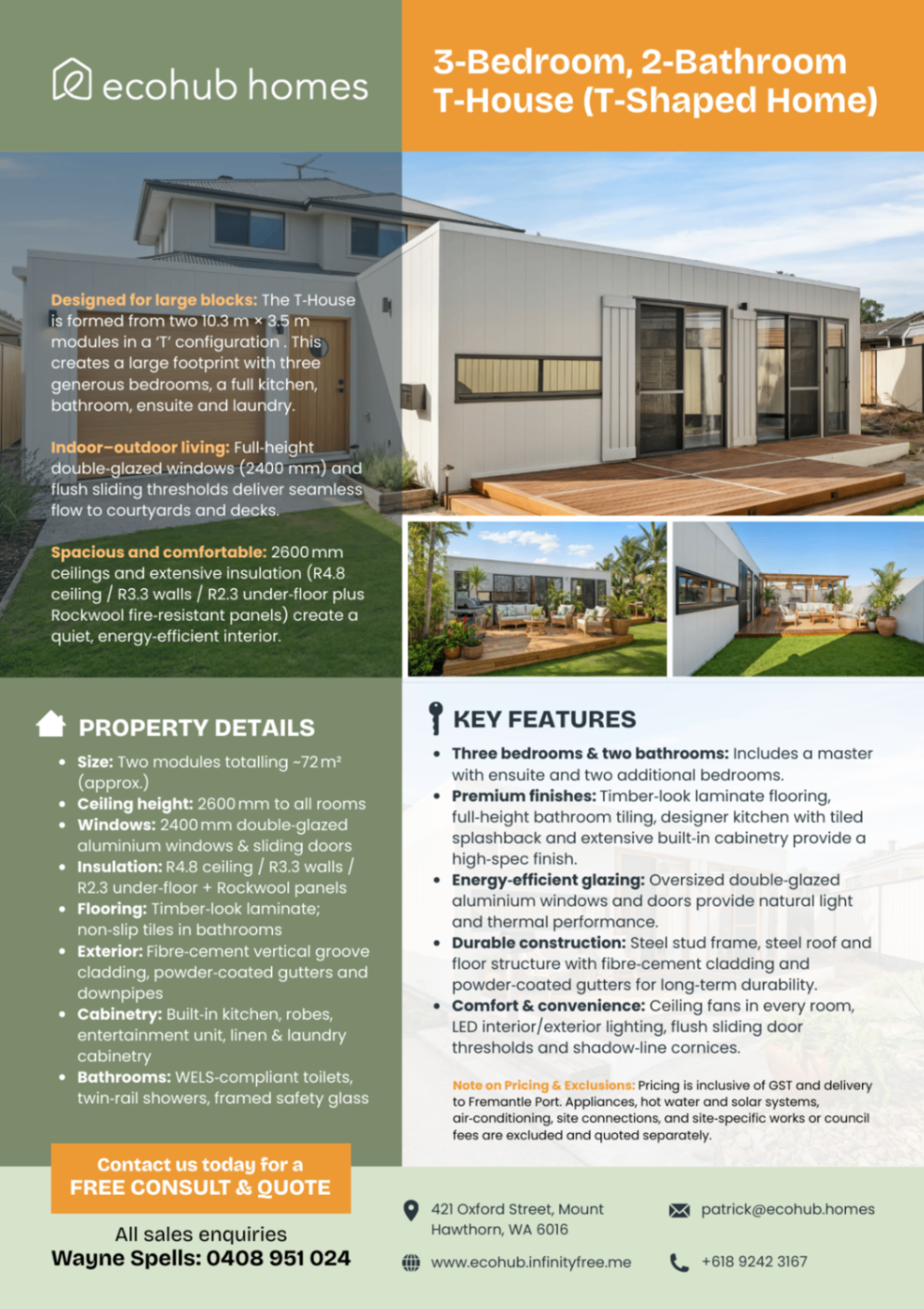
Our 3-bedroom two-bathroom T-House is a perfect example. It features 2600mm high ceilings and full-height double-glazed windows that create an expansive, open-plan feel. It doesn't feel like a modular home; it feels like a custom architecturally designed residence.
Smart Storage and Floor Plans
We’ve learned that Australians in 2026 value smart storage over raw square footage. Our designs focus on:
- Built-in cabinetry: Maximizing every inch of the floor plan.
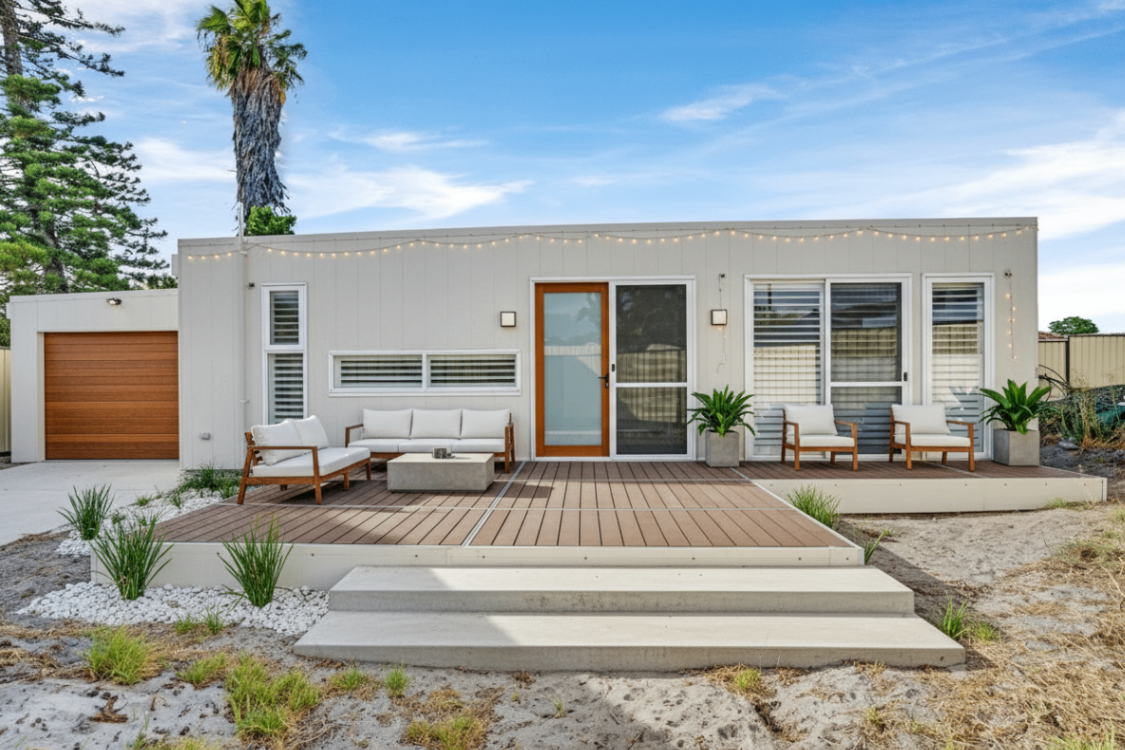
- Indoor-outdoor flow: Essential for the Australian lifestyle, with decks that transition seamlessly from the living area.
- Flexible spaces: Rooms that can pivot from a home office to a guest bedroom as your needs change.
Navigating the Process: From Land to Living Room
Building a modular home is a different journey than a traditional build. It requires a bit more upfront planning, but the payoff is a stress-free experience once the "Go" button is pressed.
- Consultation: We start by looking at your land. Is it a tight urban lot or a sprawling rural block? Check out our land-owner services for a deep dive into site feasibility.
- Design Selection: Choose from a one-bedroom retreat to a full family home.
- Council Approvals: This is often the part people dread. In 2026, councils have become much more "modular-friendly" because they recognize the need for rapid housing. We handle the heavy lifting here.
- Factory Build: While we build, you relax.
- Installation: The "magic" moment. Your home is delivered and installed, often in just one or two days.

Is Modular Right for You?
The "Australian Modular Strategy" isn't just about the building: it's about freedom. Freedom from the "builder's margin" inflation, freedom from years of construction noise, and freedom from energy-inefficient living.
If you are:
- A landowner looking to maximize your property's value.
- An investor wanting a turnkey rental solution.
- A developer looking to scale projects quickly.
- Or a homeowner who just wants a beautiful, sustainable place to live…
…then modular is the smartest play you can make in 2026.
The market is moving fast. Every day you wait for a traditional builder to get back to you is a day you could have spent watching your modular home take shape in our facility.
Ready to see how this fits your specific site? The best way to start is with a conversation. No pressure, just a clear look at what’s possible for your land.
Book a Free Consultation with EcoHub Homes
Building in 2026 doesn't have to be a headache. It can be a strategy. Let’s build something better, together.