

You've spent months planning. You've chosen the perfect design, finalised the layout, and watched the factory photos roll in. Now comes the moment that keeps every first-time modular buyer awake at night: watching a $200,000+ investment roll down the highway at 80km/h, strapped to a flatbed truck.
Will it hold? What if something shifts? What happens if the weather turns?
Here's the truth: transporting a modular home is one of the most meticulously planned operations in the entire construction process. The engineering that goes into keeping your home safe during transit rivals the structural design of the home itself. Let's walk through exactly how we get your home from factory to foundation: without a single scratch.
Built to move before it's built to stay
The difference between a modular home and a site-built structure starts in the factory. Every EcoHub home is engineered with transport in mind from the first wall frame. We're not retrofitting bracing or hoping the structure holds: the entire design accounts for the dynamic forces of highway travel.
Steel chassis run the full length of each module, creating a rigid framework that distributes weight evenly across the truck bed. Internal bracing reinforces walls, roof trusses, and floor joists beyond standard residential requirements. The structure needs to withstand not just vertical loads (like a traditional home), but horizontal forces: acceleration, braking, cornering, and the continuous vibration of 300+ kilometres of asphalt.
This over-engineering doesn't compromise the design. It makes it stronger. When your home arrives on-site, it's already proven it can handle stresses far beyond what it'll face over decades of normal use.
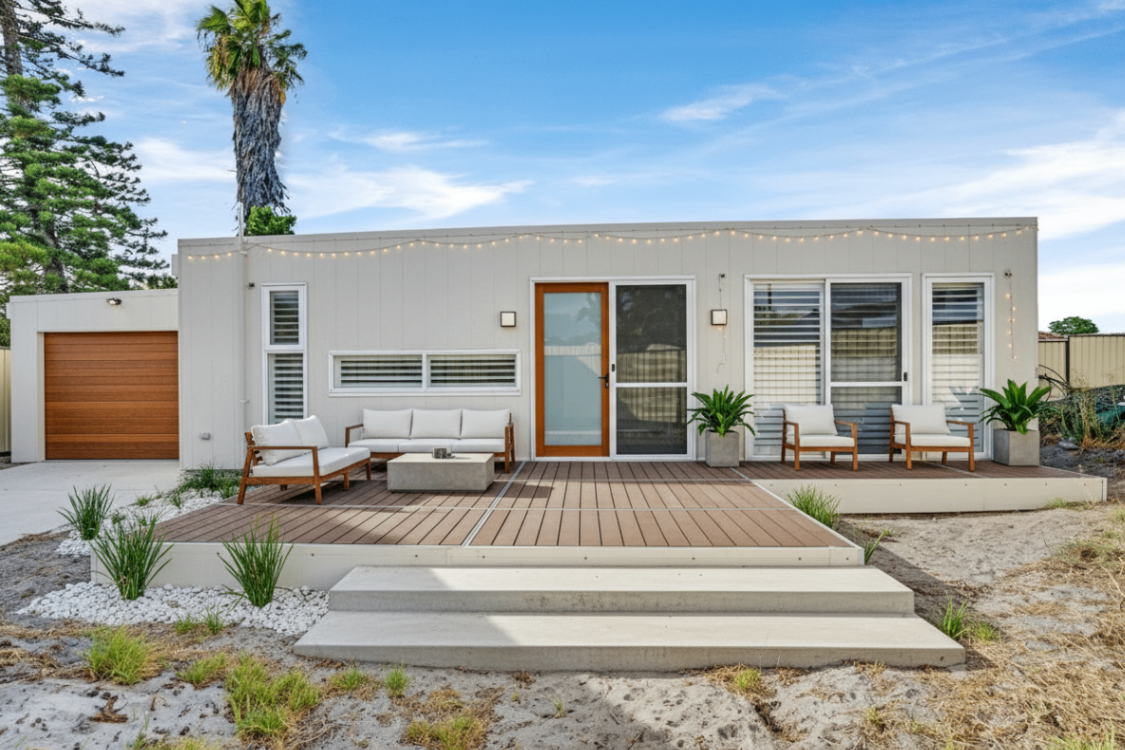
The science of staying put
Once the module is loaded onto the transport trailer, the real precision work begins. Industrial-grade tie-down straps: rated to withstand forces measured in tonnes, not kilograms: secure the structure at reinforced connection points built into the steel chassis. These aren't random anchor locations. They're calculated load points engineered specifically for transport.
Chains and straps cross the module at angles designed to prevent lateral movement. Balance is critical. The load must sit perfectly level on the trailer to avoid uneven stress on the frame during transit. Experienced transport crews spend hours checking measurements, adjusting positioning, and confirming every tie-down is tensioned correctly.
The result? Your home isn't riding on hope. It's locked into a precision-engineered restraint system that's been refined over thousands of successful deliveries across Australia.
Escorted through every kilometre
This isn't a solo journey. When your modular home hits the road, it travels with a full support convoy. Pilot vehicles: front and rear: clear the route ahead, manage traffic, and communicate constantly with the truck driver via radio. These aren't casual observers. They're trained escorts who understand the physics of oversized loads and the split-second decisions required to navigate Australian roads safely.
The route itself is pre-planned weeks in advance. Every bridge clearance is verified. Lane widths are measured. Tight corners are mapped. If there's a low-hanging power line, a narrow underpass, or a weight-restricted bridge, the route is adjusted long before the truck rolls out of the factory.
Travel restrictions apply. Most states prohibit oversized loads during peak traffic hours. Night moves require additional lighting and permits. Weekends often have tighter rules. The entire schedule is built around safety windows that give the convoy maximum visibility and minimum traffic conflict.
Weather monitoring is constant. High winds delay departure. Heavy rain triggers alternative routes. If conditions deteriorate mid-journey, the convoy pulls over and waits. Your home doesn't move unless conditions are safe: full stop.
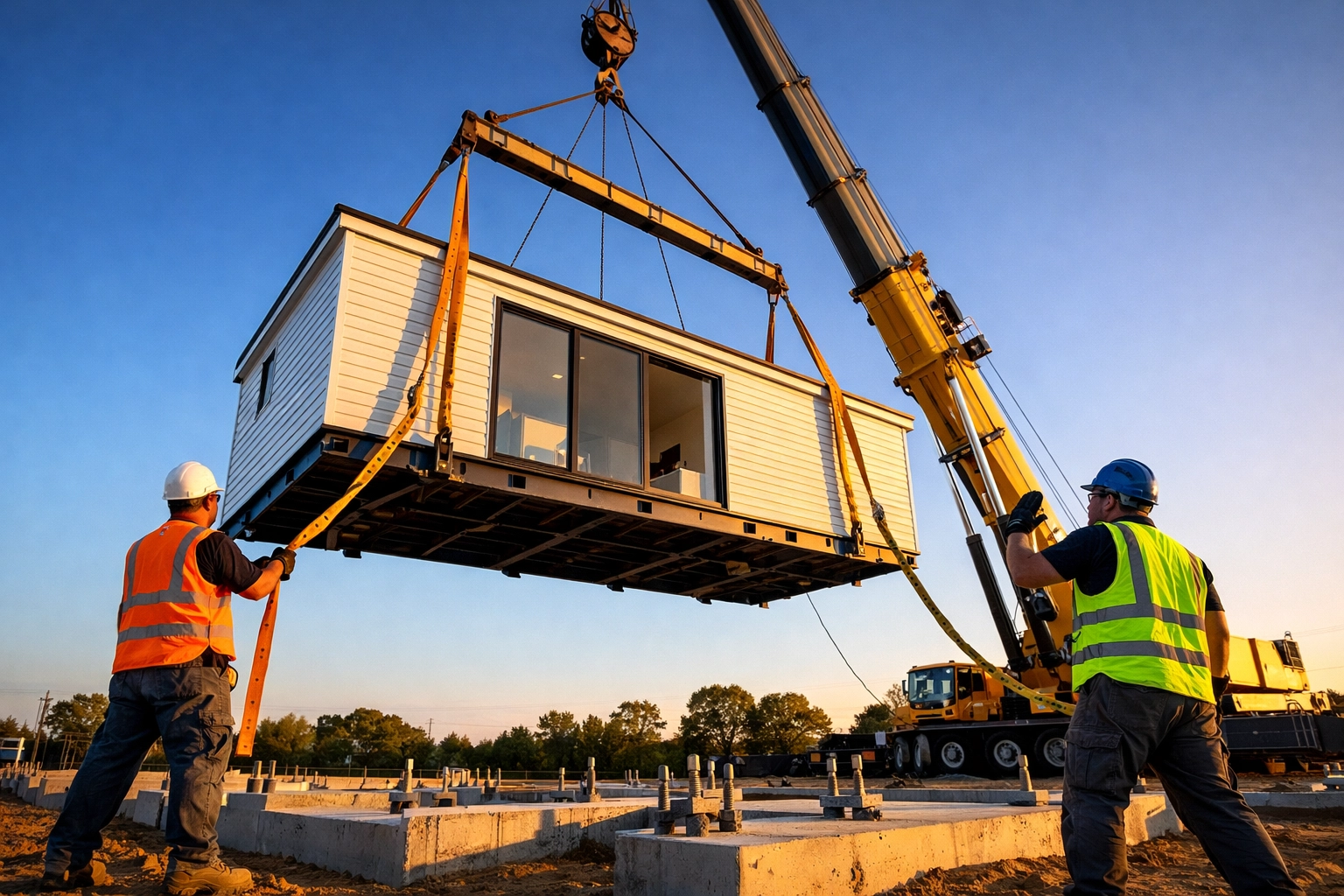
The 20-minute window that defines success
After hours on the road, the final test arrives: crane placement. This is where precision becomes non-negotiable. A mobile crane: often 50+ tonnes of lifting capacity: positions itself on your prepared site. The module is unhooked from the transport trailer, rigged with lifting straps at calculated balance points, and raised into position above the foundation.
The tolerances are tight. We're aligning bolt holes, plumbing connections, and structural tie-downs that must match within millimetres. The crane operator, riggers, and site supervisor work in coordinated silence, guided by hand signals and decades of combined experience. There's no rushing. No guessing. Just methodical, deliberate movement until the module settles perfectly onto its permanent footing.
Weather plays a role here too. Wind speeds above 30km/h ground the operation. Rain doesn't just make the site slippery: it affects crane stability and load control. If conditions aren't perfect, we reschedule. The crane costs are significant, but the cost of a misaligned module is catastrophic.
Once it's down, structural connections lock the module to the foundation and to adjacent modules (if you've ordered a multi-module home). What was a mobile structure seconds ago is now a permanent building, engineered to withstand cyclones, bushfires, and decades of Australian weather.
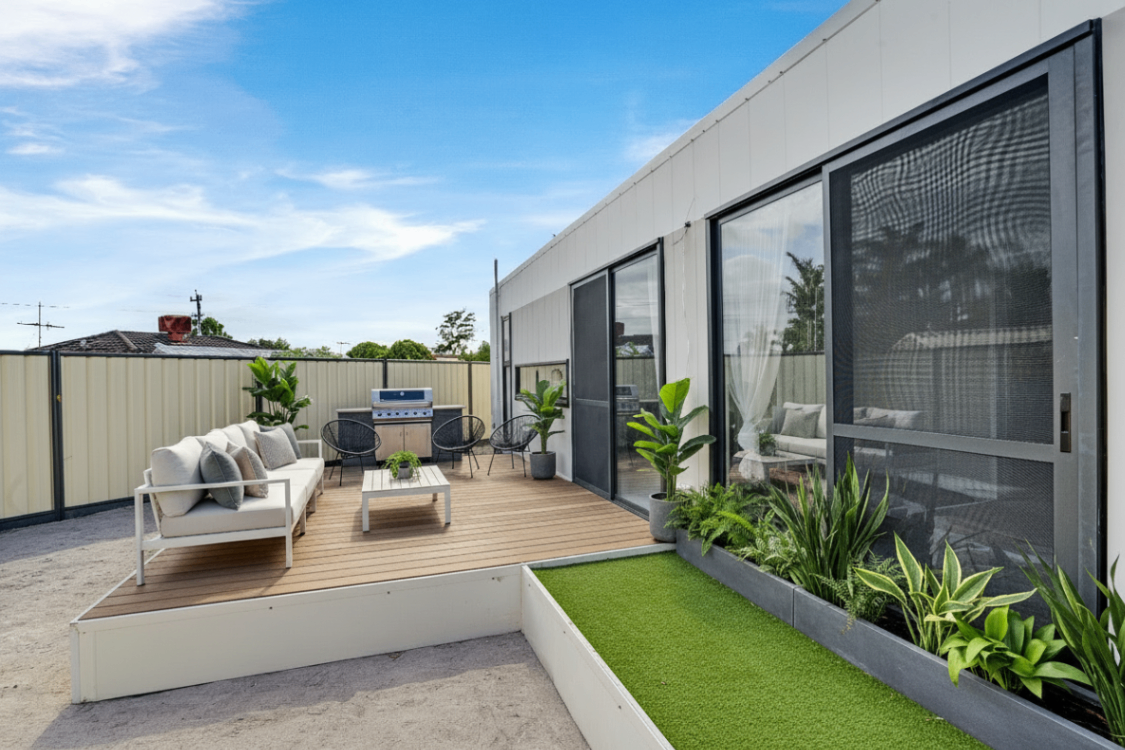
Speed without shortcuts
Here's the advantage traditional builders can't match: while you're watching the crane work, your home is already finished. The walls are painted. The kitchen is installed. Electrical and plumbing rough-ins are complete. Windows are sealed. Insulation is in place.
A site-built home in the same stage of construction would still be weeks away from weatherproof. You'd be looking at exposed framing, temporary covers, and the constant risk of weather delays damaging unfinished work. With modular, the moment your home is craned onto the foundation, you're 80% done.
The remaining work is connection and finishing: hooking up services, completing internal joins between modules, and final cosmetic touches. No weather delays. No waiting for trades. No compounding timeline blowouts because the plumber can't start until the electrician finishes.
Clients routinely move in 6–8 weeks after the crane lifts off. That's not a sales pitch. That's the documented average across hundreds of EcoHub deliveries. The transport process doesn't slow you down: it's the reason modular is faster.
Covered by a decade of certainty
Every EcoHub home includes a 10-year structural warranty that covers the entire building: including transport-related stress. If a frame shifts during the journey, if a connection loosens, if any structural element shows signs of transport damage, it's covered. Not just for the first year. For ten.
That warranty isn't an afterthought. It's a reflection of the engineering confidence we have in the transport process. We wouldn't offer decade-long protection if we had any doubt about the structural integrity post-delivery. The system works. The numbers prove it. And we back it legally.

The myth versus the reality
Will your modular home fall off the truck? No. Not with proper engineering, professional transport crews, and the safety protocols we've refined over thousands of deliveries. The risk isn't falling: it's misunderstanding how much precision goes into making it look effortless.
The real danger in construction isn't the spectacular failure. It's the hidden compromises: shortcuts on insulation, rushed framing, trades working in the rain because the schedule is blown. Modular eliminates those risks entirely. Your home is built in a controlled environment, transported by professionals, and installed with surgical precision.
The journey from factory to foundation isn't the scary part. It's the moment you realise traditional construction has been doing it wrong for a century.
Ready to see the process in action?
We document every delivery. If you'd like to understand exactly how your home would be transported to your specific site: including route planning, crane requirements, and timeline: DM us with your address. We'll walk through the logistics, show you comparable deliveries, and answer every transport question you didn't know you had.
Your home's journey matters. Let's make sure you're confident every kilometre of the way.