

You've done the research. You know modular homes are faster, more efficient, and frankly, smarter than traditional builds. You've probably spent hours comparing layouts, calculating costs, and imagining where your new home will sit on your block.
Then reality hits, council approvals, building permits, bushfire assessments, soil tests. Suddenly, "fast and efficient" starts feeling like a bureaucratic nightmare.
Here's the truth: most delays and headaches with modular homes aren't caused by the building process itself. They're caused by approval mistakes that could've been avoided with the right information upfront.
Let's fix that.
Mistake #1: Underestimating Council Approval Timelines
You think six weeks sounds reasonable for council approval. You'd be wrong.
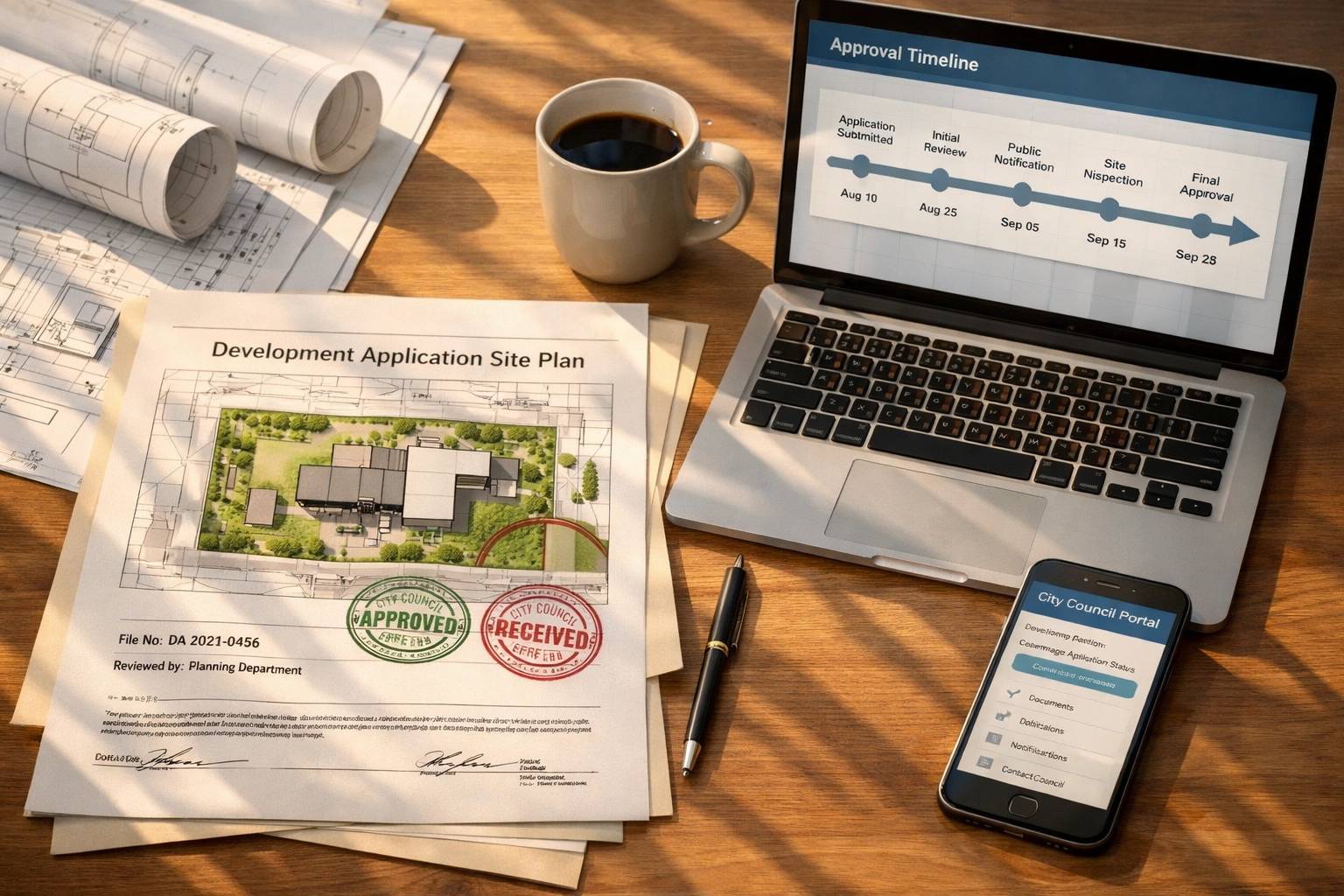
Australian councils operate on their own timelines, and "standard processing" can mean anything from 4 weeks to 6 months depending on your location, the complexity of your site, and how familiar your local authority is with modular construction. Regional councils in WA, NSW, and Queensland often take longer simply because they're managing fewer applications with smaller teams.
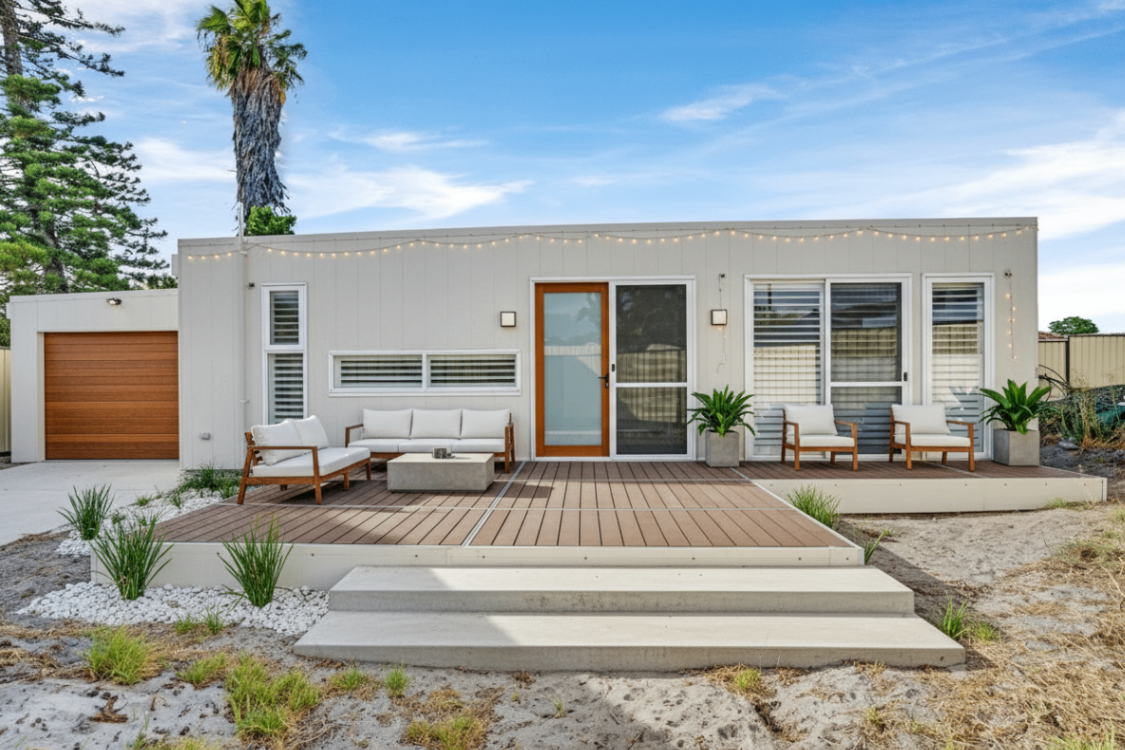
The fix: Start the approval process before you finalize your modular home purchase. Get your documentation submitted early, site plans, engineering reports, and preliminary designs. This overlap saves you months on the backend. At EcoHub, we advise clients to initiate council conversations during the design phase, not after they've signed contracts and started getting impatient.
Factor in 3–4 months minimum for approvals in metro areas, longer for regional sites. Plan your timeline backwards from your ideal move-in date, not forwards from your deposit.
Mistake #2: Thinking "Modular" Means "Skip the Red Tape"
This is the myth that catches almost everyone.
Modular homes are built faster, yes. They're constructed in controlled factory environments with precision engineering. But that doesn't exempt them from the same building approvals, permits, and compliance requirements as stick-built homes. Your local council doesn't care if your home was assembled in 12 weeks or 12 months: they care that it meets the National Construction Code (NCC), local planning schemes, and Australian building standards.
The fix: Treat your modular home approval process exactly like a traditional build. That means:
- Development approval (DA) from your local council
- Building permit under the relevant state regulations
- Final inspections and occupancy certificates
- Compliance with NCC 2022 standards (especially energy efficiency provisions)
The speed advantage of modular construction kicks in after approvals are secured, not before. Don't shortcut the paperwork assuming modular homes get special treatment: they don't.
Mistake #3: Ignoring BAL Ratings and Flood Overlays
Bushfire Attack Level (BAL) ratings and flood overlays aren't optional considerations: they're deal-breakers.
If your site sits in a bushfire-prone zone (and large swaths of Australia do), your home must be designed and constructed to meet specific BAL requirements. That affects everything from window specifications to cladding materials to ember protection. Ignore it during the design phase, and you'll face costly retrofits or outright rejection from council.
Flood overlays work the same way. Build in a flood zone without accounting for minimum floor heights, drainage, or structural reinforcement, and your insurance premiums will skyrocket: if you can get coverage at all.
The fix: Check your site's BAL rating and flood overlay status before you choose your home design. Your local council's planning portal will list these designations, or you can request a property report. Share this information with your modular home provider during the design phase so they can engineer accordingly.
EcoHub designs are adaptable to BAL-40 zones and engineered to accommodate site-specific flood mitigation requirements. But we need to know upfront: not three months into the approval process.
Mistake #4: Skipping the Soil Report
You look at your block. It's flat. It's clear. It looks solid.
None of that tells you what's happening two meters underground: and that's where your foundation lives. Reactive clay soils, sand, rock, poor drainage, underground water movement: all of these affect your foundation design, slab specifications, and structural engineering. Without a geotechnical soil report, you're guessing.
Councils won't approve your build without one anyway, so skipping this step just delays the inevitable.
The fix: Commission a soil test early: ideally before you finalize your home design. A geotechnical engineer will test soil composition, bearing capacity, and reactivity. This report informs your foundation design and ensures your home is engineered for your specific site conditions.
Budget $1,200–$2,500 for a comprehensive soil report depending on your location. It's not optional, and it's not negotiable. Get it done early, and your engineer can design the right slab from day one.
Mistake #5: Going Solo on the Paperwork
You're smart. You're capable. You've renovated before, maybe even owner-built a shed or deck.
That confidence is admirable: but modular home approvals aren't a DIY project. Between development applications, building permits, engineering certifications, energy efficiency compliance, plumbing and electrical sign-offs, and final inspections, you're looking at dozens of documents, each with specific technical requirements. Miss one section, submit the wrong revision, or misinterpret an NCC clause, and you're back at square one with weeks of delays.
The fix: Work with a modular home provider that manages the approval process for you. EcoHub handles the heavy lifting: engineering documentation, council submissions, compliance coordination, and liaison with certifying authorities. We've done this hundreds of times. We know what councils need, how they want it formatted, and how to navigate objections or requests for additional information.
You focus on choosing finishes and planning your move. We'll handle the bureaucracy.
Mistake #6: Not Budgeting for Compliance Costs
You've budgeted for your home. You've budgeted for site prep. You've even budgeted for connection fees.
But have you budgeted for council application fees, building permit costs, certifier fees, soil testing, bushfire assessments, energy efficiency reports, and occupancy certificate charges? These aren't trivial line items: they add up to thousands of dollars depending on your location and site complexity.
The fix: Request a full breakdown of approval-related costs from your modular home provider before you commit. At EcoHub, we provide transparent cost estimates that include council fees, engineering certifications, and third-party assessments so you're not blindsided halfway through the process.
Expect to budget $5,000–$12,000 for approvals and compliance depending on your site and local council requirements. Regional builds often cost more due to additional engineering and transport permits for oversized loads.
Mistake #7: Assuming One Approval Covers Everything
You get your development approval from council. You think you're done.
You're not.
Development approval confirms your home complies with planning regulations: land use, setbacks, height restrictions, and neighbourhood character. But you still need a separate building permit to confirm structural compliance with the NCC, energy efficiency standards, plumbing codes, and electrical regulations. Then you need final inspections and an occupancy certificate before you can legally move in.
The fix: Understand the approval sequence:
- Development Approval (DA) – Confirms planning compliance
- Building Permit – Confirms construction compliance
- Inspections – Staged checks during and after installation
- Occupancy Certificate – Legal authorization to occupy
Each stage has its own timeline, fees, and requirements. EcoHub coordinates this sequence so nothing falls through the cracks, but you need to know what's coming and when.
How EcoHub Handles the Approvals Process
We've engineered every EcoHub home to meet Australian building standards from the ground up: NCC 2022 compliance, energy efficiency ratings, structural certifications, and bushfire resistance where required. Our designs are pre-approved for common site conditions, which accelerates council processing.
But more importantly, we manage the approval workflow for you. That means coordinating with councils, submitting documentation, liaising with certifiers, and keeping your project moving while you focus on the exciting parts: choosing layouts, selecting finishes, and planning your life in a home that's built smarter.
Want to talk approvals for your specific site? Get in touch and let's map out your timeline: realistically, transparently, and without the bureaucratic stress.