

You've asked Google. You've scrolled through websites. And you're still wondering: What does a modular home actually cost in Australia?
Fair question. The housing market loves vague answers: "It depends," "Contact us for a quote," "Starting from…" without telling you what "from" actually means.
Here's the truth: modular home pricing isn't mysterious, but it does involve more than just the module sitting in the factory. Let's break down what you're genuinely paying for, what gets missed in the fine print, and why modular construction saves you money in ways traditional builds never will.
Starting Point: What $99,000+ Actually Gets You
EcoHub Homes' modular offerings start from $99,000. That's not a teaser rate: it's a real, livable home. But let's be specific about what "starting from" means.
At that entry level, you're getting a professionally designed, factory-built module with:
- Premium finishes included as standard: not builder-grade compromises
- Full-height double-glazed windows that actually keep your energy bills manageable
- Energy-efficient wall systems that meet (and often exceed) current NCC standards
- Complete bathroom and kitchen fitouts: fixtures, cabinetry, the works
- High ceilings that don't make your home feel like a shipping container
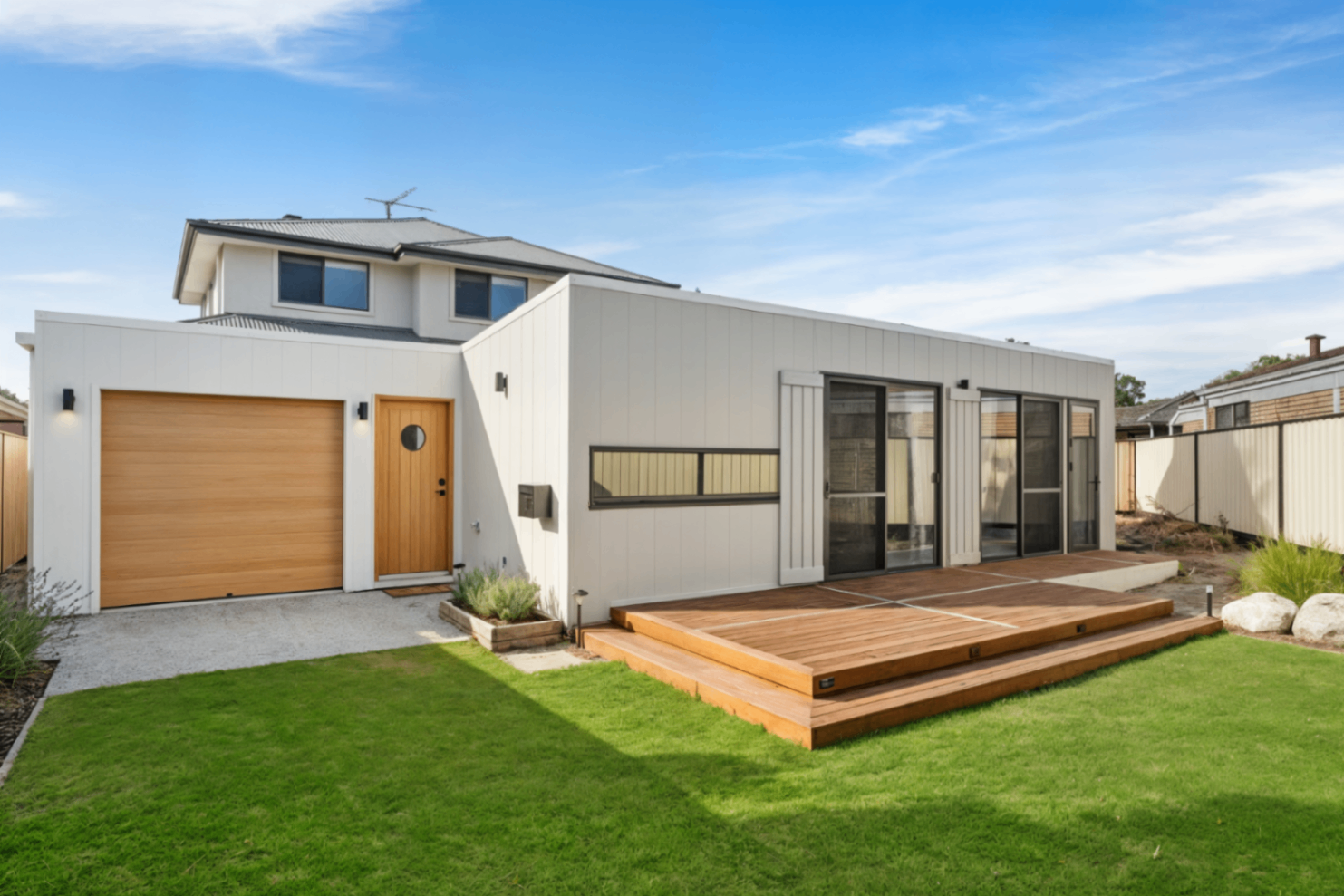
This isn't a shell you finish yourself. It's a turnkey structure that arrives with lighting, flooring, internal walls, and functional spaces. The factory does the heavy lifting, literally and figuratively.
As you scale up to two-bedroom, three-bedroom, or custom configurations, prices move into the $250,000–$700,000+ range depending on size, layout complexity, and finish selections. Premium custom builds can push past $1 million, but those are architecturally distinct homes with bespoke everything.
What's Actually Included (And What People Assume Isn't)
Traditional builders love the word "allowances." It's code for "we'll quote you low, then charge you more when you pick anything beyond beige carpet and white tiles."
Modular manufacturers: good ones, at least: don't play that game. Here's what comes standard in an EcoHub home:
- Engineered structural framing designed for Australian conditions
- Insulated wall panels with thermal performance baked in
- Complete electrical rough-in and final fixtures
- Plumbing systems installed and tested before the module leaves the factory
- Internal linings, paint, and finishes
- External cladding that's weather-resistant and low-maintenance
- Doors, windows, and hardware
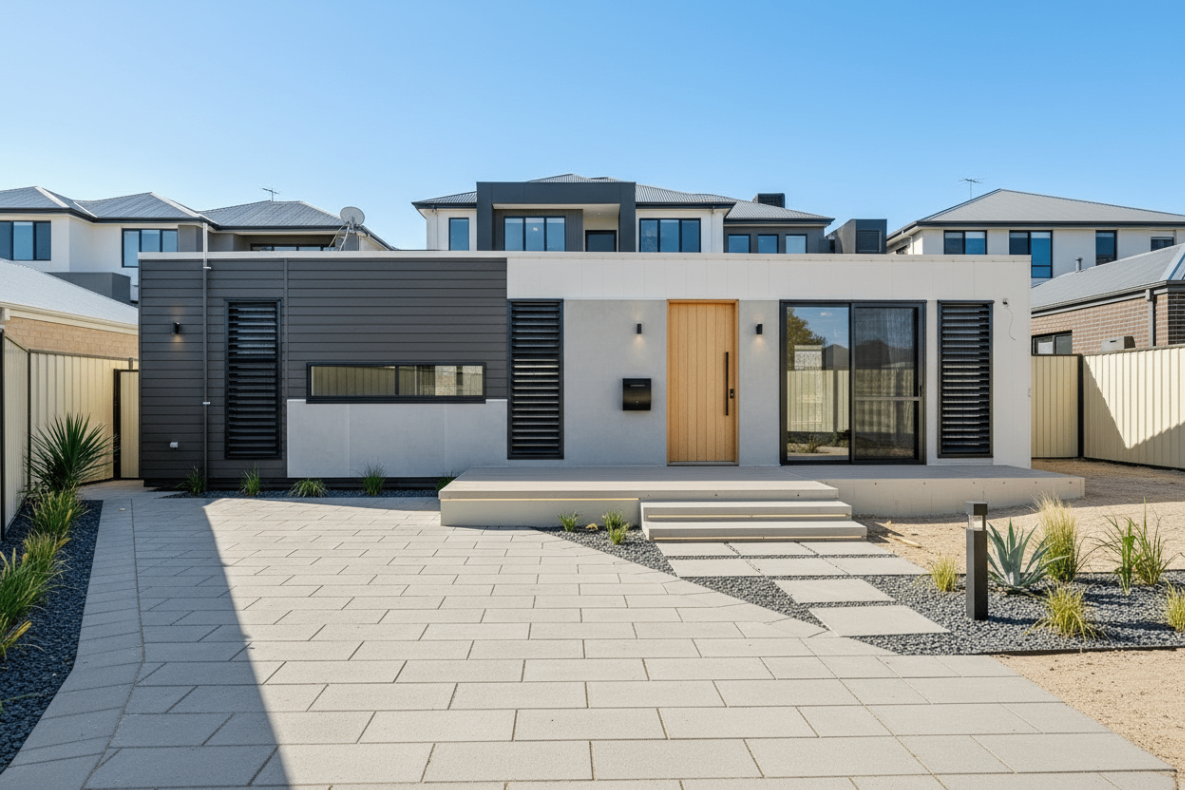
The big difference? These aren't upgrades. They're the baseline. You're not paying extra for double-glazing or decent insulation: they're engineered into the design from day one because modular homes are built to a spec, not a budget allowance.
The Costs Everyone Forgets (Until the Invoice Arrives)
Here's where honesty matters. The module price isn't your total project cost. It never is, and anyone who implies otherwise is setting you up for sticker shock.
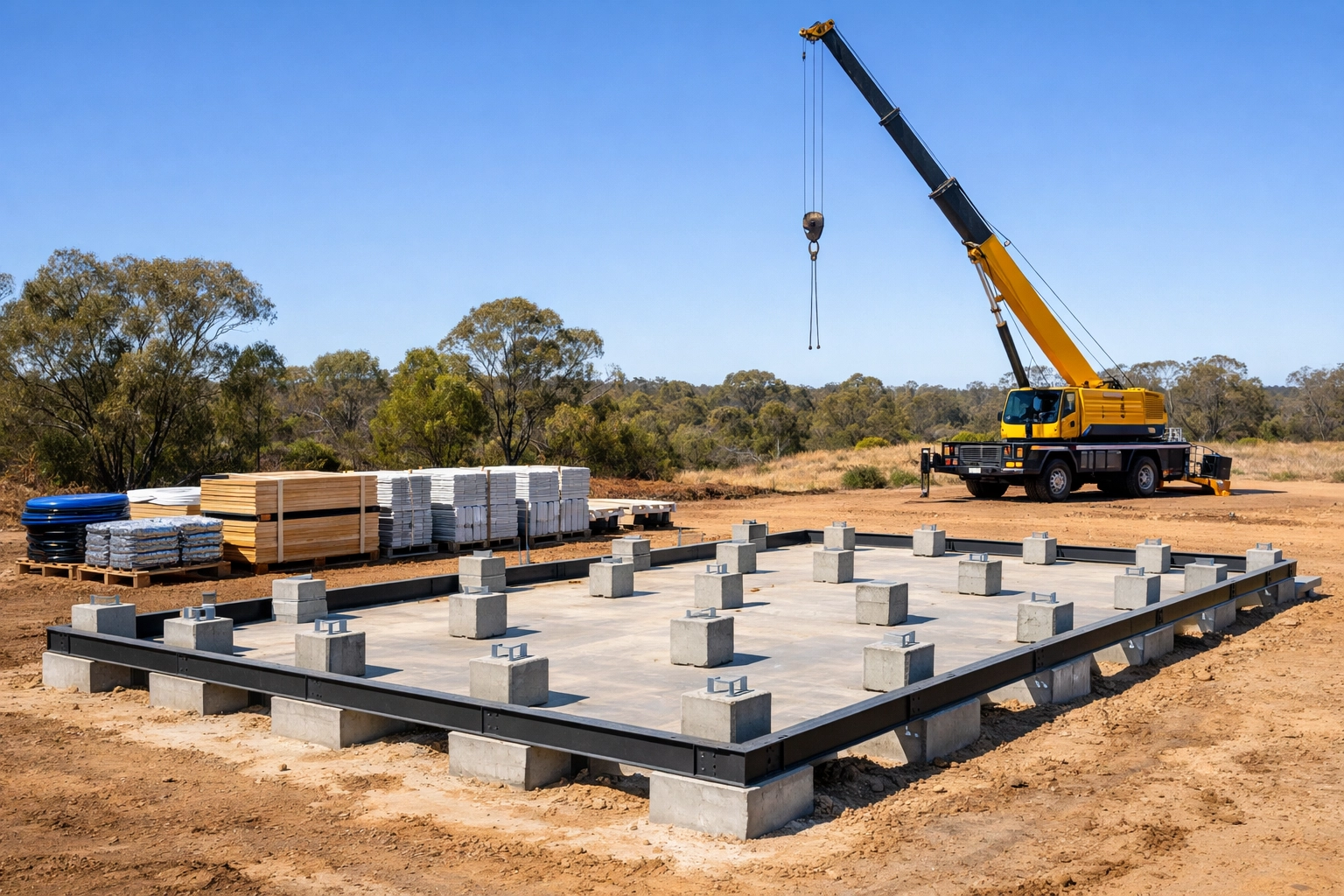
Site preparation is the first reality check. Your block needs to be ready for installation. That means:
- Clearing and leveling (costs vary wildly depending on terrain)
- Foundation or pier system (budget $15,000–$50,000+ depending on site complexity)
- Retaining walls if you're on a slope
- Driveway and access paths
Flat, cleared land? You're golden. Rocky bush block with a 10-degree slope? Your site costs will rival the module price.
Permits and approvals aren't free, either. Development applications, building permits, engineering certifications, and inspections run $5,000–$15,000 depending on your council and project scope. This isn't negotiable: it's the legal cost of building anything in Australia.
Delivery and installation depend on distance from the factory, crane access, and site logistics. Budget $10,000–$30,000 for transport and placement unless you're building next door to the manufacturing facility.
Utility connections: water, sewer, power: add another layer. If you're connecting to town services, expect $10,000–$25,000. Going off-grid with solar, battery, and water systems? That's a different conversation with different numbers.
None of this is hidden. It's just not glamorous enough for marketing brochures.
Why Modular Actually Saves You Money
Strip away the buzzwords, and modular construction delivers three genuine cost advantages traditional builds can't match.
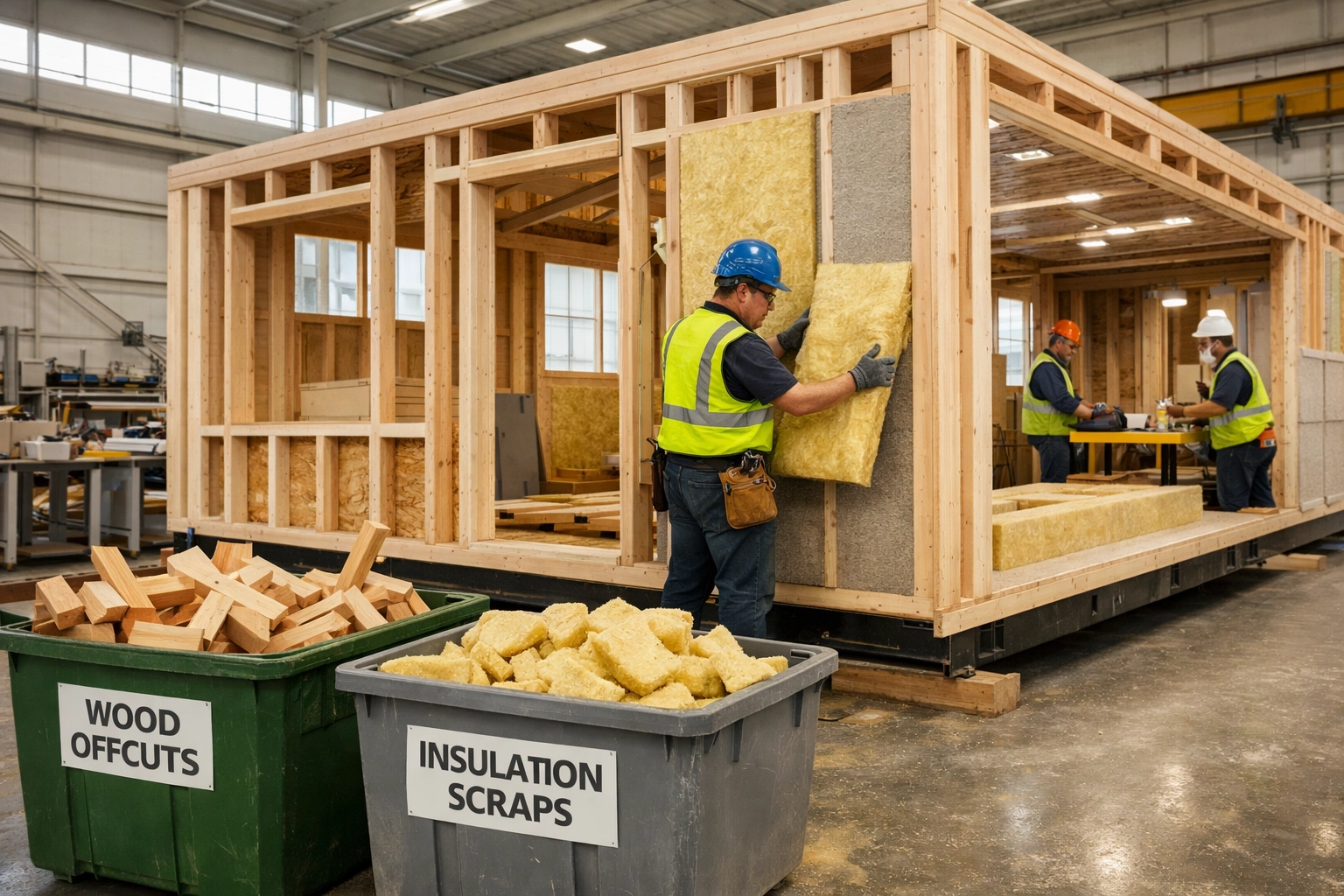
Manufacturing efficiency eliminates waste. Factories order materials in bulk, cut precisely to spec, and recycle offcuts. Traditional job sites throw 10–15% of materials in the skip. That waste is baked into your quote: you're paying for timber and plasterboard that ends up in landfill.
Modular factories? Waste rates under 3%. You're not subsidizing inefficiency.
Shorter build times mean lower holding costs. Traditional builds stretch 12–18 months. That's 12–18 months of land taxes, construction loan interest, and accommodation costs if you've sold your previous home.
Modular homes are manufactured in 8–12 weeks and installed in days. Faster completion means less financial bleed. If you're paying $2,000/month in interest on construction finance, cutting six months off the build saves you $12,000 before you've hung a single picture frame.
Fixed pricing once you sign. Modular contracts lock in costs. No variation claims for weather delays, no surprise charges when materials spike mid-build. The factory quote is your final number (excluding the site costs we've already covered).
Traditional builders reserve the right to adjust for cost fluctuations. You sign at $400,000 and finish at $470,000 because timber went up and your builder invoked the variations clause. That doesn't happen with modular: your contract is your ceiling.
Real-World Example: What $350,000 Delivers
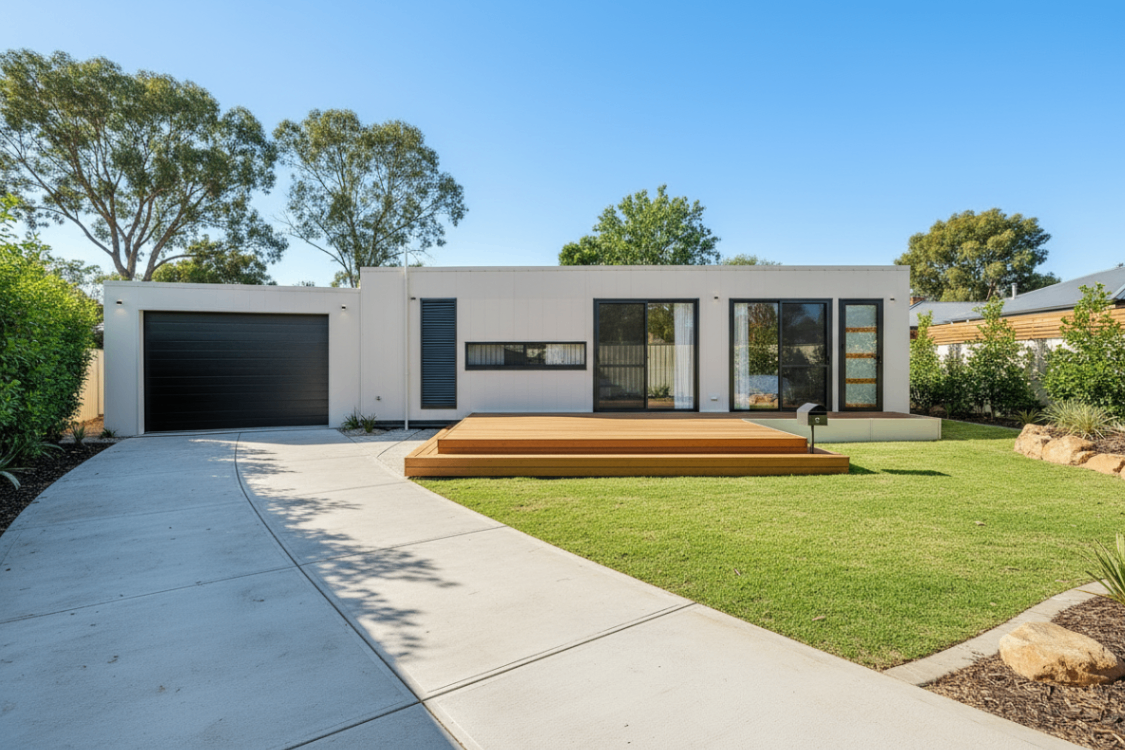
Let's put numbers to a realistic scenario. You're buying a three-bedroom, two-bathroom EcoHub home. Module cost: $350,000.
What that includes:
- 120m² of internal living space
- Premium kitchen with stone benchtops
- Full-height windows throughout
- Energy-efficient HVAC system
- Timber deck and entry (typically included in module design)
- Complete bathroom fitouts
- High ceilings and quality flooring
Additional project costs:
- Site prep and foundation: $25,000
- Delivery and crane installation: $18,000
- Permits and approvals: $8,000
- Utility connections: $15,000
- Driveway and landscaping: $12,000
Total project cost: $428,000.
For comparison, a traditional three-bedroom home in most Australian markets would quote $450,000–$550,000 with a 12-month+ timeline. You're saving money and time: both of which compound when you factor in holding costs.
Fixed Pricing Is Your Leverage
Here's the part traditional builders won't tell you: variations are profit centres. They quote low to win the job, then claw back margin through change orders.
Modular contracts eliminate that game. Once you've approved the design and signed the agreement, your price is locked. No surprise invoices. No mid-build renegotiations. The factory builds to the agreed spec, and you pay the agreed price.
That certainty is worth real money. Financial institutions recognise it: modular projects often secure better lending terms because banks know the final cost before construction starts.
The Bottom Line (Actually)
Modular homes in Australia start from $99,000 for compact, high-quality builds and scale to $700,000+ for premium multi-bedroom configurations. Your total project cost will add site prep, permits, delivery, and utility connections: budget an additional 20–40% on top of the module price depending on site complexity.
What you're buying isn't just a house. It's cost certainty, faster completion, better quality control, and genuine energy efficiency that reduces ongoing costs.
The "No BS" version? Modular isn't always cheaper upfront, but it's almost always cheaper when you account for time, waste, and build quality. And it delivers a finished home in weeks, not years.
Want to see how the numbers work for your specific block and requirements? Get in touch: we'll give you an honest breakdown based on your site, not a sales pitch.