
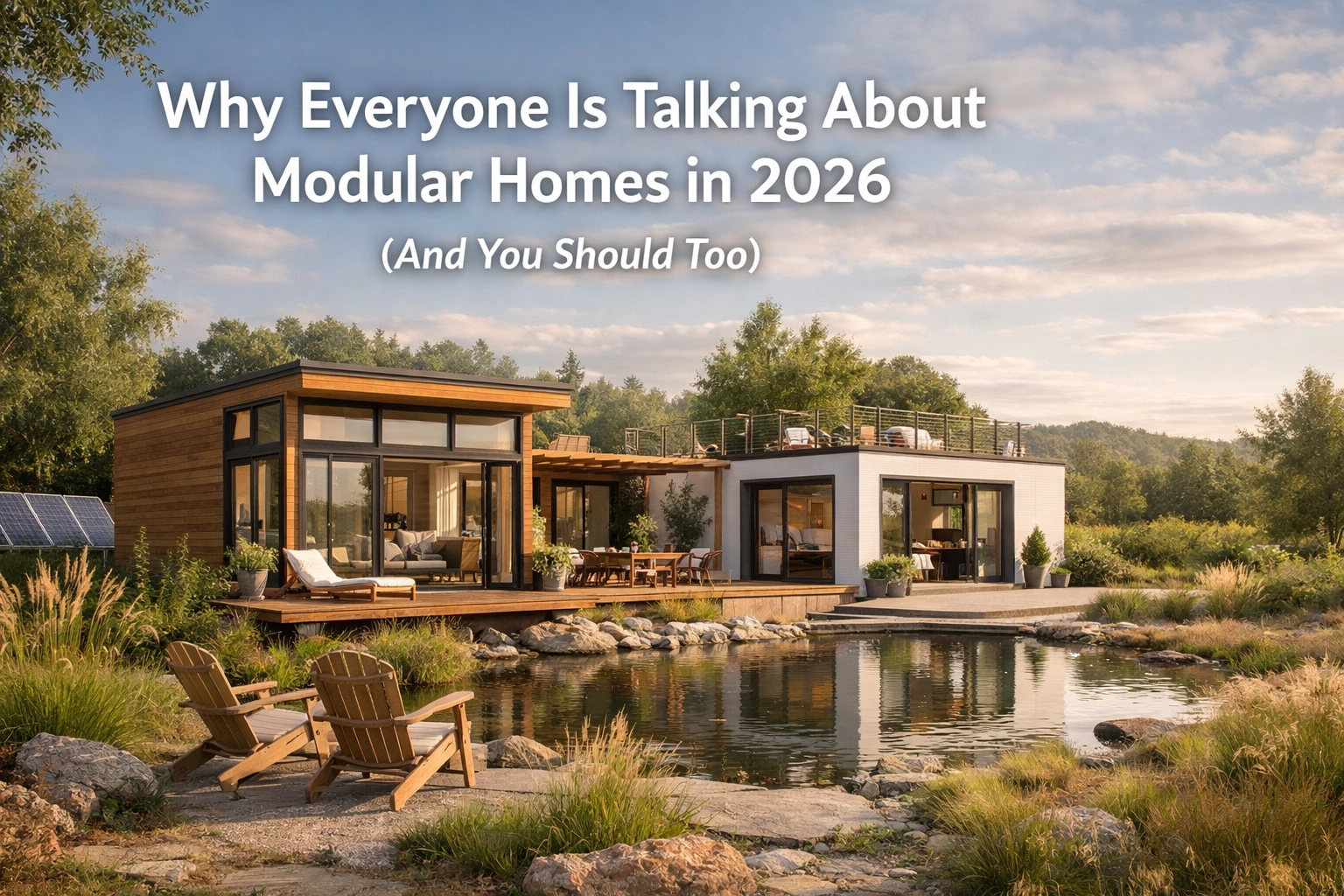
If you had asked a property investor or a first-time homebuyer about modular homes five years ago, you might have heard words like "temporary," "basic," or even "glorified shipping container." But fast forward to March 2026, and the conversation has shifted entirely. In fact, if you aren't looking at modular construction for your next project, you’re likely falling behind the most significant housing evolution Australia has seen in decades.
The traditional construction industry is facing a reckoning. With labor shortages, soaring material costs, and unpredictable weather patterns, the old way of building: brick by brick, out in the elements: is becoming a luxury that many can no longer afford, both in terms of time and money.
At EcoHub Homes, we’ve seen the shift firsthand. Modular housing has officially hit the mainstream, and it’s not just because it’s "cool." It’s because it’s the only logical response to a 2026 housing market that demands speed, sustainability, and absolute precision.
The End of the "Wait-and-See" Build
In 2026, time is the most expensive commodity in real estate. The days of signing a contract and waiting 18 months to move into a new home are over: or at least, they should be.
Modular construction allows us to bypass the "site-built" bottleneck. While your site is being cleared and the footings are being prepared, your home is already being built in a controlled factory environment. There are no rain delays, no "tradie no-shows," and no material theft from an open site. We’re seeing build times slashed by up to 50% compared to traditional builds.
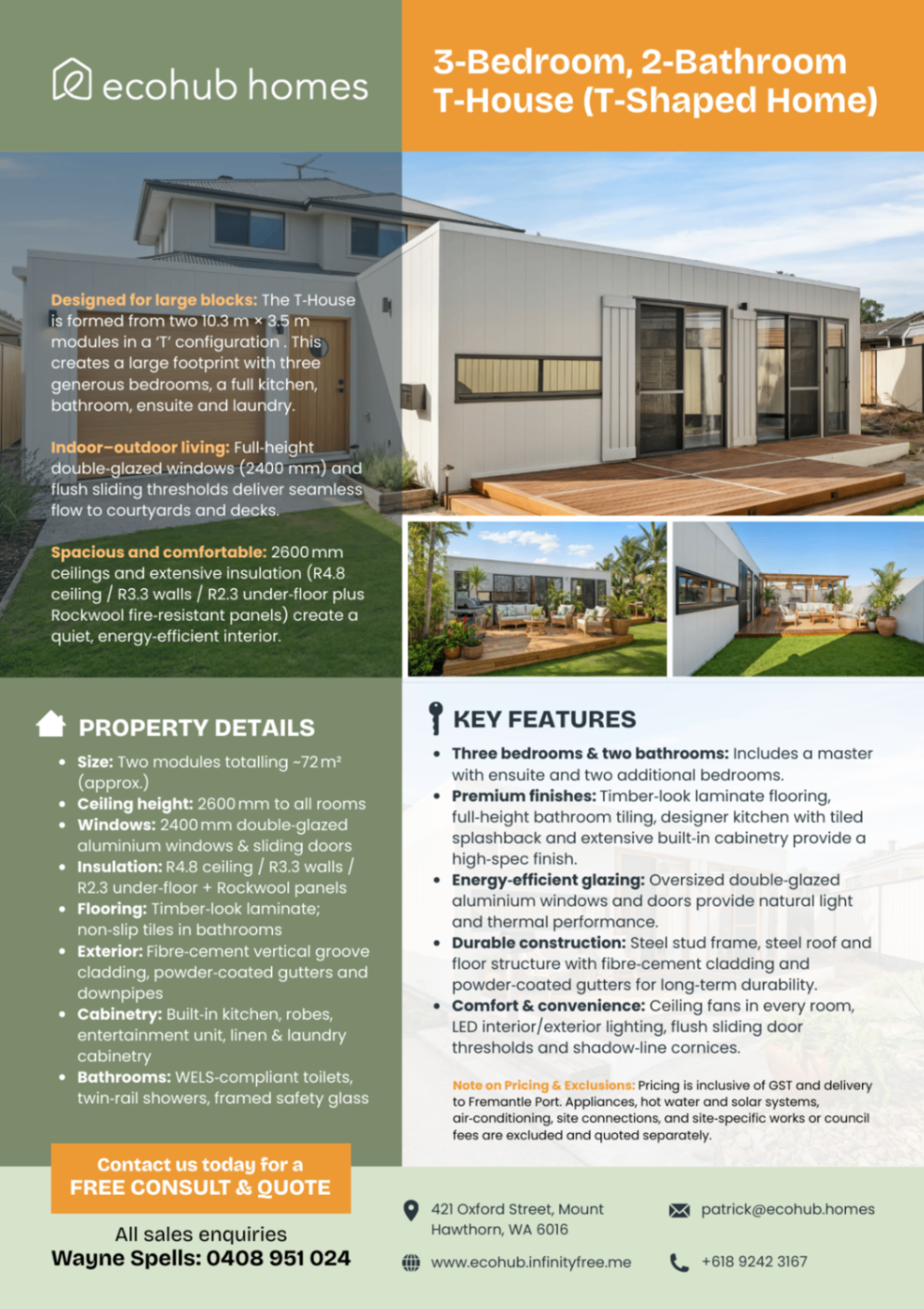
For property owners, this means moving in sooner. For investors, it means getting a tenant in the door and generating rental yield months ahead of schedule. When you can take a 3-bedroom, 2-bathroom T-House from concept to completion in a fraction of the time, the ROI speaks for itself.
Precision Engineering: Better Than Site-Built?
There’s a common misconception that "factory-built" means "lower quality." In 2026, the reality is the exact opposite. Think about it: would you rather have your car built in a high-tech facility with laser-guided precision, or in someone’s driveway?
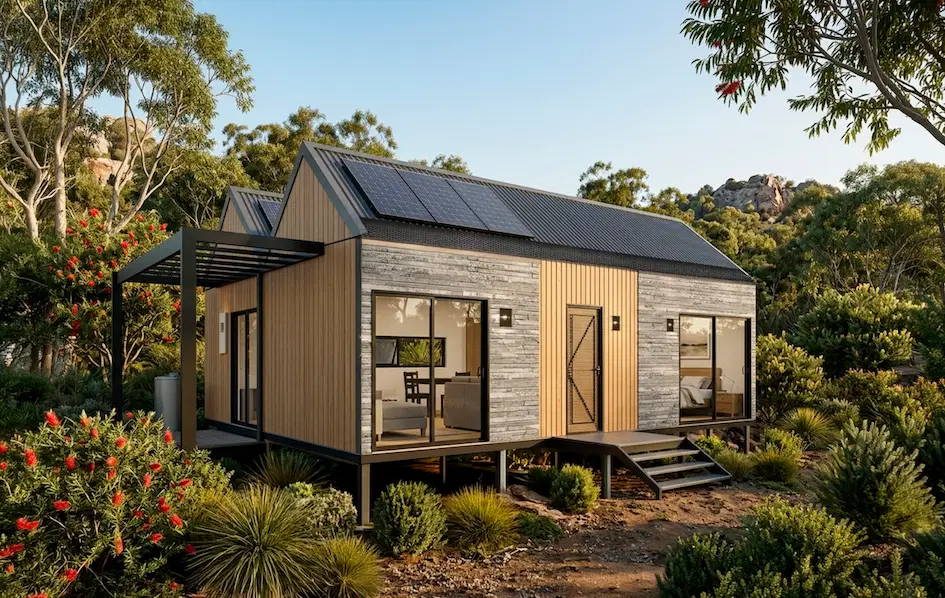
Modular homes are built to tighter tolerances than traditional homes. Every joint is perfect, every seal is airtight, and every component is checked against rigorous standards before it ever leaves the factory. This precision is what allows EcoHub Homes to achieve energy efficiency ratings that traditional builders struggle to reach.
We’re talking about 10-Star NatHERS potential, high-performance insulation, and standard features like full-height double-glazed windows. These aren't just "nice-to-haves" anymore; they are essential for combatting rising energy costs and the Australian climate.
The Sustainability Standard: It’s Not Optional Anymore
Sustainability has moved from a buzzword to a baseline requirement. In 2026, a home that isn't energy-efficient is a liability. Buyers and renters are smarter now: they’re looking at the long-term running costs, not just the purchase price.
The modular process is inherently greener. Because homes are built in a factory setting, waste is reduced by up to 80%. We can recycle off-cuts and manage materials with a level of efficiency that’s impossible on a messy construction site.
Moreover, the homes themselves are designed for the future. With ENERGY STAR certifications becoming the standard, homeowners are saving hundreds: if not thousands: annually on heating and cooling. At EcoHub Homes, we integrate solar-ready designs and high-performance thermal envelopes as standard, ensuring your investment holds its value as environmental regulations continue to tighten.
Cost-Effectiveness in a High-Inflation World
Let’s talk numbers. The average prefabricated house in 2026 costs significantly less per square foot than its site-built counterpart. With modular construction, you aren't just saving on materials; you’re saving on the "hidden" costs of building.
Think about the interest on your construction loan. If your build takes 4 months instead of 14, that’s 10 months of interest you aren't paying. Think about the cost of living elsewhere while you wait for your home to be finished. When you add it all up, the "cheaper" traditional quote often ends up being the most expensive path.
"The shift toward modular homes reflects several converging market factors. Construction speed and affordability remain central: modular homes are built on a faster timeline while being more cost-effective per square foot." : Industry Insight, 2026
Design Sophistication: Luxury is Now Modular
If you still think modular homes look like boxes, you haven't seen a 2026 catalog. Today’s modular designs prioritize the things modern Australians actually want:
- Open-concept kitchens with oversized islands.
- Spacious primary suites featuring dual vanities and soaking tubs.
- High ceilings (up to 2600mm) that create a sense of airiness and light.
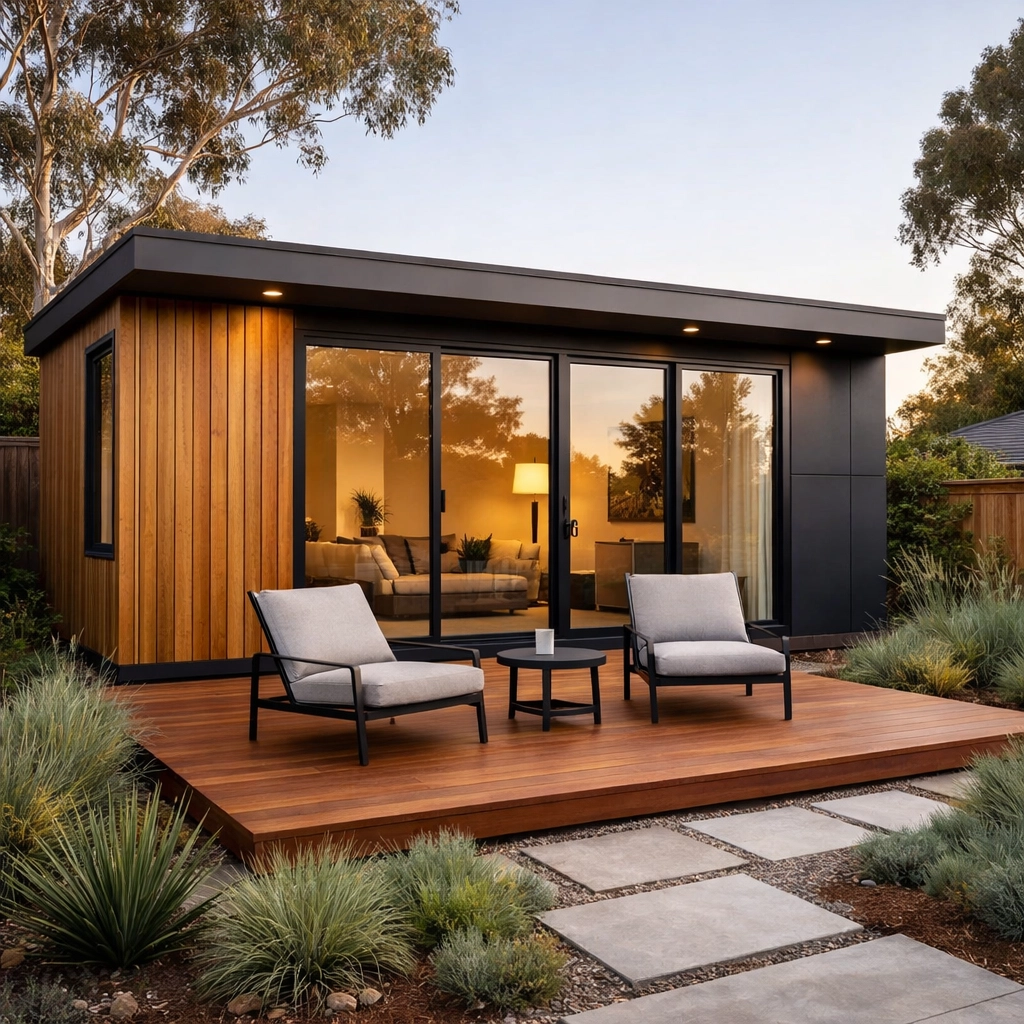
- Indoor-outdoor flow with expansive decking and floor-to-ceiling windows.
Modular construction now delivers luxury finishes that rival: and often exceed: architect-designed traditional homes. You can personalize your materials, colors, and layouts much like you’d configure a premium car. The result is a home that feels bespoke, without the bespoke price tag.
Why Investors are Flooding the Modular Market
For the savvy investor, 2026 is the year of the "Passive Income Pivot." With the rental crisis still squeezing the Australian market, the demand for high-quality, fast-turnaround housing is at an all-time high.
Investors are using modular solutions to:
- Add Granny Flats: Instantly turning a backyard into a dual-income property.
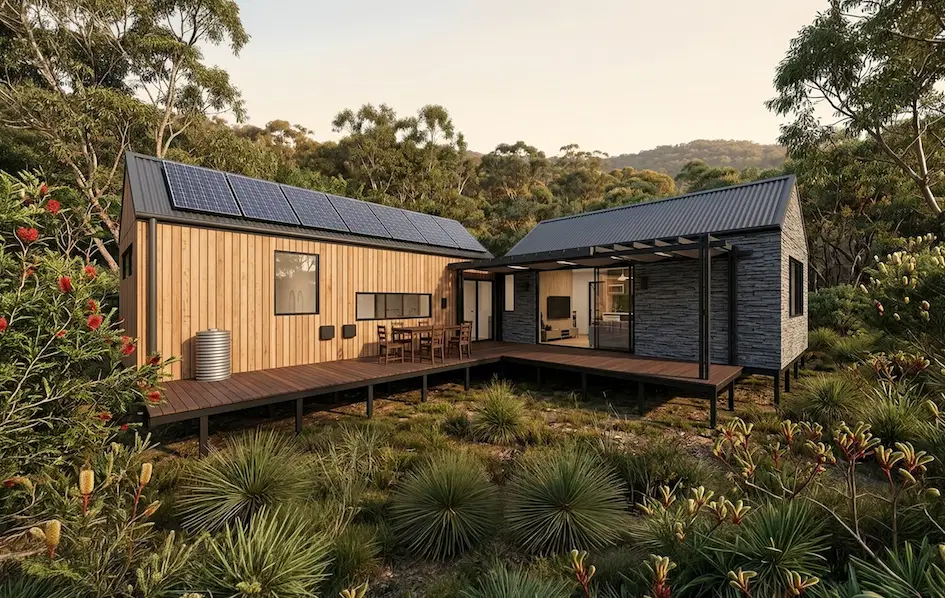
- Short-Term Rentals: Building luxury eco-retreats in rural or bushland settings to tap into the sustainable tourism boom.
- Portfolio Scaling: Deploying multiple units quickly to capitalize on high-demand areas before the market shifts.
The modular advantage for investors is simple: Speed to Market. The sooner the house is finished, the sooner the rent starts coming in. In a high-interest-rate environment, that speed can be the difference between a project that breaks even and one that thrives.
Adapting to the Australian Landscape
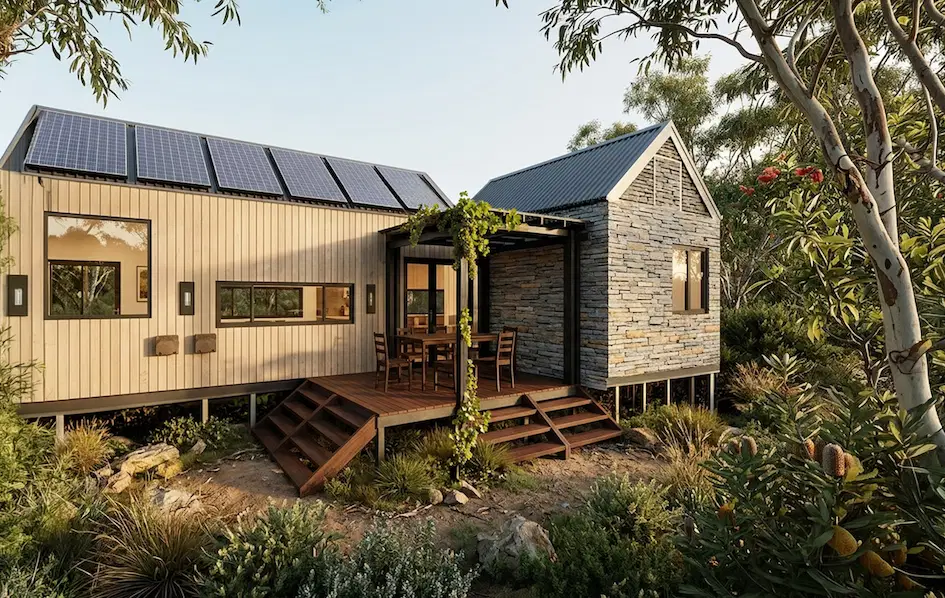
Whether it’s a coastal block or a remote bushland setting, modular homes are uniquely suited to the Australian geography. Because they are elevated on piers, they cause minimal site disturbance. This is a massive win for the environment and often simplifies the council approval process in sensitive areas.
At EcoHub Homes, our structures are built with steel frames and durable fibre-cement cladding, making them resilient against the elements: including bushfire-prone zones. We handle the site preparation and the installation, providing a turnkey solution that takes the stress out of building in "tough" locations.
Is Modular Right For You?
The growth of the modular market: currently sitting at a 4.8% compound annual growth rate: isn't a fluke. It’s a response to a world that needs better housing, faster.
If you’re a property owner looking for a sustainable, beautiful home that won't take years to build, or an investor looking for the most efficient way to grow your portfolio, it’s time to stop looking at the past and start looking at the future.
The best way to get ahead of the game is to educate yourself on the latest technology and regulations. We invite you to join our next Modular Seminar to see exactly how these homes are built and how they can fit into your 2026 property strategy.
Take the Next Step
The housing market in 2026 doesn't wait for anyone. Whether you’re interested in a compact one-bedroom retreat or a sprawling family home, the modular revolution is here to stay.
Don't settle for the delays and uncertainties of traditional building. Explore our range of modular homes today or reach out for a free consultation to find out how we can bring your vision to life( months ahead of schedule.)