
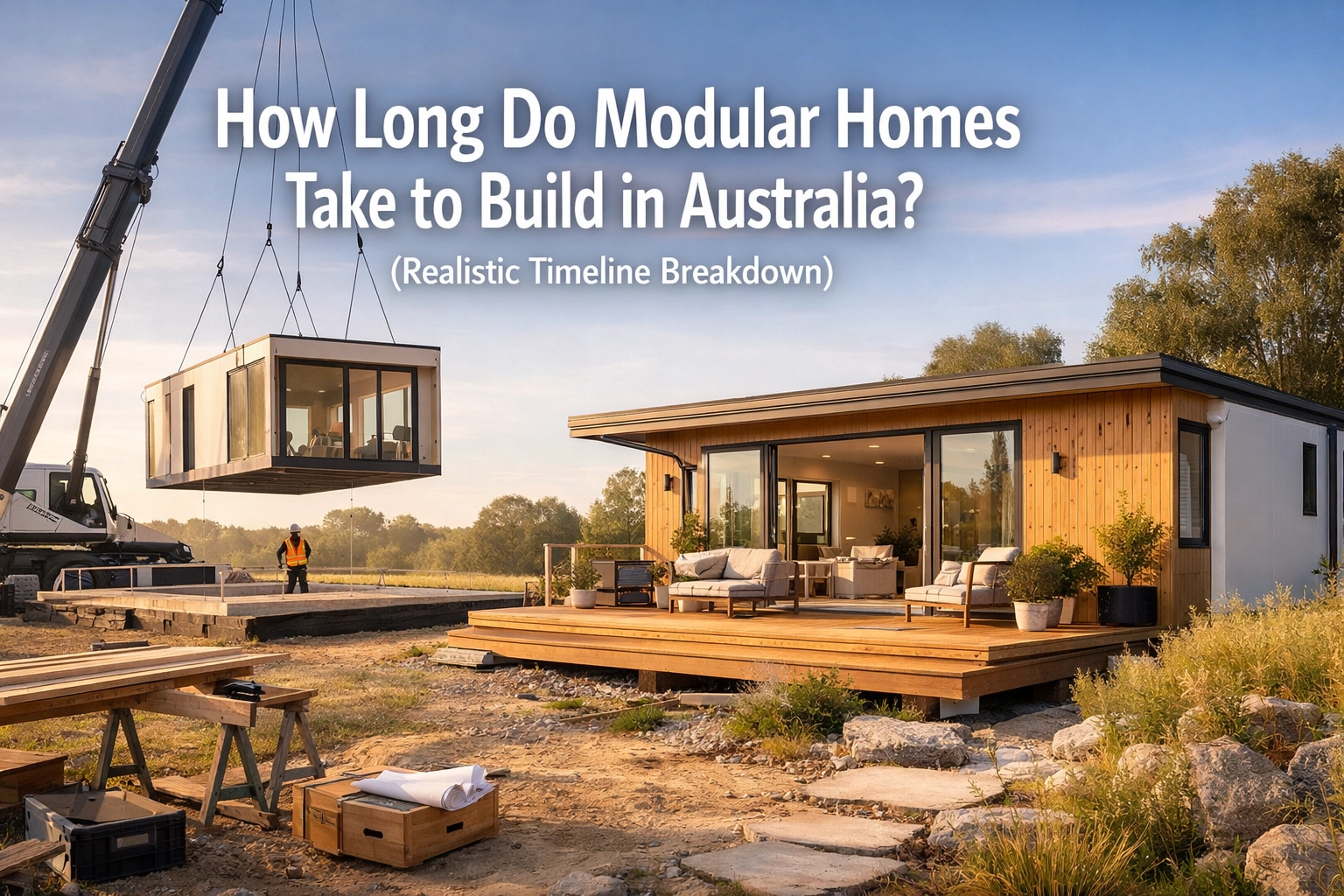
Ask anyone who's built a traditional home in Australia and they'll tell you the same story: endless delays, weather setbacks, tradie shortages, and a completion date that keeps sliding further into the future. What was supposed to take nine months stretches into eighteen. Your budget bloats. Your stress levels spike.
There's a better way.
Modular homes aren't just faster, they're predictable. And in 2026, with Australia's construction industry still battling capacity constraints and skilled labour shortages, that predictability is worth its weight in gold.
The Complete Timeline: 16-26 Weeks Total
Here's the honest answer most builders won't give you upfront: from the day you sign off on your design to the day you walk through your front door, you're looking at roughly 16 to 26 weeks. That's four to six months, compared to the 12-18 month marathon of traditional construction.
Let's break down exactly where that time goes, and why every stage moves faster than you'd expect.
Stage 1: Design and Permits (4-8 Weeks)
This is your longest pre-construction phase, but it's still dramatically shorter than traditional builds.
Weeks 1-2: Design Selection and Customisation
At EcoHub Homes, we've already done the heavy lifting. Our pre-approved designs mean you're not starting from scratch with an architect. You select your floor plan, choose your finishes, customise layouts, and move forward. No months of back-and-forth revisions. No surprise fees from architects who bill by the hour.
Weeks 3-8: Permit Approval
Here's where modular construction shows its real advantage. Because councils have already seen our designs and specifications, approval happens fast. In NSW, pre-approved modular designs can clear in as little as 10 days. Even in Victoria's slower approval environment, you're typically looking at 4-6 weeks maximum.
Traditional builds? Budget 10-12 weeks minimum for this stage alone.
Stage 2: Factory Construction (8-12 Weeks)
This is where the magic happens, and where weather, tradie availability, and all those traditional construction headaches simply disappear.
The Parallel Process
While your permits are being finalised, we're already ordering materials and scheduling your production slot. The moment approvals come through, your home enters the factory queue. This parallel processing shaves weeks off your timeline.
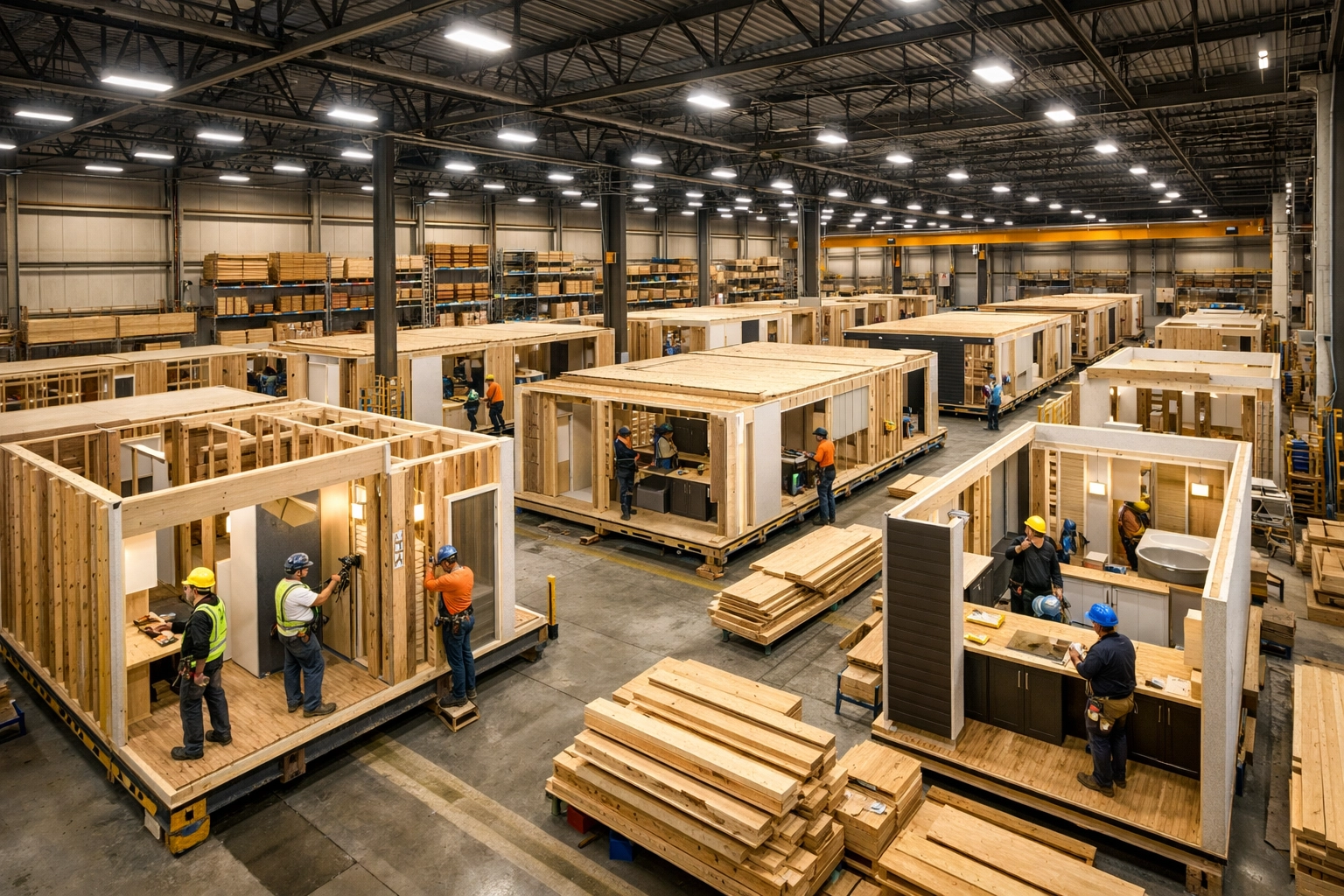
Inside our climate-controlled facility:
- Week 1-2: Steel frame fabrication and module base construction
- Week 3-6: Wall framing, electrical rough-in, plumbing installation, insulation
- Week 7-10: Windows, doors, cabinetry, internal finishes, flooring
- Week 11-12: Quality inspections, weatherproofing, final preparation for transport
No rain delays. No tradies calling in sick. No material shortages stalling progress. Your home is built in a controlled environment with dedicated teams working to precise schedules.
Stage 3: Site Installation (1 Day)
Yes, you read that correctly. One day.
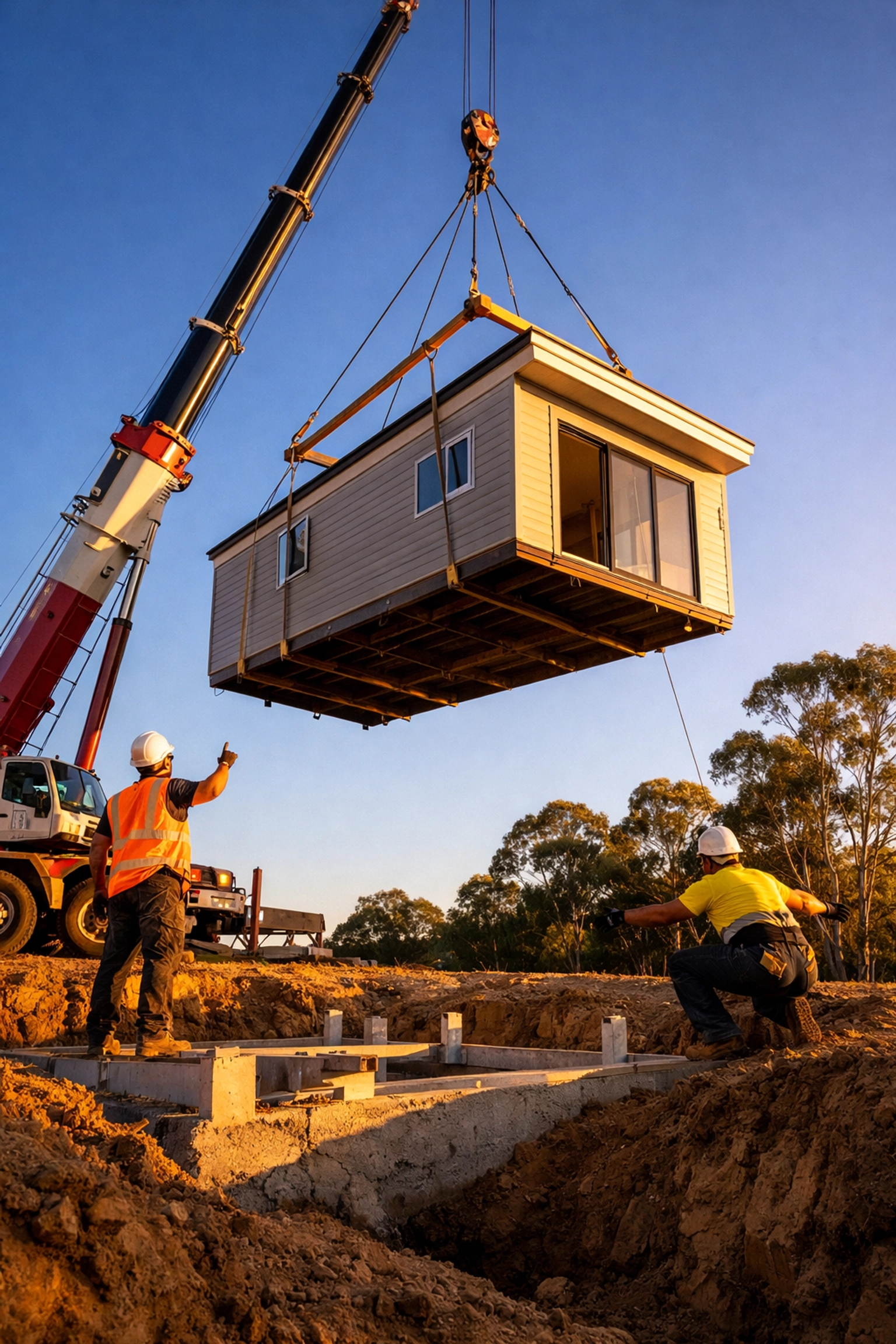
This is the moment that stops people in their tracks. Your complete home: walls, roof, windows, electrical, plumbing, even kitchen cabinets: arrives on multiple trucks and is craned into position in a matter of hours.
We've installed 18 modules on the Gold Coast in nine hours. A standard three-bedroom home? You're watching it come together before lunch.
Your site preparation: foundation, connections, access: happens simultaneously with factory construction, so when your modules arrive, everything is ready. The crane comes in, the modules are positioned and secured, and by sunset, your house is standing.
Traditional builds take 6-9 months just to reach lock-up stage. We do it in a day.
Stage 4: On-Site Finishing (2-4 Weeks)
Once your modules are secured, the finishing work begins. This isn't construction: it's connection and completion.
Week 1-2:
- Connecting services between modules
- Final plumbing and electrical work
- HVAC installation and testing
- External cladding joins and weatherproofing
Week 3-4:
- Interior paint touch-ups and final finishes
- Appliance installation and testing
- Deck construction and external features
- Final inspections and compliance certification
Even this stage is 60% faster than traditional builds because approximately 90% of the work is already completed in the factory. Your tradies aren't starting from scratch: they're just connecting the dots.
The Traditional Build Comparison
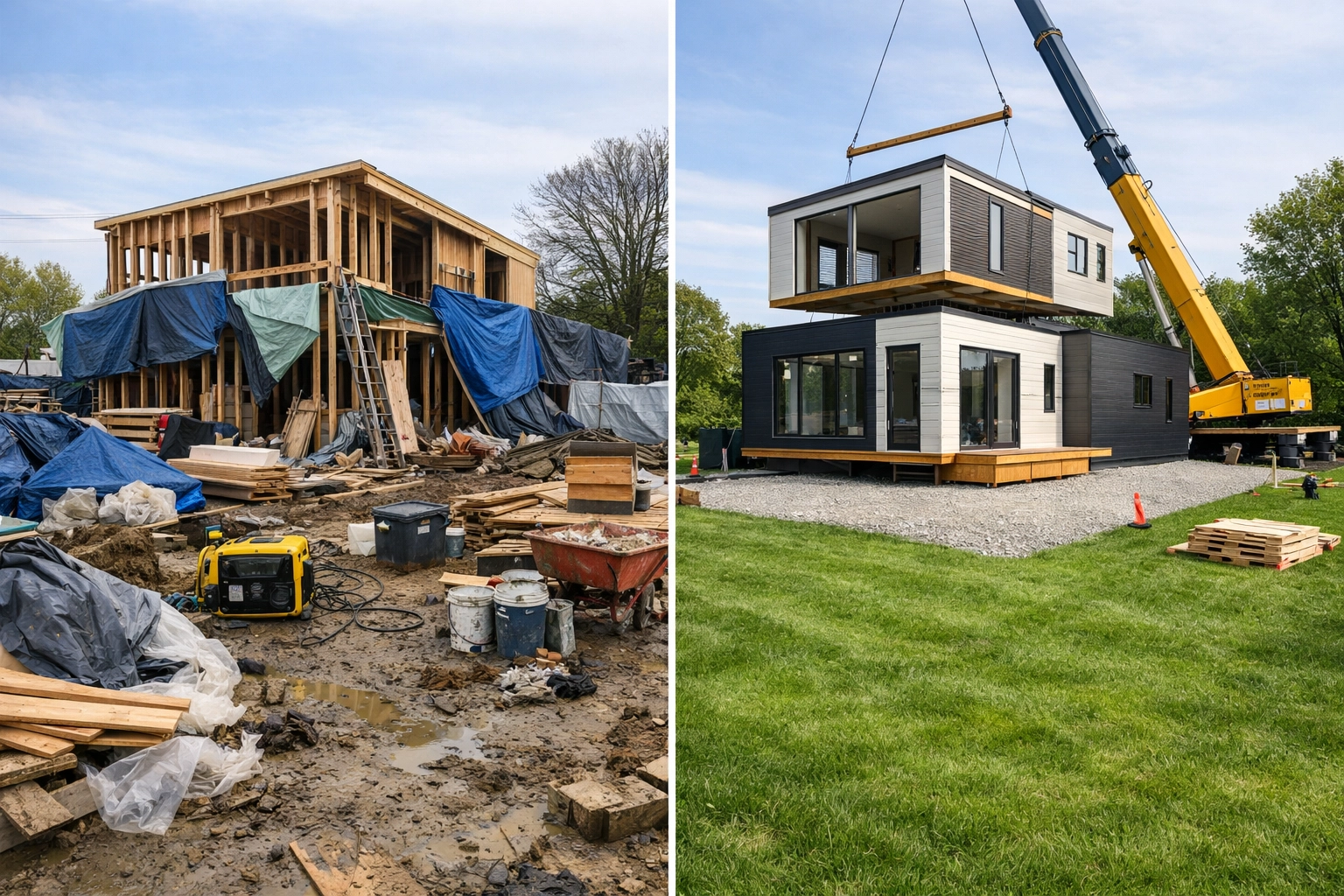
Let's put this in perspective with a side-by-side comparison:
| Stage | Modular Build | Traditional Build |
|---|---|---|
| Design & Approvals | 4-8 weeks | 8-16 weeks |
| Construction | 8-12 weeks | 26-38 weeks |
| On-Site Work | 2-4 weeks | 6-12 weeks |
| Total Timeline | 16-26 weeks | 40-66 weeks |
Traditional construction means living in temporary accommodation for a year or more. Modular means you're moving in before your mates have even finished their frame.
What Can Speed Things Up Even More?
Choose Standard Configurations
Our most popular designs: like our 3-bedroom, 2-bathroom T-House: can shave 2-3 weeks off approval times. They're proven, council-approved, and ready to go.
Have Your Site Ready
If your land already has service connections (water, power, sewer) and clear access, you eliminate potential delays. Sites requiring significant earthworks or retaining walls will add time to your site preparation phase.
Be Decisive on Finishes
Premium upgrades: stone benchtops, smart home systems, custom cabinetry: can add 1-2 weeks to factory production. There's nothing wrong with these choices, but understanding their impact helps you plan realistically.
Work in the Right Season
Northern Australia's monsoon season (November-April) requires careful scheduling for site work. Southern builds benefit from avoiding midwinter for concrete pouring and site preparation.
What This Speed Actually Means for You
Faster construction isn't just about convenience: it's about money, stress, and opportunity.
Lower Holding Costs
Every month you're not in your home, you're paying rent or mortgage elsewhere. Shaving 6-12 months off your build timeline can save you $15,000-$30,000 in holding costs alone.
Budget Certainty
Traditional builds face material price escalations over their extended timelines. A 12-month construction period means your timber, steel, and labour costs can increase multiple times mid-project. With modular's compressed timeline, you lock in pricing and avoid market volatility.
Faster Returns for Investors
Landowners building rental properties start earning rental income six months earlier. On a $36,000 annual return, that's $18,000 you wouldn't see with a traditional build timeline.
Less Life Disruption
Four to six months of construction stress versus 12-18 months? That's less time coordinating, less time worrying, and dramatically less impact on your daily life.
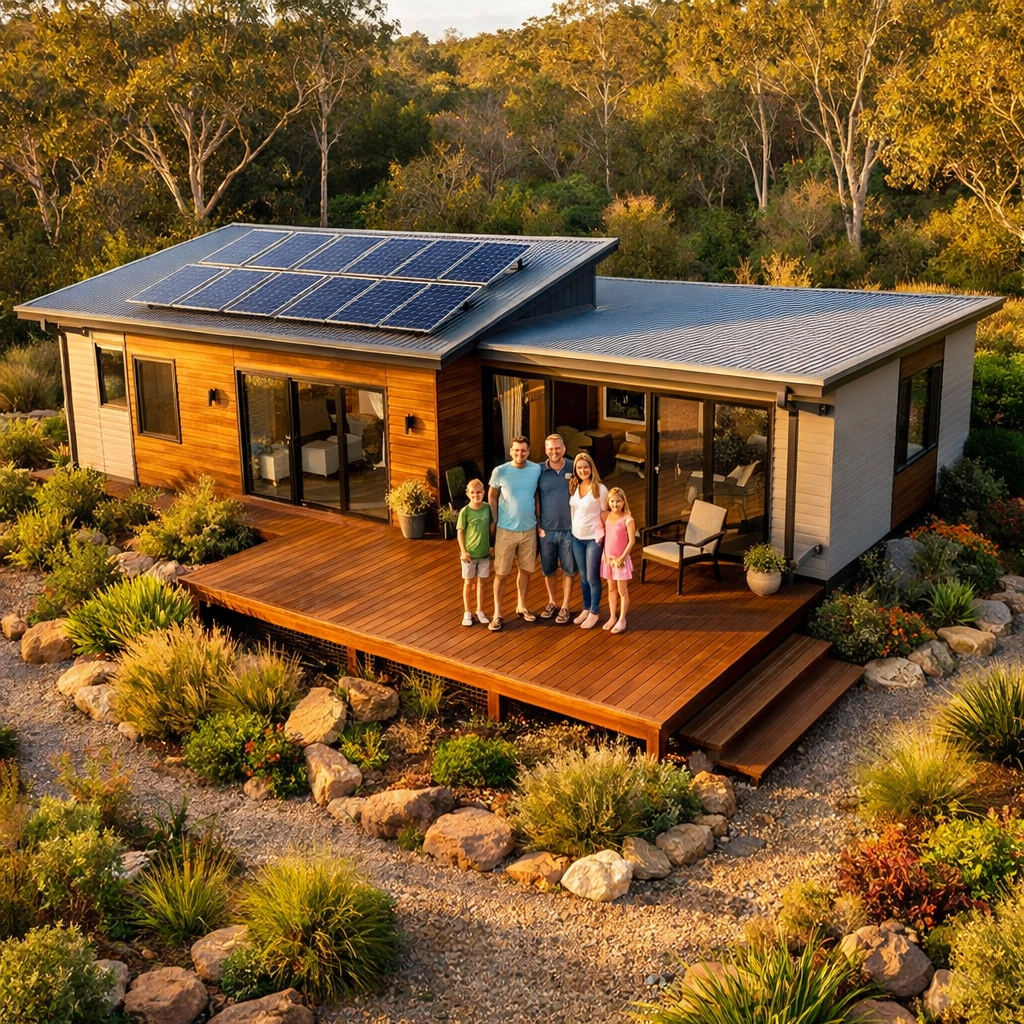
Your Custom Timeline Starts Here
Every property is unique. Your land's location, condition, and access will all affect your specific timeline. Council approval speeds vary by region. Your design choices and finish selections will adjust factory production time.
That's why we don't give generic timelines: we give you a detailed, custom breakdown for your exact situation.
Get your personalised timeline in 48 hours. We'll assess your land, review your design preferences, and provide a week-by-week construction schedule with realistic dates from design approval to moving day.
Because you deserve better than vague estimates and broken promises. You deserve to know exactly when you'll be opening your front door.
Contact EcoHub Homes for your free timeline consultation. Let's map out your path to a finished home( in weeks, not years.)