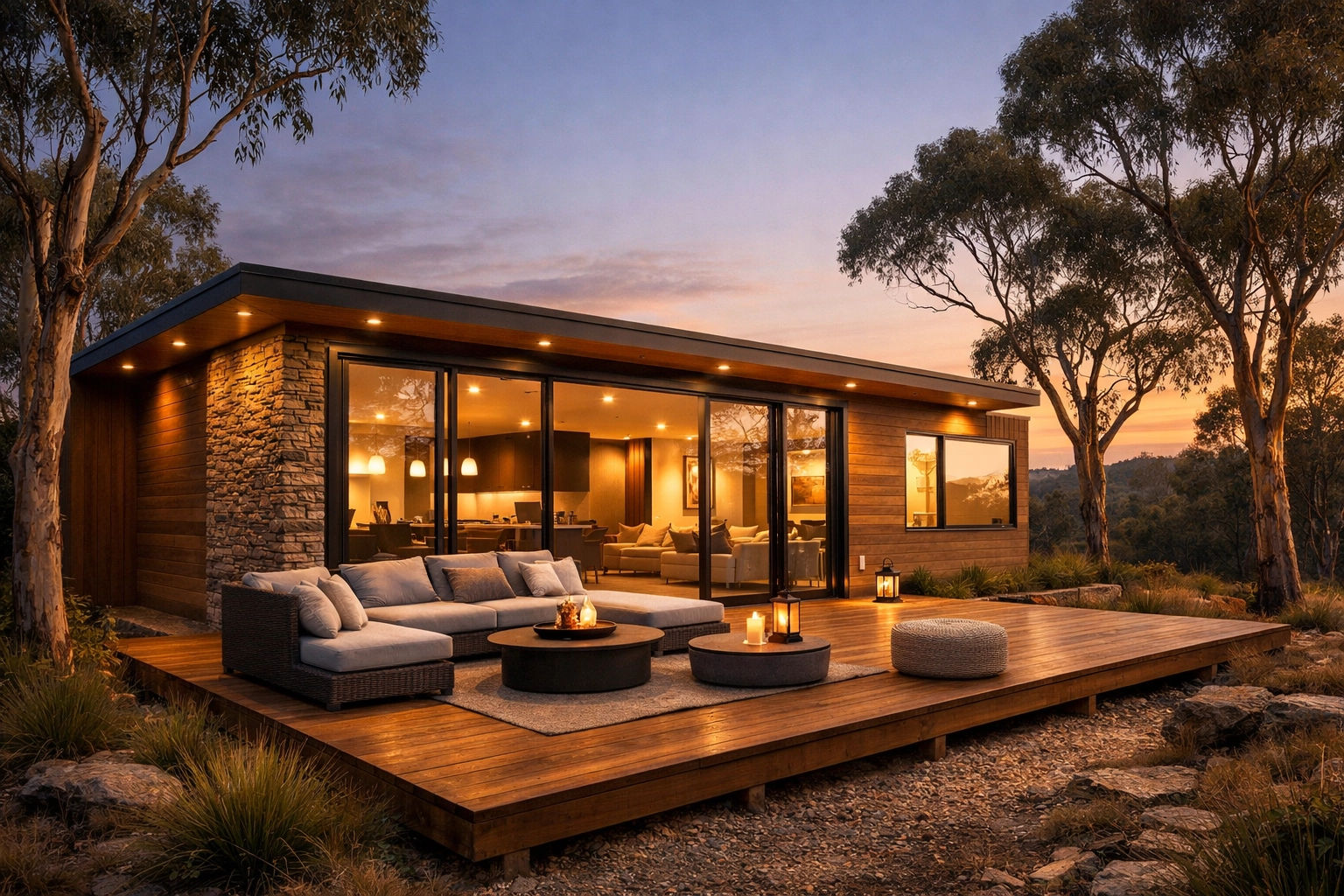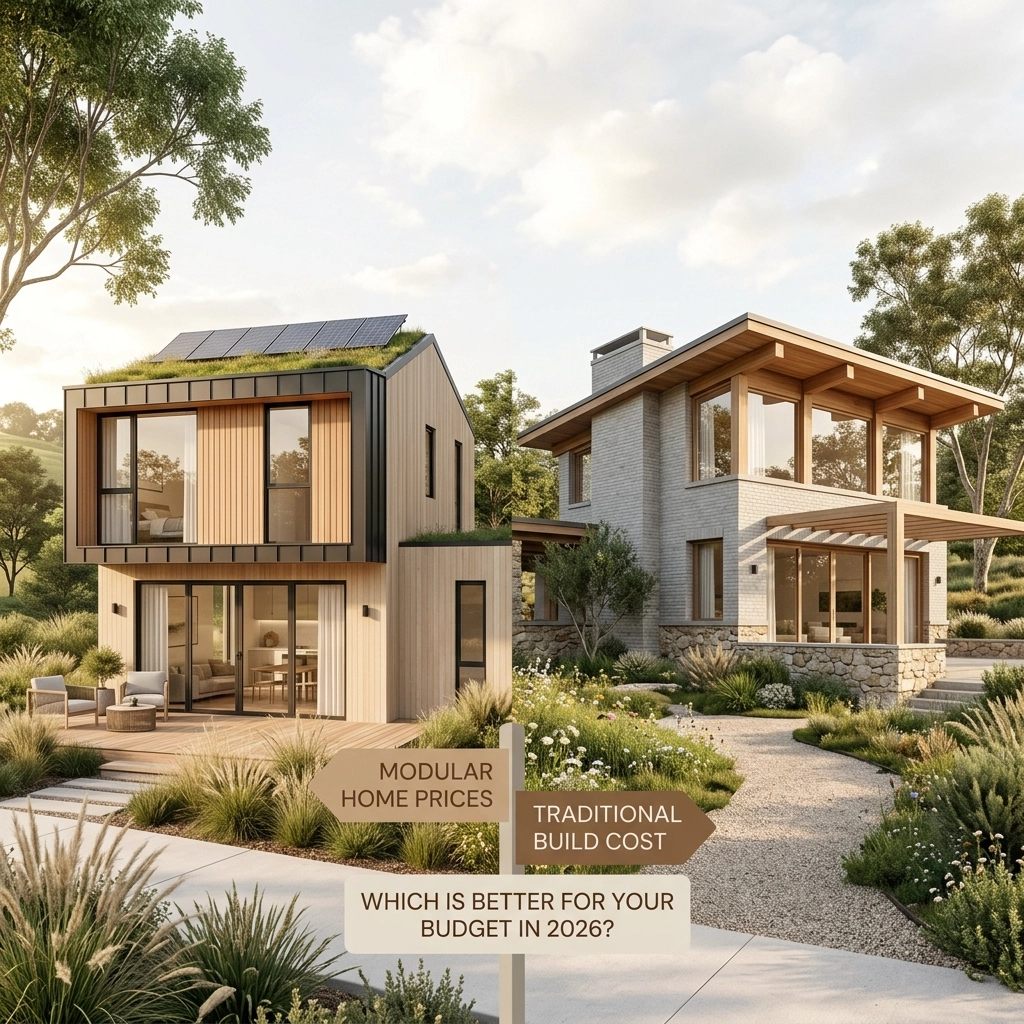
Let’s be honest: building a home in Australia in 2026 isn't the same game it was five years ago. If you’ve looked at the cost of timber, the scarcity of reliable trades, or the soaring interest rates lately, you know that the "traditional" dream can quickly turn into a financial nightmare.
The question isn’t just about putting a roof over your head anymore: it’s about how much of your sanity (and your savings) you’re willing to sacrifice to get there. In the red corner, we have the site-built traditional home: the old-school heavyweight. In the blue corner, the modular home: the sleek, tech-driven challenger that’s currently disrupting the entire property market.
So, which one actually treats your bank account with more respect? Spoiler alert: the answer isn’t just about the sticker price.
The Financial Reality Check: Modular vs. Traditional
When we talk about modular home prices, we’re looking at a fundamental shift in how value is calculated. Research in 2026 shows that modular homes are generally 10% to 25% cheaper than comparable traditional builds. That’s not a rounding error: on a $500,000 project, that’s $125,000 staying in your pocket.
In the current Australian market, you can expect modular home prices to hover between $80 and $175 per square foot (adjusted for our premium finishes and local logistics). To put that into perspective for a standard family layout:
- Tiny/Studio Homes: $50,000–$95,000
- Single-Story (3-Bed): $130,000–$265,000
- Two-Story Family Residences: $210,000–$420,000
- Luxury Custom Builds: $500,000+
Compare this to the average traditional site-built home, which is currently blowing past the $450,000 mark for basic specs, often before you’ve even picked out the tiles.
Why the Price Gap Exists (It’s Not About Cutting Corners)
There’s a lingering myth that "prefab" means "cheap quality." Let’s kill that idea right now. At EcoHub Homes, the lower cost isn't a result of using inferior materials: it’s the result of being smarter than the weather.
1. Manufacturing Efficiency
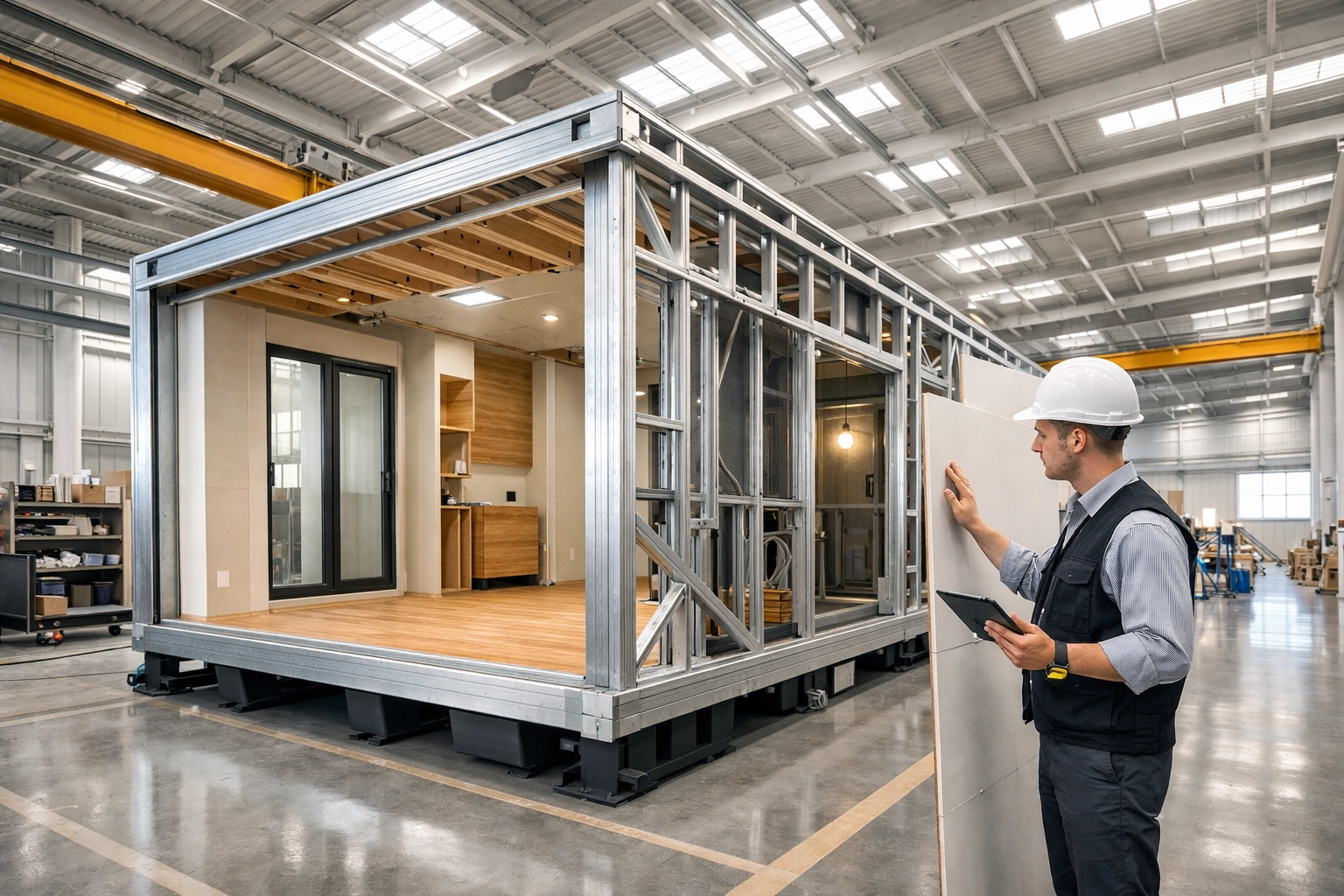
Traditional builds are at the mercy of the Australian elements. Every rainy day in Perth or heatwave in Queensland costs the builder money, which eventually becomes your money. Modular homes are built in climate-controlled factories. The workers aren't dodging puddles; they’re operating computer-guided machinery that minimizes waste.
2. Bulk Buying Power
We buy materials: steel frames, double-glazed windows, insulation: in massive quantities. Because we have a predictable production line, we can negotiate material discounts of up to 20% compared to a local builder who’s buying for one house at a time. We pass those savings directly to you.
3. Labor Optimization
In a traditional build, labor can account for 40% or more of your total invoice. You’re paying for travel time, site setup, and the inherent inefficiencies of moving a dozen different trades in and out of a small site. In our factory, the trades are already there. The plumber isn't waiting for the sparky to finish; the workflow is synchronized like a Swiss watch.
Time is Your Biggest Hidden Expense
If you’re building a home, you’re likely paying for a construction loan. You might also be paying rent while you wait for your keys. This is where prefab house prices truly shine in the long-term budget.
A modular home typically goes from contract to move-in within 3 to 6 months. A traditional build? You’re lucky to be in within 12 months in the current climate.
The Math of Waiting:
- 6 months of extra rent at $600/week = $15,600
- 6 months of extra interest on a construction loan = Thousands more
- The emotional cost of another Christmas in a rental = Priceless (but expensive)
By slashing the timeline by 50% or more, you aren't just saving on the build; you’re liberating your capital and starting your life sooner.
The 60/40 Rule: Budgeting for the Whole Picture
We believe in transparency. When looking at modular homes Australia, you need to understand the "60/40 Rule."
Generally, 60% of your budget goes toward the factory construction of the modules. The remaining 40% covers the "on-site" realities:
- Land preparation and clearing.
- Council permits and BAL (Bushfire Attack Level) ratings.
- Foundations (piers or slabs).
- Utility connections (sewer, water, power).
- Local labor for the final stitch-up.
This is why a "turnkey" price from a modular provider is so much more reliable than a "starting from" price from a traditional builder. We factor in the complexity of the site from day one.
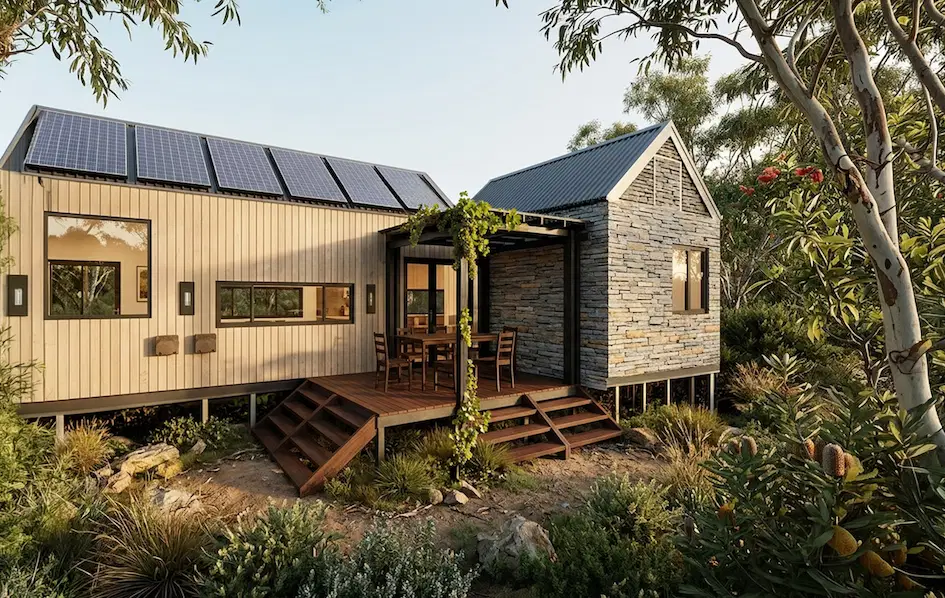
"The shift toward modular isn't just a trend; it's a necessary evolution. By moving the majority of construction into a controlled environment, we eliminate the volatility that has plagued the Australian building industry for decades." : Industry Insight, 2026
Quality and Resale: The Long-Term ROI
A house is an investment. In 2026, buyers are more savvy about energy efficiency than ever before. Modular homes are inherently more airtight and better insulated because they have to be strong enough to be transported on the back of a truck.
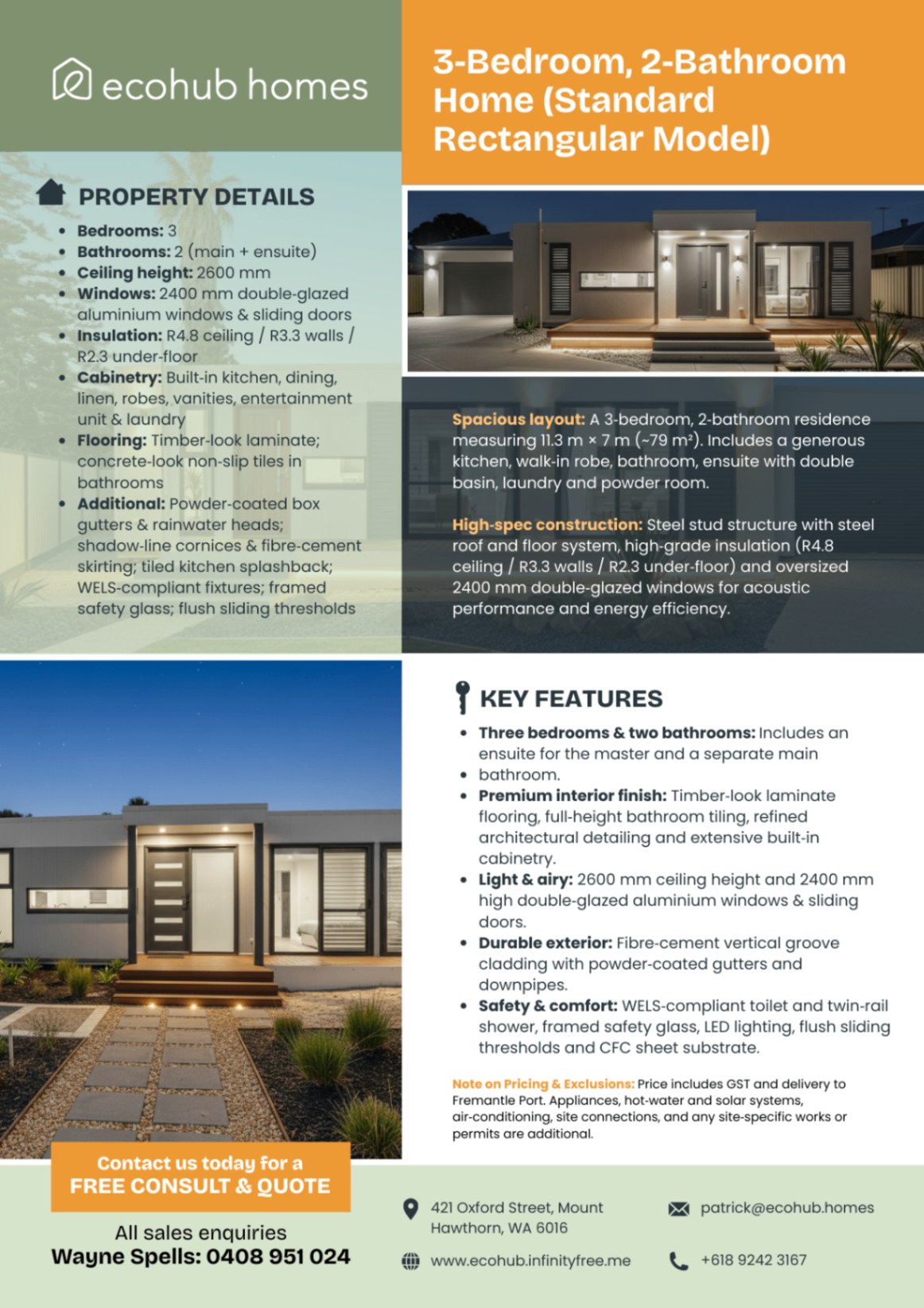
At EcoHub Homes, our standard inclusions: like full-height double-glazed windows and R4.8 ceiling insulation: often exceed what you’d find in a mid-range traditional build. This doesn't just mean a lower price today; it means significantly lower power bills for the next 30 years.
Furthermore, modular homes now appraise at the exact same value as site-built homes. The banks have finally caught up. They see the precision of factory engineering as a lower risk than a site build that might be plagued by structural issues due to poor weather during the frame stage.
The Verdict: Which is Better for Your Budget?
If you have an unlimited budget, five years to spare, and a masochistic love for managing tradies, a traditional build offers total, granular control over every single brick.
But if you want a premium, future-proof home that respects your timeline and your bank balance, modular is the clear winner in 2026. You get a house that is:
- Predictable: No "unforeseen" weather delays or mounting labor costs.
- Efficient: 10-25% cheaper on average with 50% faster delivery.
- Sustainable: Reduced waste and superior thermal performance.
Building a home shouldn't be a gamble. It should be a strategic move toward financial freedom and a lifestyle you actually enjoy.
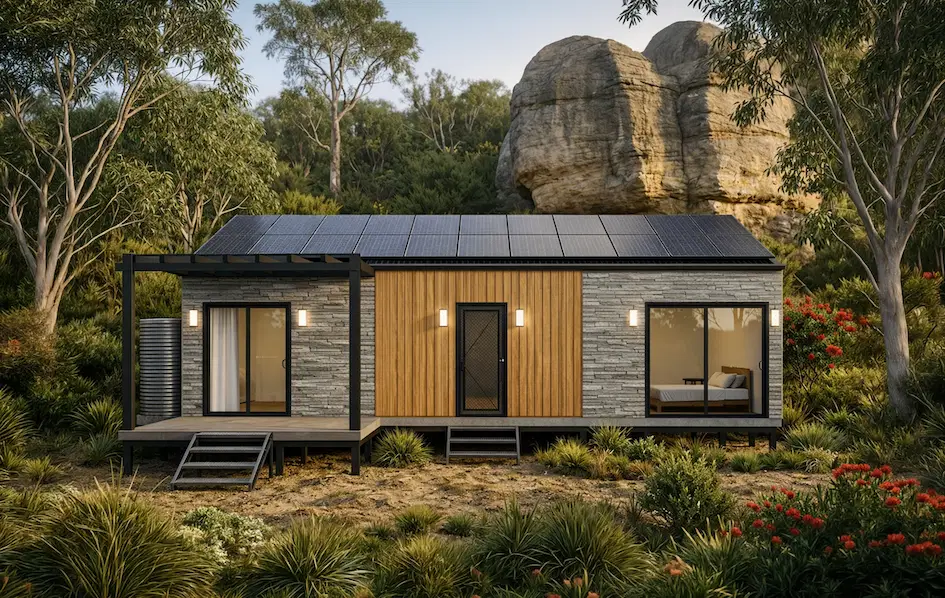
Ready to see how the numbers stack up for your specific site? Whether you're looking for a 3-bedroom family home or a sophisticated bush retreat, we’re here to help you navigate the costs without the headaches.
Explore our range and get a transparent quote today. Building the future doesn't have to break the bank.