
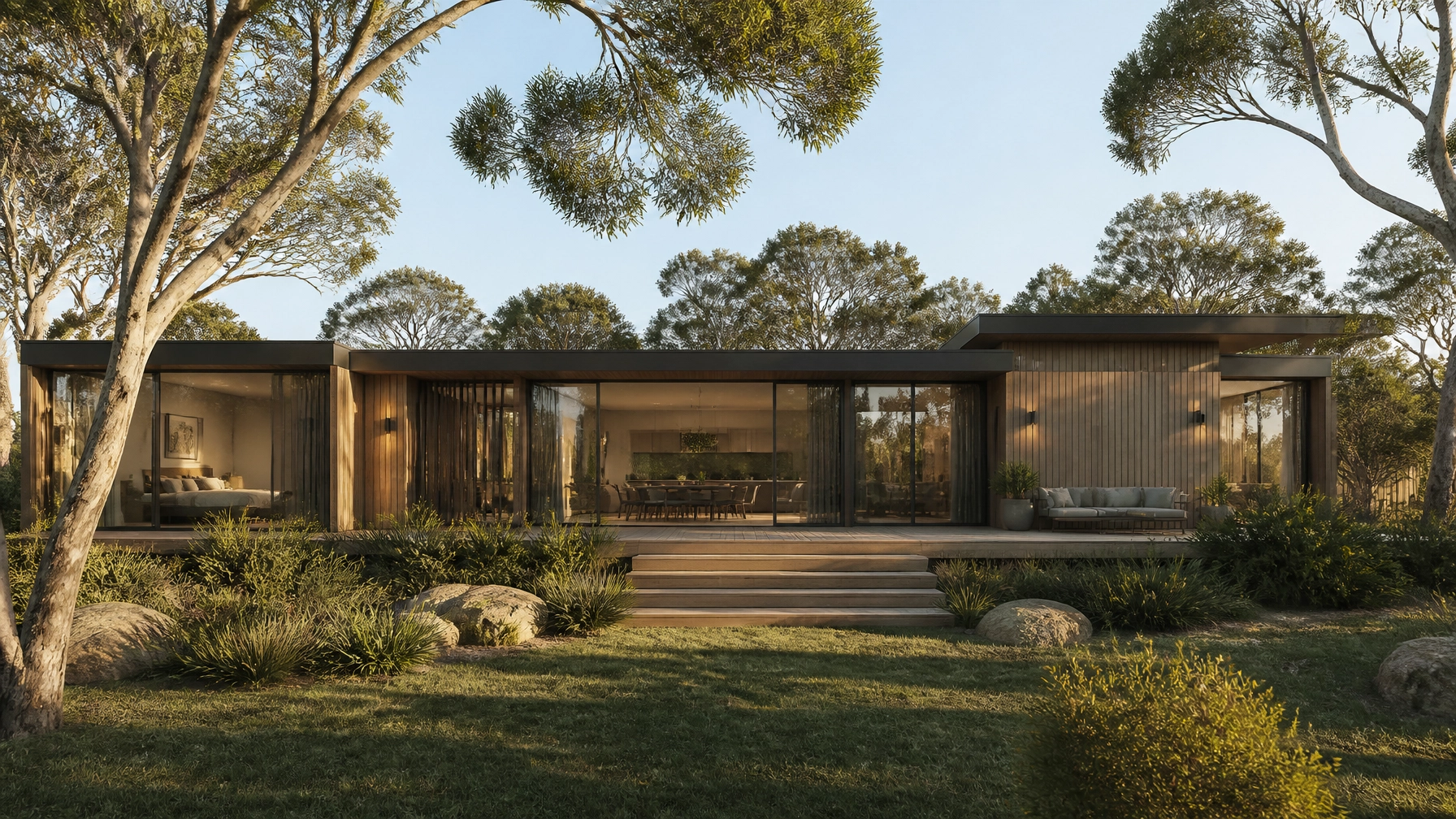
For years, a persistent myth shadowed the modular housing industry, the idea that "prefabricated" meant "temporary." In 2026, that misconception has been well and truly dismantled. As the Australian property market evolves, a critical question remains for savvy homeowners and investors: Do modular homes hold their value, or do they depreciate like a vehicle?
The reality is transformative. Modern modular homes are not just holding their value; they are often outperforming traditional builds in specific high-growth corridors across Australia.
Before we break down the data and regulatory shifts, experience the quality of a modern build for yourself. Watch our full walk-through tour of a premium 3×2 modular home to see the level of finish that drives long-term market appreciation.
https://youtu.be/Kskhm6zG7_c?si=Sjp40wDQ6mvRjJqk
The "Class 1a" Factor: Why Banks Treat EcoHub Homes Like Traditional Houses
The most significant hurdle to resale value in the past was financing. If a bank doesn’t like a building, a future buyer can’t get a mortgage, and your resale value plummets.
In 2026, the landscape is clear. EcoHub Homes are engineered as permanent Class 1a dwellings. Because our homes are built to full National Construction Code (NCC) compliance and permanently affixed to footings, they are treated by major Australian lenders exactly like a site-built brick-and-mortar home. This means your property is valued as "real property" rather than a "chattel" or "movable asset."
When a valuer assesses an EcoHub home, they focus on the land value plus the replacement cost of the dwelling. Because our homes feature premium finishes, think high ceilings and full-height double-glazed windows, the "comparable sales" used by valuers are high-end modern residences, not temporary cabins.
Regulatory Confidence: The NSW Prefab Bill 2026 and System 600
Market confidence is the primary engine of appreciation. The recent passing of the NSW Prefab Bill 2026 has been a watershed moment for the industry. This legislation streamlined approvals and created a unified framework for Modern Methods of Construction (MMC), effectively "de-risking" modular housing for the general public.
Further bolstering this is the System 600 standardisation. By adhering to these rigorous, industry-wide manufacturing standards, EcoHub Homes provides a "gold seal" of quality that future buyers can trust. It’s no longer about how the home was built, but the standard to which it was manufactured. This standardisation makes it easier for banks and future purchasers to verify the structural integrity of the home, ensuring the resale process is as seamless as any traditional sale.

Quality of Finishes: The Driver of Long-Term Appreciation
In real estate, "spec" matters. A modular home with cheap finishes will depreciate, but a home designed with longevity in mind will appreciate alongside the land.
We don't cut corners. The resale value of an EcoHub home is protected by:
- High-Performance Glazing: Double-glazed, full-height windows aren't just an aesthetic choice; they are a massive drawcard for energy-conscious buyers in 2026.
- Architectural Volume: Our high ceilings remove the "boxy" feel of traditional prefabs, creating a sense of space that competes directly with custom architectural builds.
- Premium Cladding: We use durable, eco-friendly materials that age gracefully, ensuring the street appeal remains high ten years down the line.
When you walk into an EcoHub kitchen, the stone benchtops and seamless cabinetry (as seen in our 3×2 model) signal "premium" to prospective buyers. These aren't just homes; they are high-performance assets.
The Investor Edge: Depreciation and Passive Income
For investors turning vacant lots into rental income, the value proposition is twofold. While the home appreciates with the market, you also benefit from significant depreciation schedules.
Because modular homes are manufactured in a controlled environment, every component is tracked. This allows for highly accurate depreciation claims on both the "Plant and Equipment" and "Capital Works" (Division 43) components. In the first ten years, the tax benefits of a new modular build can significantly offset the mortgage, while the 10-year warranty provides a safety net that protects the asset’s value for a future exit strategy.

Building Your Future, Faster
Ultimately, the value of a home is a reflection of its utility and the lifestyle it provides. By choosing a modular build, you aren't just saving time, you are investing in a smarter, more efficient way of living that the 2026 market increasingly demands.
With the backing of the NSW Prefab Bill and the structural certainty of Class 1a classification, the question isn't whether modular homes hold their value, it's how much faster they will grow compared to the inefficient builds of the past.
Ready to explore how a modular investment can work for your land? Contact the EcoHub team today for a custom 3×2 design consultation and see how we can turn your vacant lot into a high-value asset.

FAQ: Modular Home Value & Resale
Do banks provide standard mortgages for modular homes?
Yes. As long as the home is a Class 1a permanent dwelling (like all EcoHub Homes) and permanently affixed to the land, major Australian banks provide standard residential home loans.
Will my modular home appreciate at the same rate as a brick house?
Historical data and 2026 market trends show that location is the primary driver of capital growth. A well-maintained, high-quality modular home in a desirable suburb will appreciate in line with the local market.
How does the NSW Prefab Bill 2026 affect me?
This bill simplifies the certification process and increases consumer protection, which boosts overall market confidence and makes it easier for future buyers to purchase your property.
What is the lifespan of an EcoHub modular home?
Our homes are designed for a 50+ year service life, utilizing high-grade steel frames and premium materials that meet or exceed traditional building standards.