
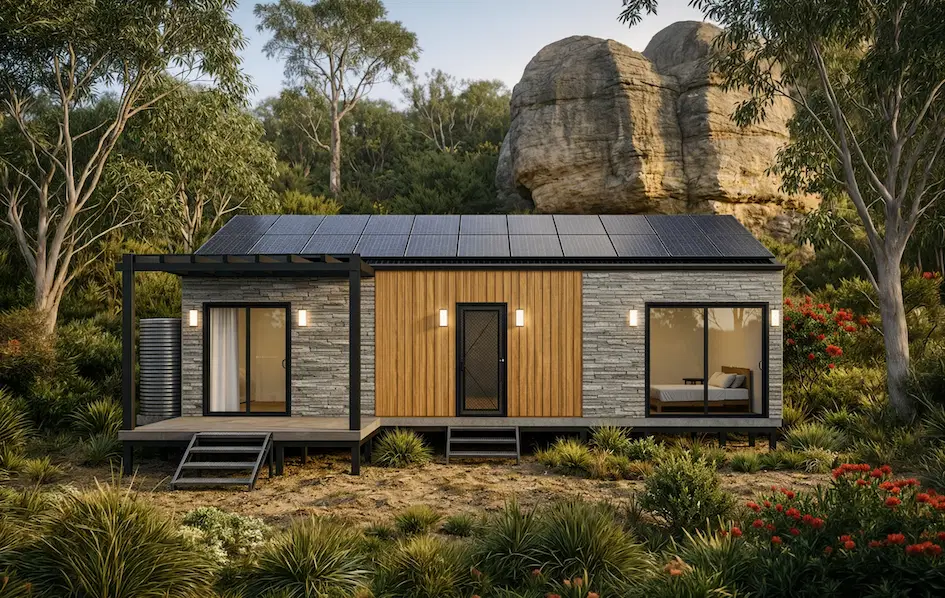
Before we dive into the details of the 2026 landscape, take a moment to see what modern modular living actually looks like in our latest 3×2 home tour.
https://youtu.be/Kskhm6zG7_c?si=Sjp40wDQ6mvRjJqk
If you’ve been watching the Australian property market lately, you’ve likely noticed a massive shift. The "standard" way of building: bricks, mortar, and months of delays: is no longer the only game in town. In 2026, modular housing has moved from a niche alternative to a central pillar of the Australian housing strategy.
Whether you’re a first-home buyer looking for affordability or an investor wanting to unlock the potential of a vacant lot, understanding the 2026 modular landscape is essential. We’ve mapped out the most critical questions property owners are asking this year to help you navigate this fast-moving industry.
What is the Australian Government doing about modular housing in 2026?
The short answer? A lot. The Australian government has gone "all-in" on Modern Methods of Construction (MMC) to solve the housing shortage. The headline act is the $47 billion federal housing package, which explicitly prioritises modular and prefab builds to meet the national target of 1.2 million homes by 2029.
One of the most exciting developments is the $39.3 million "System 600" funding. This is an open-source prefab platform trial designed to standardise how modular homes are built across the country. It means more consistency, better quality control, and a more robust supply chain for everyone involved.
Down in New South Wales, the Building Bill 2026 (often called the "Prefab Bill") has finally streamlined the nightmare of council approvals. It formally recognises prefabricated work as "building work" and integrates it into a single statewide approval system. Combine this with the NCC (National Construction Code) modernisation, which now uses AI tools to help manufacturers navigate compliance, and you have a regulatory environment that actually supports innovation instead of slowing it down.
"The shift in 2026 is about legitimacy. With the $47B package and the NSW Prefab Bill, the government has finally acknowledged that factory-built homes are the key to Australian housing productivity." : Industry Policy Analyst
How much do modular homes cost in Australia in 2026?
Let’s talk numbers. In 2026, modular home prices typically range between $2,500 and $4,500 per square metre for a turnkey product.
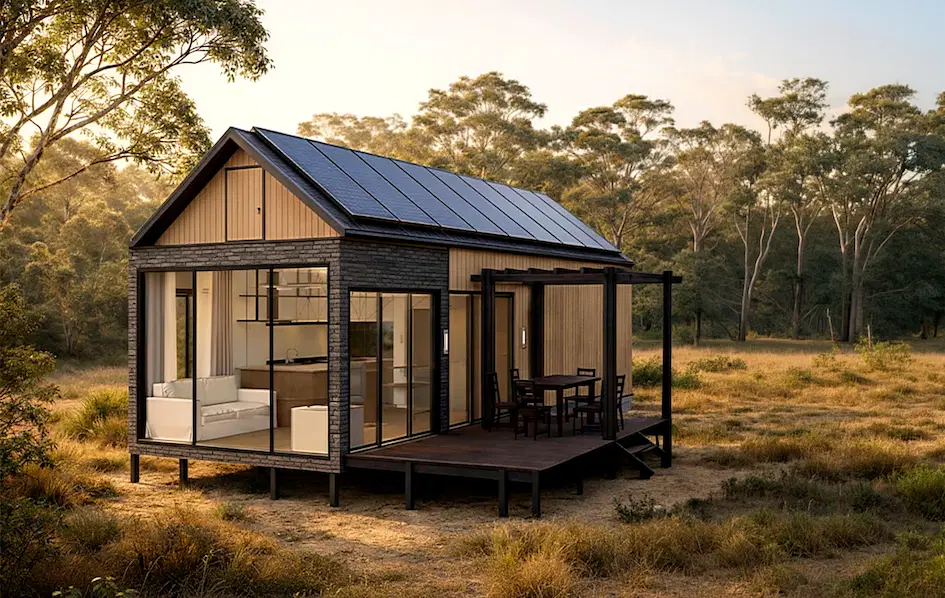
While price depends heavily on your choice of finishes and site complexity, here is a general guide for 2026:
- Small/Entry-level (1-2 Bedrooms): $150,000 – $310,000. These are perfect for modular granny flats or secondary dwellings.
- Standard Family Homes (3 Bedrooms): $350,000 – $550,000. This is the "sweet spot" for most suburban builds.
- High-end/Architectural Builds: $700,000 – $1M+. These feature premium eco-stone exteriors, raked ceilings, and expansive decks.
What’s included? At EcoHub Homes, our prices start from $99,000 and include premium finishes, double-glazed windows, and high-spec insulation.
Hidden costs to watch for: Always budget for site preparation (clearing and leveling), transport (which can range from $15,000 to $60,000 depending on distance), and cranage. Unlike traditional builds, these costs are often upfront, but they replace months of on-site labour costs.
How long does it take to build a modular home?
The time savings in 2026 are genuine game-changers. While a traditional site-built home can take 12 to 18 months (or longer with current trade shortages), a modular home is typically ready in a fraction of that time.
- Design & Approvals: 8–12 weeks (now faster thanks to the NSW Prefab Bill and AI-enabled planning portals).
- Factory Construction: 10–14 weeks. Because this happens in a controlled environment, there are zero weather delays.
- On-site Installation: 1–5 days. Your home arrives in sections and is often sealed and lockable within 48 hours.
In total, you can go from a vacant lot to moving into your dream home in less than 6 months. For investors, this means your rental income starts flowing half a year sooner than a traditional build.
Is modular housing truly sustainable?
In 2026, sustainability isn't just a "nice to have": it's a requirement. Modular construction is inherently greener because factory production reduces material waste by up to 40% compared to traditional sites.
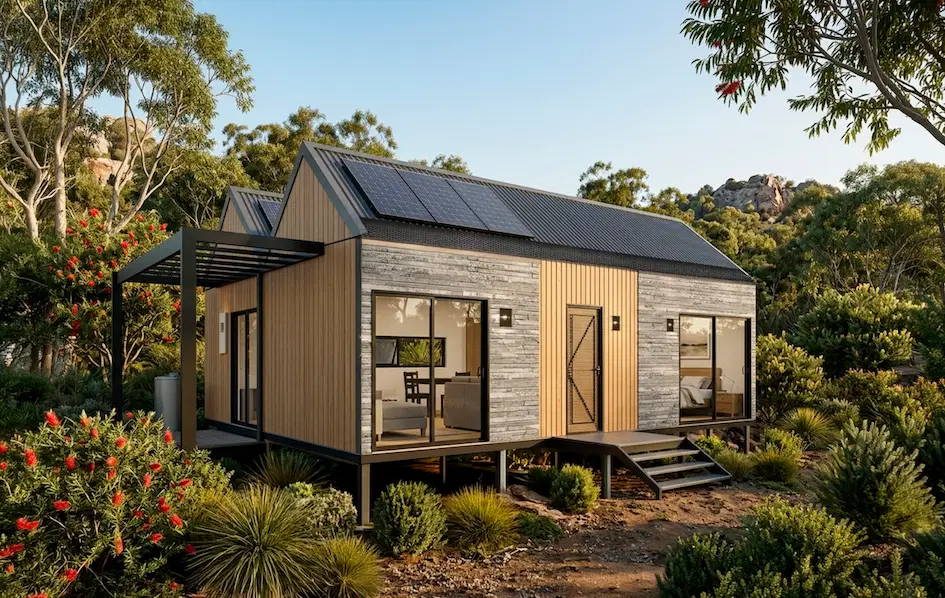
At EcoHub Homes, we lean into this with:
- Full-height double-glazed windows: Keeping your home cool in summer and warm in winter without the massive energy bills.
- Solar-ready designs: Most of our 2026 models come with integrated solar and battery storage options.
- High-efficiency insulation: Our homes are designed to exceed Australian energy standards, ensuring a high NatHERS rating.
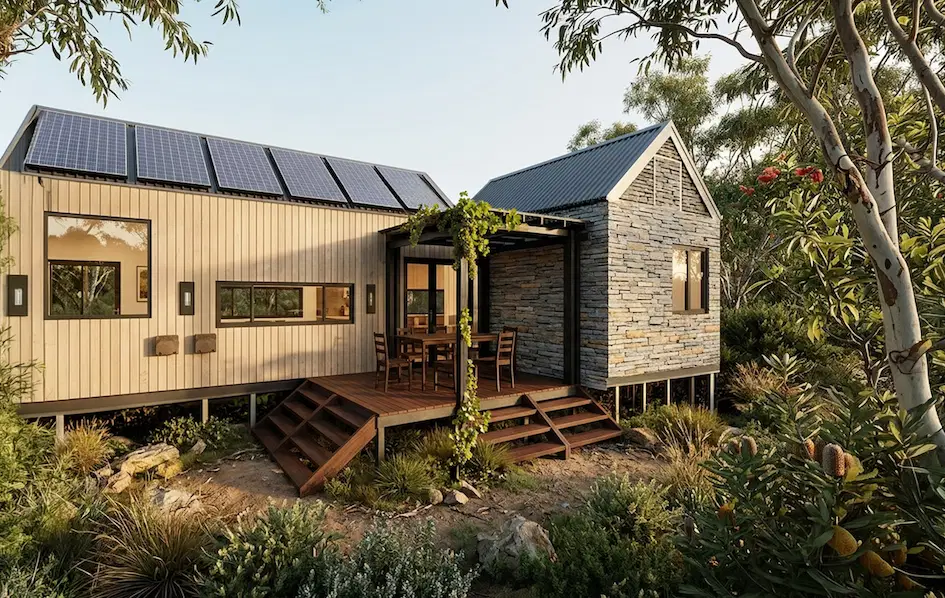
By building in a factory, we also minimize the "site footprint," meaning less disruption to the local ecosystem and native Australian flora during the installation process.
Are modular homes a good investment in 2026?
For property owners with a bit of extra space, the 2026 market offers a massive opportunity for passive rental income. With the ongoing rental crisis, a modular granny flat on a rear lot can generate significant yield.
- Vacant Land: Turning an empty lot into a high-spec modular home is often 20-30% more cost-effective than traditional construction for social and repeatable housing.
- Tax Benefits: The 2026 tax environment continues to offer attractive depreciation schedules for new-build rental properties.
- Resale Value: As prefab homes australia-wide become more mainstream, the old stigma has vanished. A high-quality modular home now holds its value just as well as a site-built home, provided it’s built to NCC standards (which all ours are).
What’s coming next for modular housing in Australia?
As we look toward the end of 2026 and into 2027, the focus is shifting toward smart-factory integration. We’re seeing more AI-driven customisation where buyers can walk through their 3D-visualised home in VR and make real-time changes to the floor plan before a single piece of timber is cut.
The rise of "Micro-grids" is also on the horizon, where clusters of modular homes share energy, making entire developments self-sufficient.
Staying ahead of the game
The best way to stay ahead in the 2026 market is to look for transportable homes that don't look transportable. The goal is "permanent feel with modular speed." By choosing designs with high ceilings, premium stone finishes, and seamless indoor-outdoor flow, you’re not just building a house: you’re building an asset that’s ready for the future.
Ready to explore your options?
Whether you’re looking for a coastal retreat or a smart investment on your suburban lot, we’re here to help you navigate the process. Explore our range of 2026 modular designs here or contact Daniel Margraf and the team to start your custom 3D visualisation today.